Novels by Doina Ruști
Doina Ruști, a novelist whose works have been translated, awarded, and studied in schools, is regarded as “a major writer of contemporary literature” (Nicolae Breban) and a writer of “great talent and intuition” (Norman Manea).
Her books explore history, memory, and identity through a blend of realism and the fantastic, with Balkanism as the central aesthetic dimension of her work.
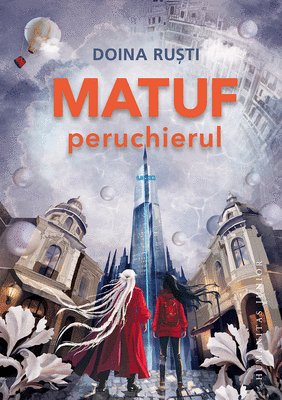
Doina Ruști’s novel Matuf, the Wigmaker is a YA thriller and speculative fantasy connecting Phanariot-era Bucharest with the post–artificial intelligence age. Everything begins and ends on Lipscani Street.
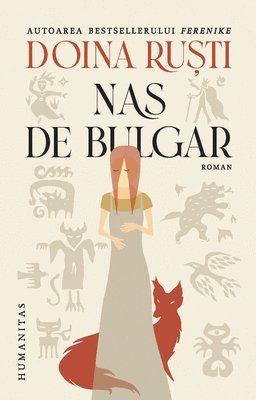
A confessional novel built around love, memory, and Balkan identity, Nas de bulgar continues the world of Ferenike, following the adolescence and youth of a protagonist shaped by passion, family mythologies, and an affective geography that connects the Danube Plain, Iași, and the Balkan world.
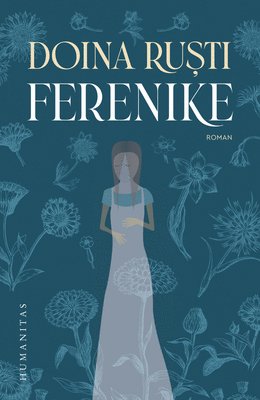
A confessional and autobiographical novel, Ferenike follows the memory of a childhood marked by history, political violence, censorship, family mythologies, and forms of feminine resistance. A fiction about a mythologized geography and a crime.
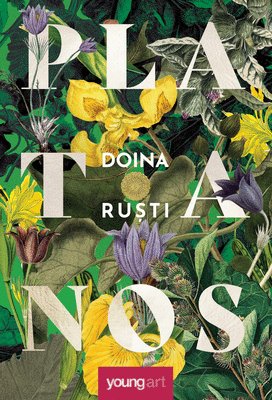
Platanos (YA) is a novel about friendship and the trauma caused by social inequality.
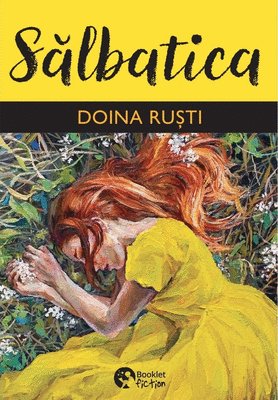
The Stalinist era, the Bărăgan Plain.Tavi (14 years old) encounters a strange being in the endless plains of the Bărăgan. Each of them has an incredible story, and the two stories meet in a symbolic realm — that of mathematics.
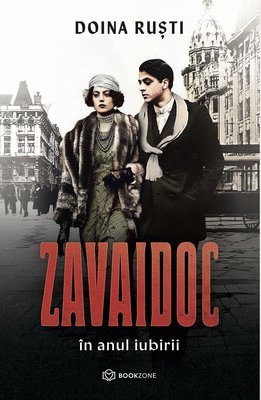
The novel recreates, in a rich and sensory literary form, the world of interwar Bucharest, shaped by music, love, fame, social unrest, and spectacular destinies. The figure of Zavaidoc becomes the center of a feverish age, in which song, passion, and the memory of the city come together in a story about love, survival, and the seduction of a vanished world.
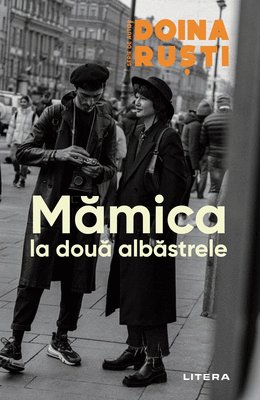
Adulterer, adopted children, mothers defects, hypocrisy of adoptions, love and despair, Bucharest today.
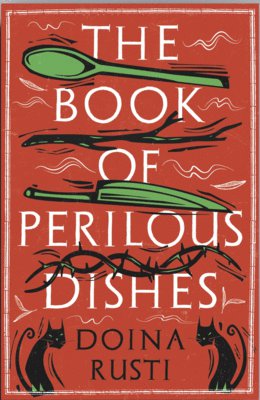
The novel builds a fabulous Phanariot Bucharest, dominated by a magical culinary manuscript, perilous recipes, love affairs, intrigues, and characters governed by tastes, scents, and obsessions. In English, the novel was published under the title The Book of Perilous Dishes.
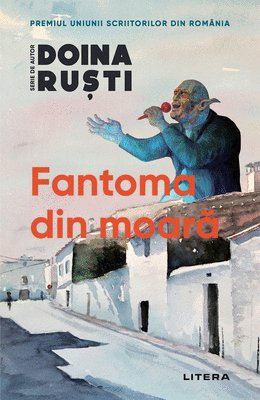
This page presents The Ghost in the Mill, the novel by Doina Ruști first published in 2008, awarded the Romanian Writers’ Union Prize for Prose, and translated into German. At the heart of collective metamorphosis, a young schoolteacher is raped, forced to undergo an abortion, and then arrested for having one. Her story gradually reveals the bleak and absurd essence of Romanian communism.
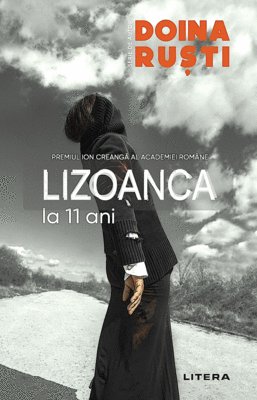
This page presents Lizoanca la 11 ani (Lizoanca at the Age of Eleven), the novel by Doina Ruști first published in 2009 and awarded the “Ion Creangă” Prize of the Romanian Academy. A small village, a child blamed by everyone, a true story.
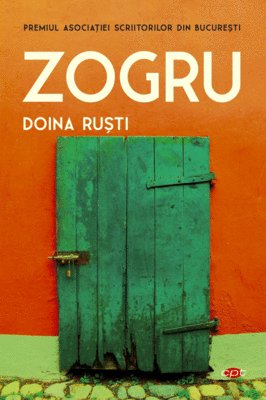
Zogru, the Romanian literary character by Doina Ruști - un unusual vampire, a Romanian Saint Germain
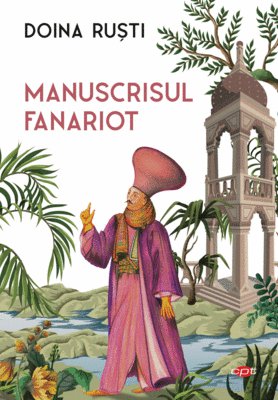
The novel is built around a contract for the sale of a human being, a manuscript that becomes a character and haunts the entire narrative, in a Phanariot Bucharest shaped by love, slavery, Wallachian boyars, and fatal passions.
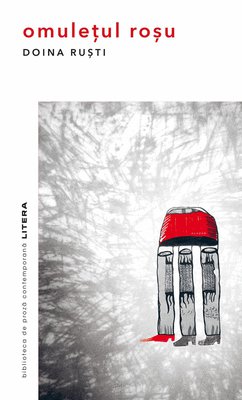
The Little Red Man is both a manifesto novel and an ars poetica, built around a new fragmentary epic composed of online conversations, summaries of events, confessions, disparate texts, and mechanisms of manipulation in the virtual world. And a love story .
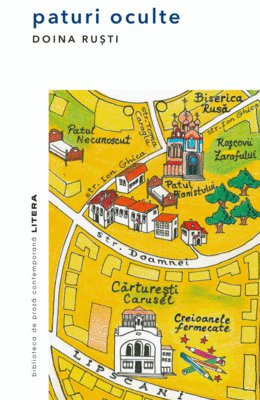
Flori, a literature student, discovers a bed in which she dreams of a grove of carob trees. When she wakes, her appearance has changed slightly. Together with her boyfriend, Lev, a bookseller, she begins to investigate the bed’s origins and learns from an old manuscript that an eighteenth-century bedmaker built twenty-eight beds from carob wood. Their investigation opens up a world of objects charged with memory, unstable identities, and mysterious connections between past and present.
Bucharest, 1790 — an invented, intensely fabulatory time in which perfumes can kill, portraits painted on the wall of a butcher’s shop seem to breathe, cats inherit fortunes, and a Turk’s head stuck on a fence sets off investigations and collective hysteria.
Urban adventure, love, crime, strange happenings, surrealism, satire.
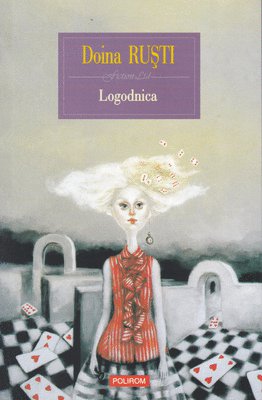
This page presents The Fiancée, the novel by Doina Ruști published in 2017. It includes the plot of the novel, excerpts from the book, editions, interviews, meetings with readers, including with the book’s character, and other events dedicated to the novel. The novel follows a love story told from two perspectives, hers and his, a parable of the cultural incongruities between Eastern and Western Europe. The page also includes the novel’s critical reception: excerpts from reviews, articles, and mentions of The Fiancée, together with references to their sources. Among those who have written about the novel are Mircea Pricăjan, Adi G. Secară, Ioana Cistelecan, Serenela Ghițeanu, and others.


