Writers rarely meet in quiet places. Most often, they cross paths amid the bustle of festivals, book launches, and travels. This page is a gallery of such encounters. But also of others, more tranquil ones, from Bucharest gardens, from the streets, or simply those chance meetings on the staircase, as one enters a building.
“My doctoral thesis was about alterity and its symbols. At the time, I argued that the simple encounter that triggers emotion entails an act of revising one’s own being through mirroring, through the analysis of coincidences and of striking differences on a subjective plane of perception. Comparing oneself with the Other has its roots in an instinct of kinship, more precisely in that primordial feeling of coexistence, which Husserl defines as the measure of the awareness of the Other in the process of understanding one’s own identity. Therefore, if I am to present my encounters, I will accompany them with my reflections on alterity.”
Doina Ruști
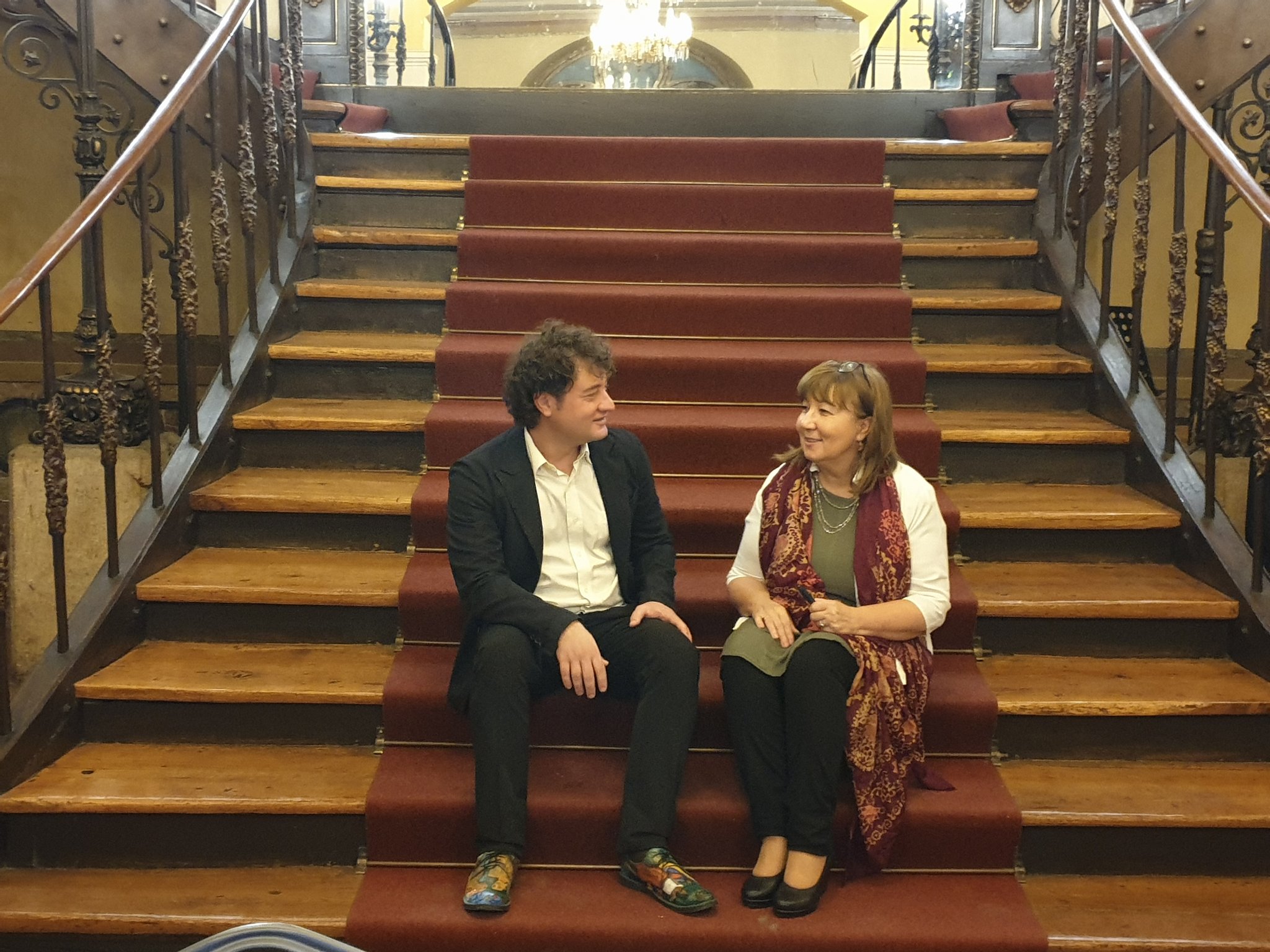
Doina Ruști, Cătălin D. Constantin, Suțu Palace, 2020
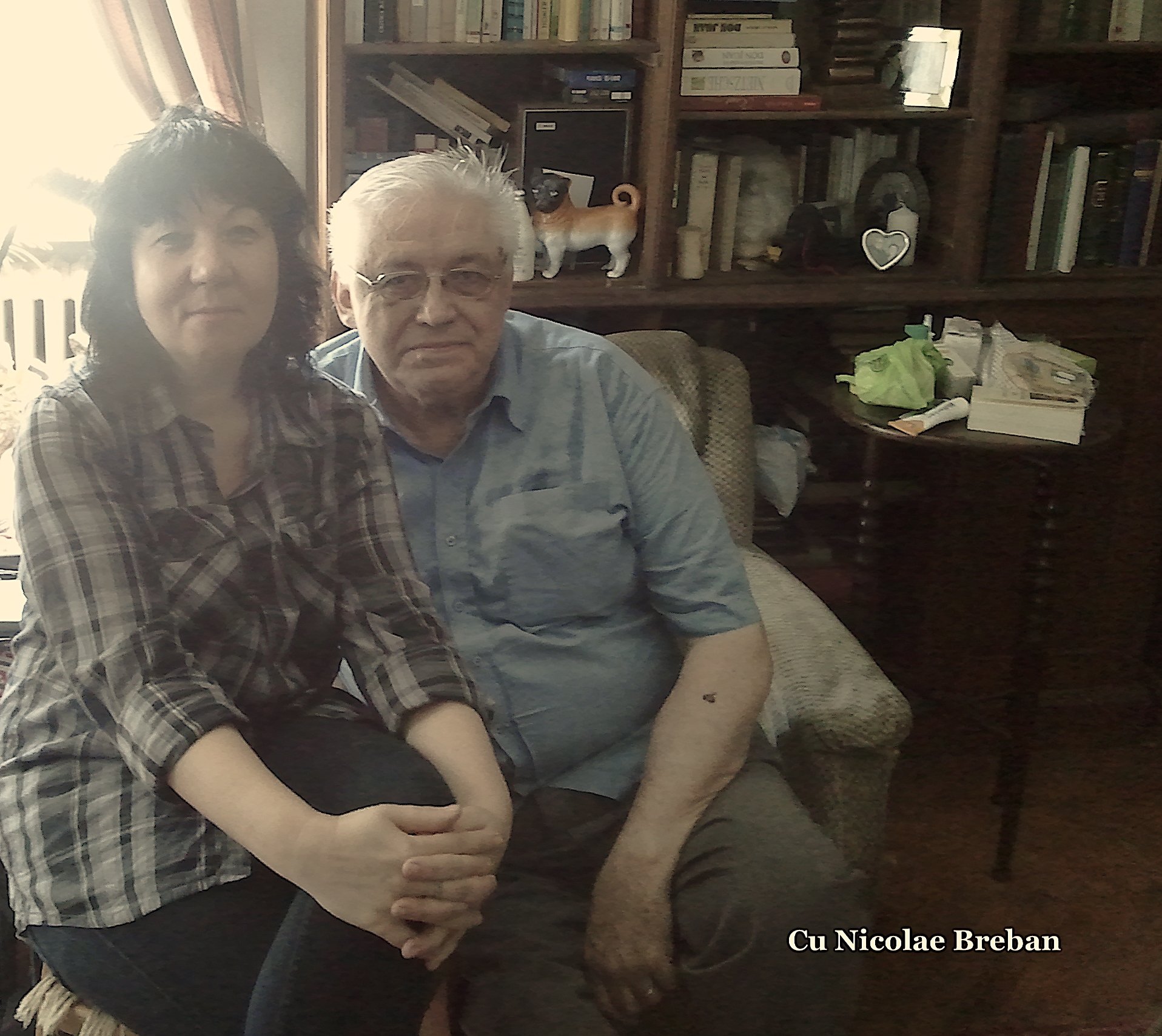
Doina Ruști, Nicolae Breban, 2011
Nicolae Breban said about Doina Ruști, at the awarding of the Ion Creangă Prize of the Romanian Academy:
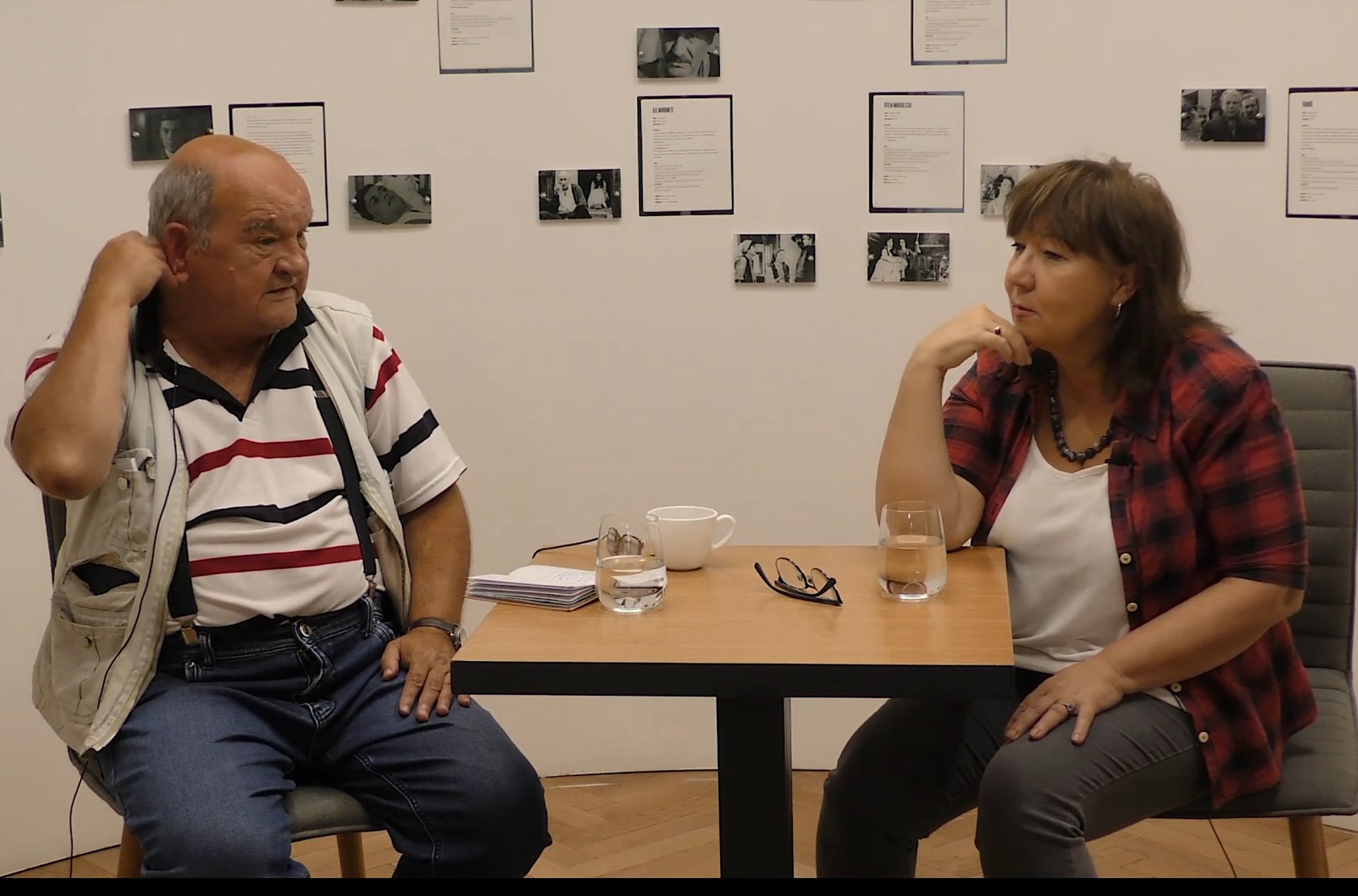
[Dpoina Ruști & Ioan Grosan, ]Museum of Romanian Literature, Bucharest
more
Ioan Groșan, Observator cultural, about Doina Ruști:
An unusual love story set in Phanariot Bucharest, rendered with all the resources of broad-breathed, quasi-Balzacian prose: intrigues, schemes, crowd scenes, but above all with a skill rarely encountered today, the art of portraiture, from simple sketches to ample tableaux in which one can almost hear the silken details of Byzantine painting rustling. An entire human fauna unfolds vividly before our eyes, each figure with his own story, or with stories within stories opening out like Russian matryoshka dolls. […]
There are numerous passages in the texture of the book that could be “unfolded,” arranged as verse, bringing to mind, in tone and vision, a vast Whitmanesque poem.
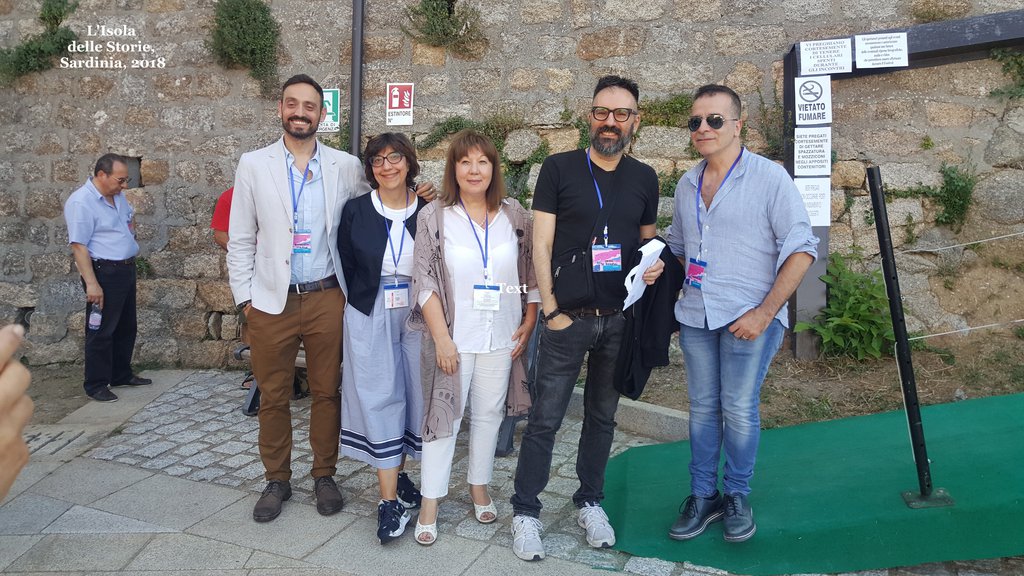
Sardinia, festival: Marcelo Fois, Omar di Monapoli, Doina Rusti, Simonetta Bitasi, Roberto Merlo.
Regarding Doina Ruști’s work, Roberto Merlo stated that:
The Alazar into which Laura enters is, ultimately, the world of stories, an artificial world resembling those imagined and foretold in the enthusiastic early years of the digital revolution. Enigmatic cities filled with secret passages and indecipherable messages, dizzying falls into darkness, high-speed pursuits and ethereal flights, monstrous or curious creatures, strange and unsettling landscapes, an abyss in which people come to life, secretly carrying within them a message made of luminous words, an unborn child who nevertheless performs miracles, a procession of animated shoes, perilous roads, a mysterious white villa and a smiling host — all these and many others make up Alazar: pure sense of wonder, a hallucinated, convulsive world, absurd and yet coherent and real, as only fantasy can be, a bizarre and unpredictable electronic Wonderland into which Laura enters joyfully and without fear, like a telematic Alice.
(Preface to the novel Omulețul roșu (The Little Red Man), whose Italian edition is signed by Roberto Merlo.)

Doina Ruști, Paul Cernat, at the launch of The Ghost in the Mill, 2008
Paul Cernat has authored numerous critical studies on Doina Ruști’s works. Among other things, he describes her as “a prose writer endowed with an epic vein and inner force.”
Paul Cernat has written numerous critical essays on Doina Ruști’s work. Among other things, he describes her as “a prose writer endowed with an epic gift and remarkable inner strength.”
He has written about the novels Homeric, Lizoanca at Eleven, and The Book of Perilous Dishes, as well as the short-story collection The Checked Shirt.
“Linked together in various ways around the figure of Iane, a drug-addicted pharmacist from Batiste Street, the eleven stories move back and forth between the mysteries of contemporary Bucharest and those of the eighteenth-century city. The characters thus relive forgotten experiences and identities in a kind of narrative roller coaster. An enchanting and captivating book, filled with old spices and new flavours. Doina Ruști unquestionably has a true storyteller’s gift.”
—Paul Cernat
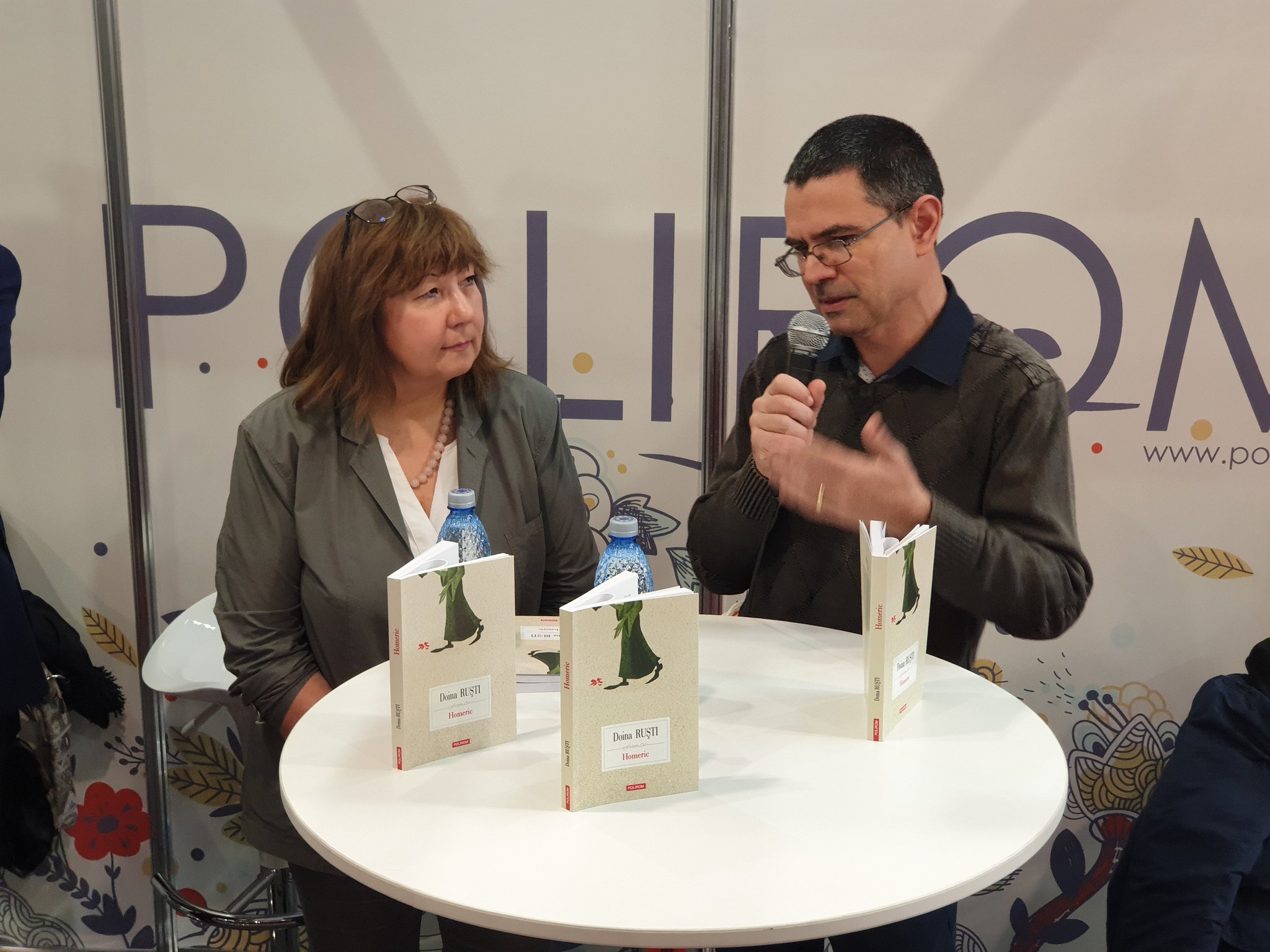
Doina Ruști, Paul Cernat, 2019
“One cannot speak about encounters without thinking of Emmanuel Lévinas. For him, the elements of the logical framework through which being can be defined are the social relation, the idea of the infinite, and the crisis of a content that exceeds form. In his view, the human being is shaped in relation to the Other, without this implying imitation or relations of superiority and inferiority; each person finds themselves through the appeal to the Other.”
Doina Ruști
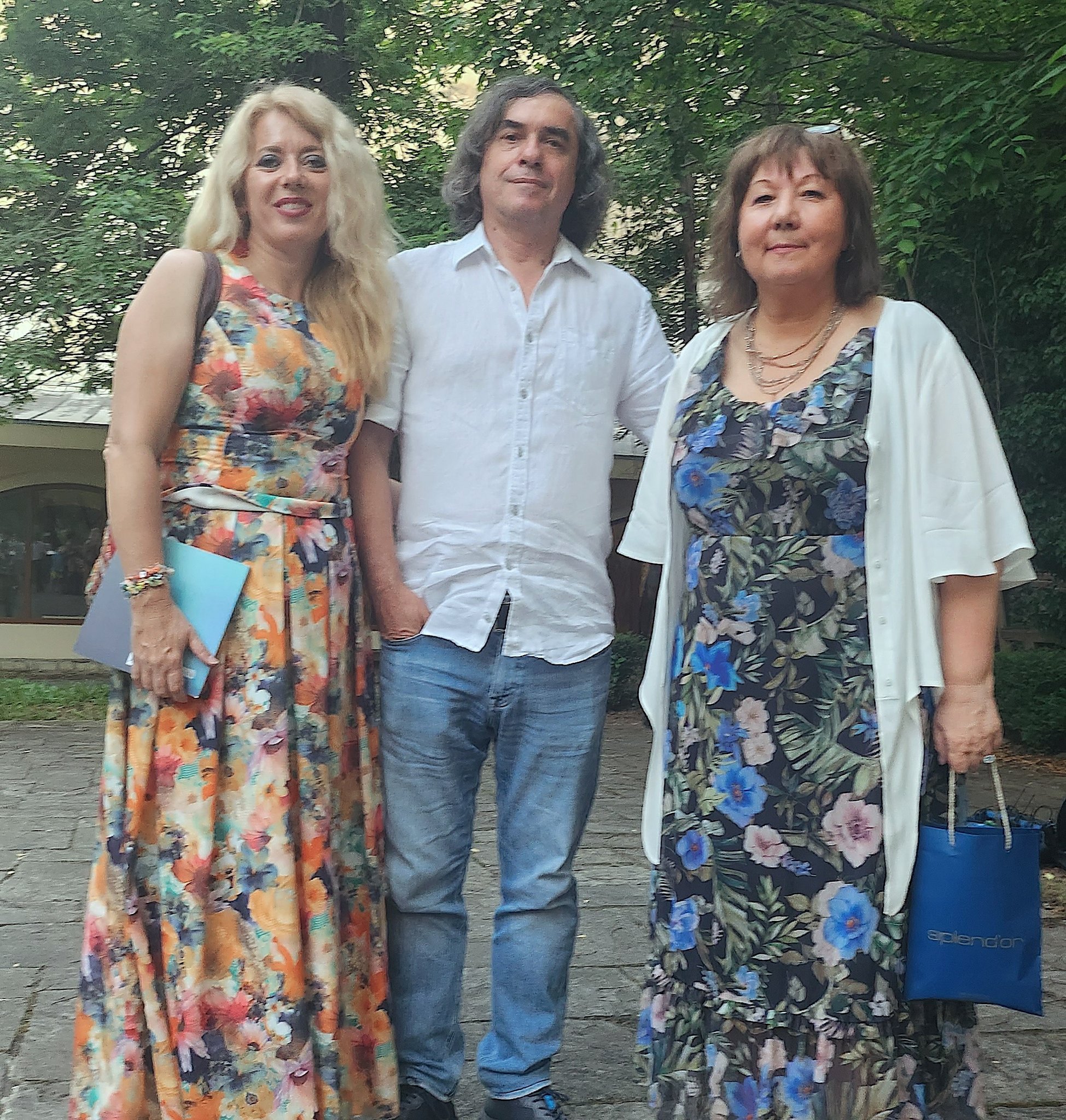
Doina Ruști, Mircea Cărtărescu, Ioana Nicolaie
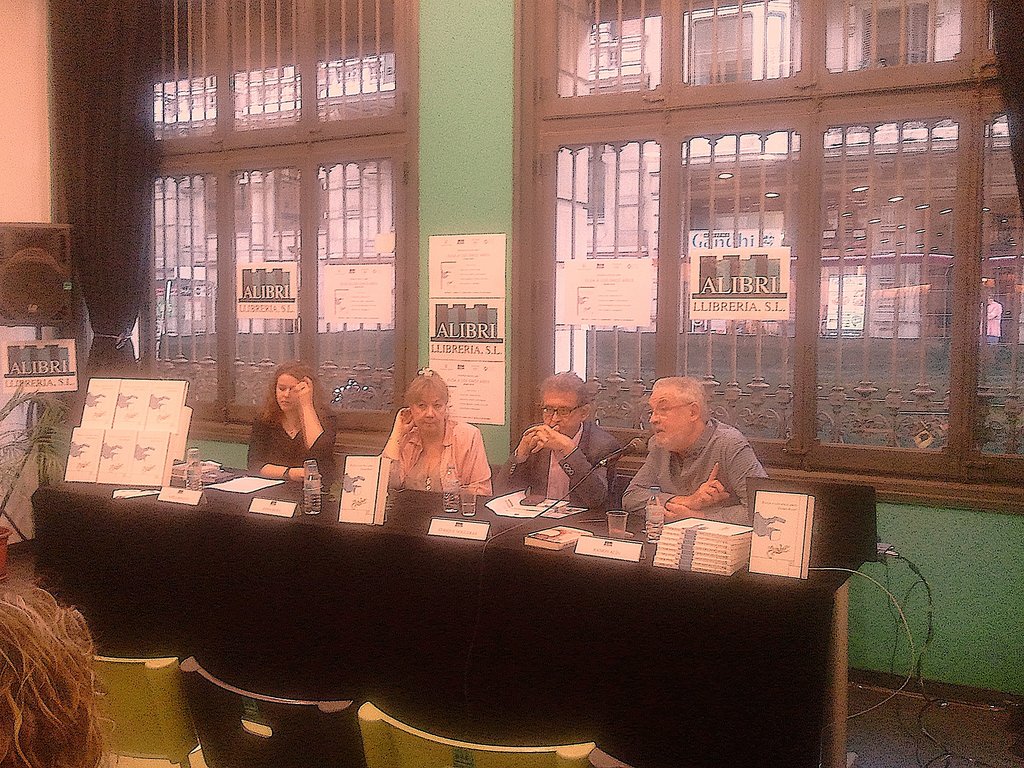
Barcelona, 2014: Doina Ruști, Enrique Nogueras, Ramón Acín, Adina Mocanu.
Enrique Nogueras is a professor of Romance Studies at the University of Granada and a poet. He has translated three of Doina Ruști’s novels: Lizoanca at the Age of Eleven, The Book of Perilous Dishes, and The Phanariot Manuscript.
Ramón Alín, a Spanish writer, is also the author of a critical study of Lizoanca at the Age of Eleven, published in Turiamagazine (no. 115, 2015).
Critical reception of Doina Ruști’s work.
Roma: Doina Ruști, Petre Barbu
“The miracle of alterity should not be understood as the recovery of a primordial unity (as in Plato’s Symposium), but, as Lévinas also says, as the freedom to negate or absorb the Other without a definite purpose. The image of the Other is, first of all, an ideal mirroring that is destroyed at every moment, that is, as it expresses itself (kat’ at) and takes shape as a reference point in history; the human being finds a point of reference in the Other by speaking with them, that is, in a situation where fusion—of a mystical or affective kind—is excluded.”
Doina Ruști
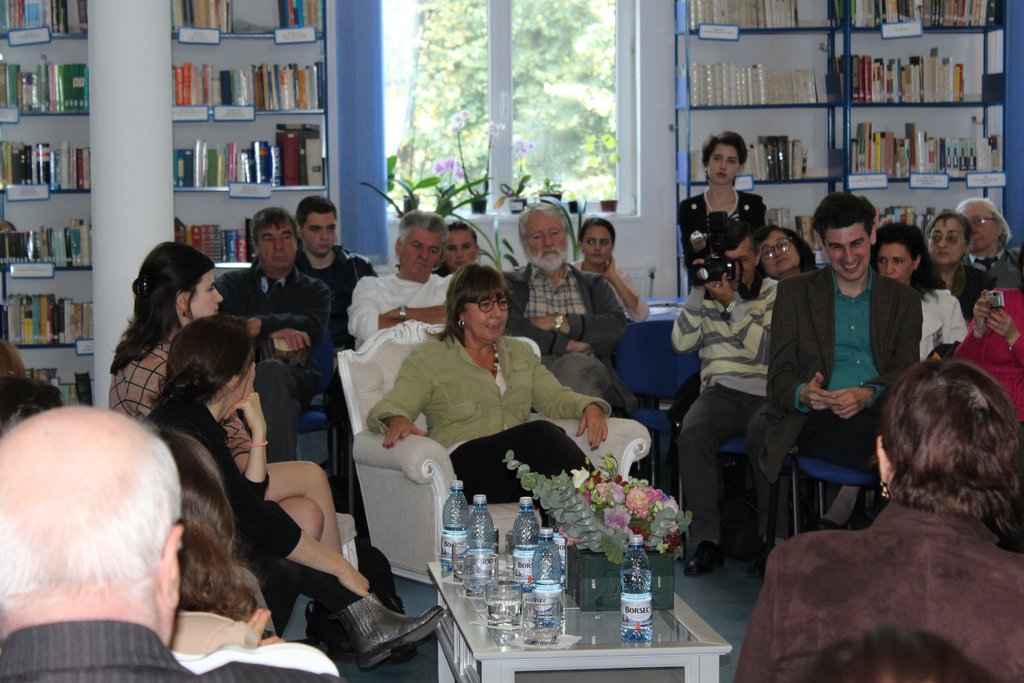
Bacău — before the Ateneu Prize for the novel The Phanariot Manuscript. On the right: Doris Mironescu.
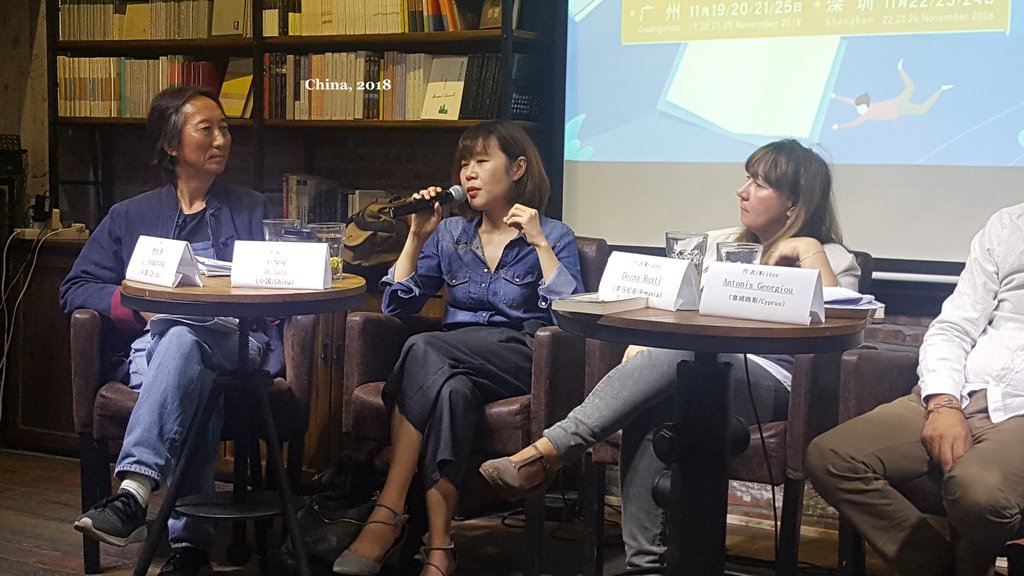
Doina Ruști with Chinese writers Du Lulu and Li Songzhang, EU-China Festival, Shenzhen
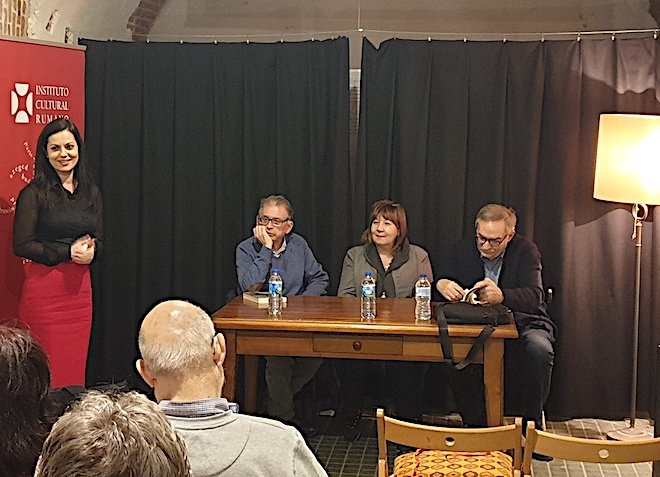
Doina Ruști, Manuel Rico, Madrid, after the Spanish launch of The Book of Perilous Dishes* (La Gata del Viernes).*
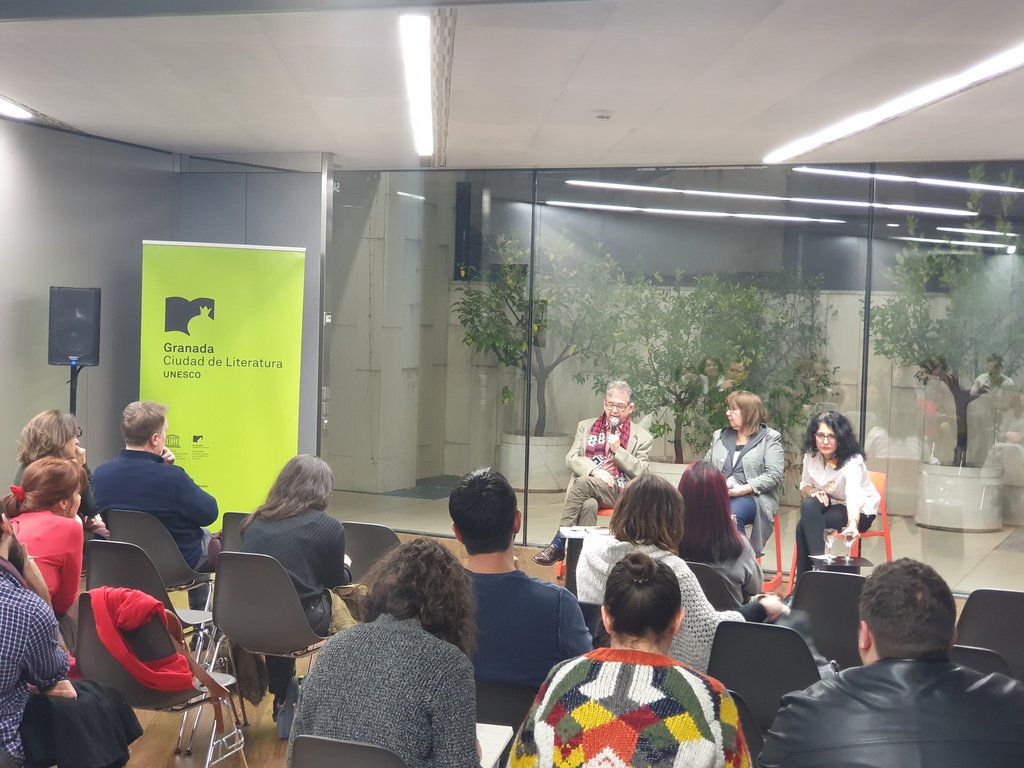
With poet Enrique Nogueras, Granada, UNESCO event during the launch of The Book of Perilous Dishes
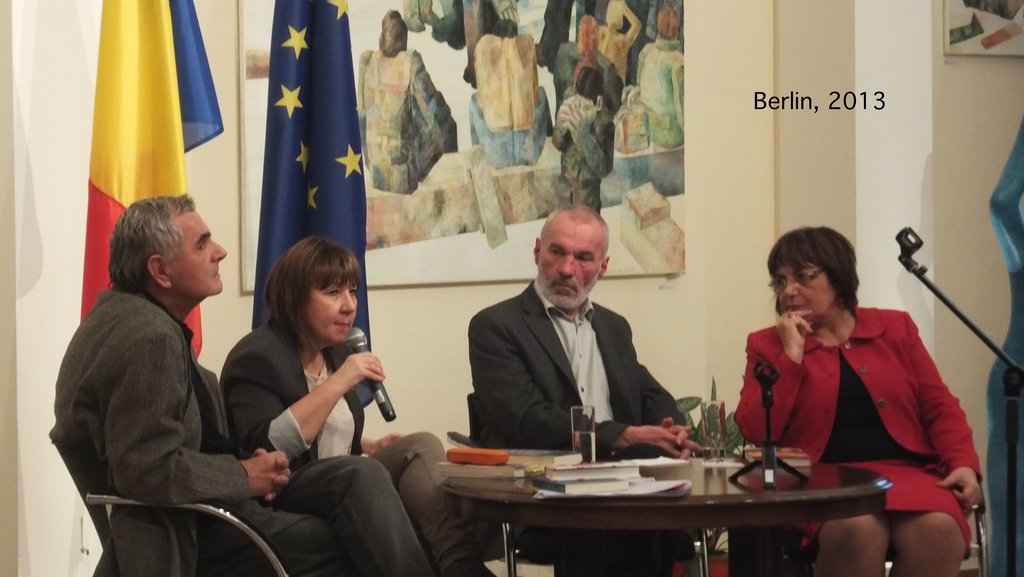
Berlin: Jan Cornelius, Doina Ruști, Georg Aescht, Gabriela Adameșteanu
“Every desire is but a form of escape from the universe of the self. Lévinas likewise defines it as an aspiration turned into necessity: In need, I can bite into reality and satisfy myself by assimilating the other. In Desire, there is no biting into being, no satiety, only a future without markers. Fear, cold, hunger—in other words, all dependencies in relation to the world—ultimately confer independence upon the being that struggles, that enters into relation with someone willing or compelled to offer alterity; this struggle born of need removes the being from anonymous threat and reaffirms its desires within a framework of possibility.”
Doina Ruști
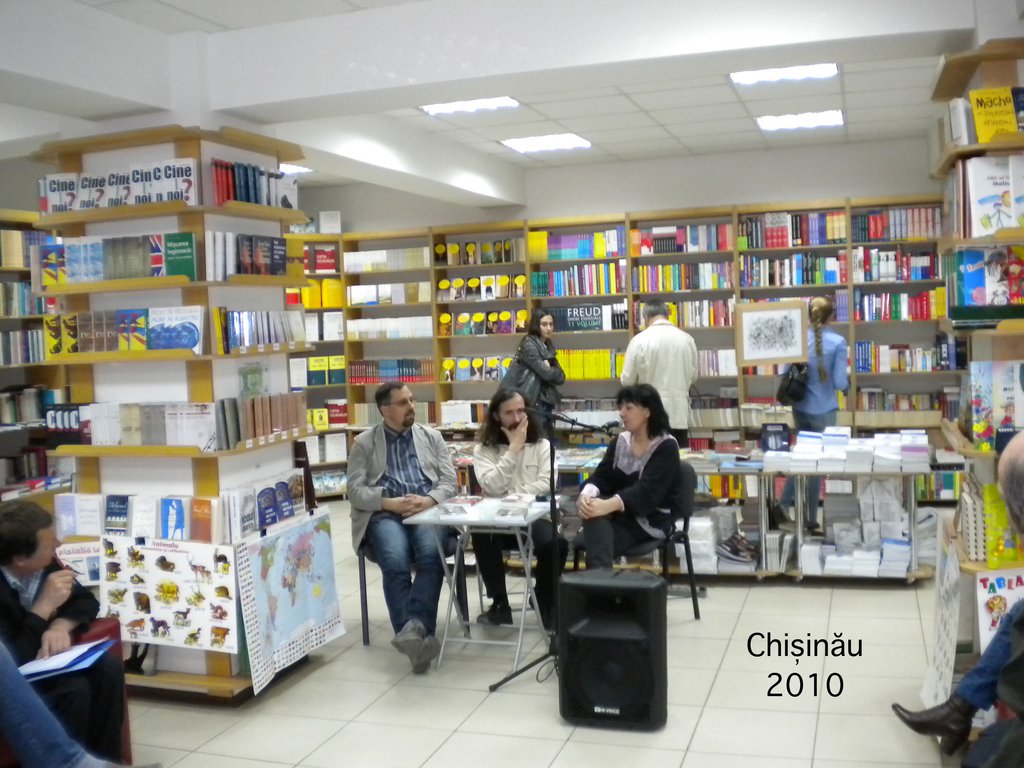
Chișinău: Doina Ruști, Dan Lungu, Emilian Galaicu-Păun
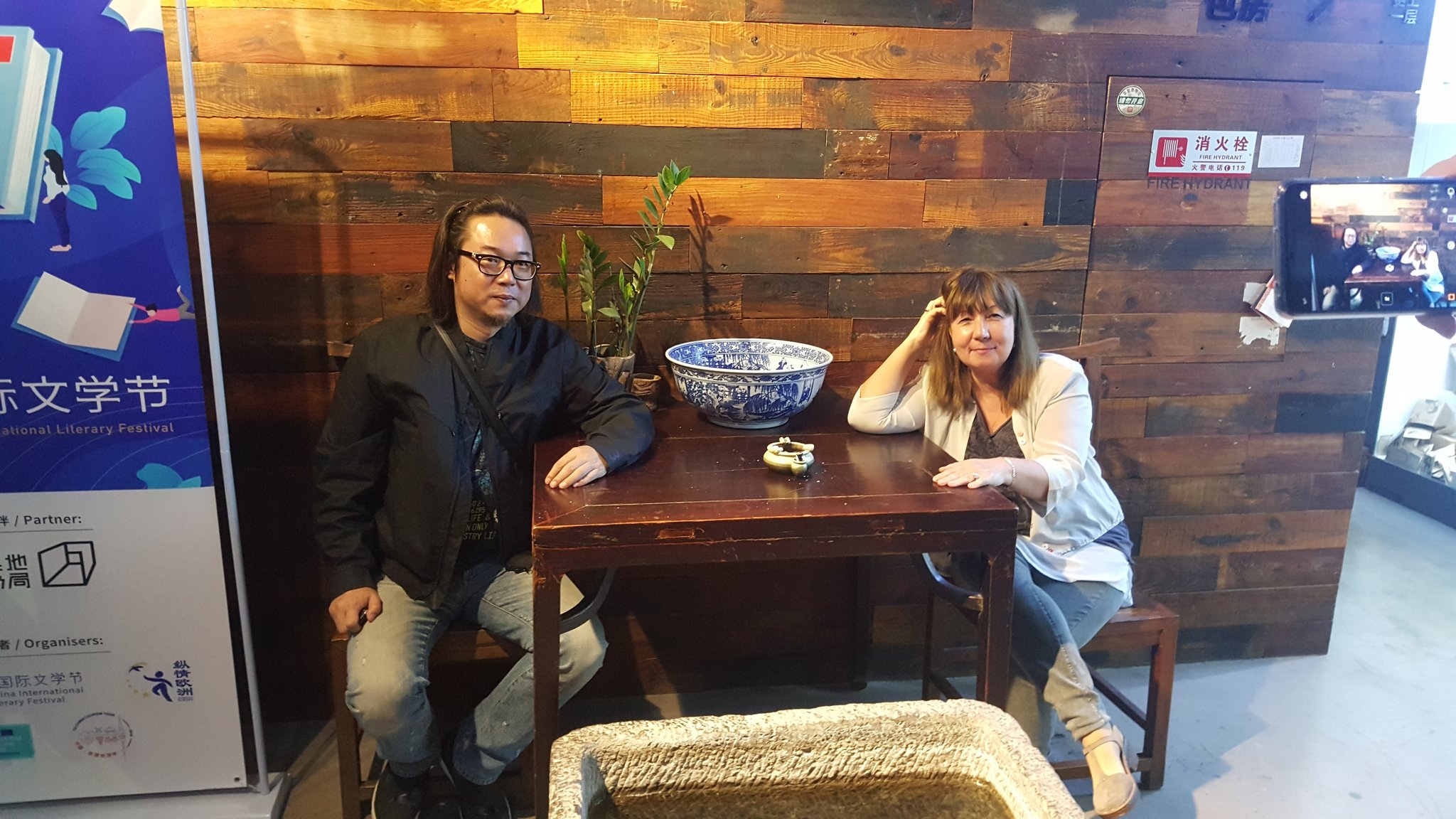
EU-China Festival: Doina Ruști, Zhang-Er
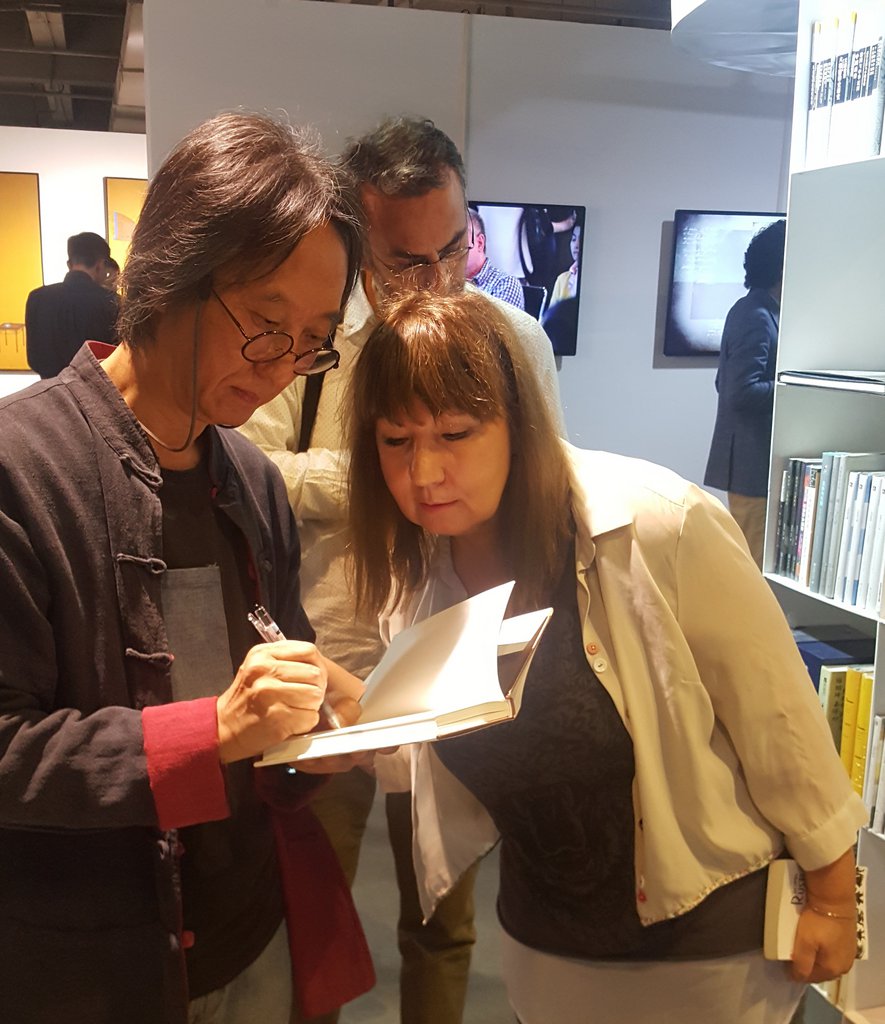
EU-China Festival: Doina Ruști, Li Songzhang
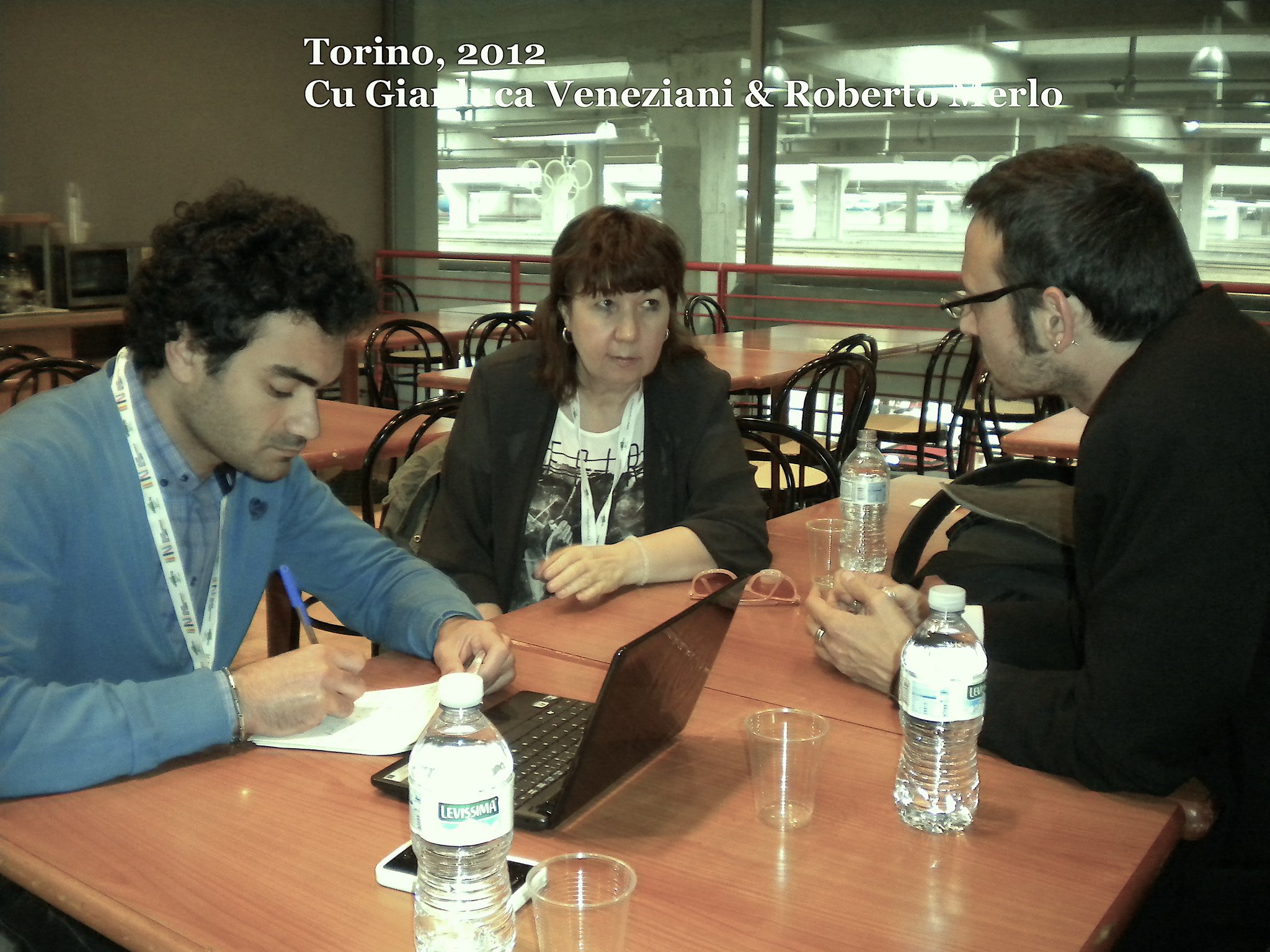
Turin: Roberto Merlo, Doina Ruști, Gianluca Veneziani
At the Turin International Book Fair, journalist Gianluca Veneziani interviews Doina Ruști for Libero Quotidiano. They are joined by professor and translator Roberto Merlo.
“The deep dream of the human being is to escape from the self, more precisely, from the fatality of returning into oneself, as someone once said. Yet alterity implies a confrontation that evolves from the feeling of being put on trial, to the loss of identity, and to the feeling generated by taking possession of the Other.”
Doina Ruști
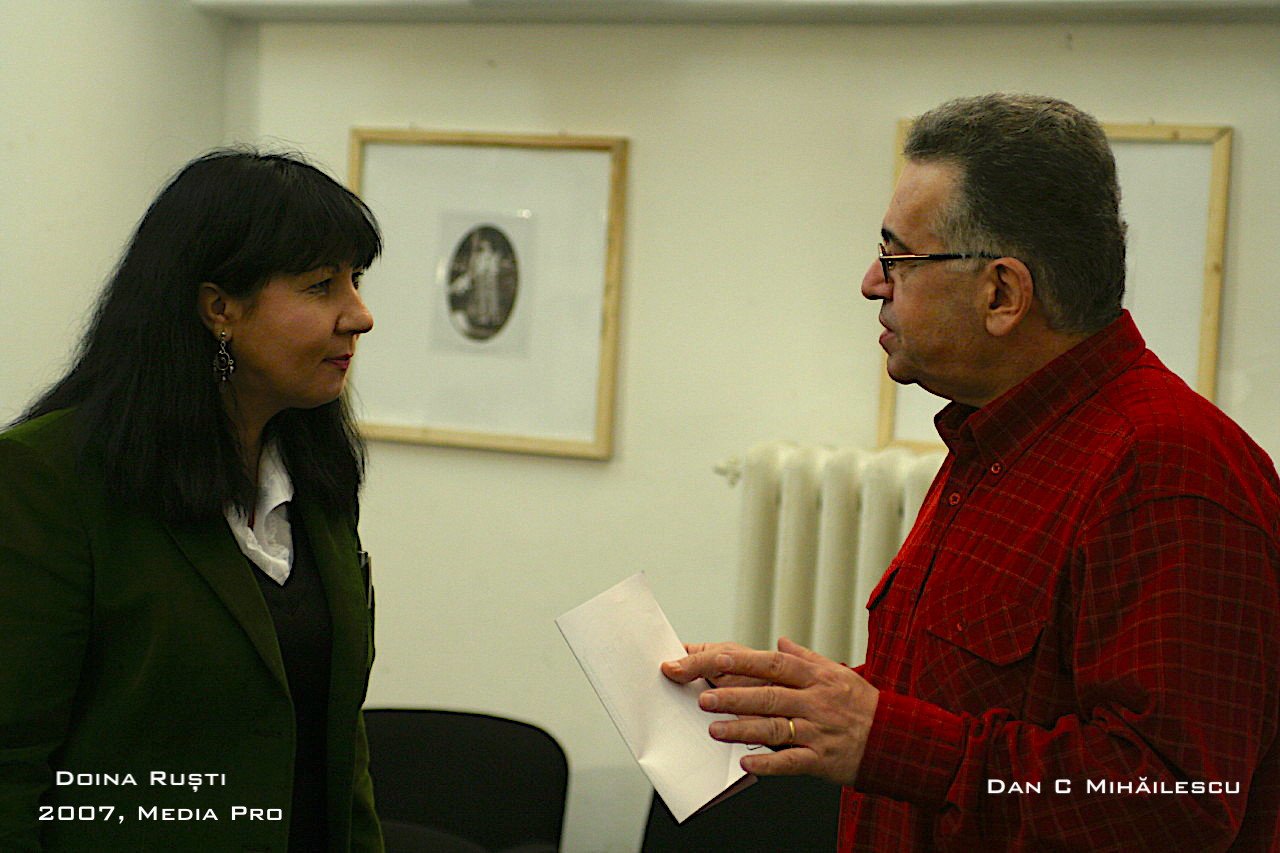
MediaPro Pictures, 2007: Doina Ruști, Dan C. Mihăilescu
Media Pro Pictures: Doina Ruști and Dan C. Mihăilescu at Media University, during a break in a workshop devoted to Stanca the Widow, a character from the short-story collection The Checked Shirt and the founder of St Sylvester Church in Bucharest. In other words, an entry into the Phanariot world.
Dan C. Mihăilescu has written about many of Doina Ruști’s books, beginning with her literary debut.
“Now this is style! A style matched in Romanian literature by only two writers: Ștefan Agopian and Mircea Cărtărescu!” (video)
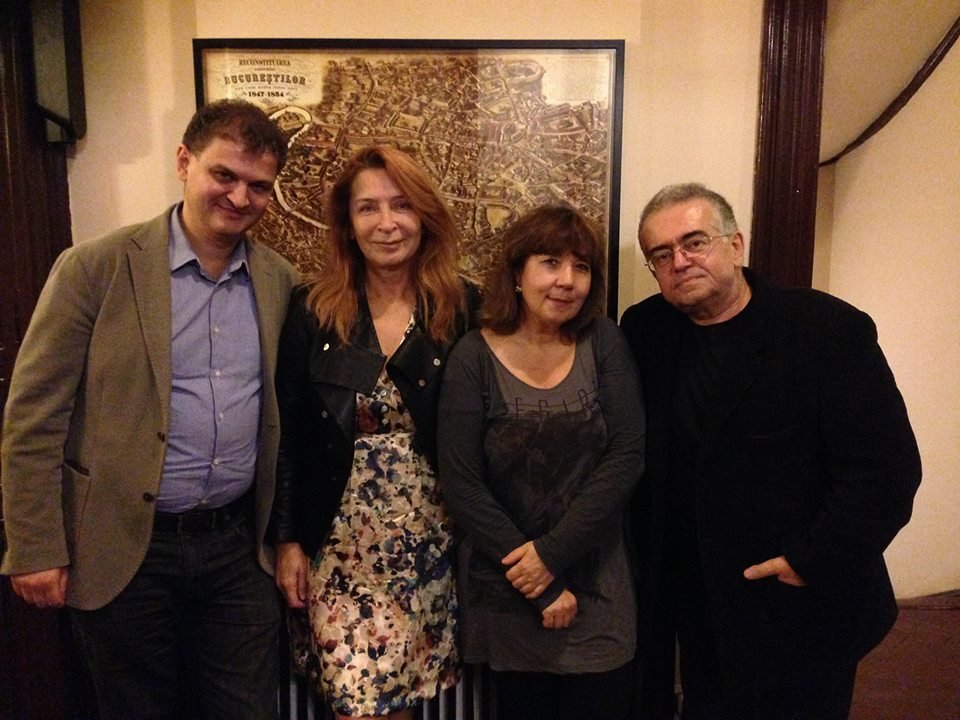
București, 2018: Dan C Mihăilescu, Doina Ruști, Mihaela Cârlan, Daniel Cristea Enache
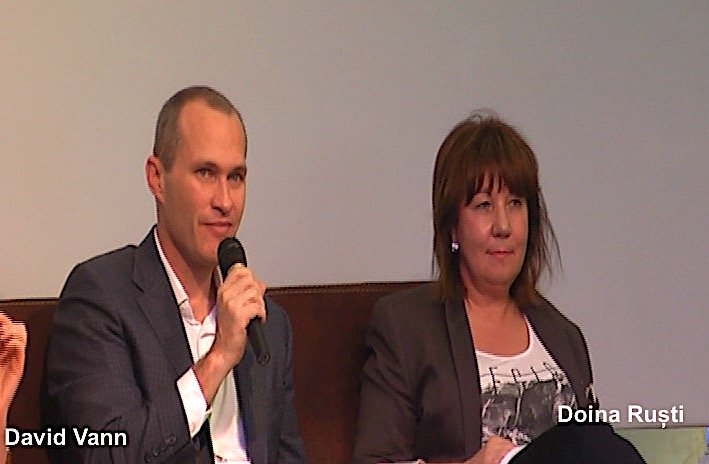
FILIT: David Vann), Doina Ruști
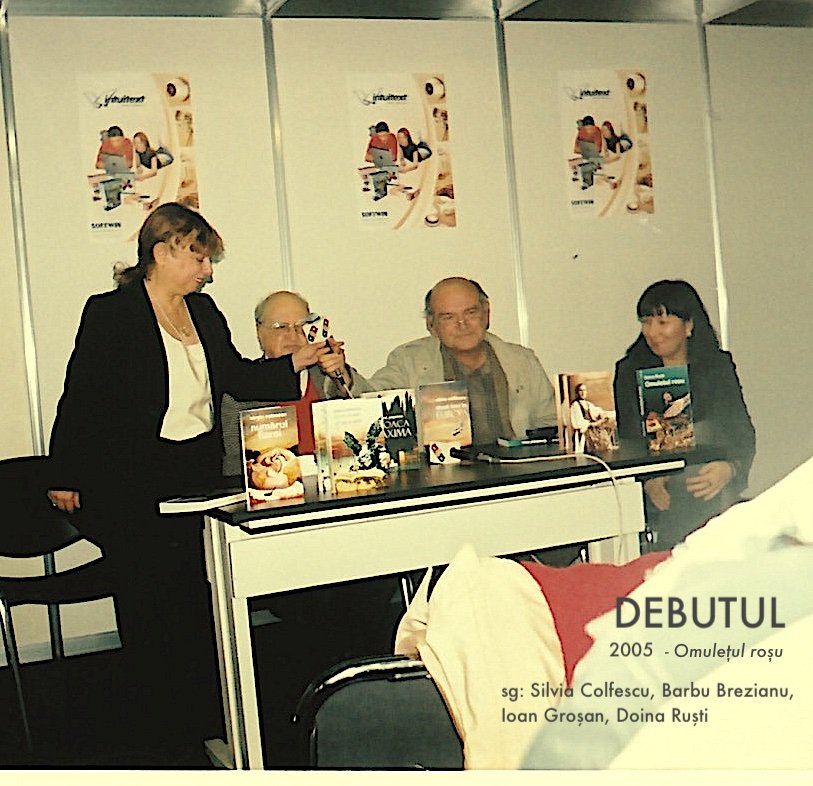
Gaudeamus Book Fair: Doina Ruști, Ioan Groșan, Barbu Brezianu, Silvia Colfescu, 2004
My publishing debut came in 2004, with The Little Red Man. I was deeply moved, especially since several writers had come to support me. Ioan Groșan introduced me to the literary world at that year’s Gaudeamus Book Fair.
—Doina Ruști
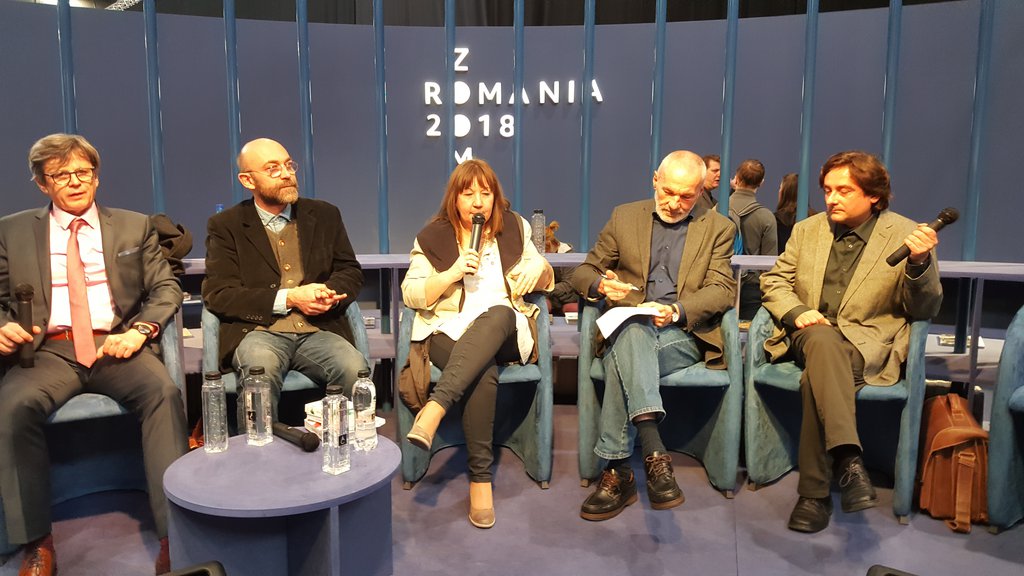
Leipzig Book Fair: Doina Ruști, Filip Florian, Cătălin Mihuleac, Georg Aescht
That year, 2018, Doina Ruști had two novels published in German: The Phantom in the Mill and The Book of Perilous Dishes. Romania was the Guest Country.
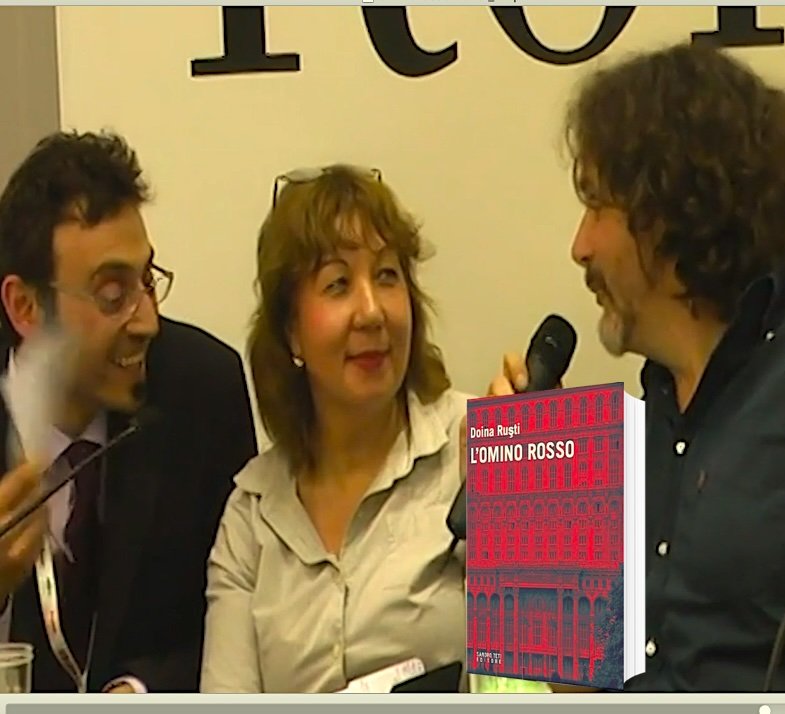
Turin: Marco Dotti, Doina Ruști, Roberto Merlo, 2012.
Marco Dotti, a professor and journalist, said that “Doina Ruști’s writing has two defining qualities: depth and the sweetness of her storytelling.” Dotti took part in the Turin International Book Fair in 2012, alongside Doina Ruști and Professor Roberto Merlo, the translator of the novels Zogru and The Little Red Man. Romania was the Guest Country.
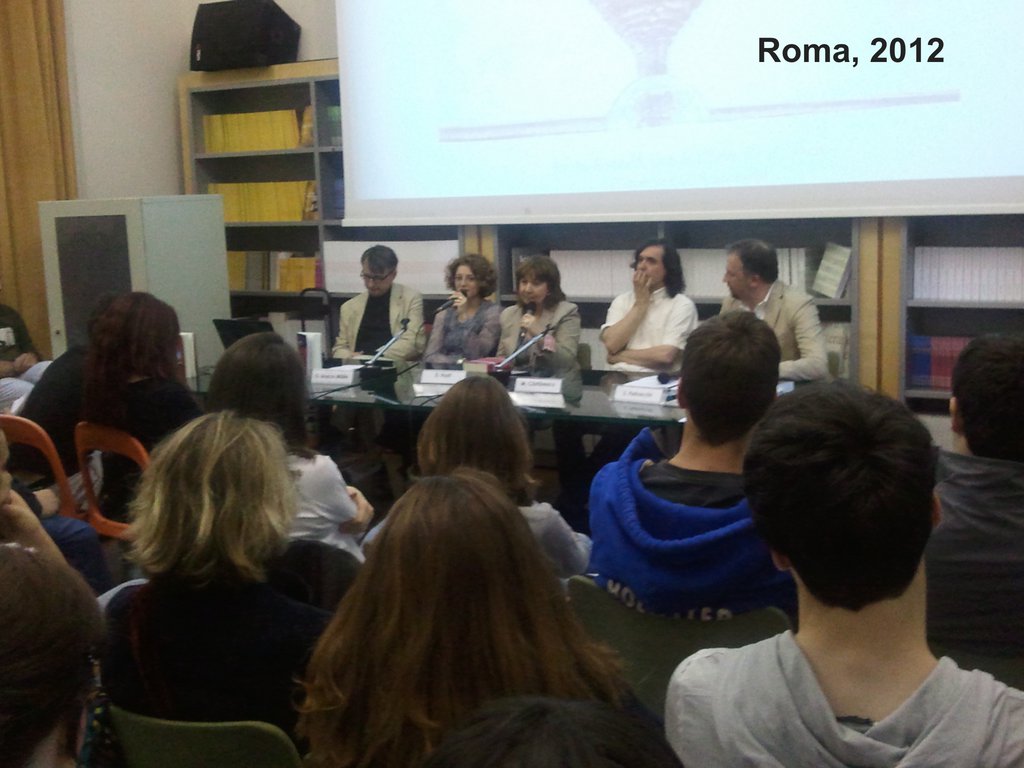
Rome: Doina Ruști with Mircea Cărtărescu and Horia-Roman Patapievici
“The consequences of any encounter belong to the sphere of evolution, a phenomenon studied in particular by modern psychoanalysis. Jung even states in this regard: The mutual approach of people brought about by such a community results in a psychic intimacy which, in turn, touches upon the personal instinctual sphere of human love and therefore conceals certain dangers within itself. I would add that the main danger lies, in Finkielkrautian terms, in the emotional adventure of a being preoccupied with exteriority. Affectively, the need for the Other turns into solidarity, into a euphoric participation in the Other’s joy, or, on the contrary, into egoism, or into an atrocious hatred toward the Other; both situations (adhesion and hatred) are natural manifestations of alterity.”
Doina Ruști
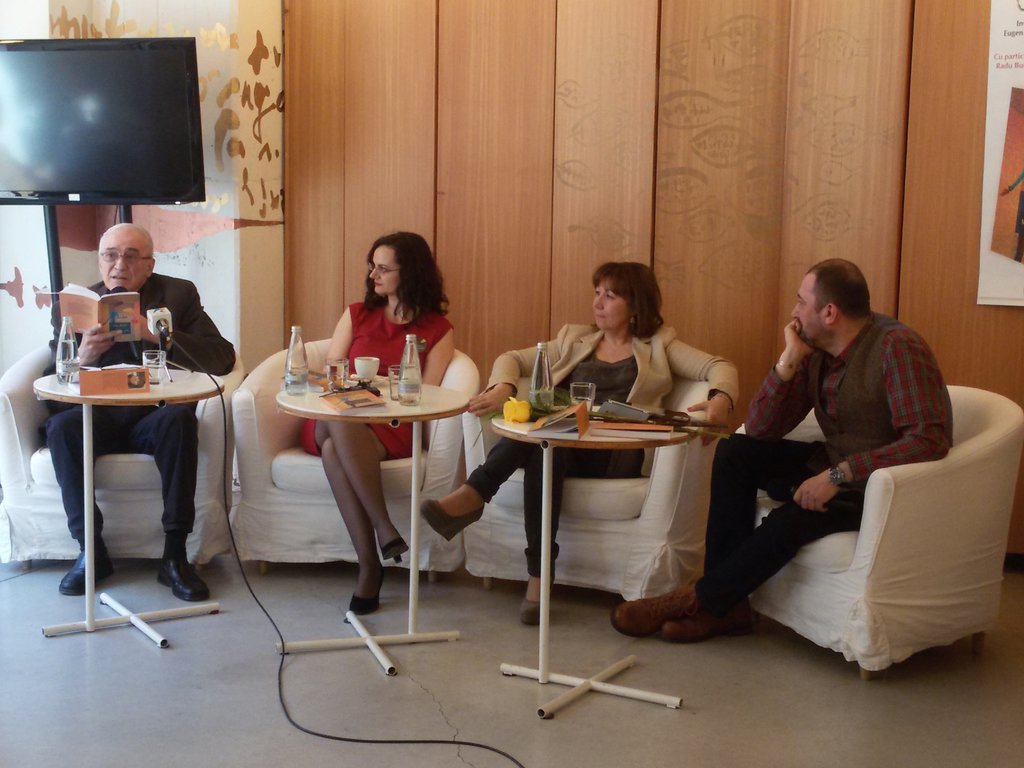
Humanitas: Doina Ruști with Luminița Corneanu, Eugen Negrici, Cătălin Ștefănescu
At the launch of the novel The Phanariot Manuscript, at the Humanitas Bookshop near Cișmigiu, in 2015.
Eugen Negrici and I have been friends for many years, but The Phanariot Manuscript bound us forever. We built together within the world of the novel. He was its first reader and its first supporter. He persuaded me to reconsider one chapter and to expand the references to Bozărie. More
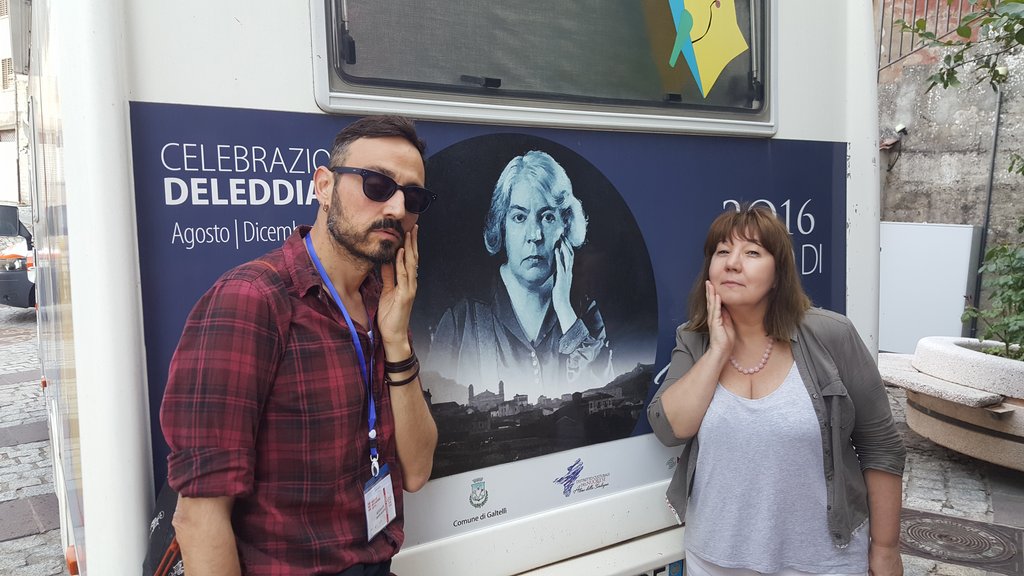
Sardinia, L’Isola delle Storie Festival: Doina Ruști, Roberto Merlo
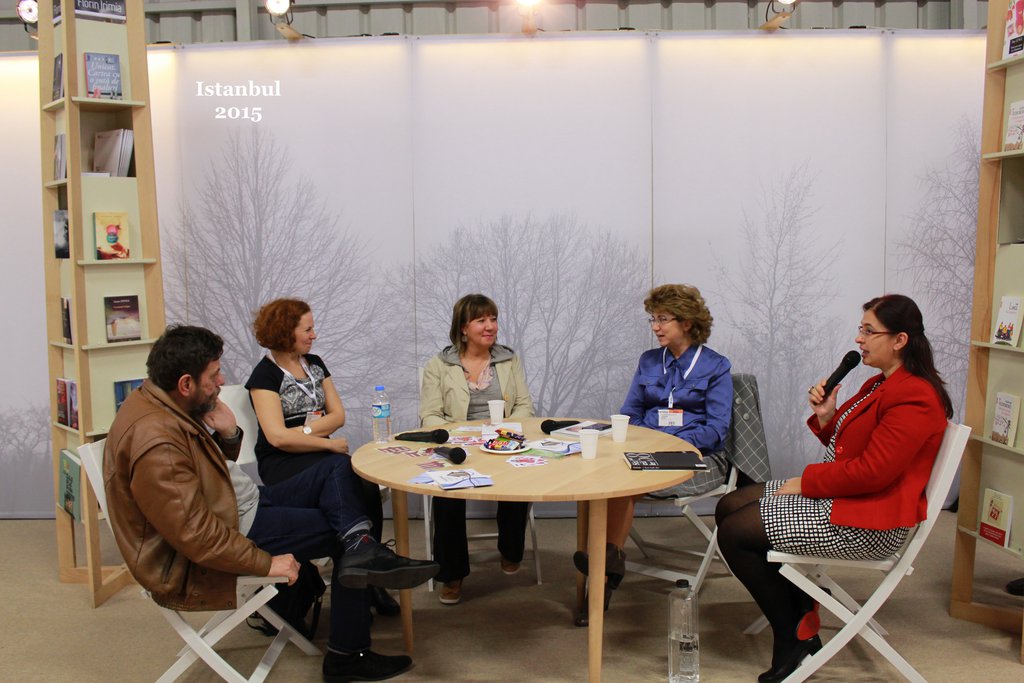
Istanbul Book Fair: Doina Ruști with Carmen Mușat, Corina Sabău, Octavian Soviany
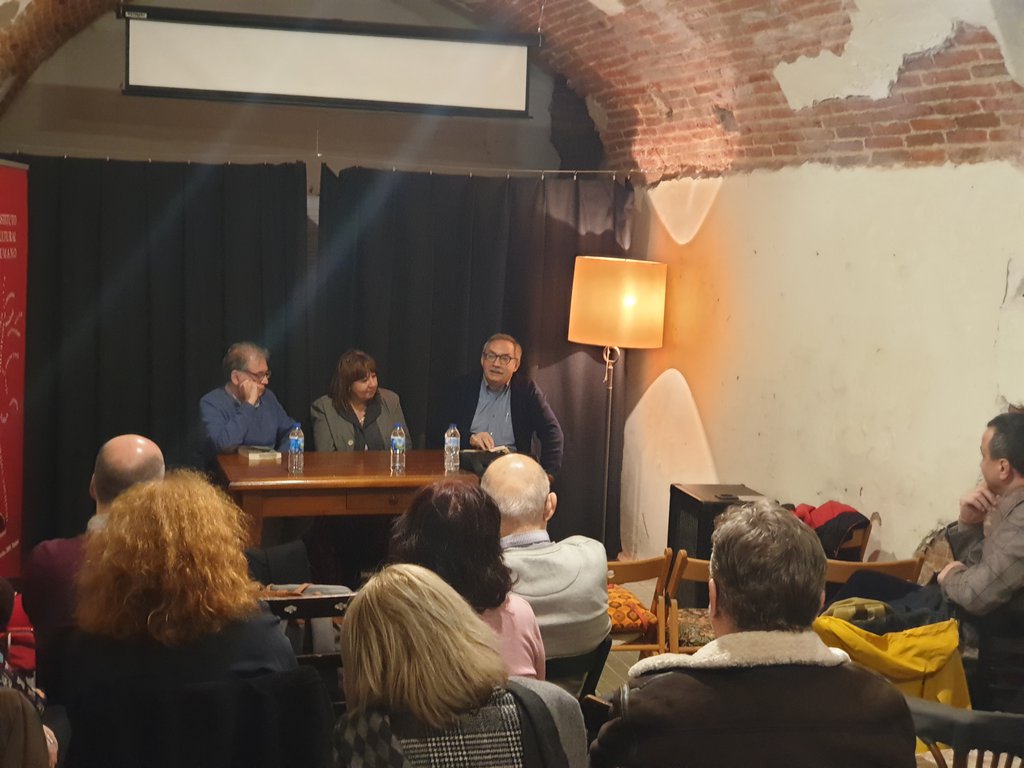
Madrid: Doina Ruști with Manuel Rico and Enrique Nogueras
“When I read Finkielkraut, I felt срод with him through a shared passion for small dramas, which define the collective attitude throughout historical time, but above all for the symbols that define the relationship between the individual and the community to which we genetically belong.”
Doina Ruști
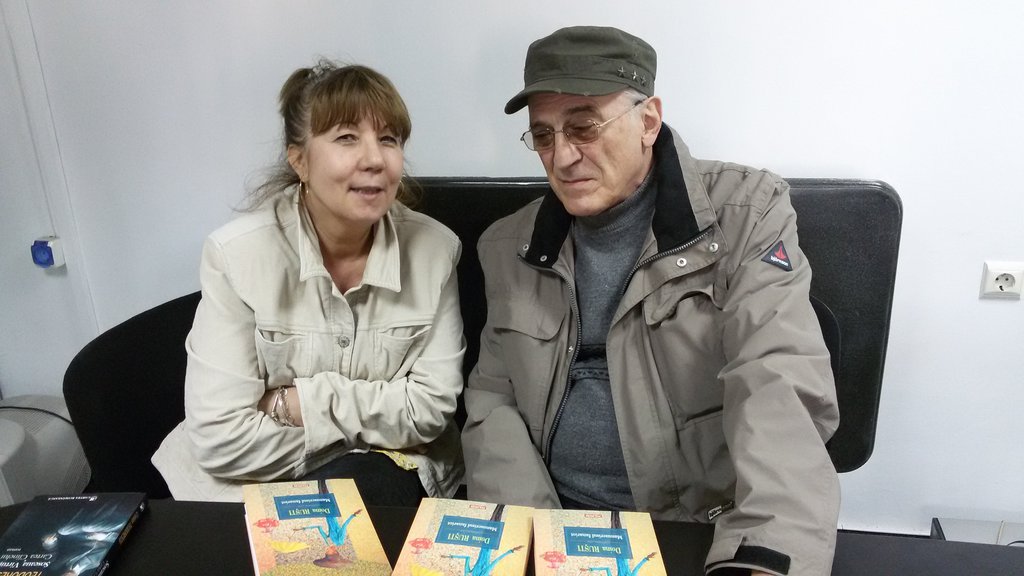
Polirom: Doina Ruști, Eugen Negrici
On the day The Phanariot Manuscript was published, I arranged to meet Eugen Negrici at the publishing house. He had written the text for the back cover. This photograph says everything about our conversation: Eugen looked sad, yet his inner vitality reached me. I looked cheerful, although the demons of the next novel in the Phanariot Trilogy, The Book of Perilous Dishes, were already circling me.
—Doina Ruști
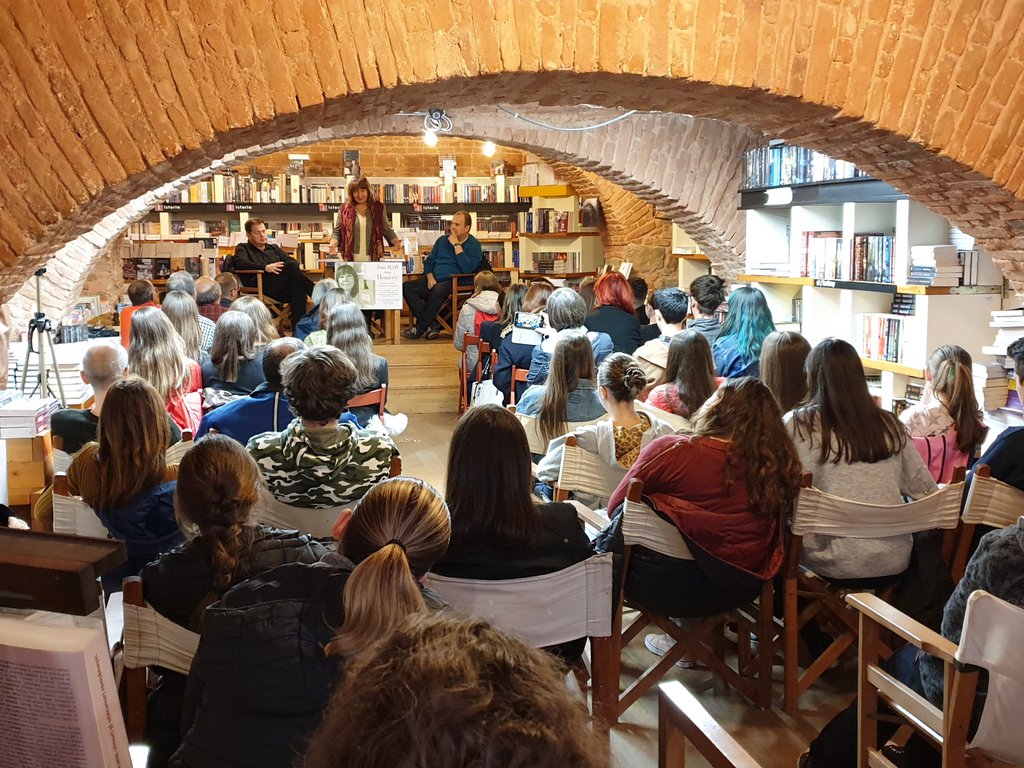
Humanitas Bookshop, Sibiu: Doina Ruști with Andrei Terian and Dragoș Varga, at the launch of the novel Homeric.

Cărturești Carusel, 2017 — launch of The Book of Perilous Dishes: Doina Ruști with Marius Constantinescu and Ovidiu Șimonca
“The one who defines themselves as an individual set apart from others faithfully embodies the image of alterity as a closed bastion—thus all the more enticing, all the more seductive.”
Doina Ruști
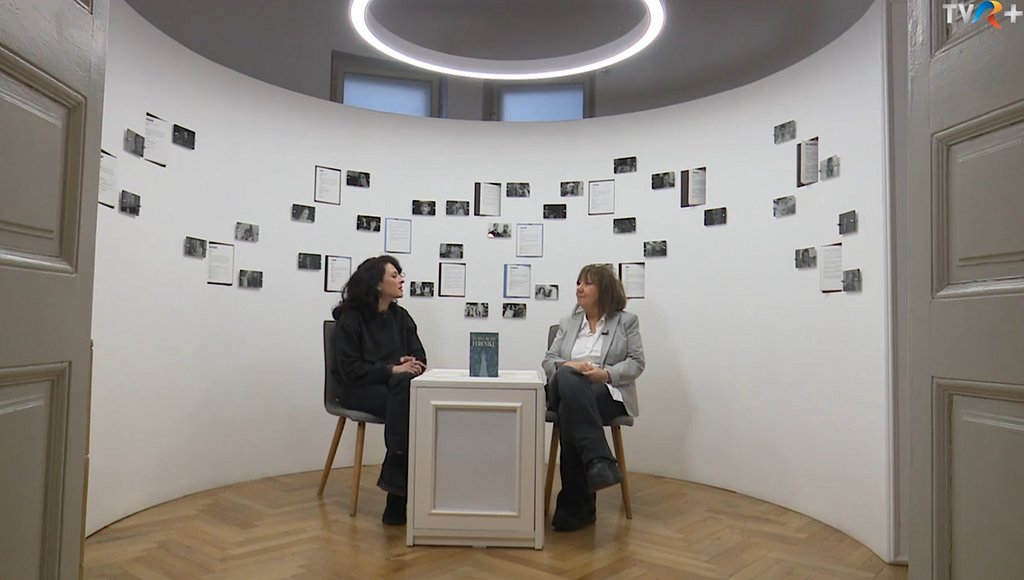
Museum of Literature: Doina Ruști and Adriana Irimescu: an interview TVR.
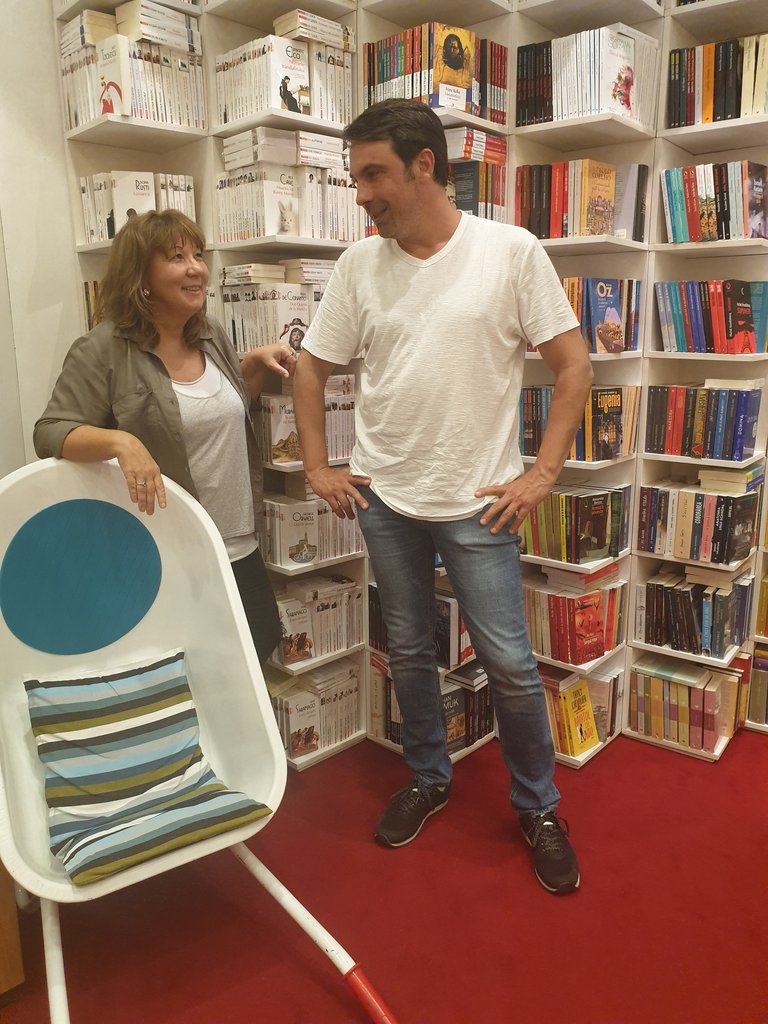
National Theatre Bucharest: Doina Ruști, Alexandru Papadopol.
Meeting at Librarium, Bucharest National Theatre, 2018.
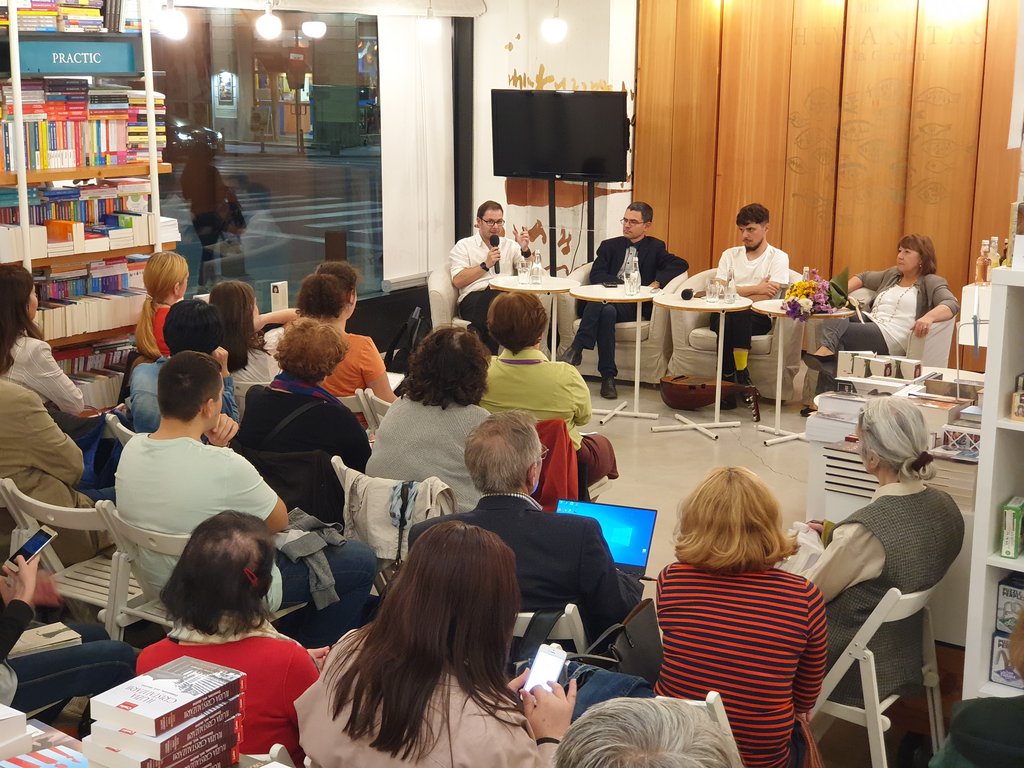
Humanitas Cișmigiu: Doina Ruști with Paul Cernat, Cosmin Ciotloș, and Bogdan Simion, the cobza player.
At the launch of the novel Homeric, at the Humanitas Bookshop in Bucharest.
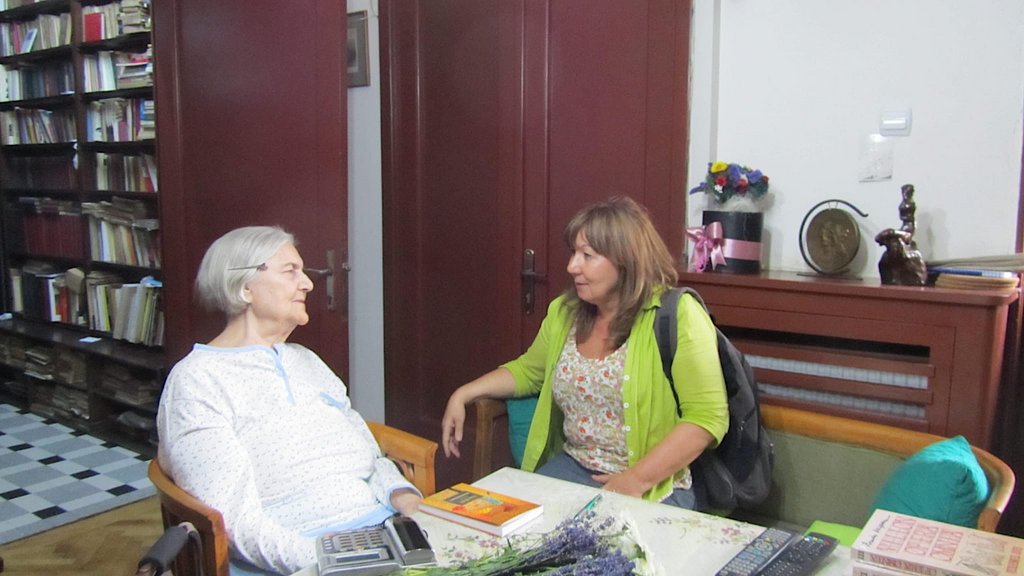
Doina Ruști, Ileana Vulpescu
“The last time I saw Ileana Vulpescu was not long before she passed away. We spoke about writers’ posterity; she knew that her readers would carry her name forward. She had compiled a catalogue of the valuable volumes in her personal library, which she donated to the Aman Library in Craiova.”
— Doina Ruști
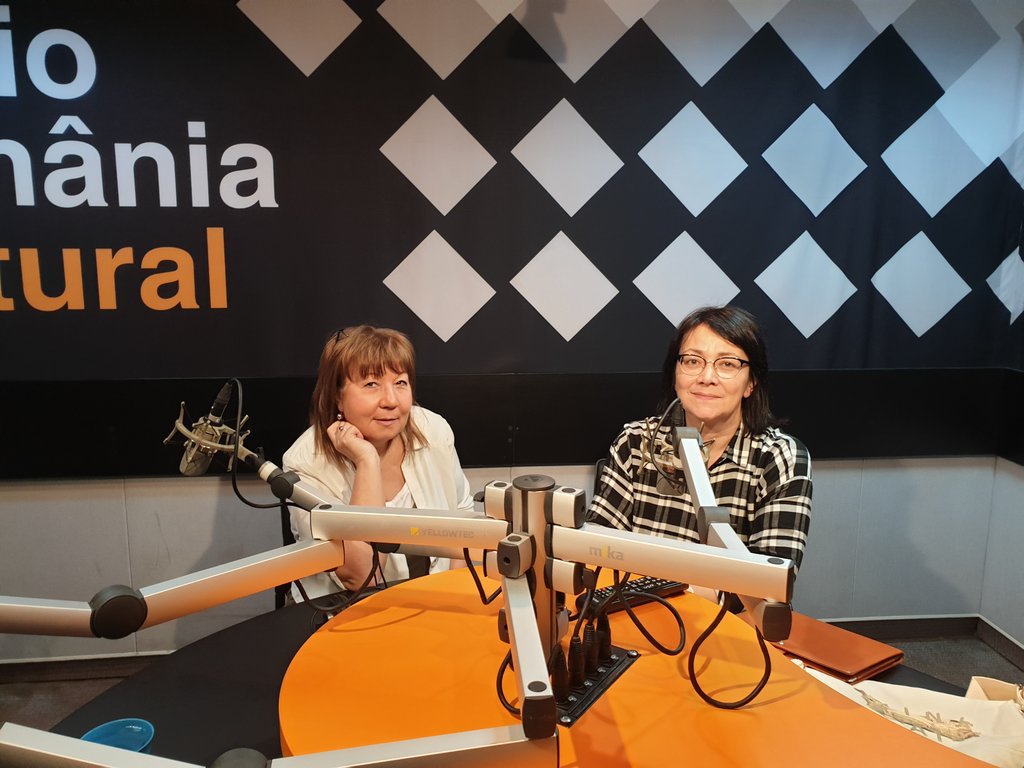
Radio România Cultural: Doina Ruști with Ema Stere
“In his monumental work on magical medicine, I. A. Candrea explains that all the communities nestled within a nation are endowed with miraculous powers, sustained by the myth of the stranger; for instance, Germans believe that Jews can cast the evil eye, while for Romanians the Roma are thought to gather malevolent forces. In general, the nomadic population, without a stable territory, or the simple exiled being acquires special meanings; in Joyce’s novel Ulysses, the main character is Jewish—that is, an exile in his own homeland—because the message of the work subtly pleads for the liberation of Ireland. Likewise, Ion Budai-Deleanu, through the epic Țiganiada, creates a parable of an estranged Transylvania. What a waste, and what passion.”
Doina Ruști
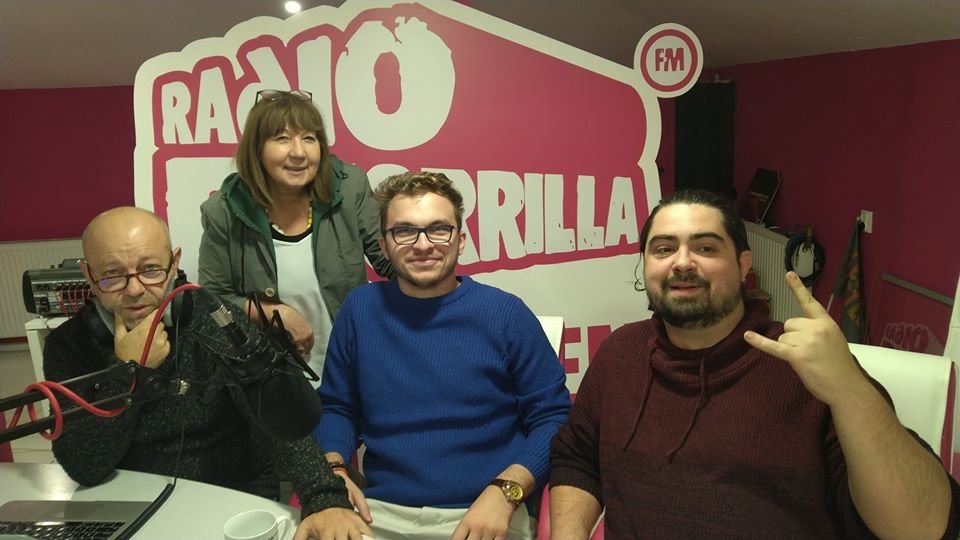
Radio Guerrilla: Doina Ruști with Liviu Mihaiu, Andrei Ruse, Emanuel Iavorenciuc
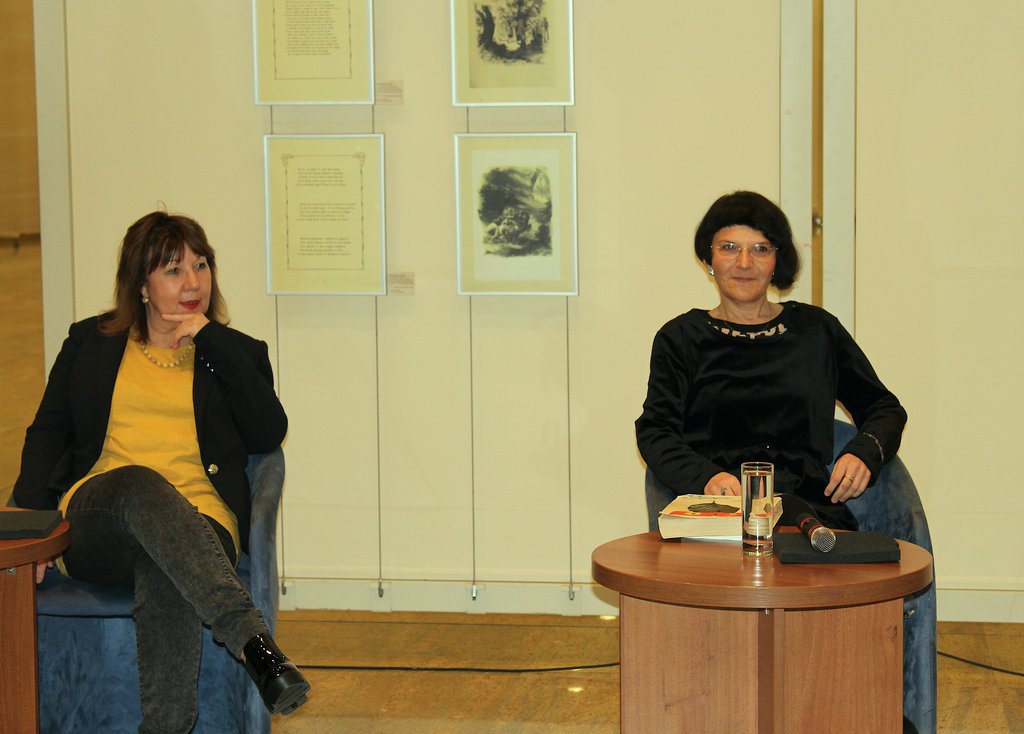
National Library: Doina Ruști, Ioana Pârvulescu
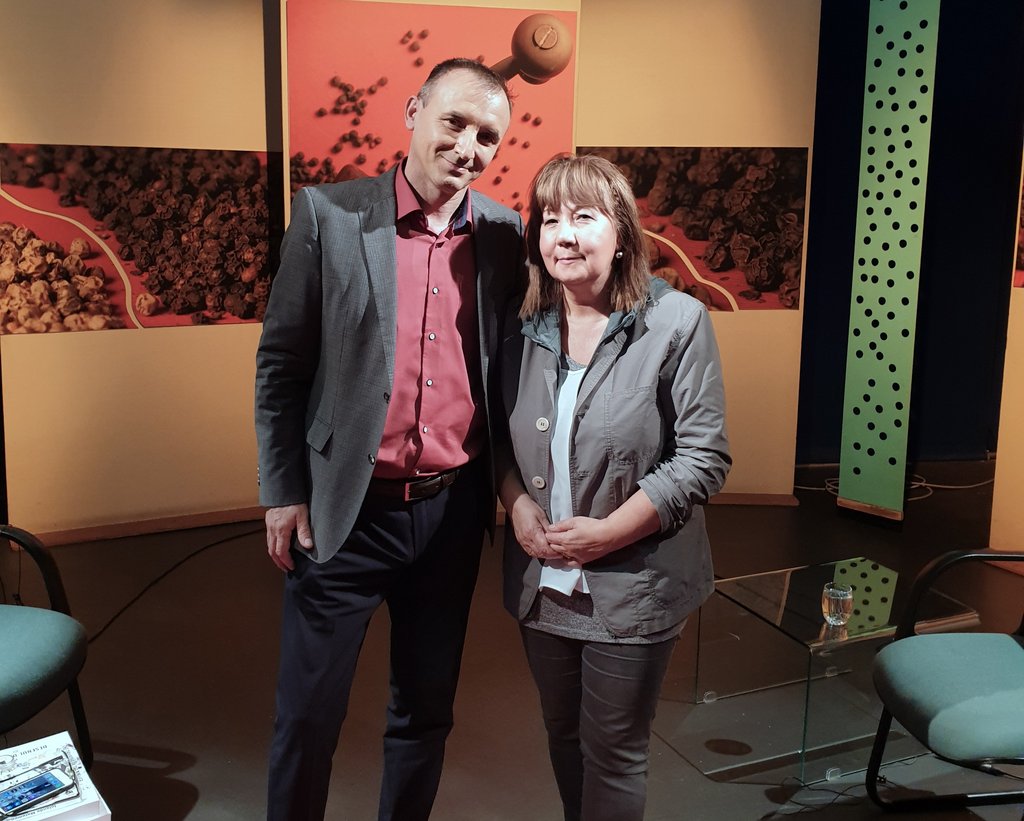
TVR: Doina Ruști with Robert Șerban, la Timișoara
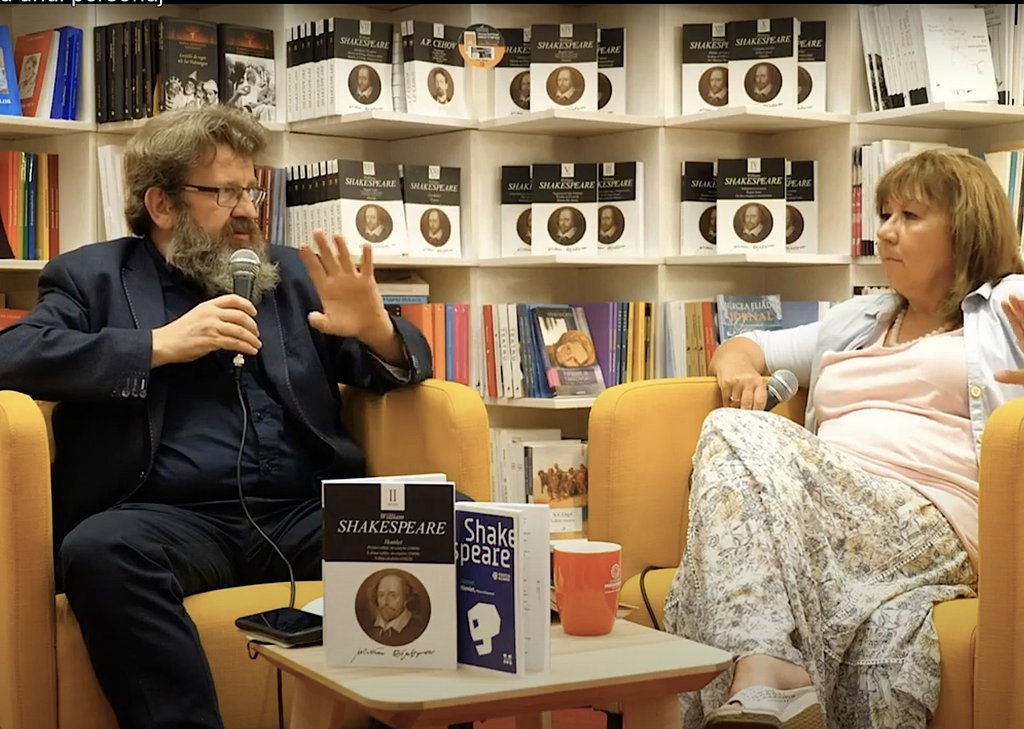
National Theatre Bucharest, The Story of a Character: Doina Ruști and Adrian Titieni
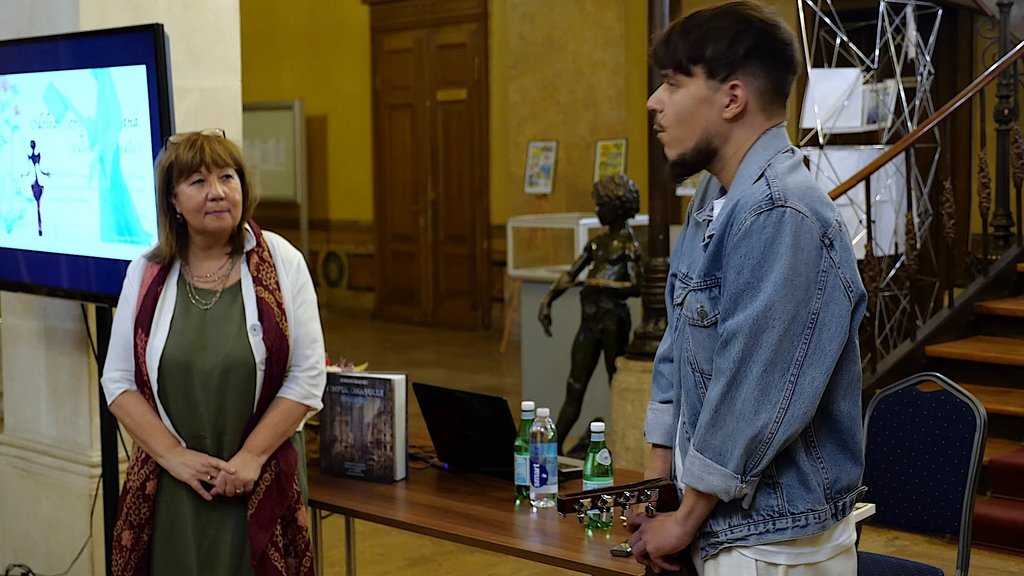
Suțu Palace: Doina Ruști and Bogdan Simion (Cobzarul)
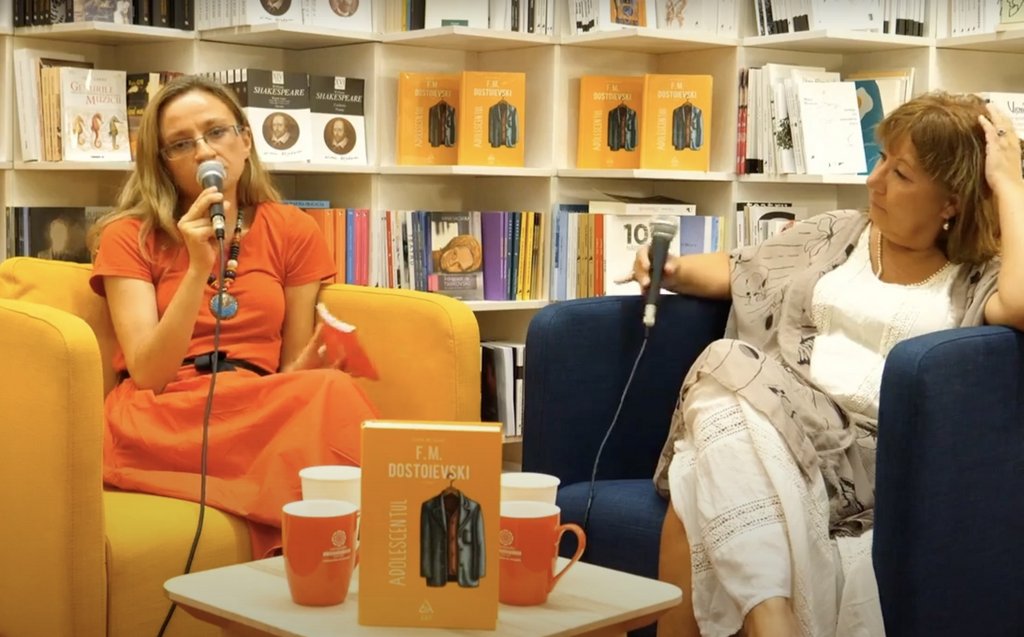
National Theatre Bucharest: Doina Ruști and her guest Bianca Burța-Cernat
“The stranger is the one compelled to identify themselves, but also the one who can enter the universe of the self—abusively (as an enemy) or through seduction (as a guest). The being’s chance of establishing a beneficial connection lies in receiving the Other in the name of a perfect hospitality. Thus one arrives at Derrida :)”
Doina Ruști
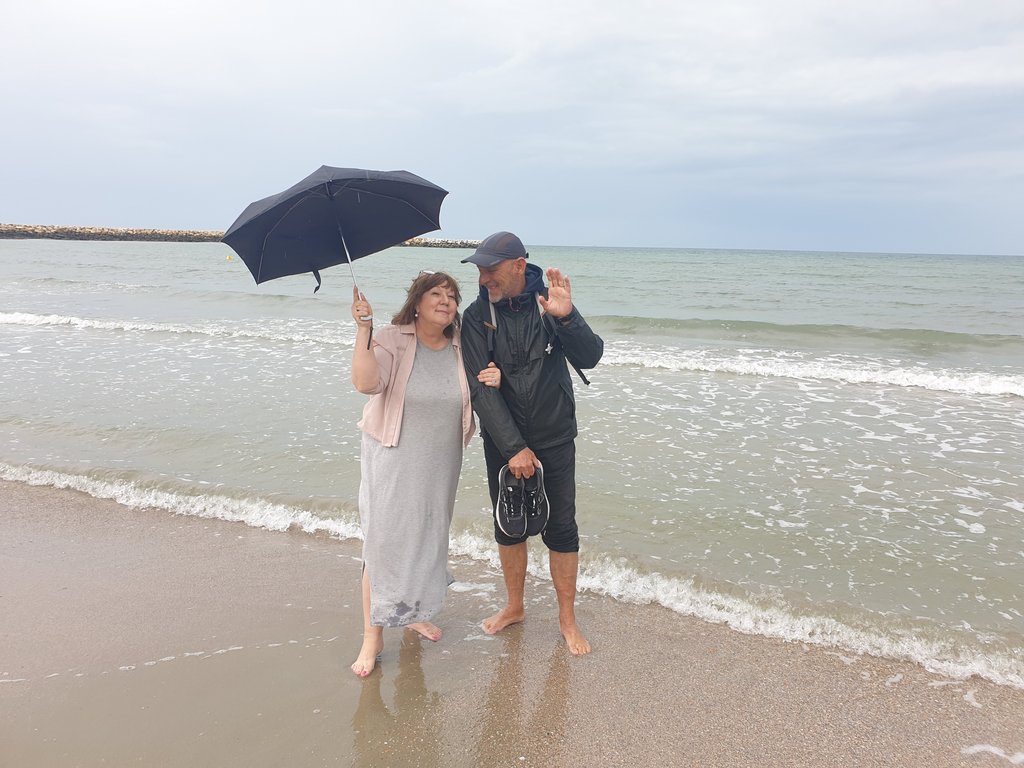
Ficțiunea Awards, Constanța, 2022: Doina Ruști, Radu Aldulescu
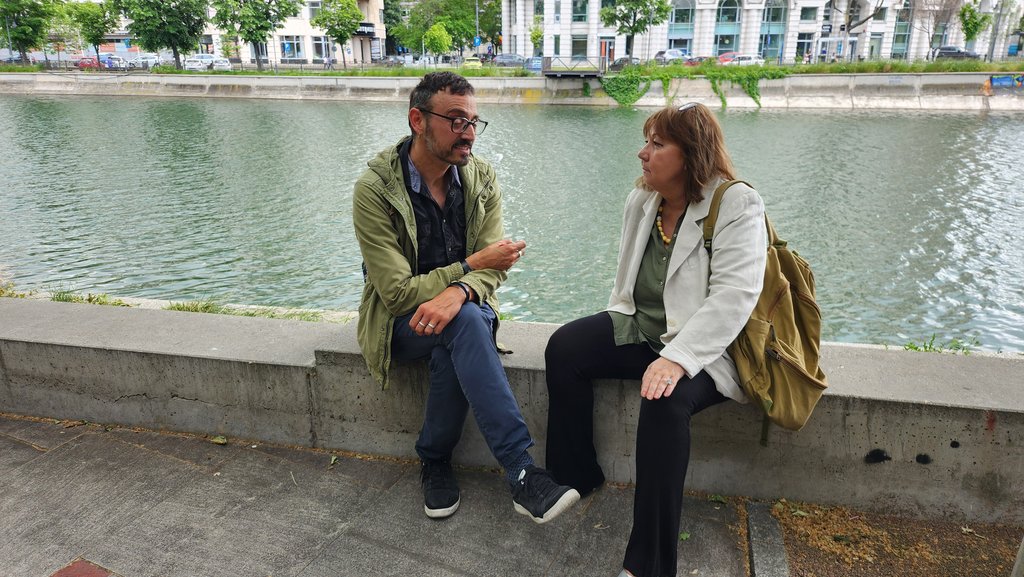
Bucharest, on the Dâmbovița riverbank: Doina Ruști and Roberto Merlo
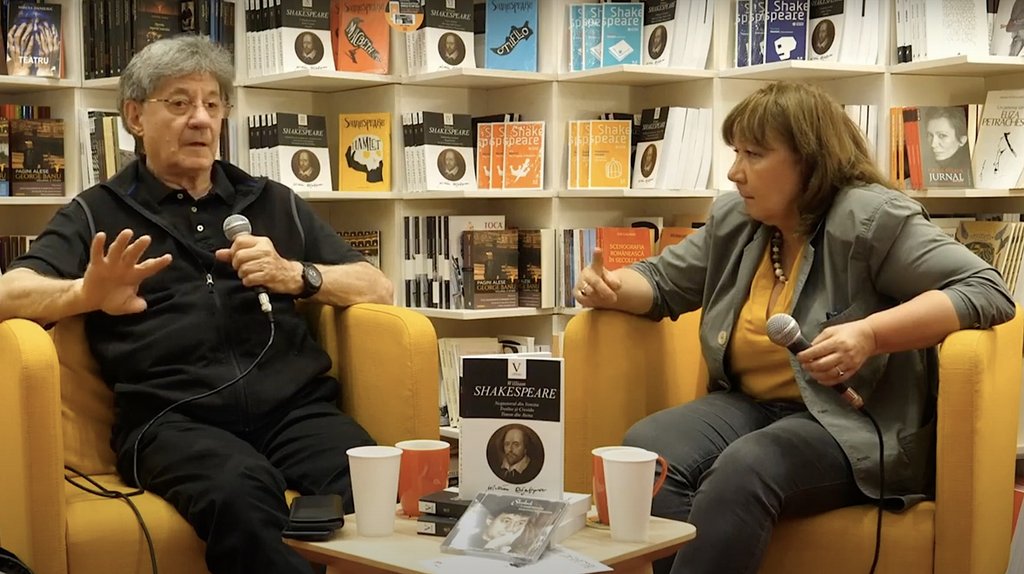
At the National Theatre Bucharest (TNB): Doina Ruști and Ion Caramitru, in a conversation about Hamlet.
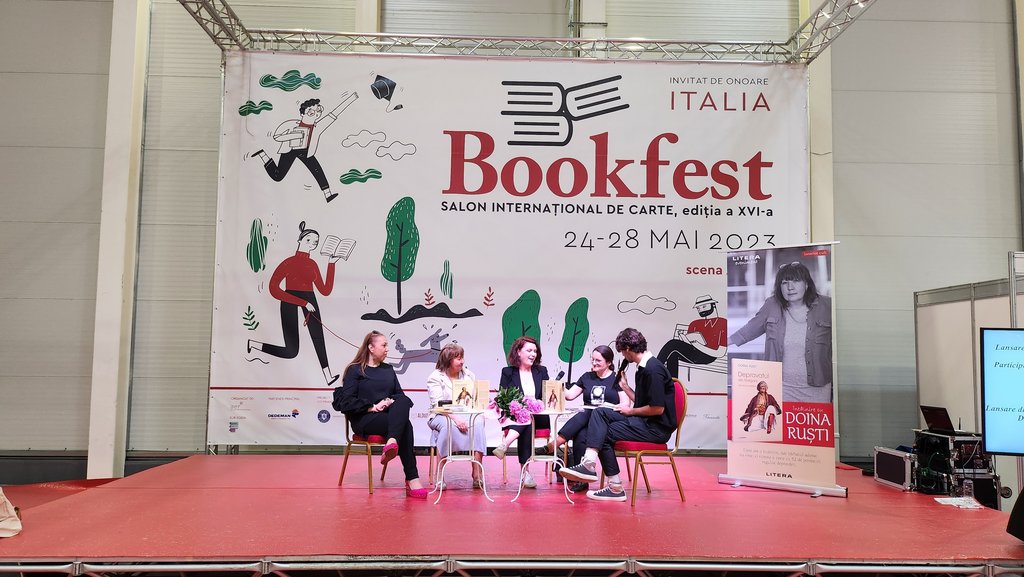
Bookfest 2023: Doina Ruști, Camelia Văcaru, Ema Ilie
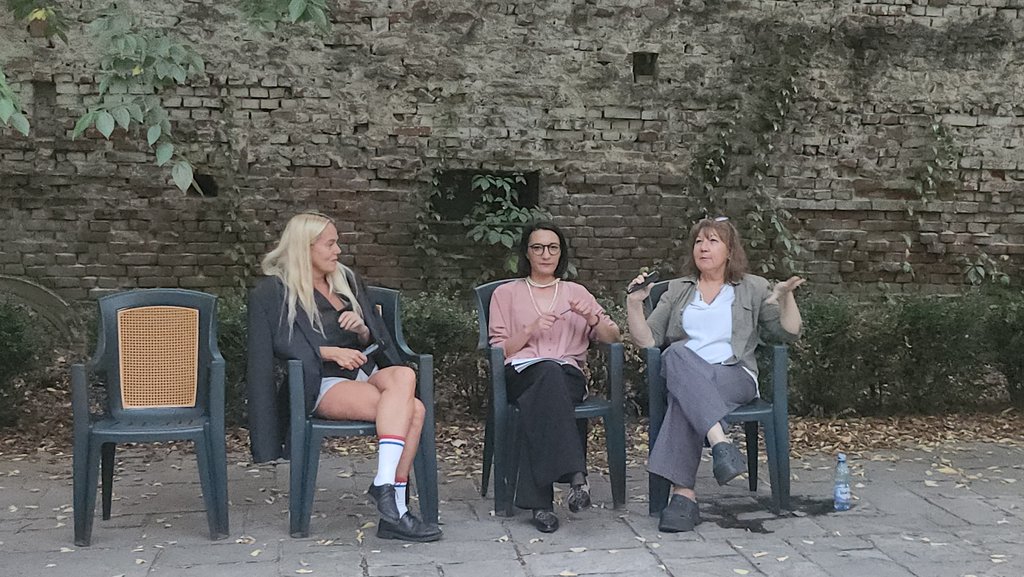
Cesianu Garden: Doina Ruști, Carmen Lidia Vidu
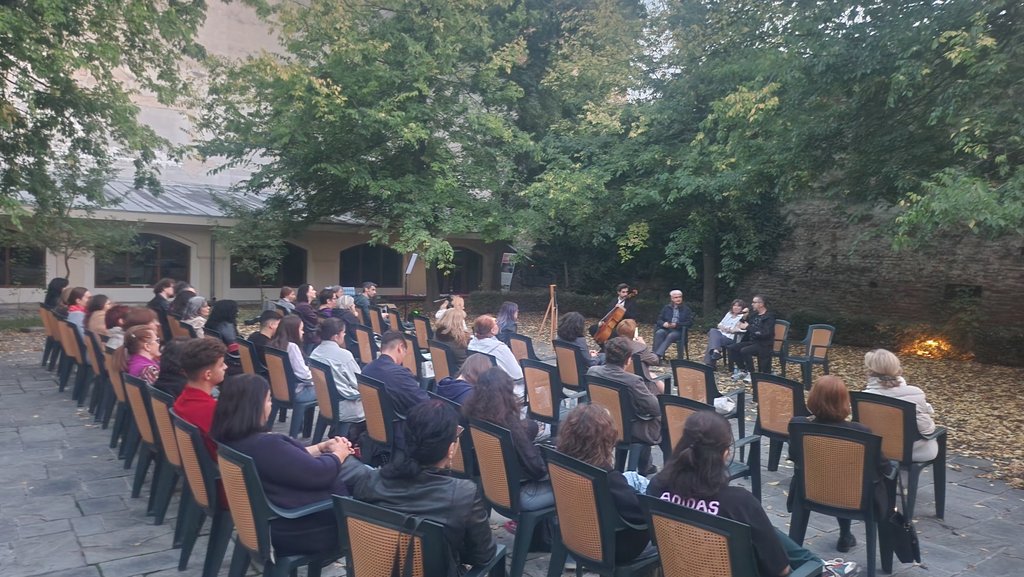
Cesianu Garden: Doina Ruști cu Vasile Ernuși Adrian Majuru
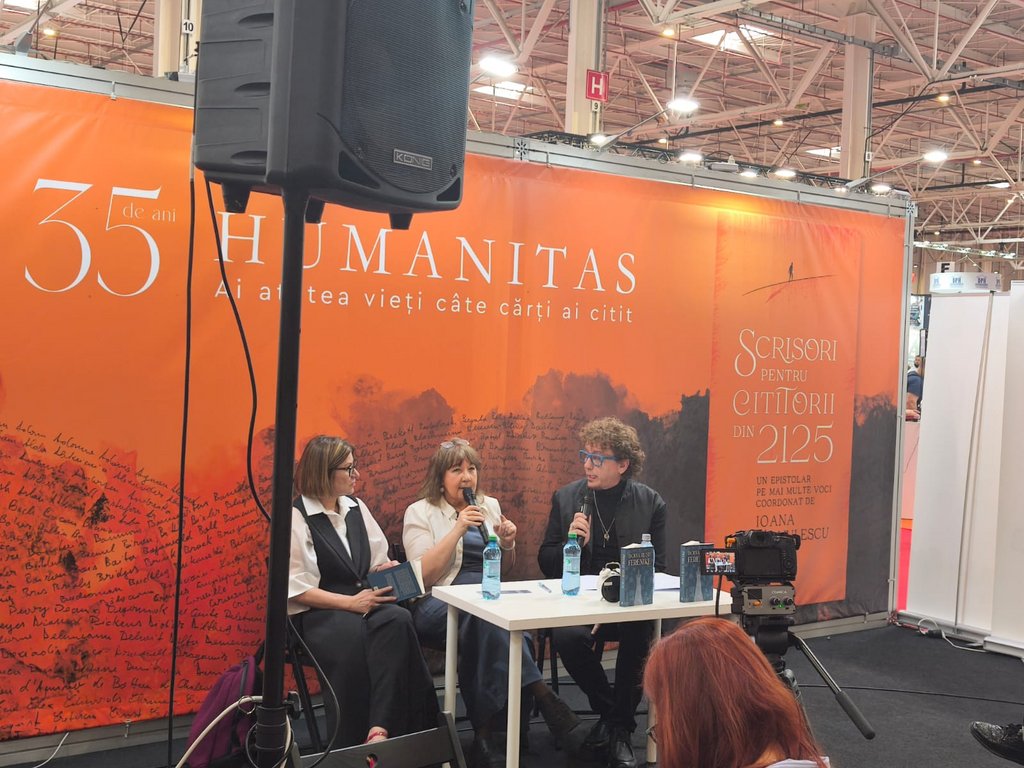
Bookfest 2025: Lidia Bodea, Doina Ruști, Bogdan Stănescu & Ferenike.
“Both the seducer and the parasite or the warrior are faces of alterity, toward which the individual should behave according to the laws of Greek hospitality—namely, with politeness, obligation, and caution.”
Doina Ruști
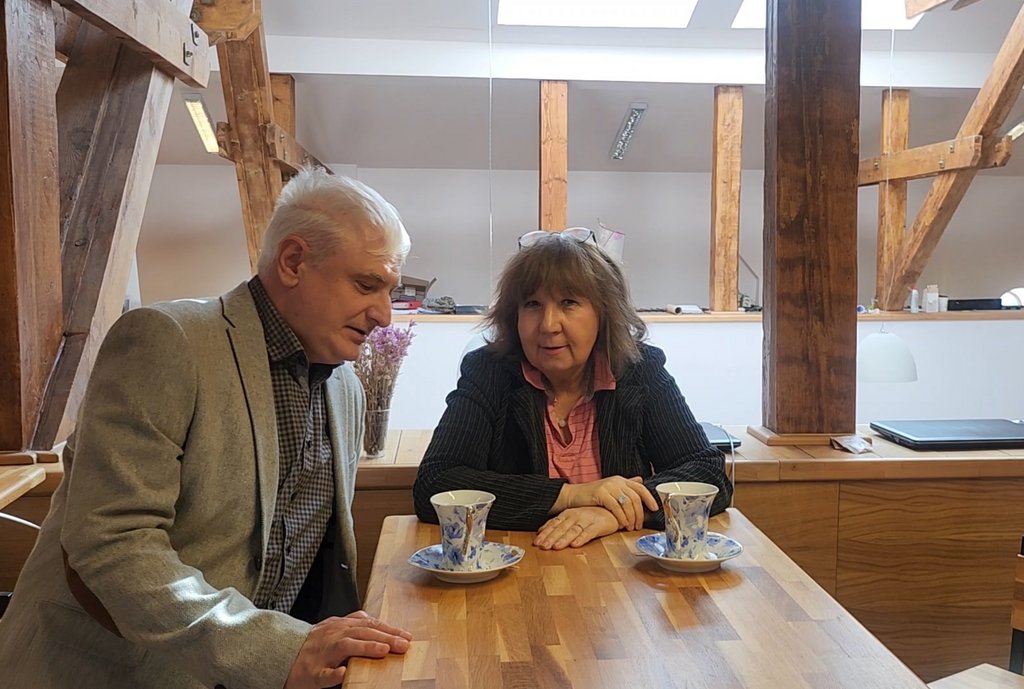
Doina Ruști și Adrian Majuru, la Casa Filipescu-Cesianu din București, în timpul filmărilor pentru podcastul Iubiri din București.
Antropolog, prozator și autor al unor importante studii dedicate Bucureștiului, Adrian Majuru organizează, împreună cu Doina Ruști și revista Ficțiunea, întâlnirile din grădina Casei Filipescu-Cesianu.
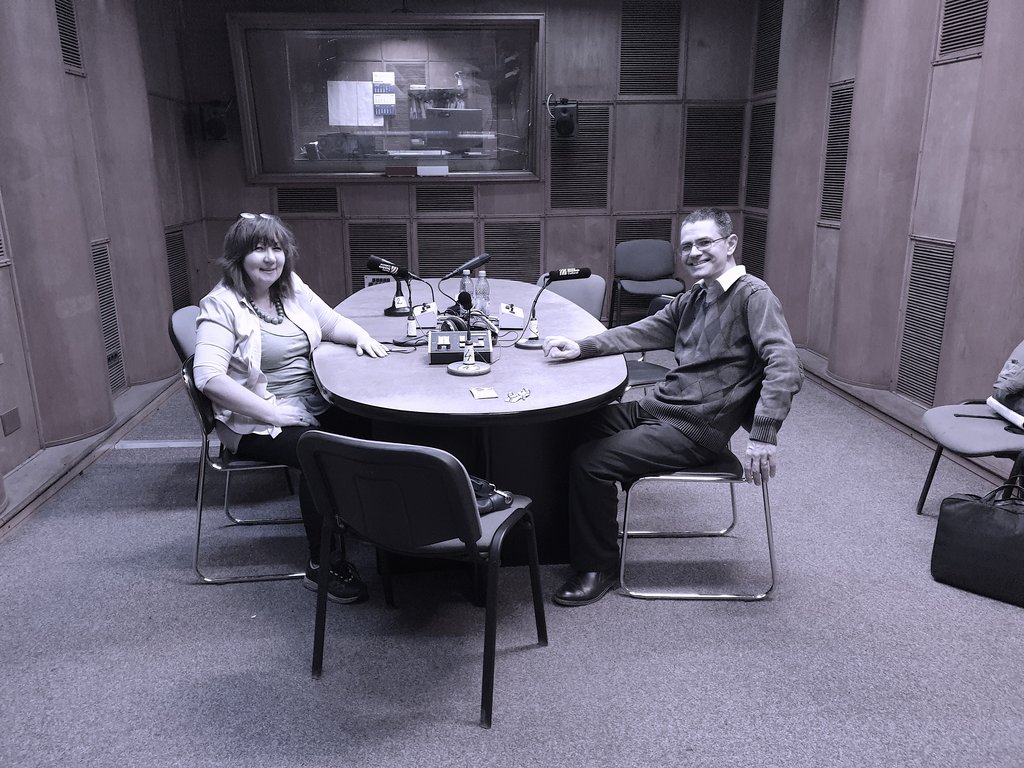
At Radio România Cultural: Doina Ruști and Paul Cernat, on the occasion of the launch of Ficțiunea OPTm magazine, in 2020.
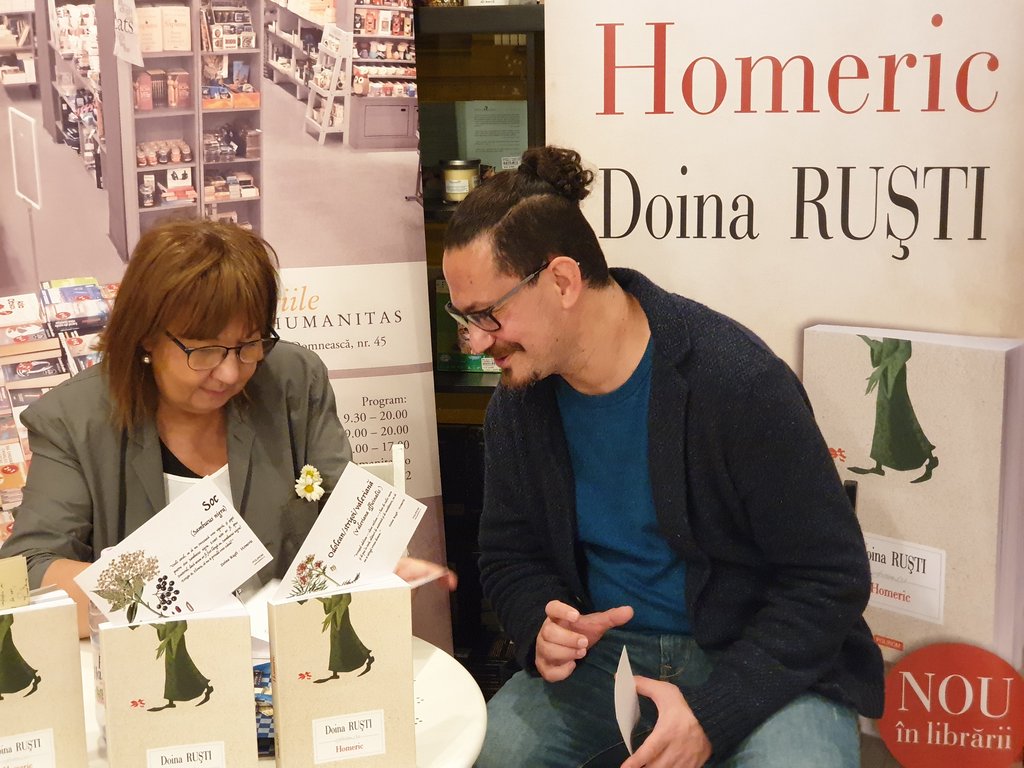
Humanitas Galați: Doina Ruști, Andrei Velea
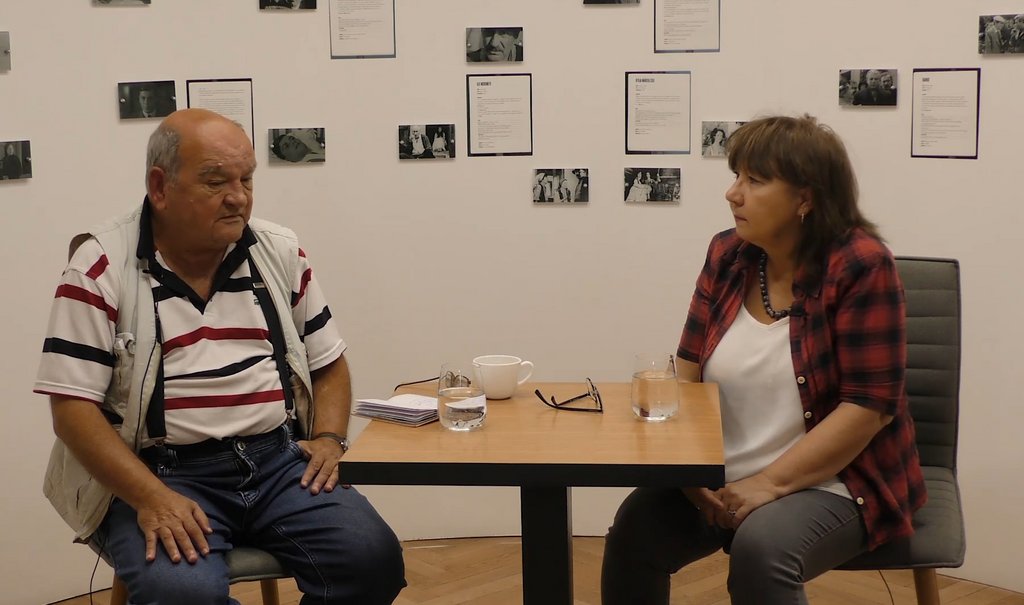
Museum of Romanian Literature: Doina Ruști, Ioan Groșan
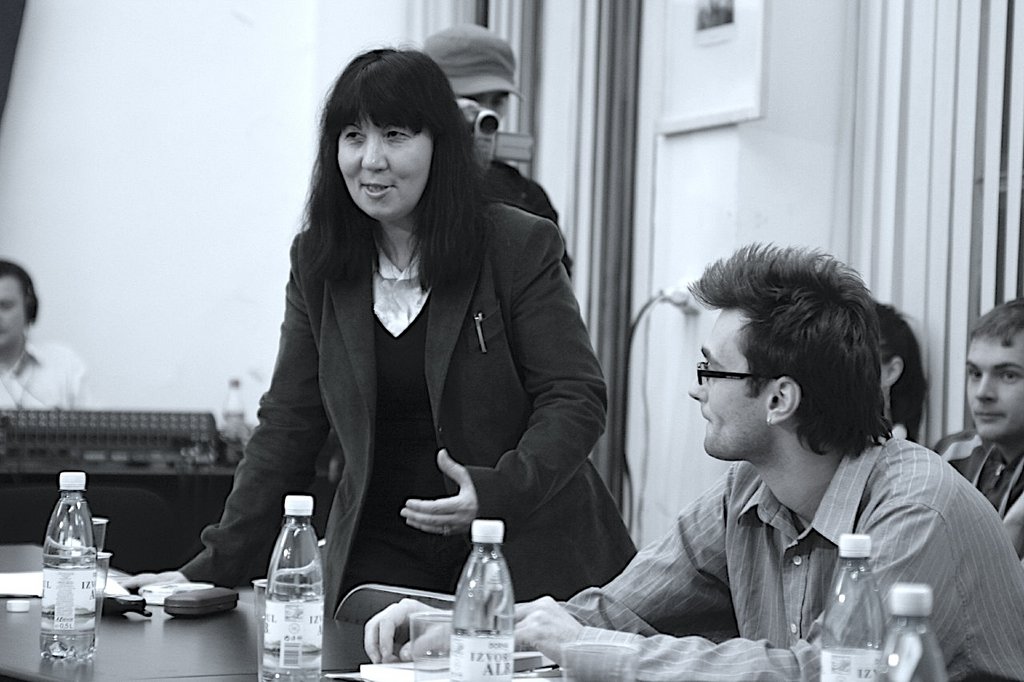
Media University: Doina Ruști, Răzvan Țupa, 2007
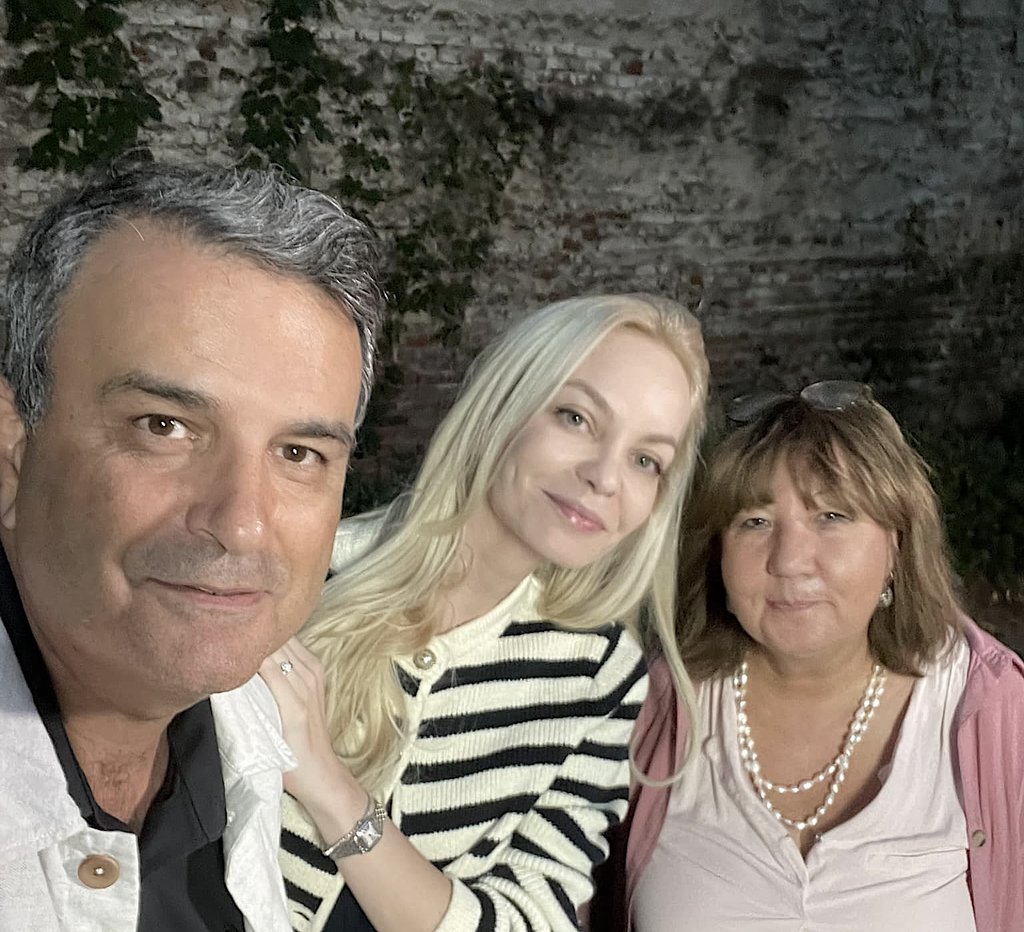
Cesianu Garden: Doina Ruști, Roxana Dumitrache and Lucian Mîndruță
“In Derrida’s view, the Other becomes hostile insofar as they are treated as an offender who enters illegally into the territory of ipseity. The stranger is perceived as a threat, especially because they carry with them the phantasm of the intimate dwelling—the mother tongue.”
Doina Ruști
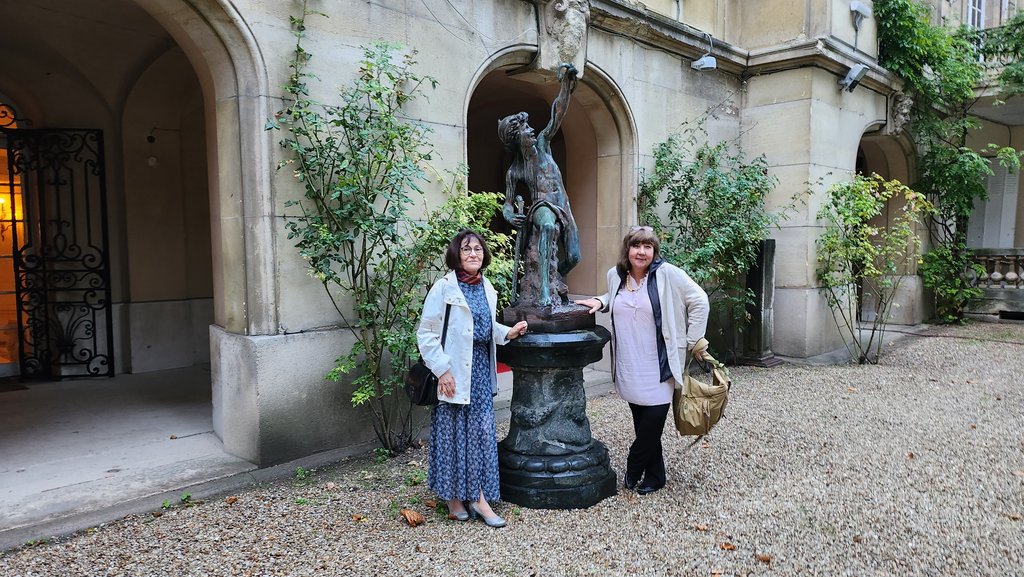
Romanian Embassy, Paris: Doina Ruști, Florica Courriol
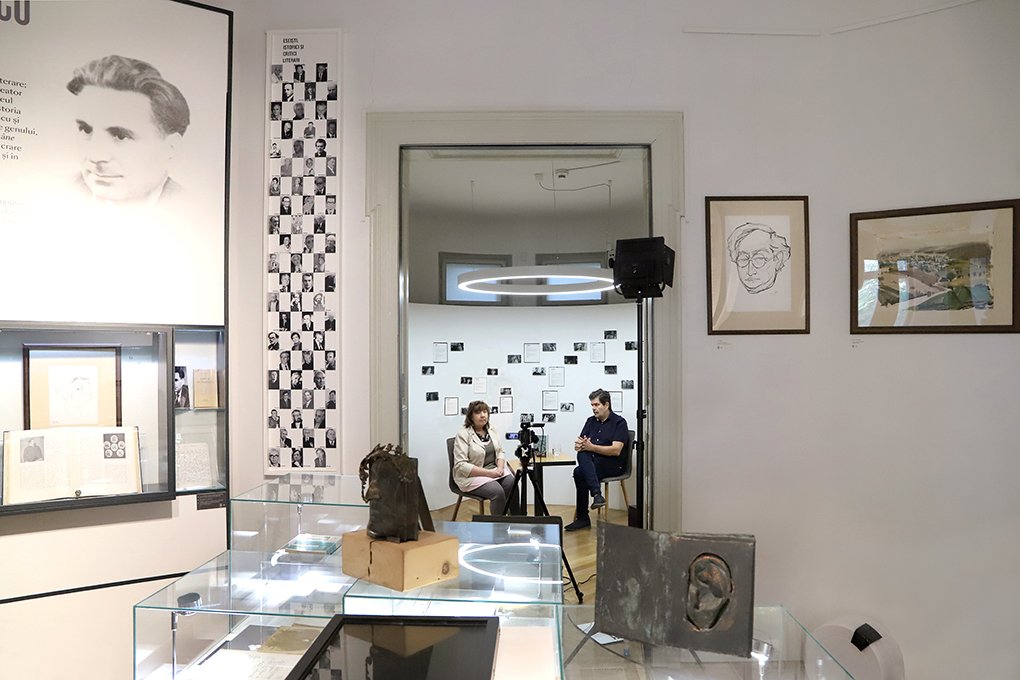
Museum of Romanian Literature: Doina Ruști, Radu Paraschivescu.
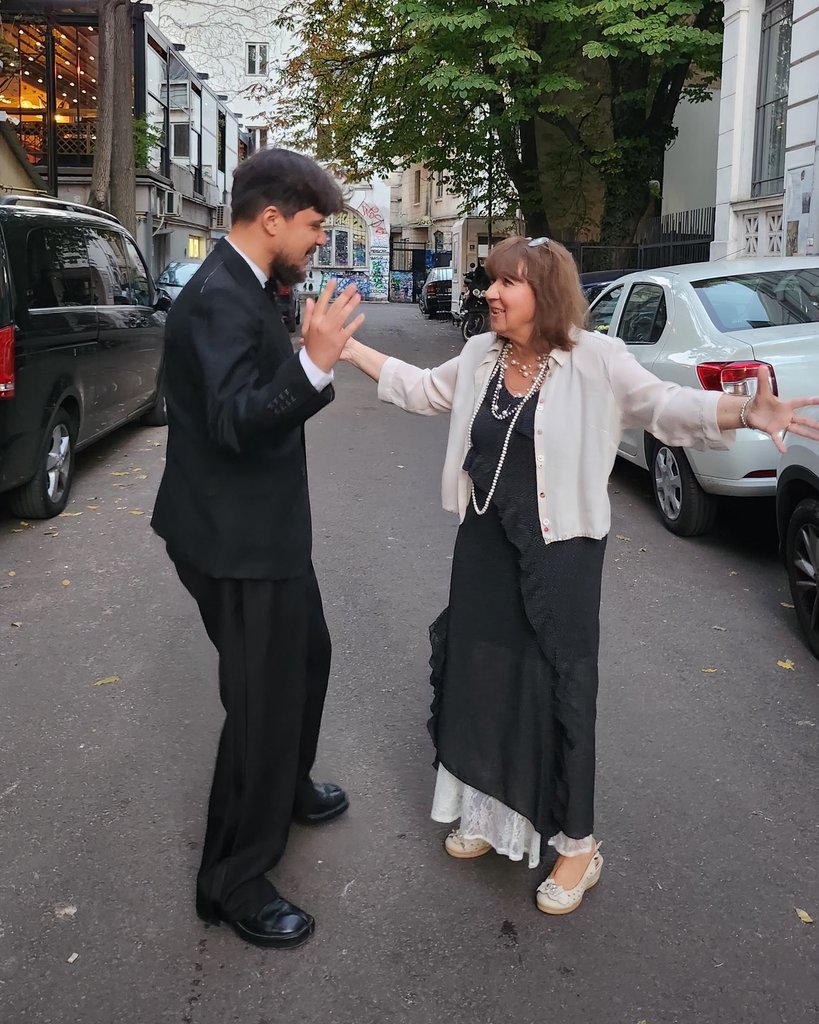
Museum of Romanian Literature: Doina Ruști and Bogdan Simion (Cobzarul), before the launch of the novel Zavaidoc in the Year of Love
“The stranger, Derrida said, signals his drama, and through this becomes a clearly defined symbol of alterity; the stranger is the Other canonized, defined as a singular individual and placed in the position of a guest. Both as a theme and as a symbolic archetype, the stranger constitutes a frequent figure of indisputable alterity in literature as well. A divine messenger or an ancestor returned to their origins, any stranger arouses interest as an unknown being and a potential bearer of essential mysteries. The unknown that appears unexpectedly is both seductive and dangerous in equal measure. Every encounter, even with old friends, implies a confrontation, an adventure.”
Doina Ruști
See also
Writer photo gallery


