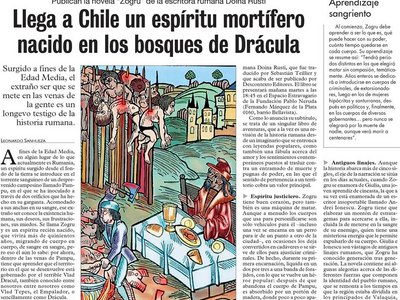
I first read Doina Ruști more than ten years ago, and at the time I wrote enthusiastically about her novel Zogru(Polirom, 2006) in the books section of Time Out Bucharest. Reading that novel, I felt there was a need to reinvigorate prose with fantastical insertions, which in Romania had remained anchored in the Eliade–Voiculescu moment, with a single notable exception in my view: the prose of Ștefan Bănulescu. I believed that Doina Ruști’s writing might reconnect this tradition.
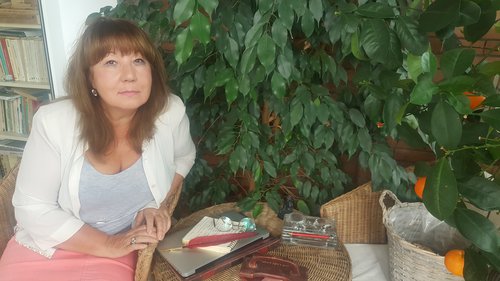
Since then, however, the prose writer Doina Ruști has evolved in many other directions, drawn to still-unexplored territories and to themes that are as provocative as they are original. If her early books — The Little Red Man (Vremea, 2004), Zogru (Polirom, 2006), and The Ghost in the Mill (Polirom, 2008) — move in the direction of the fantastic prose I mentioned, Lizoanca at Eleven (Trei, 2009) and The Fiancée (Polirom, 2017) head toward a kind of non-fictional prose in the vein of Truman Capote. Meanwhile, The Phanariot Manuscript (2015) and Friday’s Cat (2017) explore baroque territories in which fantasy and meticulous detail are the key elements.
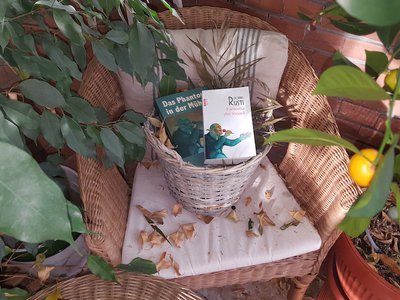
Reading Friday’s Cat - The Book of Perilous Dishes - recently, where culinary details abound, I thought the author would enjoy our small dialogue under a gastronomic pretext — and I was right: she did. You will see just how much in the answers below. Bon appétit, and happy reading!
Mr. Hot Pepper — a man, of course. I have never been able to imagine a woman in the role of a cook: only a man, emotional, with a mind full of poems.
It comes from my mind and my desires, from childhood and from kitchens that lured me with their smells. In The Little Red Man, the main character, Laura, is a Latinist, unemployed, who finds no other job except in a family’s kitchen. Since she does not know how to cook, she invents all sorts of dishes that intrigue her employers. Continuing along these lines, the titular character of Friday’s Cat writes a witch’s cookbook entitled The Book of Perilous Dishes, without actually knowing how to prepare any of the recipes, because true gourmets establish spiritual relationships with the realm of the kitchen. For her culinary dreams there exists a dark, dreamy cook: Silică.
First of all, I started from a cookbook from the court of Brâncoveanu. Then I gathered recipe fragments from folklore books and even from medieval zoologies and botanies. Reading Insects by Simion Florea Marian, I found a mention of the therapeutic effects of fireflies: brewed as tea, they can cure stupidity. 🙂 I liked the prescription, and from there I moved on to others. In Romanian beliefs, basil added to salads helps ward off depression, while bread covered with horseradish leaves strengthens faith.
Beyond folklore, there was, of course, my own experience — above all the kitchen of my childhood — which taught me not only to value flavors but also to understand life, since nowhere is a community’s imaginative openness more visible than in its culinary preferences. In our house, food was tied to an ancient calendar that had sustained not only the bloodline but also the strength to accept the meanings of decay.
Of course. Any crisis situation stimulates creativity.
Something from The Book of Perilous Dishes — for instance, fur-coated quail. For this, you first need many cockchafers. It is delicate work, but it doesn’t take long. The beetles are gathered in trays and thoroughly doused with mint liqueur until none of them moves, then placed in the oven. Once they are well dried and brittle, they are crushed with a wooden pestle until they become powder.
Only then do you take the quail, clean them, and lavishly coat them with a garlic paste seasoned with orange juice. Finally, they are rolled in the cockchafer powder until they look like furry creatures — hence the name. They are baked in the oven in a wave of ordinary sauce until they develop a crunchy crust.
This is a good dinner dish, necessarily served with wine and eaten by the light of a small green candle. The candle itself must be kneaded from pure wax mixed with sage. As the sweet quail meat, perfumed with garlic, melts in your mouth, the ghosts of the cockchafers begin to stir at your temples, igniting those desires you were afraid to believe in. This dish has the gift of lifting any weight from your mind.
Voiculescu. For a long time meatballs held first place, but I’m trying to restrain myself. 🙂
All the food I know comes from my grandmother, but among all of it, acacia-flower sherbet remains in the fierce fog where nostalgia lies. I remember how the white paste spun madly, leaving behind a desperate acacia scent, which unwillingly opened all my eyes toward the blue spring sky — I mean that sky in front of the house, leading southward: pale and melted into the blossoming crowns of our acacia trees.
I like crispy roasts, crayfish kept in garlic brine, and catfish soup. Two hundred kilobytes wouldn’t be enough to tell you everything I like.
I despise pasta. It reminds me of harsh days when I ran breathless to catch a few fried potatoes. The cafeteria was full, and on the students’ faces hovered an iron unhappiness that told me at a glance that only greasy plates of macaroni were left on the line, over which a cynical hand poured a red sauce with two scraps of mutton. I hardly need to add that I eat neither sheep nor lamb.
A fragment from the feast of the boor Trimalchio (Satyricon, Petronius). There were not many people in the salon yet, and those who had arrived early, like me, were already stuffing themselves. In the saddlebags of a bronze donkey gleamed black and green olives. Then the trays began to flow, carried by tall Ethiopians, silver platters on whose rims Trimalchio had engraved his name large enough for even a blind man to see.
Among the good things heralding a splendid feast were peahens sitting on eggs, pieces of meat drowned in garum, quail threaded onto gold rings. As the slaves brought the food, the room filled with those smells that punch holes in your chest. An egg would have suited my appetite perfectly, but it soon proved to be made of dough, and inside it slept a beccafico smeared with yolk.
And together with the great temple of the twelve zodiac signs, made of choice dishes, musicians appeared, inflamed by the song of a guilty love. I searched anxiously for my zodiac sign, fearing they would shove an eel down my throat again, as last time, but I sighed with relief when I saw that under Aquarius stood a proud wild goose, adorned with a cap of melon rind. In this moment of hubbub, when everyone was thinking what to hide in their toga, Trimalchio himself appeared — bald, wrapped in scarves, waving his ring-laden fingers — and gestured for us not to spare our bellies.
I drink tea — always almost cold — after all the buzzing thoughts have left it and all desires have died. Beside one of the sofas I keep a small, mobile tea table with two tiers: utensils below, the cup above — which I constantly change, since any ritual requires a new vessel. 🙂
I don’t like drinking in tearooms, with people bustling around my ears, staring at me, demanding inspection in return. If I’m not at home, I prefer a “carton” tea from a gas station, something I can drink wherever I please — in the car, for instance. When I drink tea, my brain warms up, and from its invisible fissures thoughts of silk begin to flow.