Romanian novelist Doina Ruști was among the authors invited to the Leipzig International Book Fair, one of Europe’s most important publishing events. At this edition, Romania was the guest of honor, bringing together a large group of contemporary Romanian writers through a series of readings, debates, and meetings with readers.
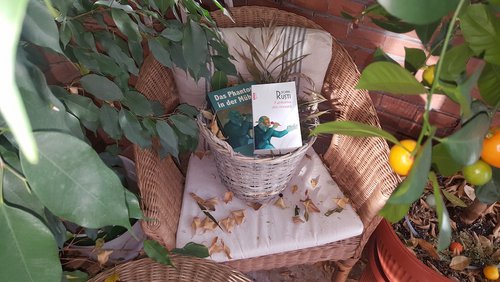
On this occasion, Ruști’s novel The Ghost in the Mill (Das Phantom in der Mühle) was presented to German readers in the translation by Eva Wemme, one of the most prominent translators of Romanian literature into German.
The book was discussed during several literary events and signing sessions, drawing the attention of both readers and critics.
The novel was extensively reviewed by literary critic Markus Bauer in the prestigious Swiss newspaper Neue Zürcher Zeitung, one of the most influential cultural publications in the German-speaking world.
In his analysis, Bauer highlights the central role of the ghost in the narrative structure of the novel and the way it reveals the hidden tensions within the community.
“The ghost is the narrative catalyst that allows secret forces to manifest themselves, especially those of a sexual nature, while also becoming their most visible component, a single belief that itself dissolves in the final part of the novel.
Doina Ruști’s book displays a wide range of literary abilities that measure the endurance within Romanian history of the twentieth century.”
— Markus Bauer, Neue Zürcher Zeitung
The critic emphasizes that the novel moves beyond a strictly realist depiction of the communist era and introduces a symbolic and mythological dimension, in which the ghost becomes a narrative mechanism revealing the hidden forces shaping both the community and history.
Originally published in 2008, The Ghost in the Mill is one of Doina Ruști’s most notable novels. The story follows the fate of a village dominated by the enigmatic presence of a mill that gradually becomes the center of a local mythology.
Within the novel’s universe, everyday reality constantly merges with fantastic elements. The mill is perceived by the villagers as a mysterious entity, a presence that seems to influence human destinies and expose the hidden tensions of the community.
Against the background of recent history, marked by the surveillance of the secret police and the ideological pressure of the communist regime, the novel explores how fear, memory, and hidden desires shape individual lives.
Through this blend of social realism and imaginative fantasy, The Ghost in the Mill offers a literary perspective on collective trauma and on the ways history infiltrates personal biographies.
Shortly after its publication, the novel received the Romanian Writers’ Union Prize for Fiction, and it has continued to circulate internationally through translations and presentations at literary festivals and book fairs.
Its presence at the Leipzig International Book Fair confirmed the continued interest in Doina Ruști’s work in the German-speaking world, where her fiction is appreciated for its original narrative construction and its distinctive combination of history, memory, and the fantastic.
Markus Bauer, about "Das Phantom in der Mühle” (by Doina Ruști) in Neue Zürcher Zeitung