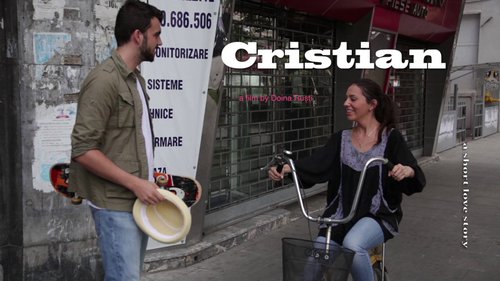
A scene from Cristian, a film by Doina Ruști, based on the short story of the same title.
Doina Ruști’s short fiction comprises several hundred texts published in magazines, anthologies, school textbooks, and books, in Romanian or in translation.
From realism to the fantastic, from narrative experiment to urban fiction and the Balkan imagination, her stories form a broad and readily recognisable territory in which characters, places, and events often communicate with one another, creating a coherent epic world.
Some of the stories begin in contemporary reality, using techniques rooted in naturalism and often moving towards surrealism. Memory, violence, family, and marginality are recurring themes. Other stories reconstruct old Bucharest, especially the Phanariot city, as a living space crossed by love stories, fantastic beings, mysterious objects, and documents transformed into fiction, bringing out the Balkan strand of Romanian literature.
“Short fiction was my first love. In the 1980s, if you didn’t write short fiction, you were nobody — the novel mattered less. From the very beginning I looked for different forms, and many of my texts are experimental.
I have always believed in a kind of ‘folder literature’, literature in motion, capable of revealing another side of the story with every reading — a construction that is difficult to imitate.
I also described this kind of writing in the novel The Ghost in the Mill and explored it directly in stories such as SIGCHLD, fork() and sleep().
For me, no story is independent and final.”
— Doina Ruști · more
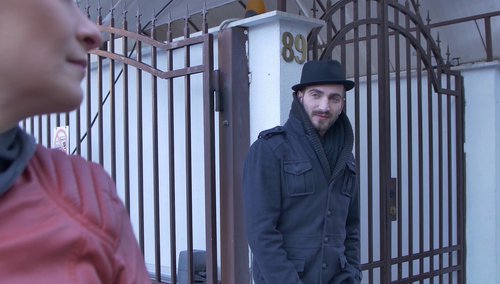
A scene from Umbra perfidă a unei iubiri, a film by Doina Ruști, based on the short story of the same title.
Găbițu, The Mangy Forest, Beyond Events, The Secret, The Treacherous Shadow of a Love, etc.
A story about erotic memory and the way an experience from adolescence can, much later, shape a woman’s entire emotional life.
Published in Romanian Erotic Stories (anthology), Trei Publishing House, 2007. Adapted for the stage by Radu Afrim.
A realist story with surrealist elements, built around a character who gradually becomes part of memory and of literature understood as an act of remembering. A postman who is also a reader — and, through him, the reader in general.
Published in Mozaicul, no. 4, 2008.
A contemporary story about the emotional dimensions of education.
Published in România literară, no. 31, 2015.
A story about love, disappearance, and the memory of a name.
Originally published in România literară, no. 17/2007, it was later incorporated as a plot-generating text into the volume The Checked Shirt (Cămașa în carouri), 2010. The story was adapted for film, and the film was presented at Cannes. It has been translated into several languages and published in anthologies and periodicals.
One of Doina Ruști’s experimental stories. During an exam on women’s emancipation in the nineteenth century, historical discourse gradually turns into a story about memory, sexuality, and the relationship between two people in the same room.
Published in România literară under the title The History Lesson, no. 29, July 25, 2008.
Three amorous encounters transform Bucharest into a secret geography in which only a handful of places still preserve the intensity of real life.
Published in the volume The Libertine of Gorgani (Depravatul din Gorgani), 2023. Translated into English and Arabic.
In a marketplace in Phanariot Bucharest, an apparently insignificant man has the power to awaken devastating desires in the women around him — until one of them refuses the role of victim.
Published in România literară, no. 29, 2011. Translated and published in Trafika Europe, Penn State University Libraries, no. 8, 2016.
In Phanariot Bucharest, a celebrated letter writer is drawn into a mysterious house, where he discovers an unexpected form of his own identity.
Published on the Adevărul blog under the title Like a Broken Heart.
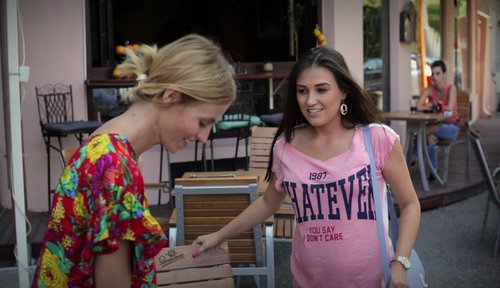
A scene from 35 Minutes Later (dir. Cristi Todoran), based on the short story of the same title by Doina Ruști.
Amantul — Trafika Europe
Mâna lui Bill Clinton — Bill Clinton's Hand, in Bucharest Tales, New Europe Writers, 2011
Harta secretă a Elinei / Harta desfrânării — Misr Al‑Mahrousa, Cairo
Fantasma / Ciudățenii amoroase din Bucureștiul fanariot, trans. Barbara Pavetto — Romania Orientale, Sapienza University, no. 35, 2022
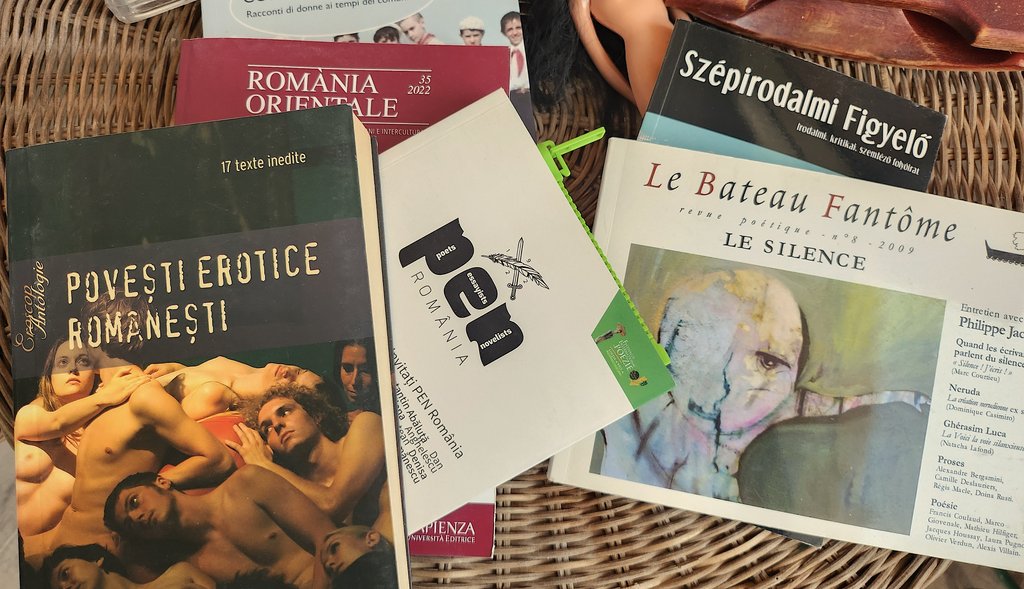
Cristian — Le Bateau Fantôme, Paris, no. 8, 2009
Învingătorul — anthology of Nagyvilág, Budapest, September 2010
I miei ginecologi, in Compagne di viaggio, Sandro Teti Editore, 2011
Ura pri univerzi, in Zgodbe iz Romunije, Sodobnost International, Ljubljana, 2011
Stories about Balkan Bucharest, where document, legend, and the fantastic enter the same reality.
Ciudățenii amoroase din Bucureștiul fanariot
Love affairs, obsessions, magical objects, and unusual stories from eighteenth-century Bucharest.
Cămașa în carouri și alte 10 întâmplări din București
An epic puzzle: autonomous stories that complete and alter one another through shared characters, details, and narrative threads, linking the present to the eighteenth century.
Pădurea albastră, textbook for Year 7, Litera, 2024
Platanos, textbook for Year 8, ART, 2020
Colierul, Litera, Year 6, 2024
Fantoma din moară, Year 10, Paralela 45
O după-amiază cu Tanti Viki, ART (texts), etc.
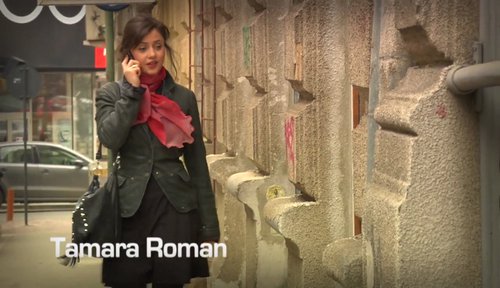
A scene from Apartment 26 (dir. Alexandra Băcilă), based on the short story of the same title by Doina Ruști.
Herr, in Treisprezece, Litera, BPC, 2021
Cocrișel, in Când viitorul era mic, Arthur, 2021
Anonima, in Femei, bărbați și faptele lor, Litera, 2023
Găbițu, in Retroversiuni, Paralela 45, 2023
Secretul, in Antologia Echinox, no. 1, 2018
Kant and Max, in the anthology PEN95 România, 2017
Visul spiridușului, in Cel mai mult și mai mult, Arthur, 2017
Uniune europeană, in Cum iubim, Vellant, 2016
Milițianul pierdut, in Scriitori la poliție, Polirom, 2016
Prințul Avolo, in Cui i-e frică de computer?, eds. Tina Sâmihăian and Liviu Papadima, Arthur, 2013
Amănunte pierdute, in Literatura română contemporană, Antologia Echinox, 2011
Dincolo de poarta mov, in Care-i faza cu cititul, eds. Liviu Papadima and Tina Sâmihăian, ART, 2010
Darul lui Mărțișara, in Bookătăria de texte, ed. Florin Bican, Clubul Ilustratorilor, 2009
Cireșele din asfalt, in Farse, lacrimi și o găleată de sânge, ed. Mircea Petean, Limes, 2008
Cristian · 35 de minute după · Apartamentul 26 · Escrocheria · Cinematograful din mall · Umbra perfidă a unei iubiri
Watch the video selection
For several years, Doina Ruști regularly published short fiction on her Adevărul blog. Some of these texts were later included in books.
All the stories published in Adevărul
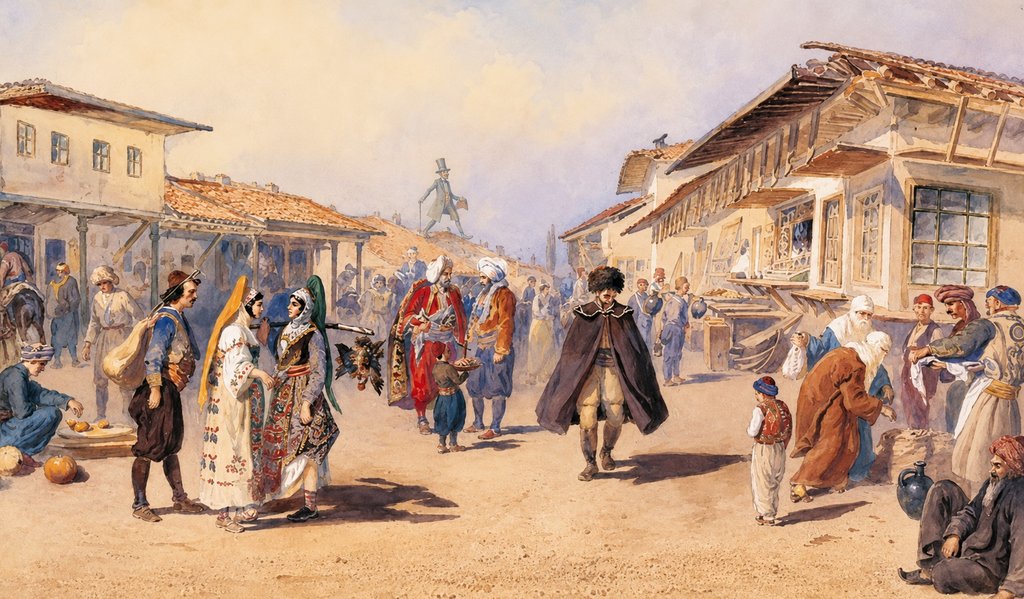
Carl Goebel - Poarta ruinată a Prințului Eugen, Belgrad (prelucrare)
“It teems with women — clever women, sinful women — and with buying and selling; Doina Ruști’s characters include no shortage of merchants. Merchants of both sexes. Some sell nothing but old clothes, others sheets or jewellery; some sell, as I was saying, tin watches, others culinary delicacies. Or a dog whose colour makes it unlike any dog before it.”
— Mircea Morariu, HotNews
A distinct area of the short fiction is devoted to Bucharest and its Balkan imagination. Many of the stories in this series were published on the Adevărul blog, but also in books, magazines, and anthologies, and often take period documents — especially eighteenth-century ones — as their starting point.
Across more than 200 stories, a profile of Romanian identity gradually takes shape at one of the moments when it was forming as a modern society: the Phanariot period. Details of everyday existence — ways of safeguarding valuables, shopping lists, inventories of stolen or lost objects, the stages of a bureaucratic adventure, or love affairs — become the centre of fictions in which historical reality and imaginative invention meet.
The pattern is recognisable: Doina Ruști brings before the reader a real document and an authentic figure — a historical personality or, more often, a name mentioned in a contract, a list, or a deed of sale — and brings to the surface a story that maps, through people and places, a specifically Balkan imagination.
Many of the characters come from the margins of urban society. Enslaved people occupy a central place. Doina Ruști’s stories offer important details about slavery in eighteenth-century Romanian society and are among the relatively few works of fiction to approach the subject from a contemporary and distinctive perspective. Rather than emphasizing the overt drama of the condition itself, they focus on its absurdity and on those patterns of behavior that have survived, in altered forms, into present-day human relationships.
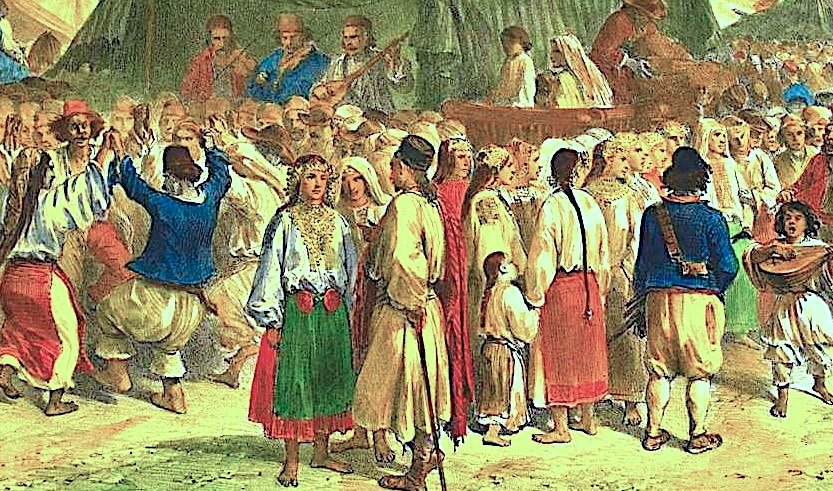
Auguste Raffet: Bâlciul de Sfântul Petru și Pavel, de la Giurgiu
“When his first master decided to offer him as a prize at the summer games, he was terrified. Only the most wretched ended up as mere gifts. He had worked hard, had been a good slave, and now he felt cast aside. He wept and begged his master, but the decision had been made; there was nothing more to be done.
Chained and tied to a cart, he was taken to the fair, where the pole-throwing contest had already begun.
He was miserable all the way there, determined to kill himself at the first opportunity. But the moment he reached the fairground, he was spellbound. Someone placed a crown on his head, a wreath woven from leaves and flowers, and seated him on a high chair. Now you’re going to be a king, said the woman who had come to arrange his face. She perfumed him and painted beneath his eyes. Be careful, she whispered, at least this time make use of your gift. What gift? Vencică asked stupidly. The one you were born with, the woman said, and only then did he notice that she had a long nose, lengthened by a wart.
With his face made up and dressed in a shining little vest, he drew every eye and commanded everyone’s attention. At last, life seemed wonderful to him, and he wished he could remain a ‘trophy’ forever.” — Vencică
Phantoms, mysteries, magical objects, conflicts hidden inside major historical events, the trajectory of a word, or the anatomy of a dramatic event gradually compose a world that is deeply Romanian while also symbolically connected to Balkan literature. The picturesque, morally ambiguous acts, an absurd Urmuzian imagination, and Levantine pleasures come together in a vision specific to the world north and south of the Danube.
The same Phanariot Bucharest and the same imaginary geography are developed on the scale of the novel in the Phanariot Trilogy — Manuscrisul fanariot, Mâța Vinerii, and Homeric.
“The stories of strange entanglements amount to a genuine radiography of an age grounded in reality and marked by the Orient, documented in archives and embellished through fiction.”
— Flavia Iosef, Litera blog
Urban Legends · All the stories published in Adevărul
A recent Balkan short-fiction project, opened by the story:
Doina Ruști moves from an academic essay published in the Literary Encyclopedia towards legend, revisiting the figure of the Spânul in several forms: from a tale collected by Hasdeu to the story of a Phanariot merchant who sells a hair-growth elixir, and further to the fabulous history of Turnavitu, a real person of minor importance in Romanian history who became a symbolic Urmuzian obsession.
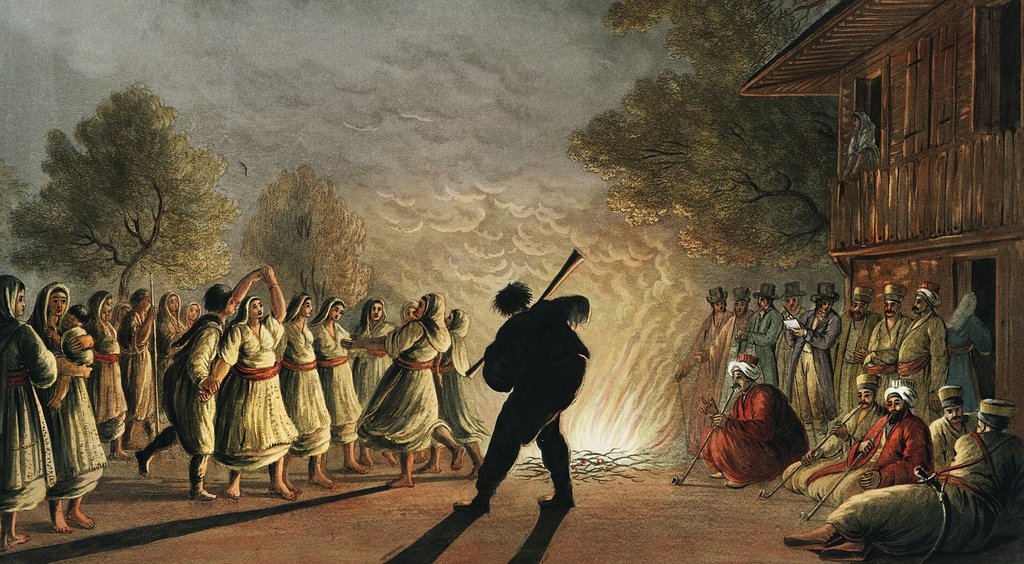
L. Mayer - Dans bulgar
· Mastichinus, Adevărul, 1 April 2025
· Baticul, Opt motive, no. 88, 2021
· Muzeul manuscriselor, Opt motive, no. 74, 2021
· Ușa secretă, Opt motive, no. 30, 2020
· 35 de minute după, România literară, 2014
· Vizita, România literară, no. 8, 2013
· Fiatul negru, Viața românească, no. 9–10, 2013
· Trattoria Amore, Catchy, 30 April 2012
· Cinematograful din mall, România literară, no. 7, 2012
· Criptele ADN-ului, Ziarul financiar, 15 June 2012
· Cum a început blazarea lui Cici Bezergheanu, Bucureștiul Cultural, no. 107, 19 July 2011
· Magazin provincial, Obiectiv Cultural, 2 May 2011
· Fluierul roșu, Timpul, March 2011
· Apartamentul 26, Timpul, March 2011
· Cerceii cu topaze, in Bucureștii Vechi și Noi, Editura Subiectiv, 2011
· Năltărogul, in Bucureștii Vechi și Noi, Editura Subiectiv, 2011
· Mult așteptatul ceas al D-nei Glodeanu, Revista 22 / Bucureștiul Cultural, no. 103, 2010
· Diavolul îndrăgostit, Revista la plic, no. 4, Chișinău, 2010
· Mâna lui Bill Clinton, Revista 22 / Bucureștiul Cultural, no. 95, 2010
· Mesajul din sticlă, Mnemosyning / Triade, 2010
· Amiaza unui manaf ucigaș, România literară, no. 25, 2010
· Spiridușul de pe strada Batiște, Luceafărul de dimineață, no. 1–2, 2010
· Învingătorul, Convorbiri literare, March 2009
· Prăvălia de peruci, România literară, no. 52, 2009
· Poveste de Paște, România literară, no. 15, 2009
· O crimă și patru oameni care trăncănesc, Hyperion, no. 1–3, 2009
· Lacătul și cheia, România literară, no. 45, 2008
· Uniune europeană, România literară, no. 48, 2007
· Lângă Biserica Sf. Silvestru, Convorbiri literare, November 2006
· Lulu, Vatra, no. 11–12, 2005
Image from the film Apartamentul 26 (directed by Alexandra Băilă and Cristi Panaitescu)
Image from the film 35 de minute după (directed by Cristi Toporan), with Andreea Perju and Raluca Straia as Catrinel and Mari