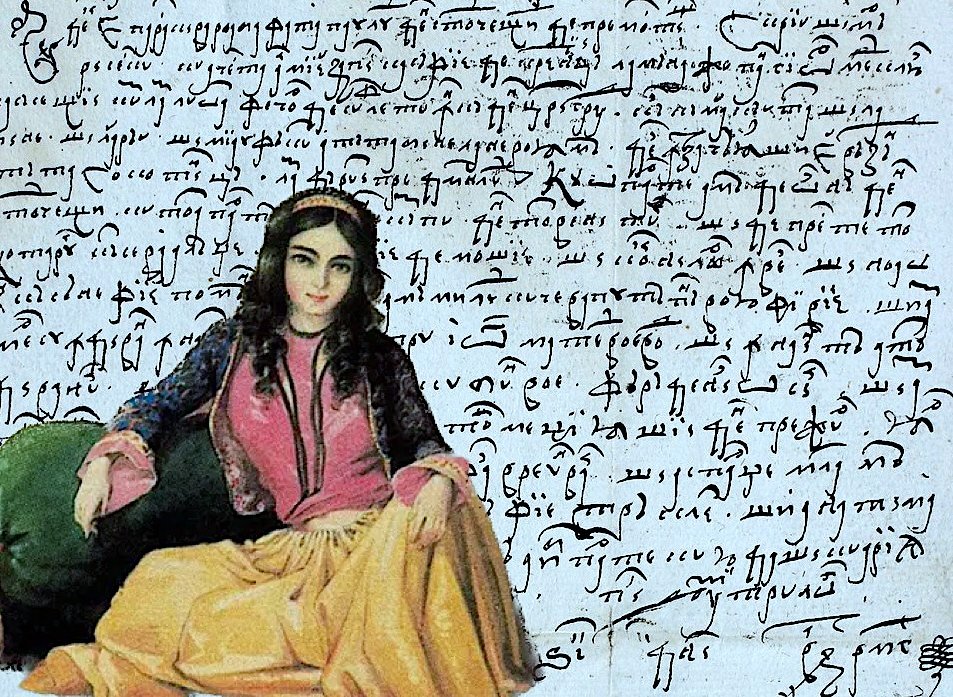
Since 2019, Doina Ruști has maintained a blog in Adevărul, publishing almost every week. Over the years, hundreds of pieces have accumulated: mostly short stories, but also essays, personal reflections, and ideas.
Of all these, her favorite is the Phanariot series of Balkan stories. Her connection with Balkan culture is recognized and acknowledged, and she has devoted a trilogy to the Phanariot era.
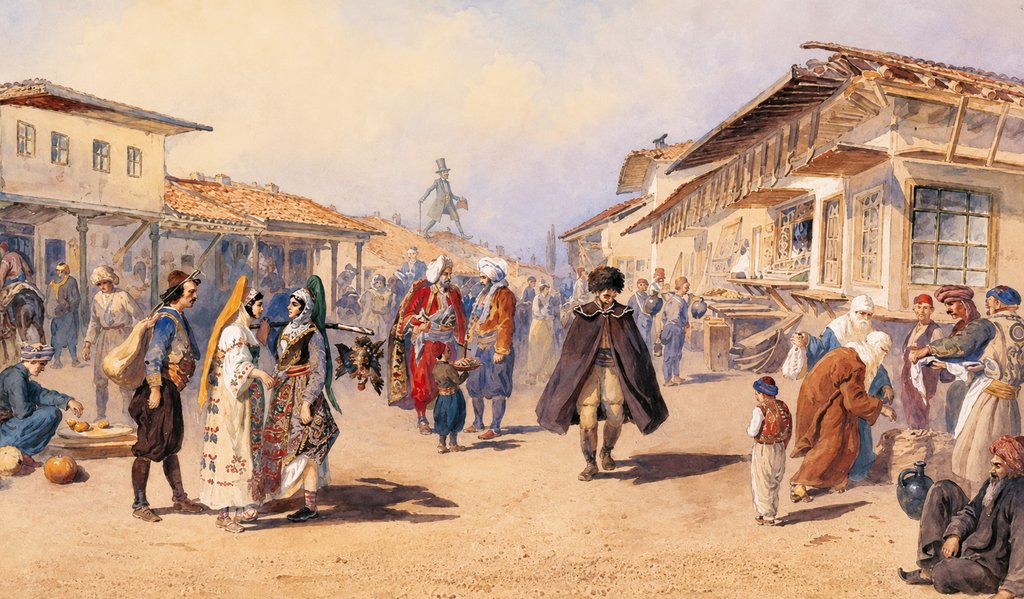
Tase was not quite that kind of musician. He lived in an isolated monastery, somewhere beyond Ștefănești in Ilfov, between Grădiștea and Fierbinți. He was enslaved, so he had to work hard. But as an artist, he cared deeply about his image.
By the time the bagpiper entered the gates of Bucharest, he was so seasoned that despair seemed to trail in his wake.
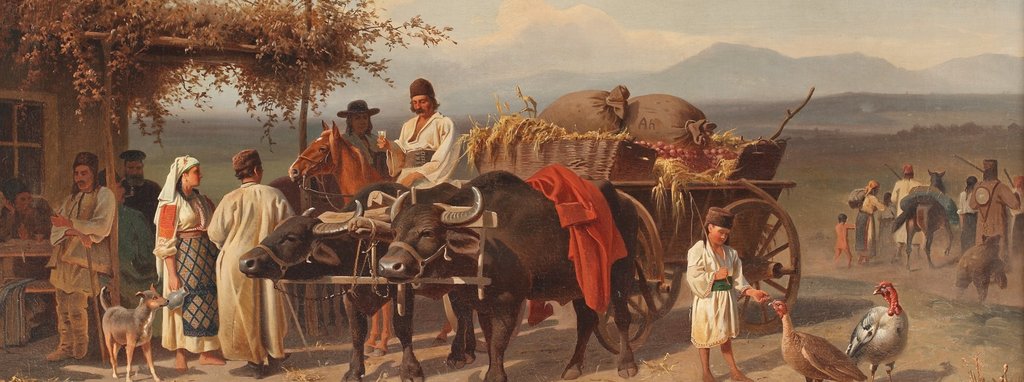
The widow had joined forces with Ion Apostol. The complainant does not say that they were in love, that she had lost her mind, or anything of the sort. This old-fashioned but wonderfully expressive verb suggests an opportunistic relationship conducted openly. It was therefore common knowledge that Băjeasca went walking with Ion or that the two shut themselves up in the house for days on end. But that was only one part of the accusation. The worst was yet to come.
The word degremea (plural degremele) was a short-lived colloquial derivative of dermeá/dirmeá, grimeá, or digrimeá—all rather mangled forms of the Turkish dürmé, meaning a triangular or square headscarf folded diagonally.
But here we are not talking about an ordinary headscarf. This was something extremely fine, almost like foam: a kind of muslin or fine silk scarf made especially to be wrapped around a small fez. Called a saric/sarâk, it was an ornament that signaled high social rank.
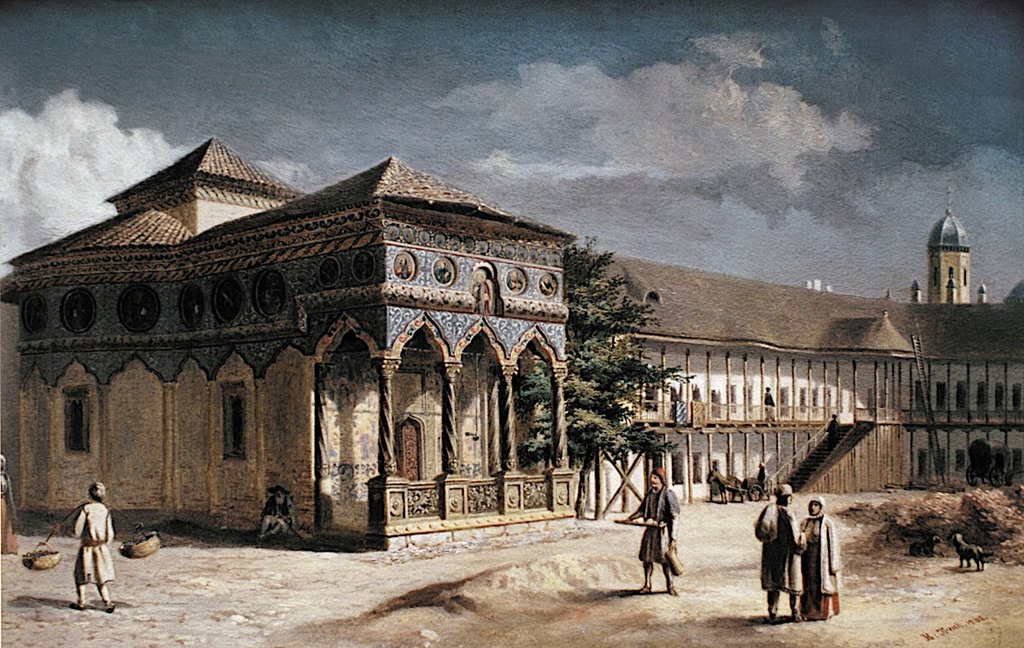
Doctor Carniol, whom I turned into a character in my novel Zavaidoc în anul iubirii, lived a short but intense life. In 1923, he had a practice on Moșilor Street, in a new building put up in the 1920s: a one-story blockhouse, more of a villa, really. And for the curious, one of those buildings still survives today near the Eminescu intersection, absorbed into a socialist-era apartment block yet still visibly bearing traces of life a century ago.
Gloomy faces. A hand reddened by the cold writes down what the sergeant dictates. The body is that of a girl, her age uncertain, though she cannot be more than twenty. Although she is dressed for the house, in a red dressing gown, she is wearing outdoor boots.
I would also add a few mysteries, old myths, and superstitions, two of which are especially dear to me. Then there are the dishes, with their own mythology connected to Mâța Vinerii or Cartea bucatelor rele; three stand at the top of my list. There are also the stories of different centuries, which inspired me to gather my thoughts and examine the facts; of all those centuries, I would choose just two. Recently, I began a series called “Balcanic, iute rău,” opening with the mysterious Spân.
The girl with the umbrella, leaning slightly forward, had something irritating about her. She brought with her a breath of summer, a little shower of pebbles ready to slip into your shoes. She also had a cheeky smile. She was provocative and clearly had nothing to do with the umbrellas sold on Șelari Street. Her neckline was low, and one strap of her dress had slipped far down her shoulder.
In February 1741, Bucharest was gripped by an unusual epidemic. The most secret desires came out into the open, and women who until then had seemed ready to enter a convent began slipping out of their homes at night to have their fun.
Among the many spirits in the world is one responsible for affection, and one day that very spirit was taken prisoner.
Night after night, she dreamed of calf's brains until she could almost taste them. But it was difficult to act on her craving, because the women in her family were forbidden to touch brains.
Lightly fried in elegant slices, then simmered in verjuice and white wine...