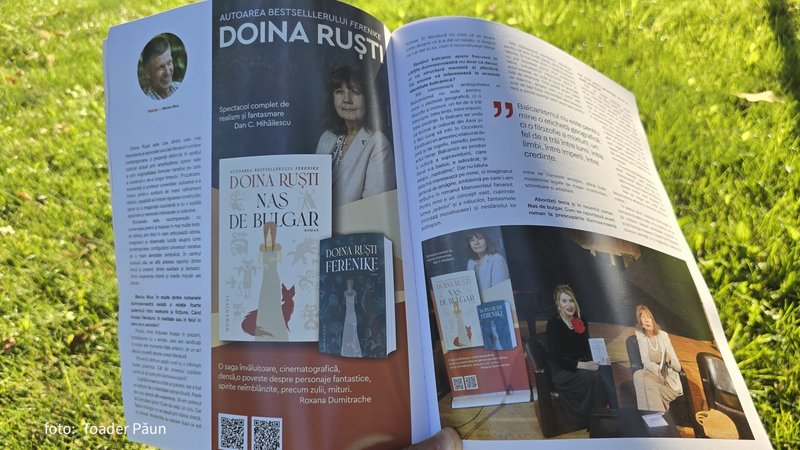
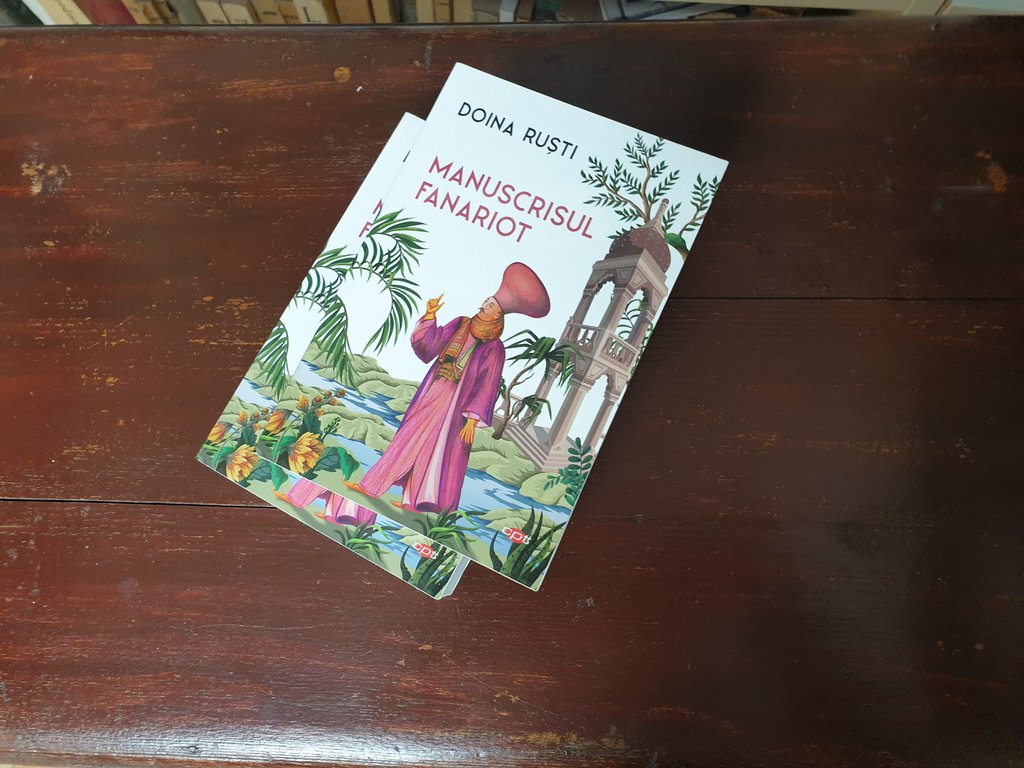
For me, Balkanism is not a geographical label, but a philosophy of mixture, a way of living between worlds, between languages, between empires, between faiths. In the Balkans, one can see that you have only just descended from Asia and are gathering the courage to enter the West. There is an elaborate blend of embarrassment and pride here, which is beneficial to the literary act. Balkan peoples have produced a culture of survival, which in literature has indeed also found expression through Aesopian and “Nasreddin-like” modes. But that is not the aspect that interests me. What interests me is the imaginary generated by illusion, the emblem I assigned to it in my novel The Phanariot Manuscript. For me, it is a vast concept, encompassing the world of the “bald men” and apparitions, phantoms that are never monstrous, and their endless versatility.
Balkan identity interests me because it is fluid, wounded, and filled with historical remnants. And there is something else: in the Balkan space, one never puts a full stop. Through its Latin inheritances, Balkanism integrates history into the immediate present, hence the lack of solemnity towards one’s ancestors. Everything exists now. The lack of permanence that has so often been discussed is, in fact, the force of continual reinvention, without losing the essence, that something which, for me, is called illusion: all the inheritances connected with magic, inventiveness, change, and adaptation.
My Bulgarian Nose continues these preoccupations, but in a more intimate sphere. I have always been interested in peripheral spaces, perhaps in the tradition of interwar literature, through the idea that history can be seen differently from the margins, but above all because of the intensity of experience: near borders, the struggle for existence is fiercer, driven by the desire to cross to the other side. In My Bulgarian Nose, the symbolic border is the Danube. I chose a geographical symbol to which I am personally connected through my birthplace, but also because of the many symbolic threads linking it to the title of the novel.
Much has been written about inheritances and about the minor histories that together make up the monumental history of a people. Likewise, much has been written—and I myself have written—about small but decisive histories. In My Bulgarian Nose, I spoke directly about the archaic history of the Romanians, for two reasons.
First, because the subject is connected with my university years, it seemed natural to discuss the central obsession of the Iași school of philology. Philippide’s theories, the preoccupation with Latinity, and the Balkan connections form the foundation of the Iași school. I could not write about my formative years without addressing this issue. In a sense, this was my tribute to the school that shaped me.
The second reason I approached the subject of Romanian ethnogenesis is connected with my own origins, since some of my ancestors were Aromanians who came from Montenegro.
Rejecting from the outset a poeticised presentation of history, I chose to insert into my novel about youth and love eleven stories that form a second book: a book of the ancient history of the Romanians. On the surface, they are not connected. Nor do they appear chronologically. They are moments that I consider symbolically linked to the essence of Romanian identity. I have often heard questions such as: what is specifically Romanian? What do Romanians possess that other peoples do not? Here, I tried to answer: a refined mixture of “remnants,” an active imaginary, rather than one frozen into “figuration,” and above all a language that has miraculously survived in order to carry forward the message of Latinity.
The survival of the name “Bulgar” seems emblematic to me of the Balkan world. Although the connections are not structural, the symbolic endurance of this word, left behind by a vanished people, seems highly revealing of the shifting geography of the Balkans, of migration, and especially of the philosophy of survival. In the ancient and turbulent history of the Balkan world, there are two constants for me: the word “Bulgar,” now borne by a Slavic people, and the Romanian language.
The Bulgars, a Turkic people, entered Balkan history in 681, when they defended Constantinople against the Arabs. Their courageous act left an echo that lasted for centuries, to the point that any warrior would present himself as a Bulgar in order to partake of their heroic reputation. The Bulgars disappeared, but their name remained. It is a moving history, in some respects related to the history of the Romanians. People have always spoken about the Dacian substratum and about how much of the archaic population survived, yet no one asks what, and how much, survived of the Bulgar population. That is because, in history, only the name matters.
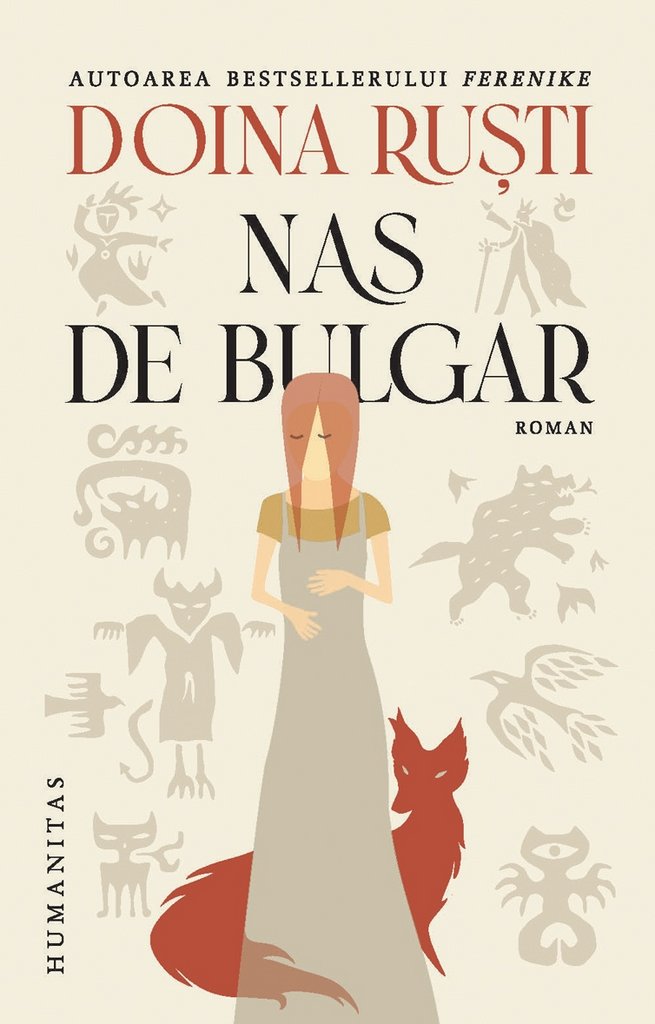
That may be putting it a little too strongly. In My Bulgarian Nose, all eleven archaic episodes are based on real facts. Even the Zuli, the gods, and the fantastical characters. There is a Cucuteni vessel on display at the National Museum of History in Chișinău, bearing the image of a strange figure with fish-like fins instead of legs, an antenna on its head, and so on. It may, of course, represent a ritual mask, but that was unimportant to me, because what interested me was the imaginary, the way in which the forms of life were perceived. I turned this figure into a recurring character: it appears both in Homeric and in My Bulgarian Nose. It is a figure as bizarre as it is historical. It is a form of memory.