On this page: The event at Humanitas Bookstore in Cișmigiu \| Photos and video \| Press, radio, TV \| About the novel
23 May — Bucharest
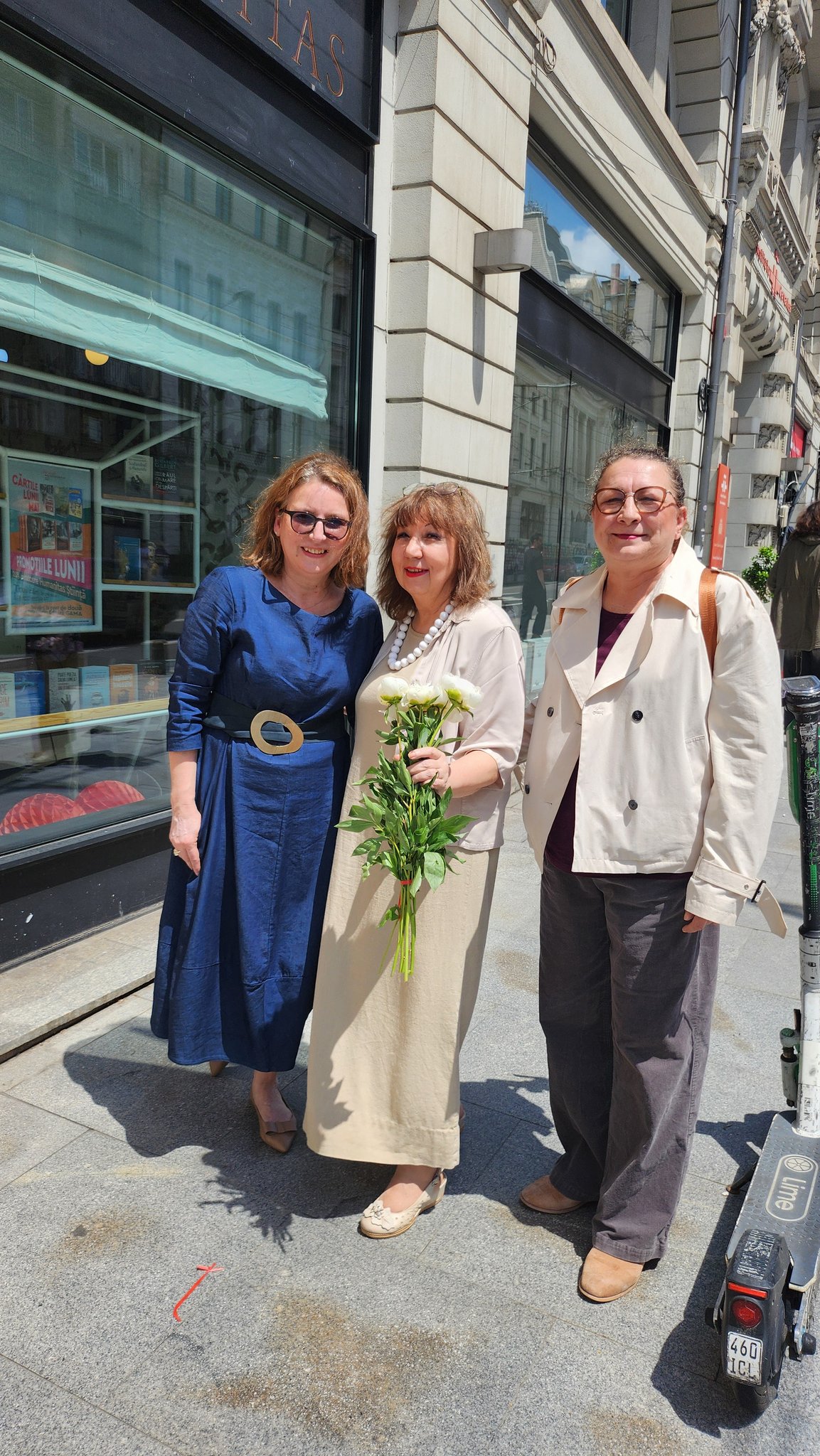
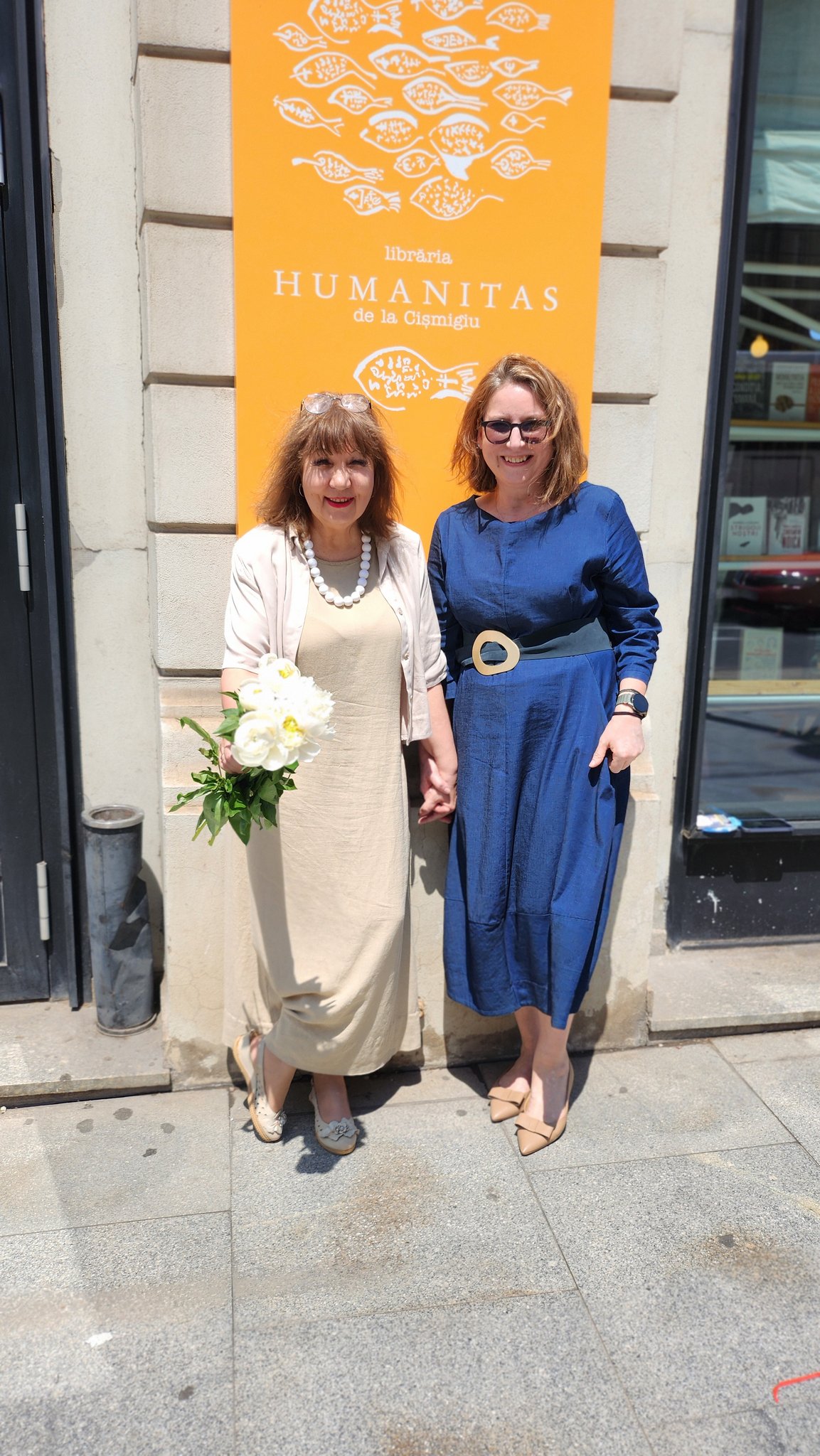
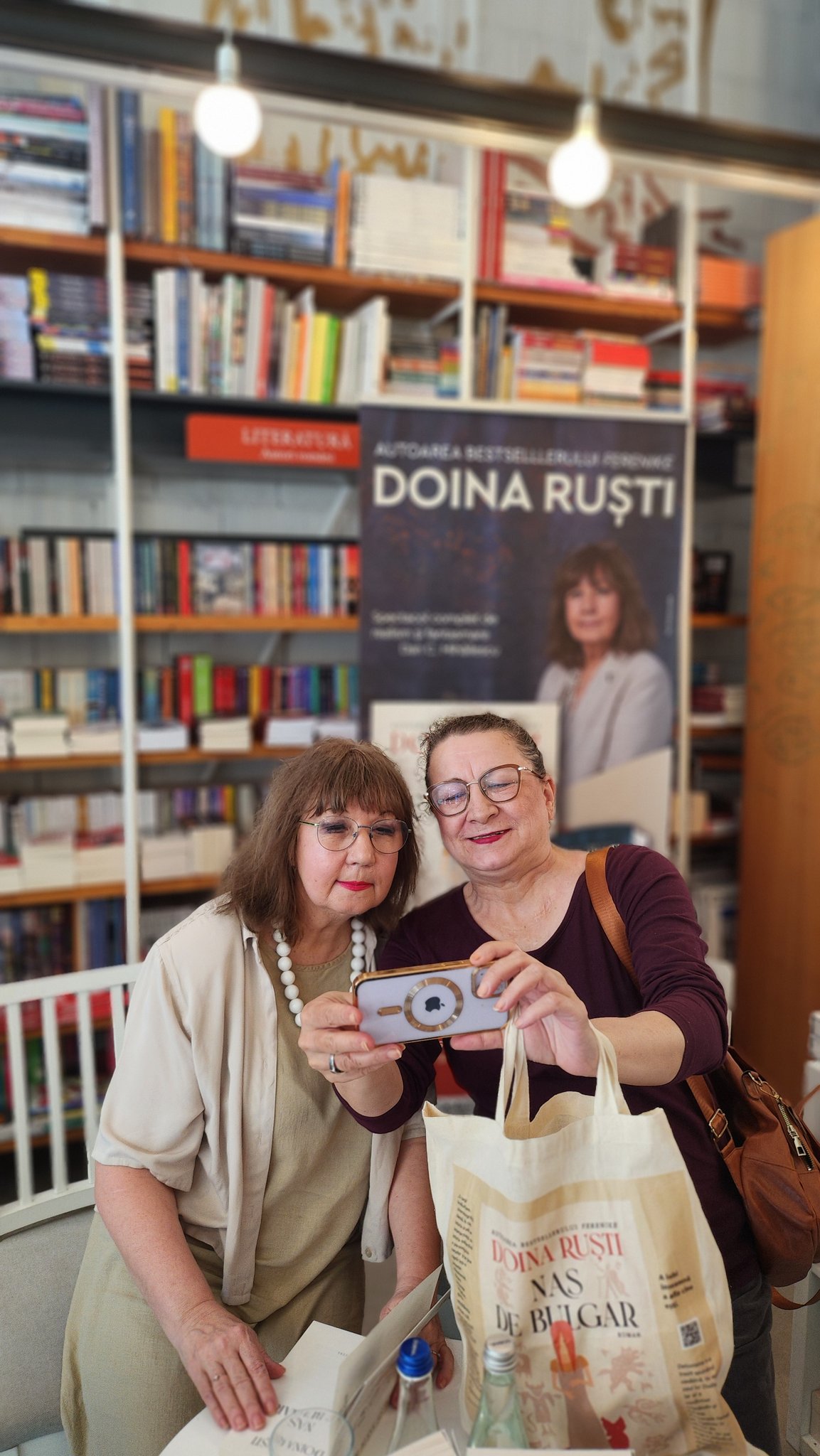
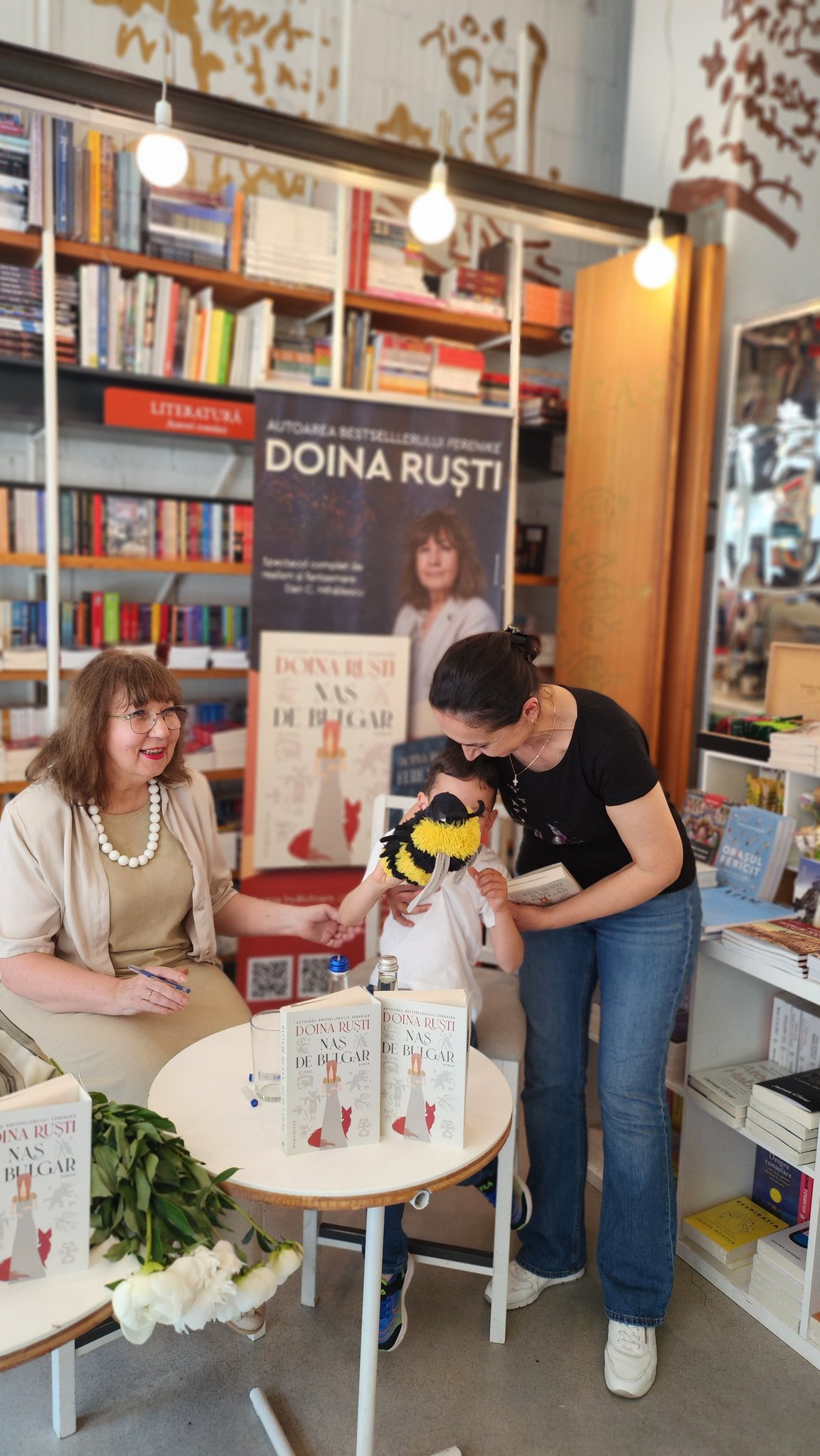
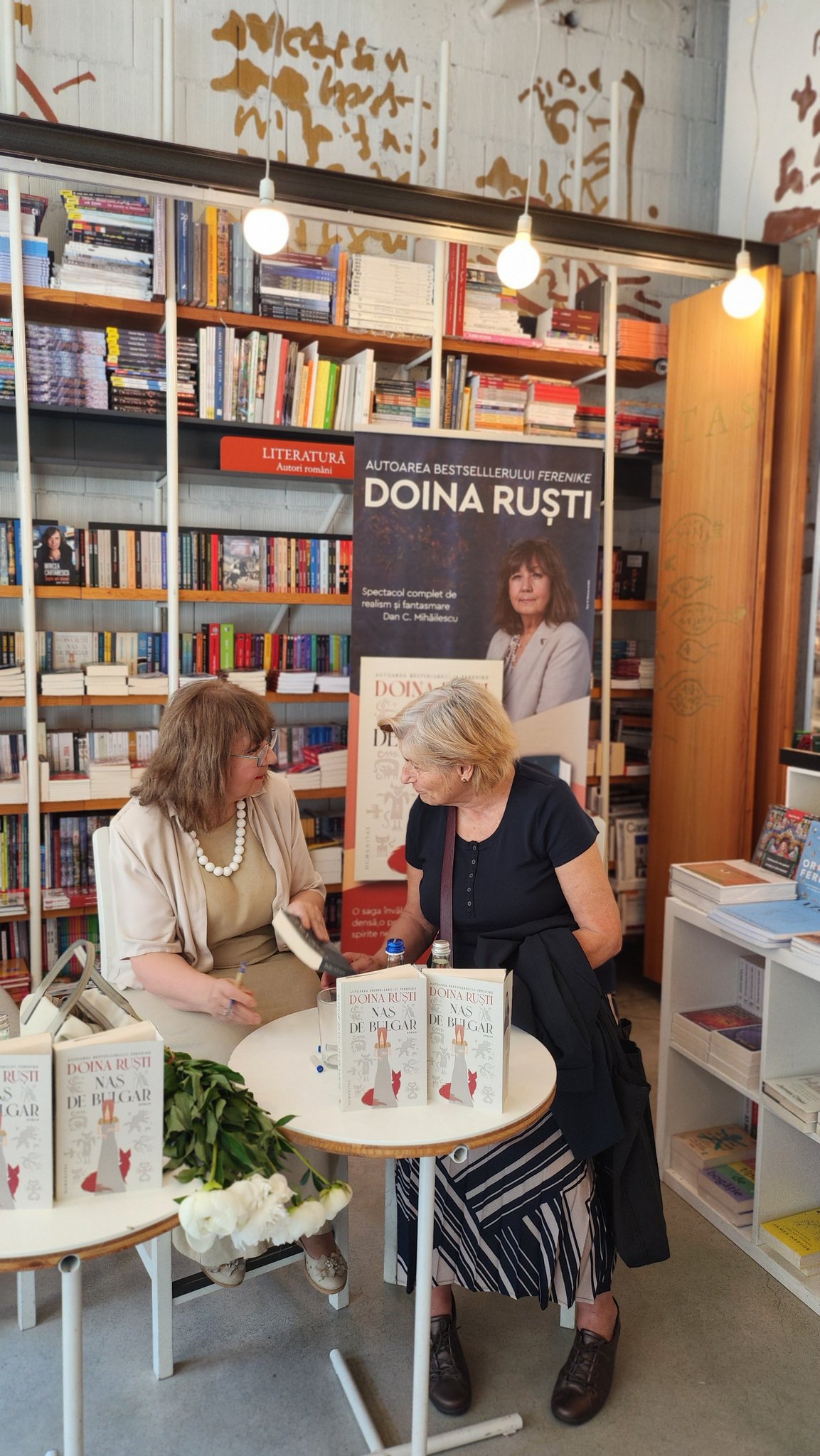
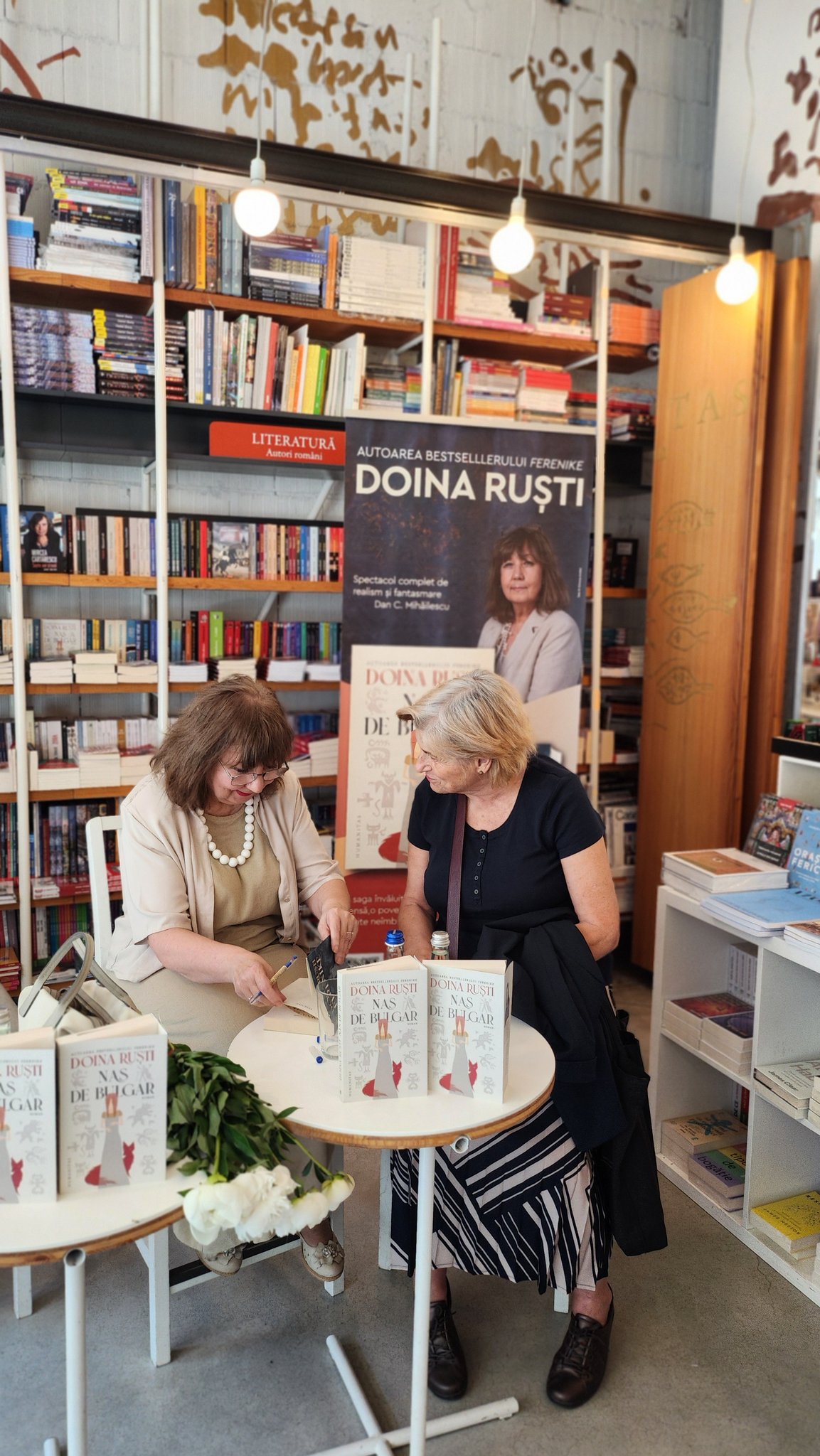
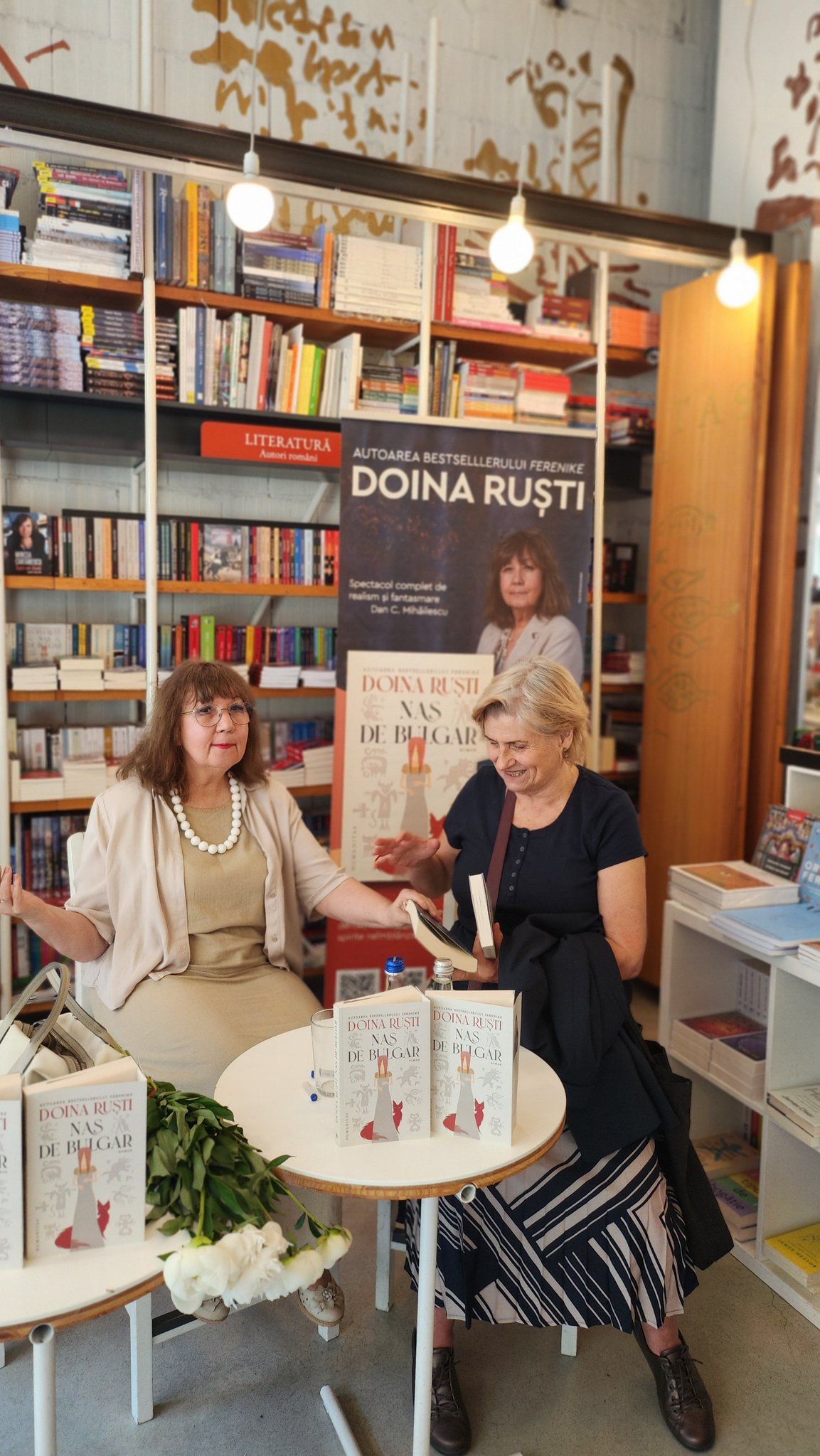
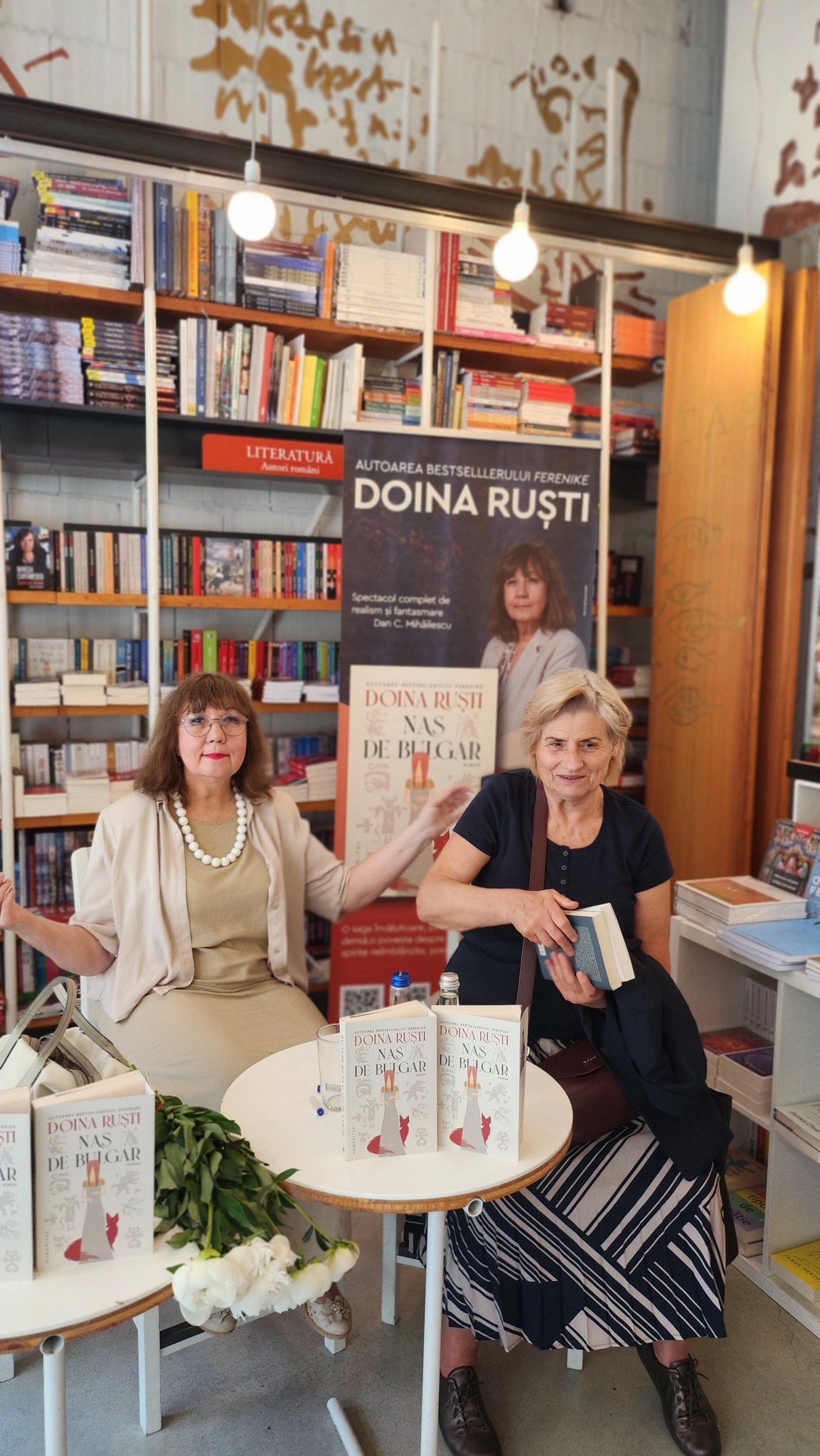
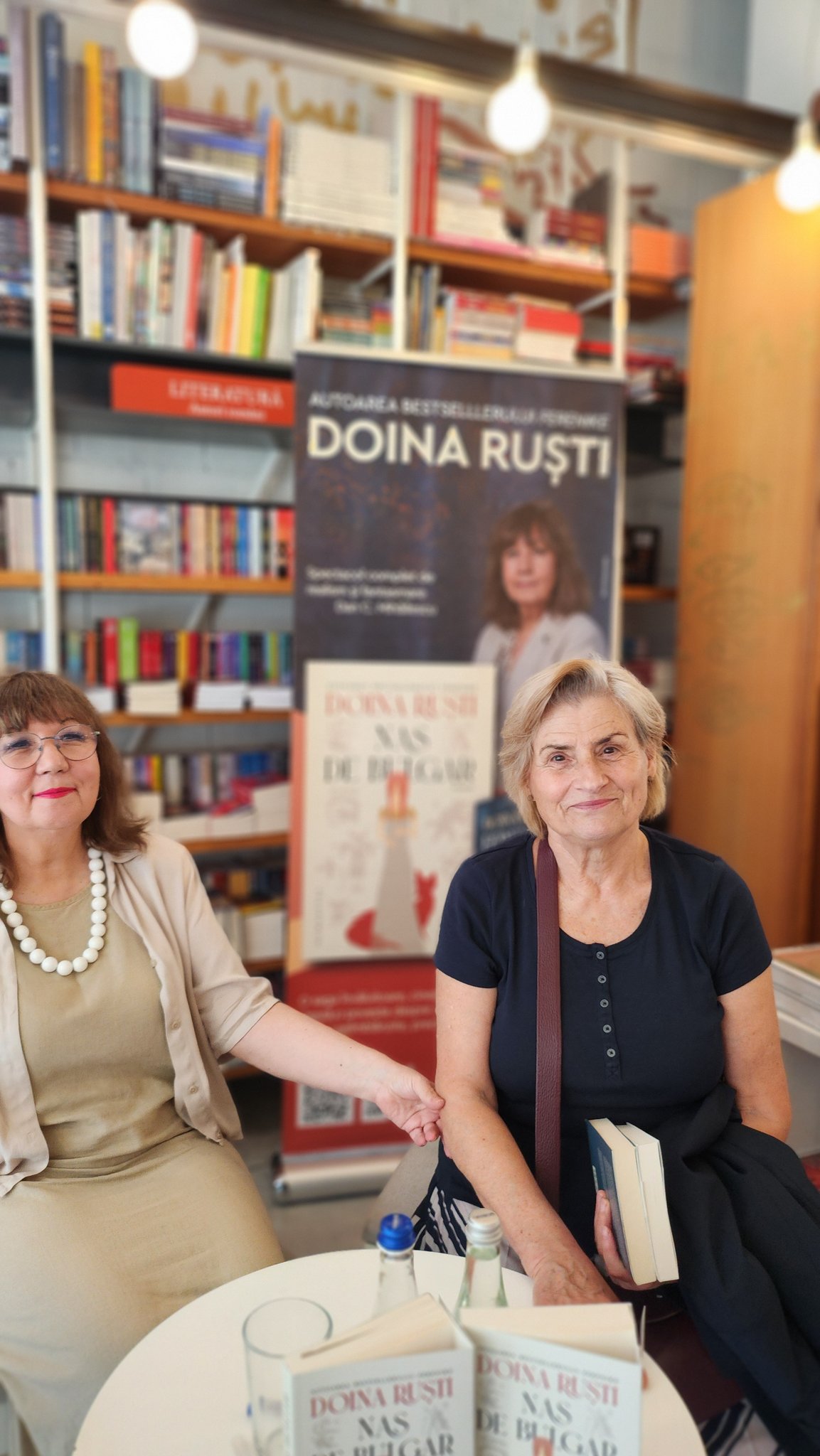
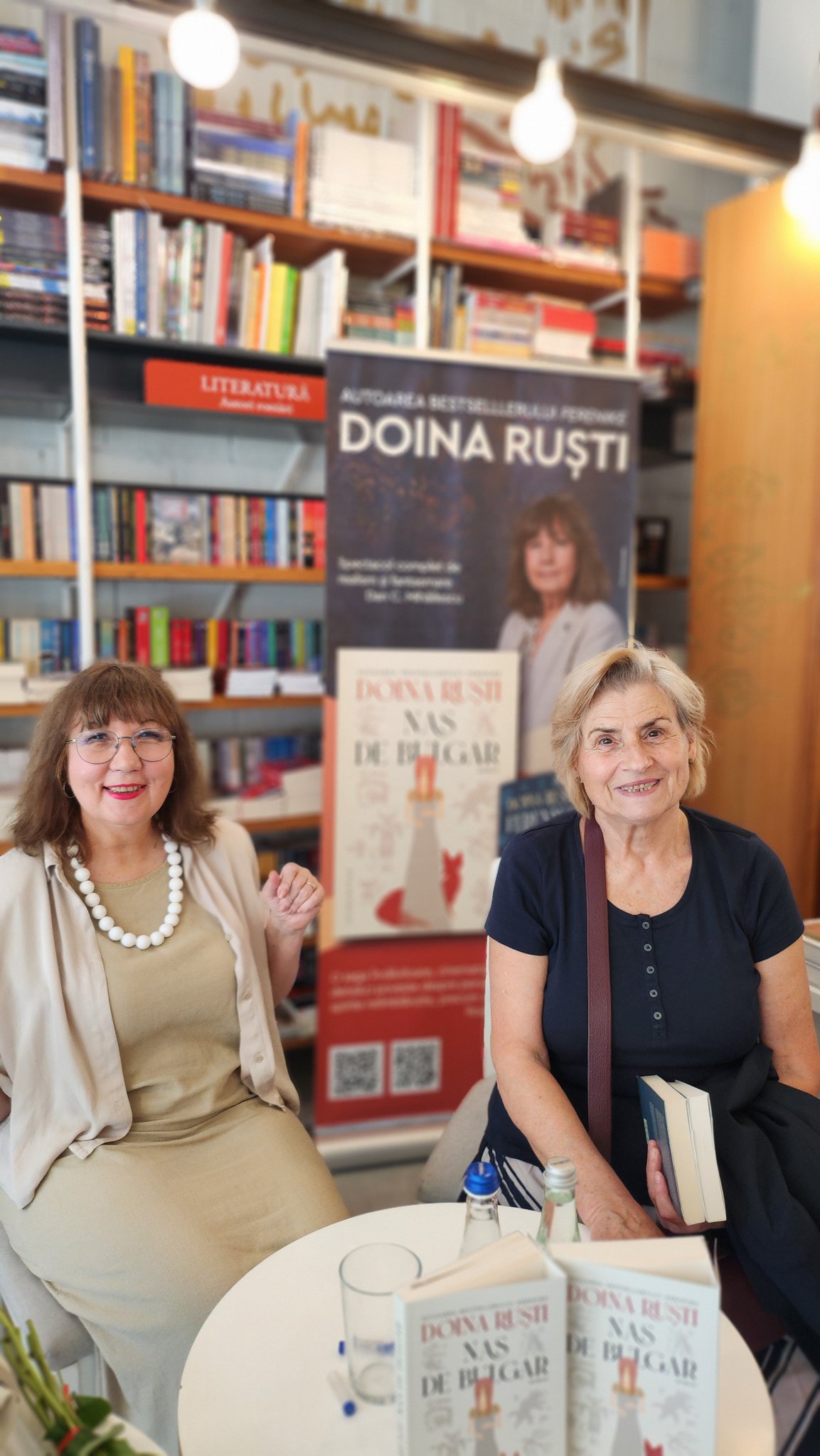
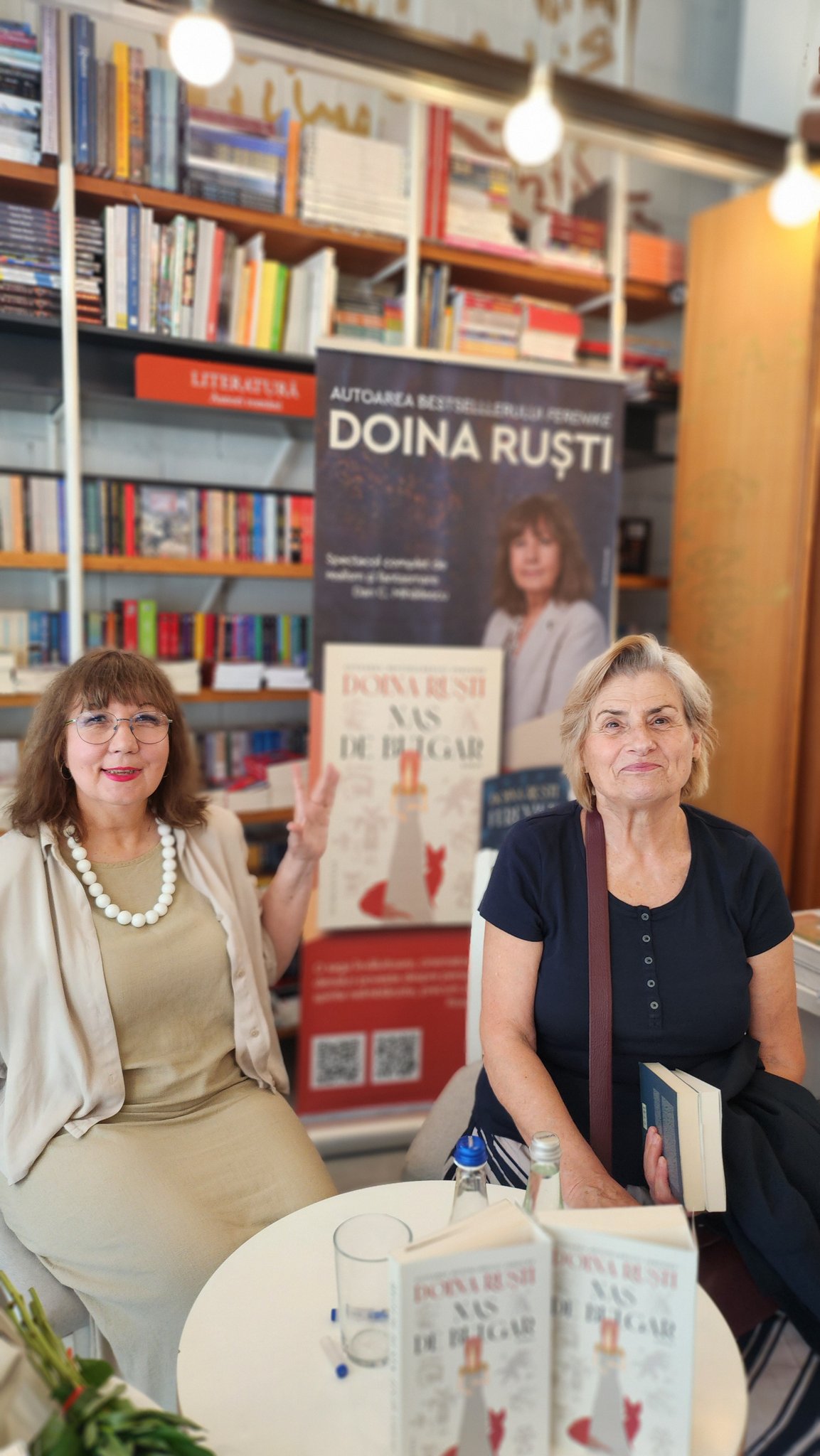
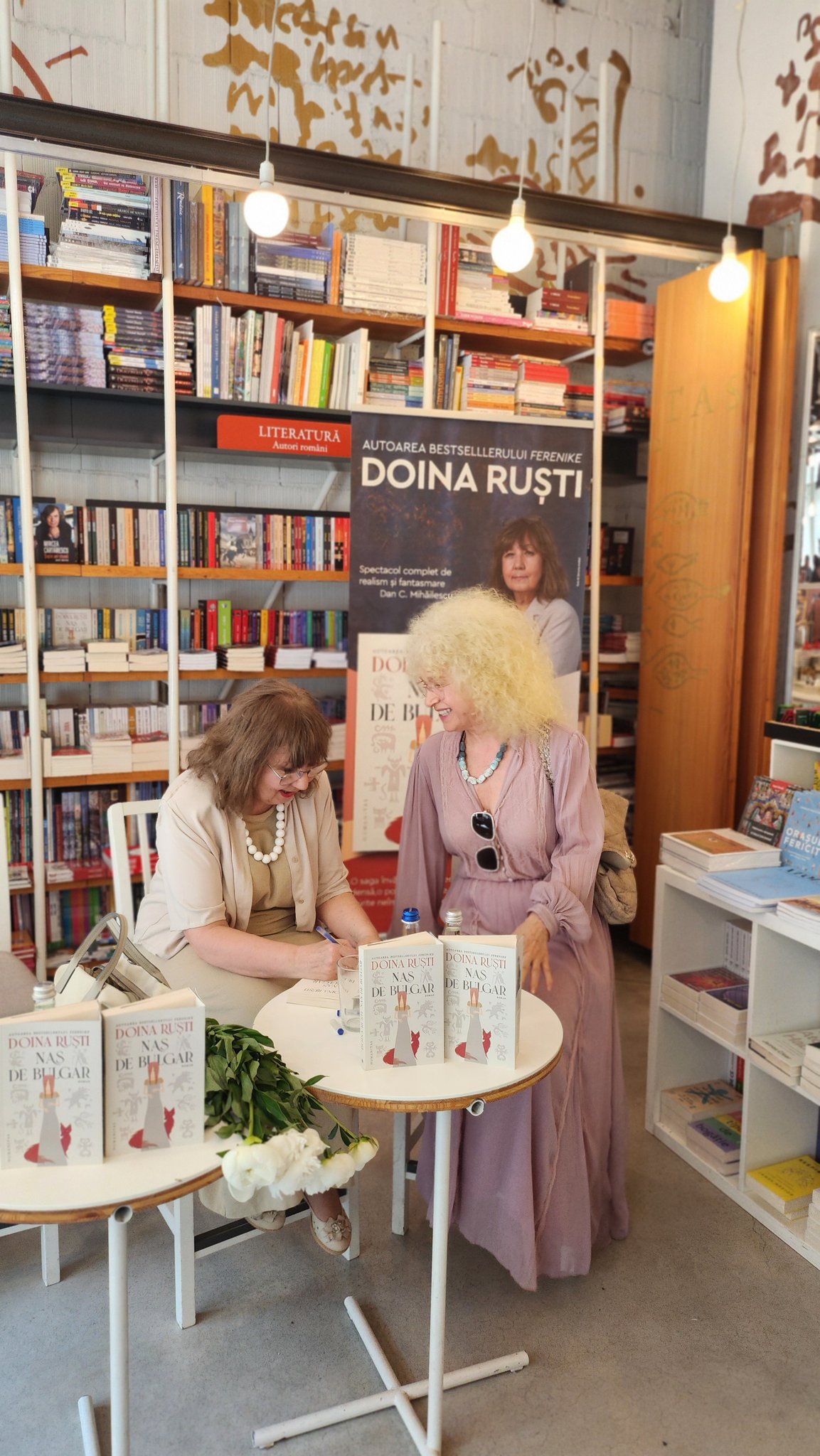
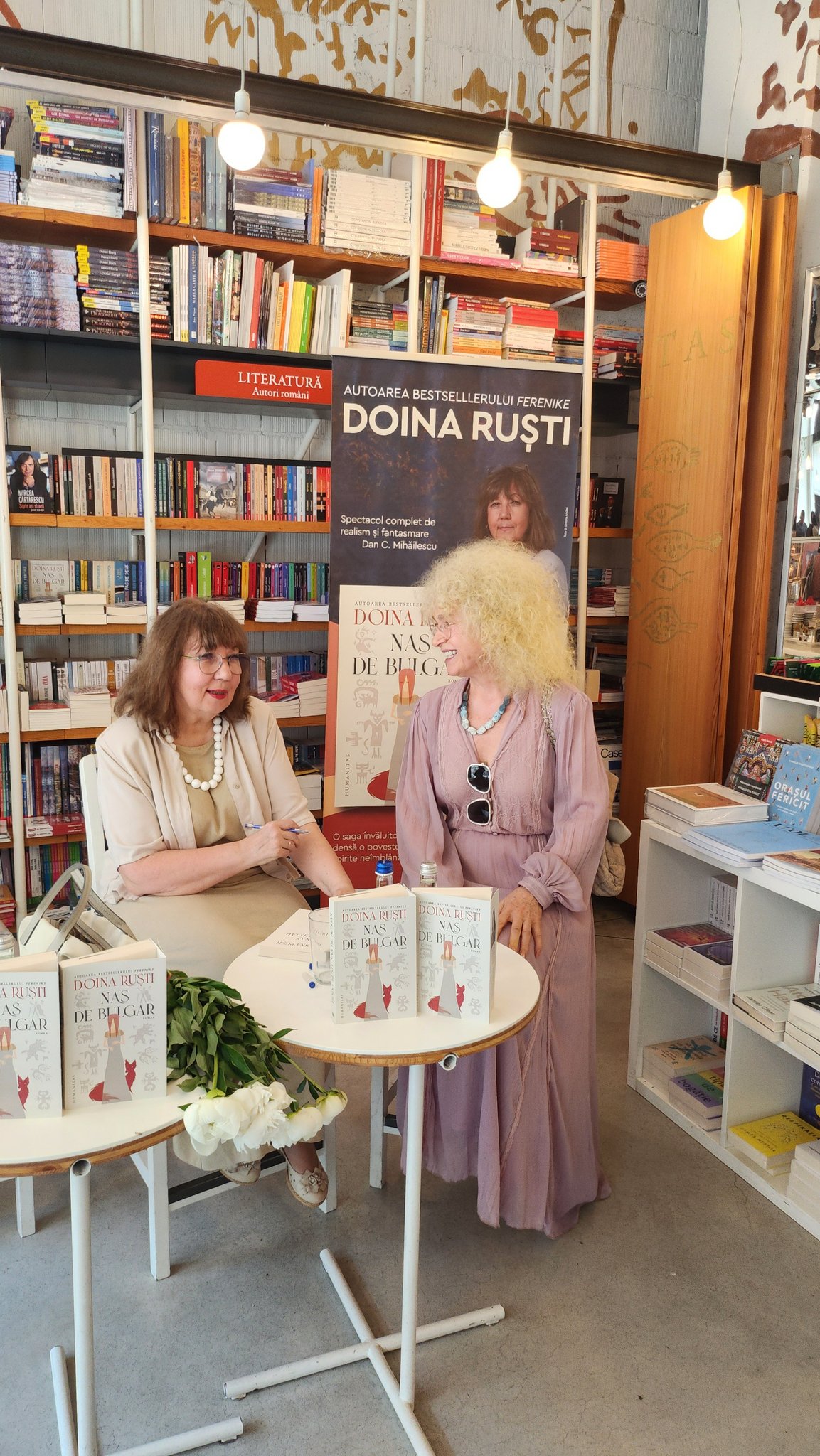
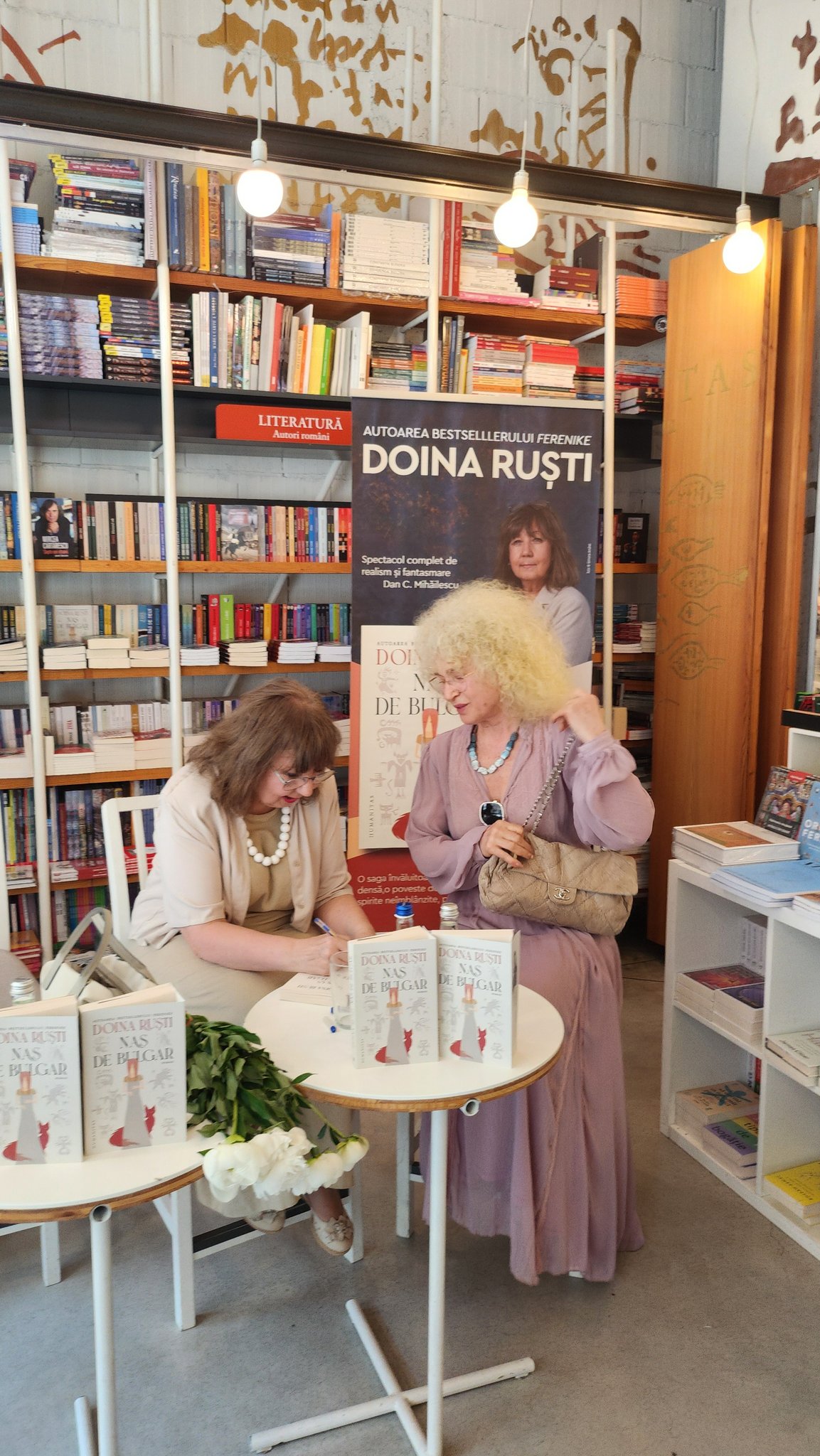
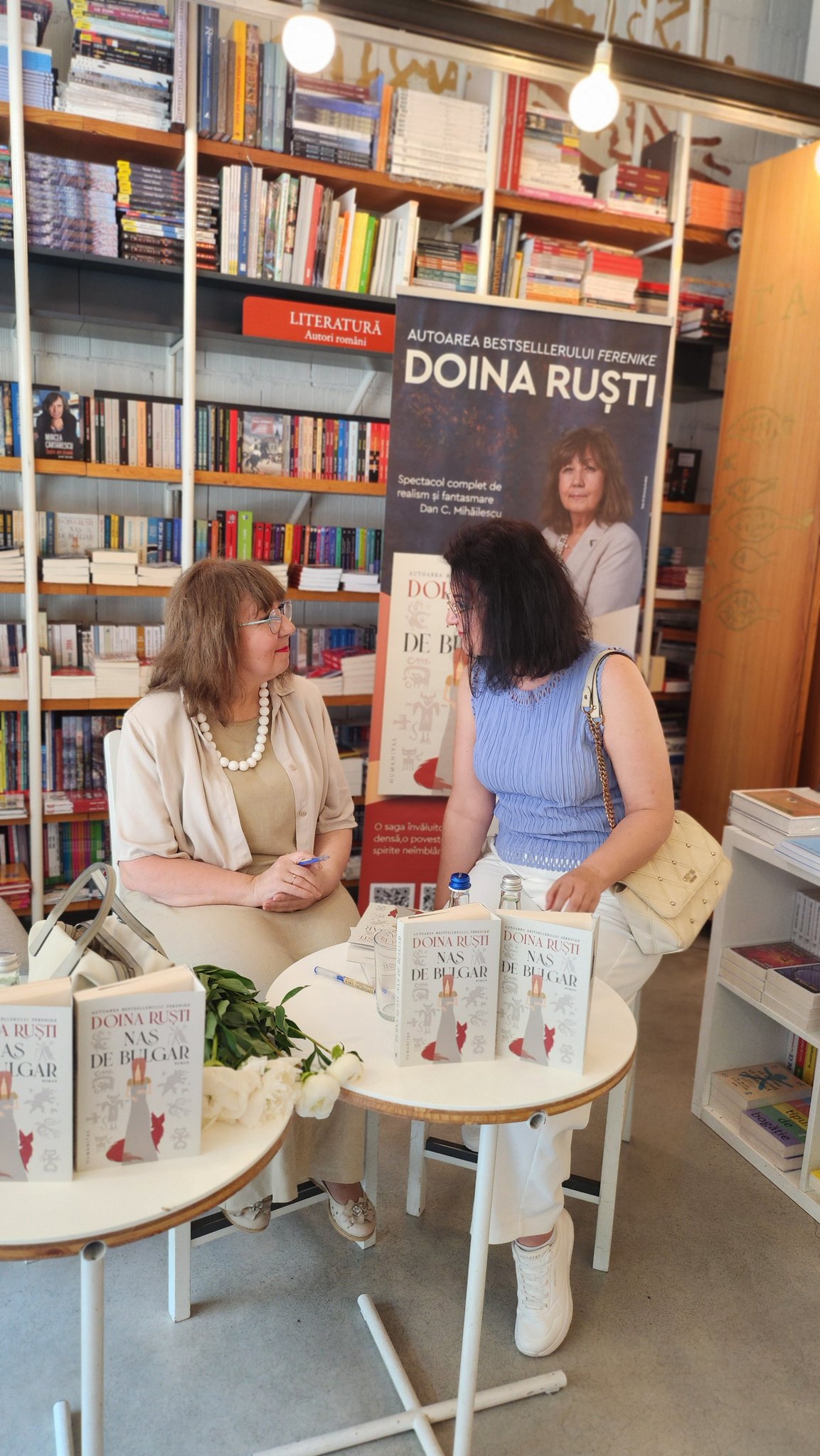
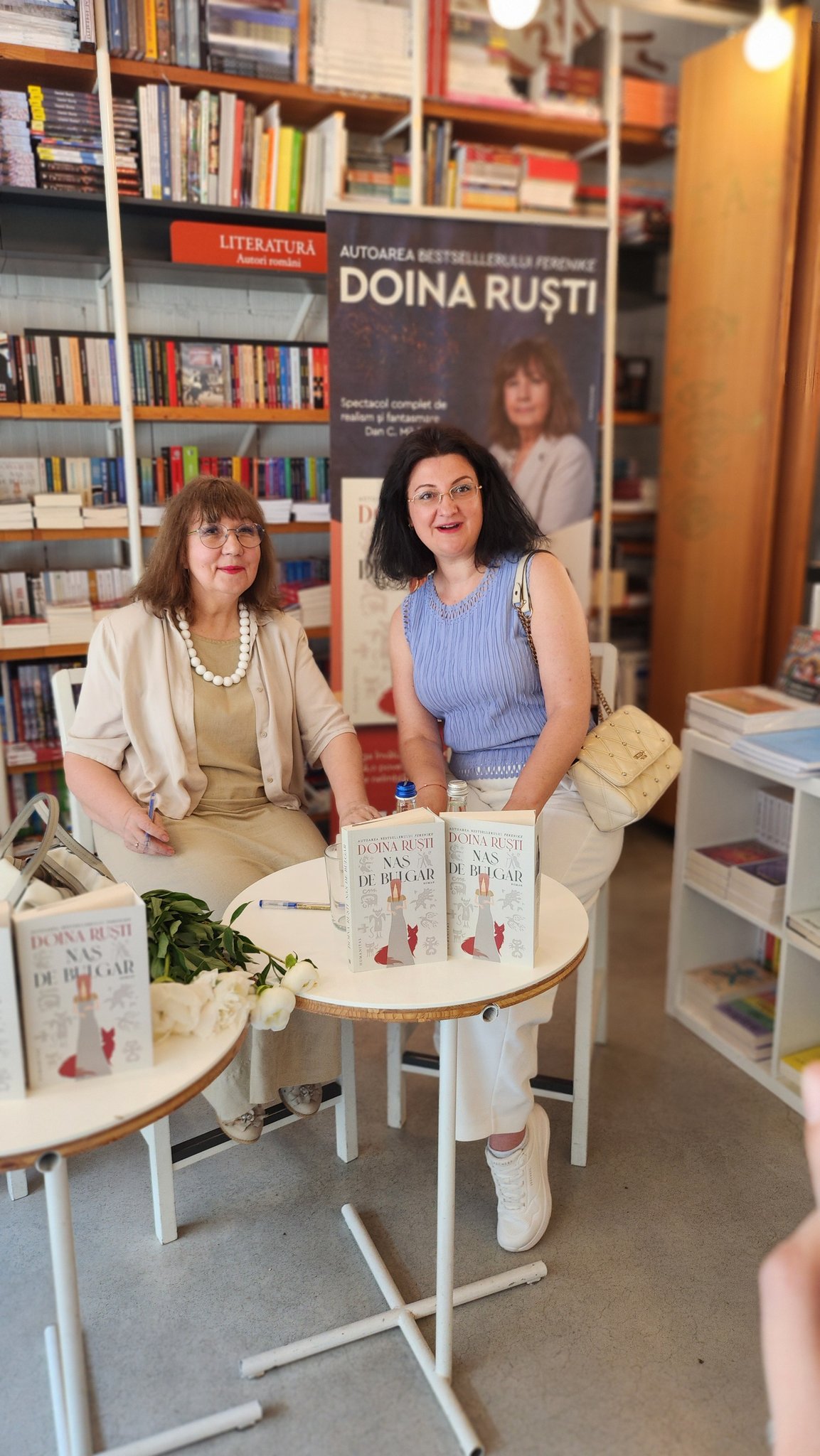
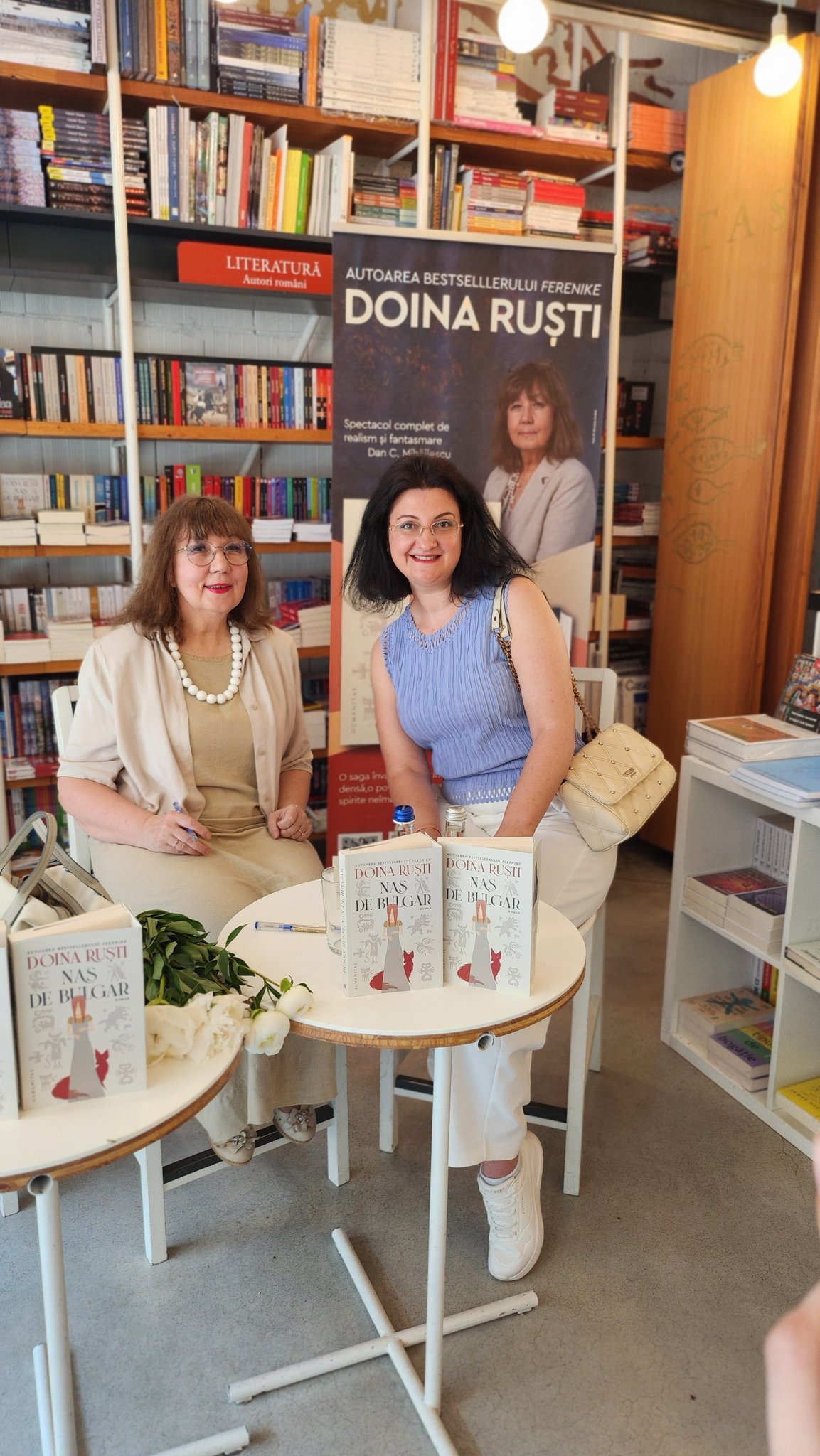
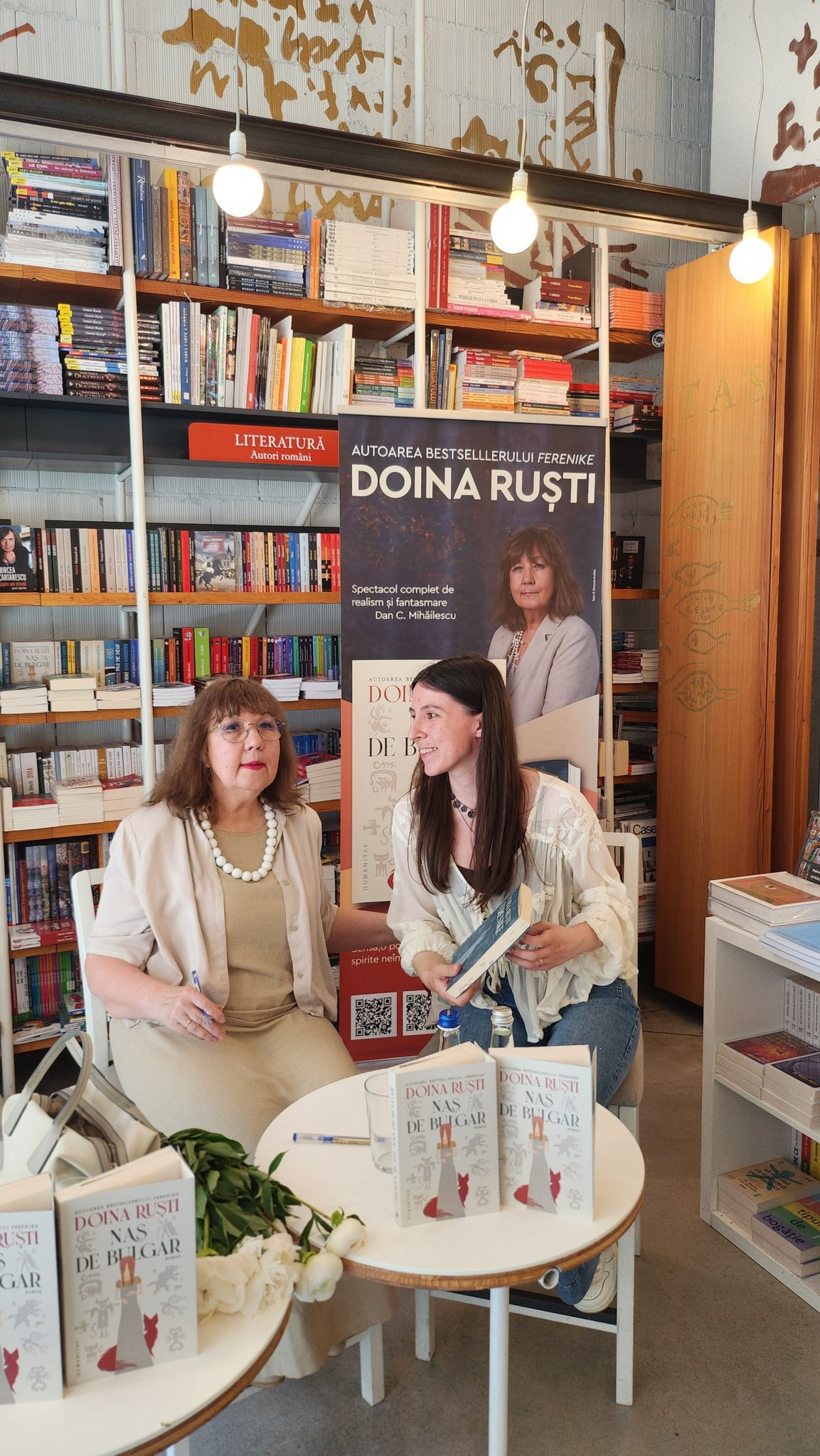
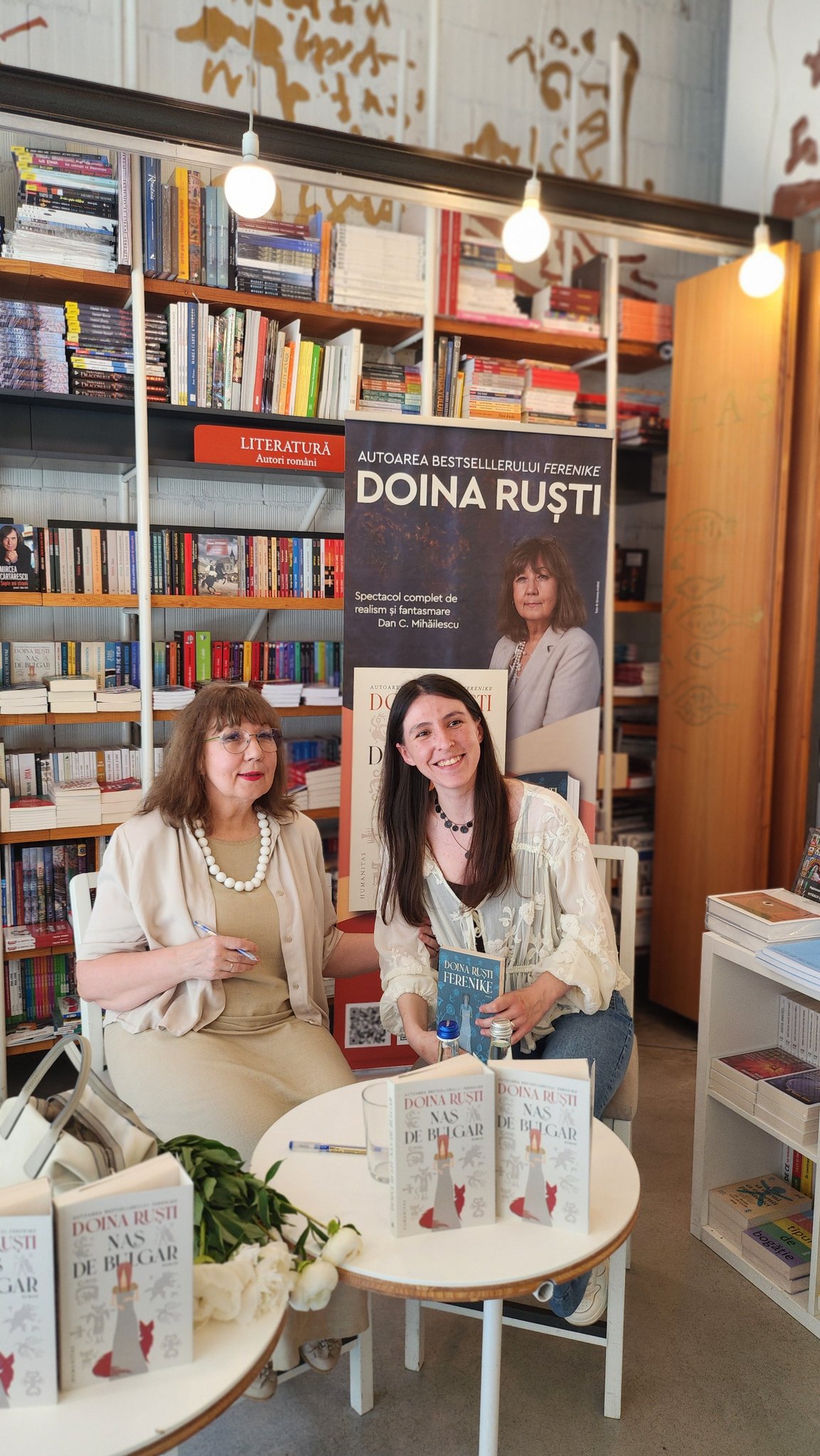
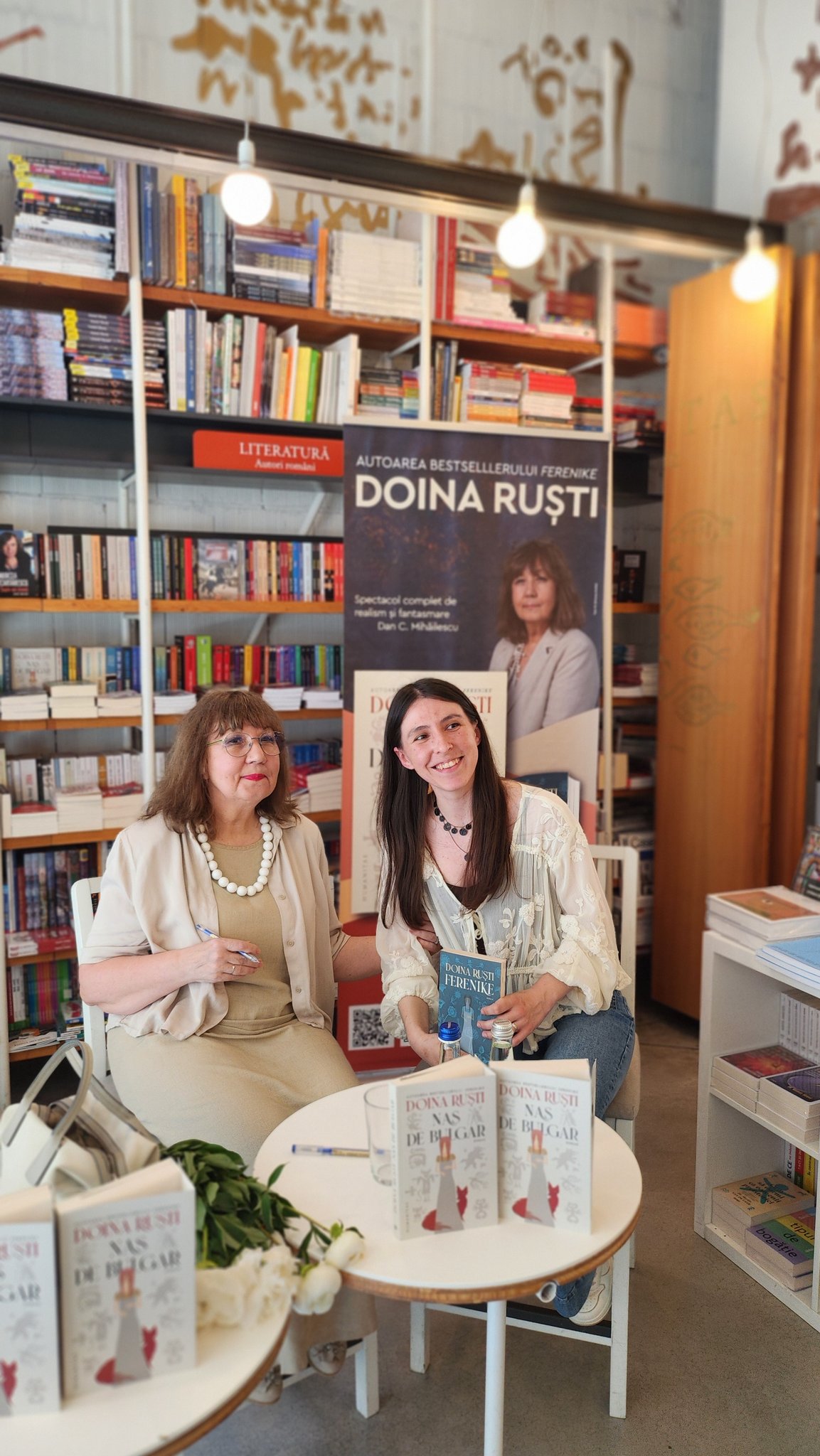
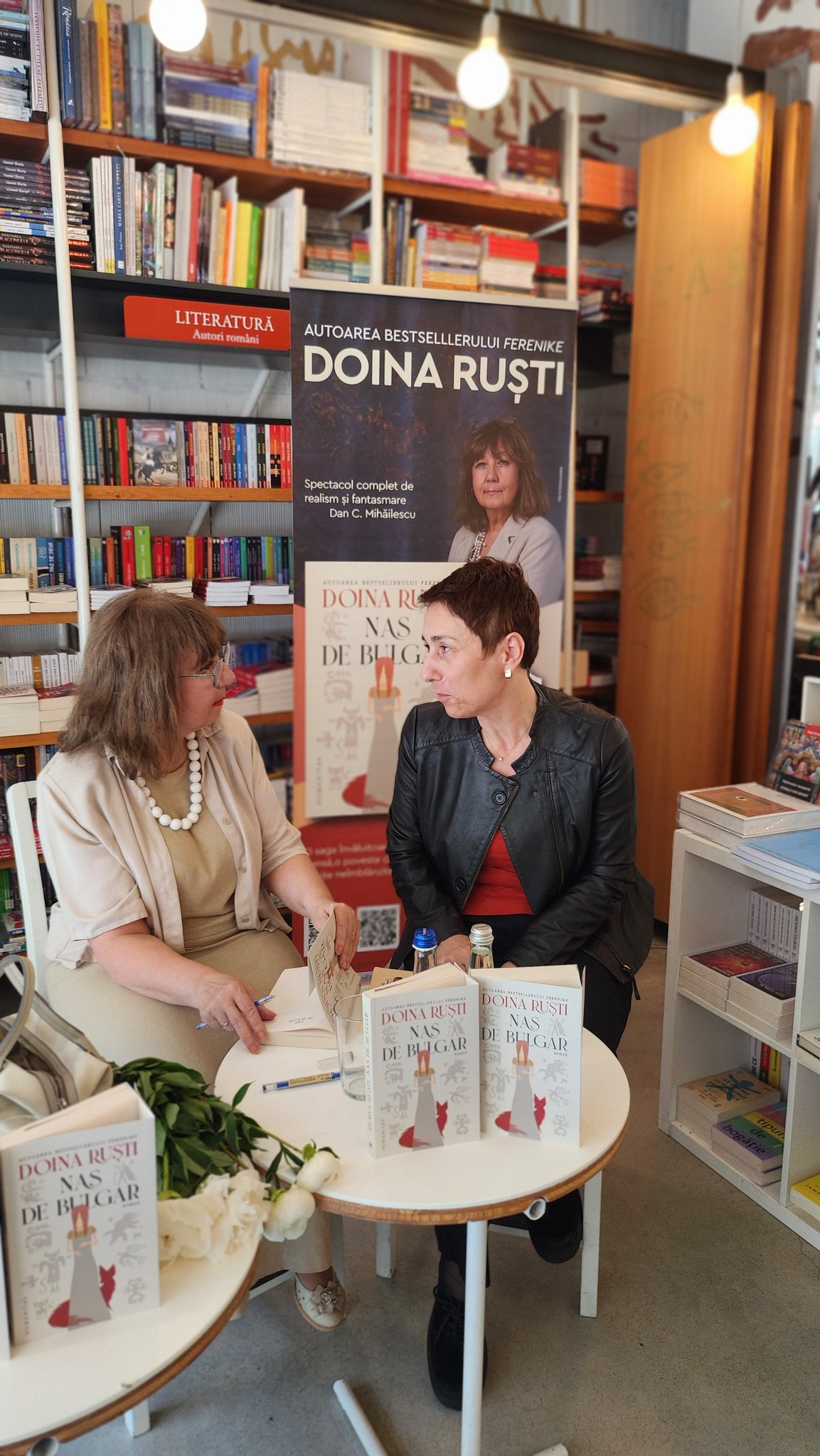
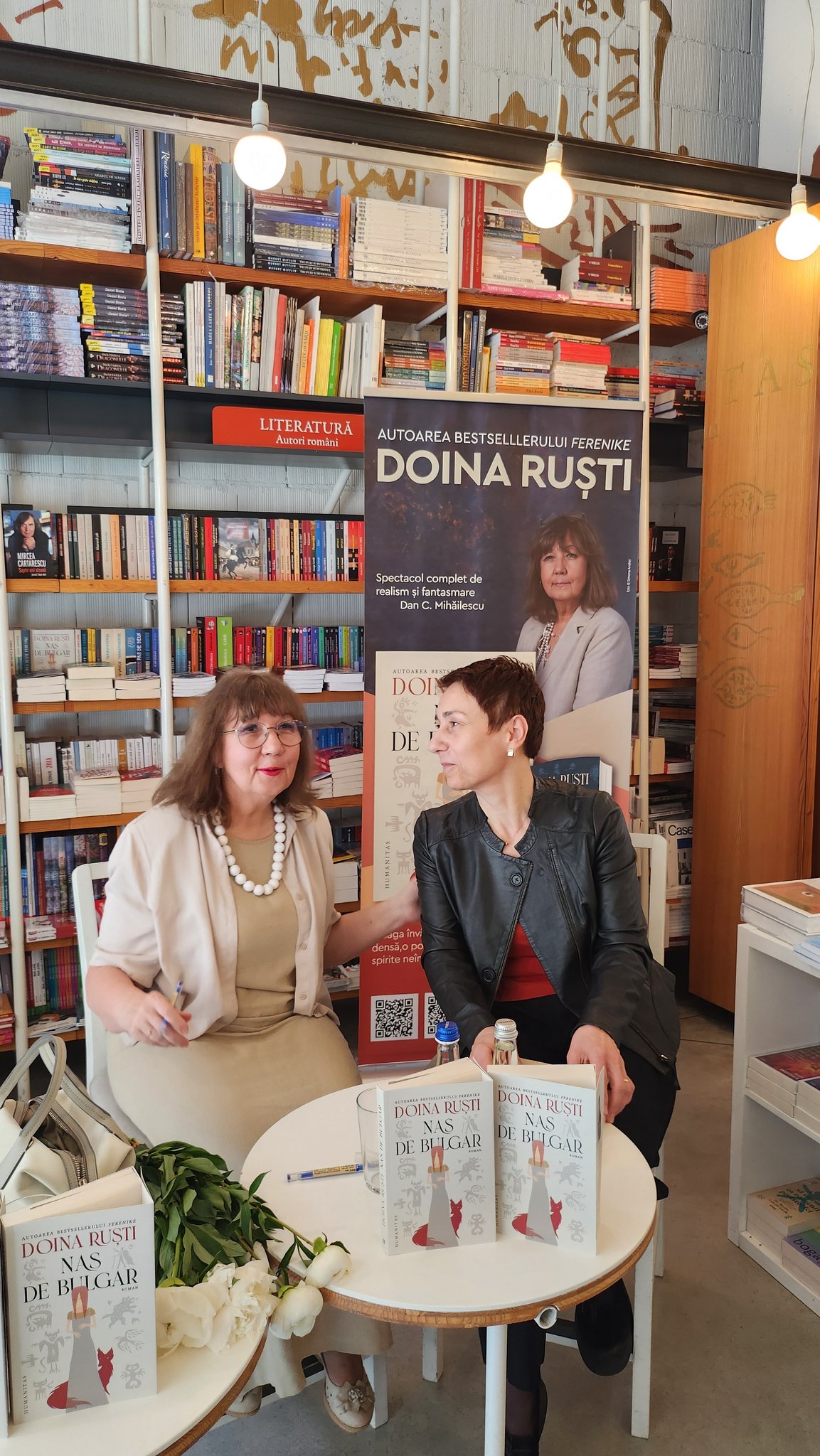
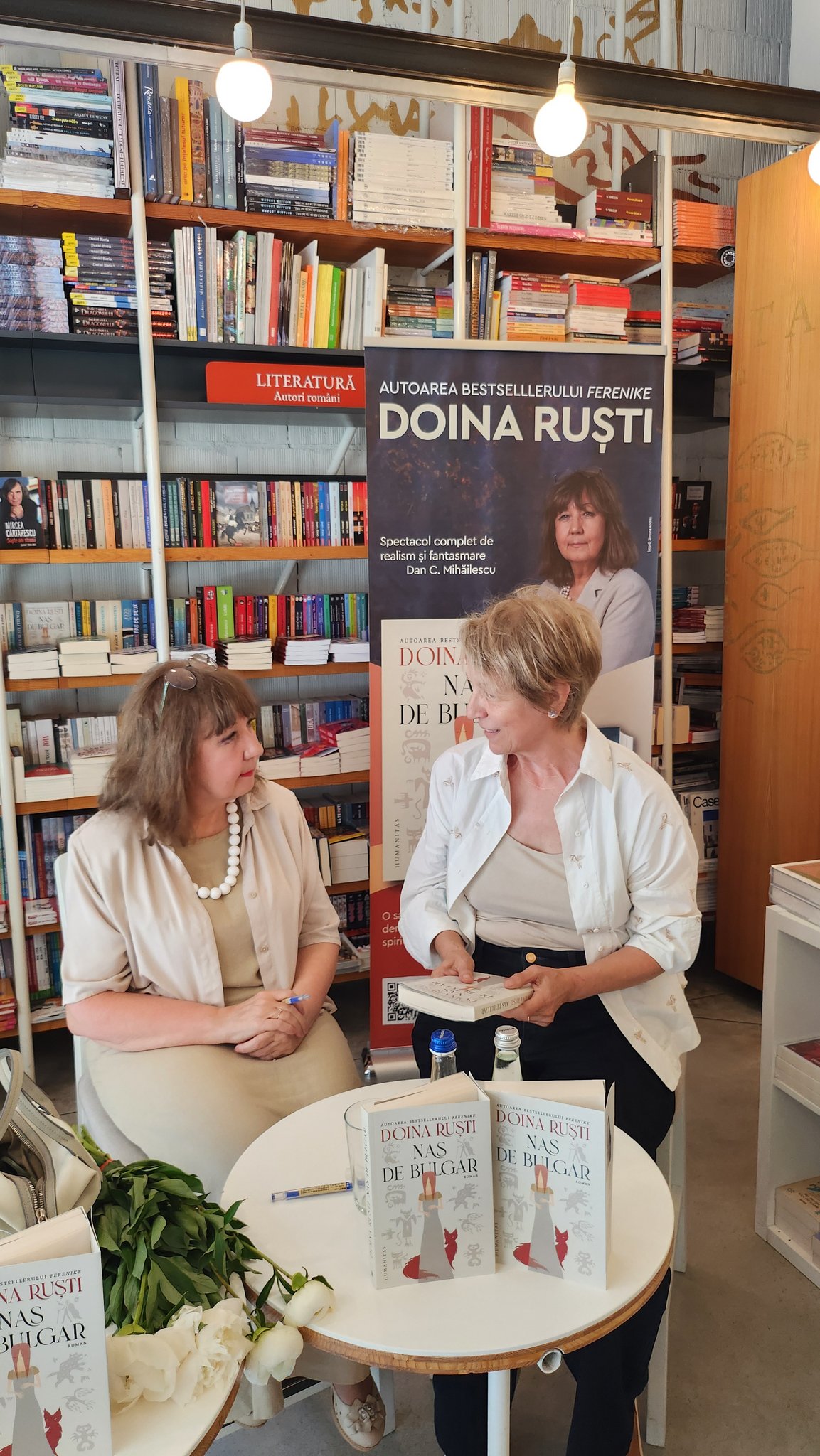
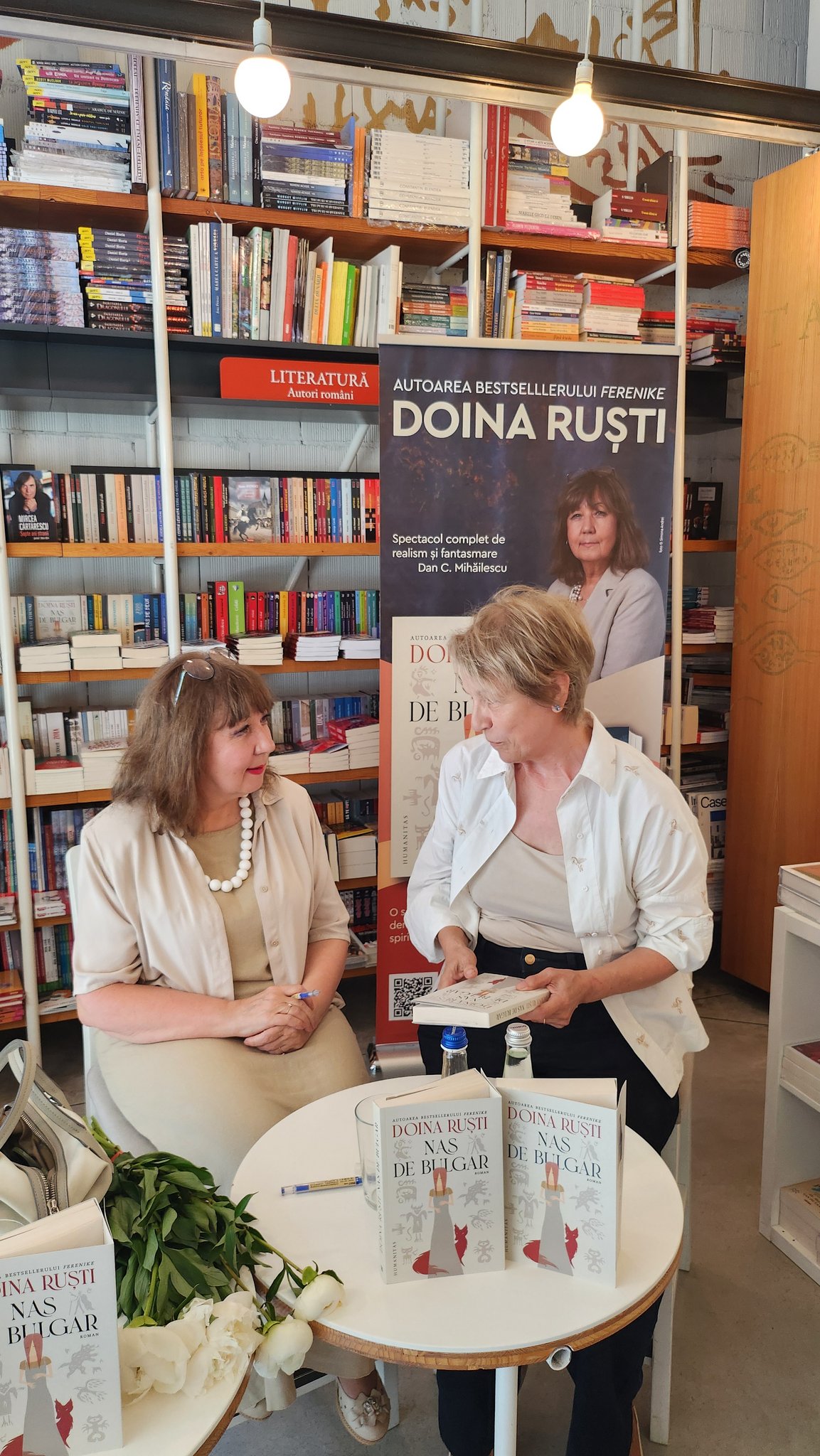
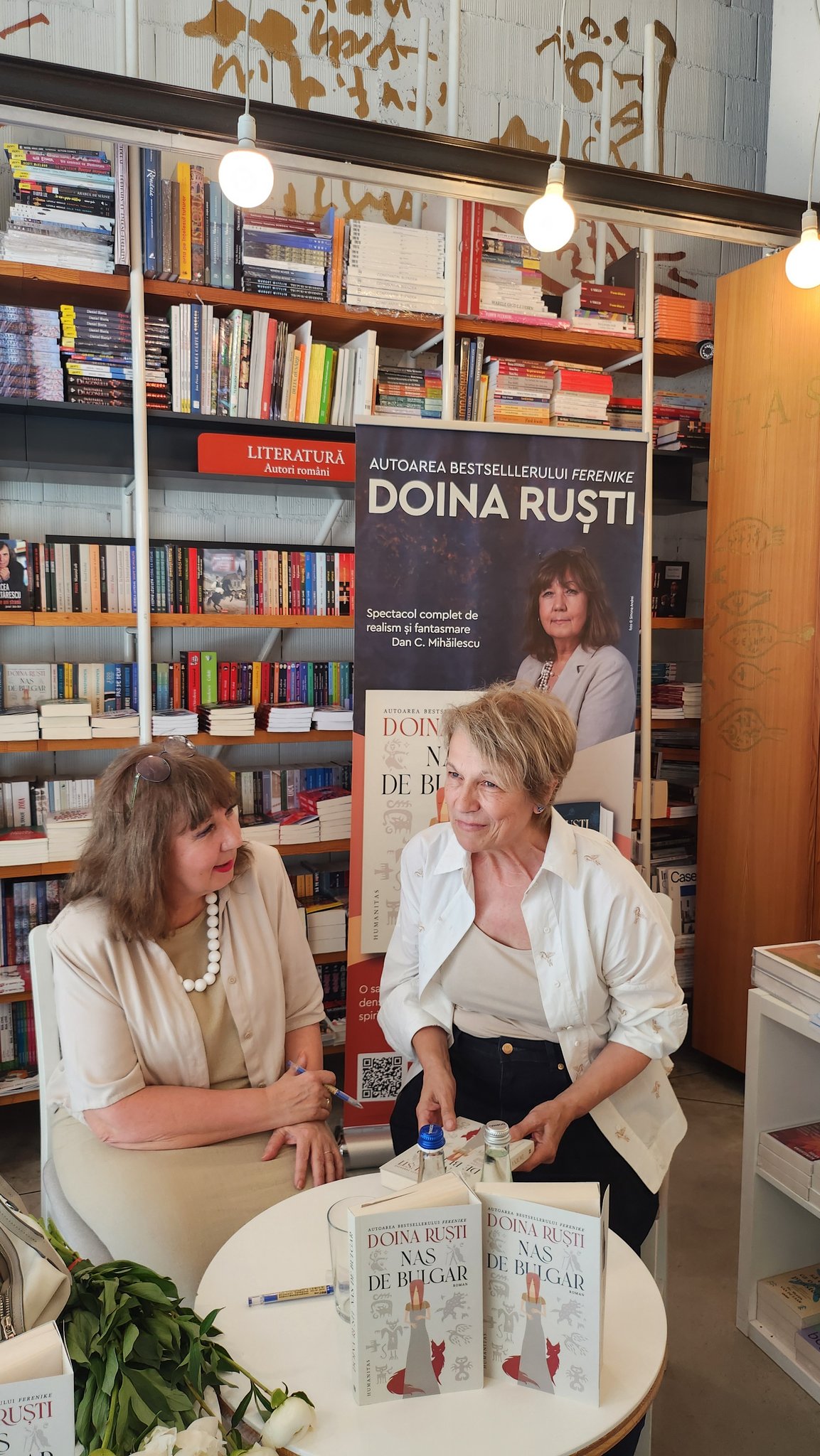
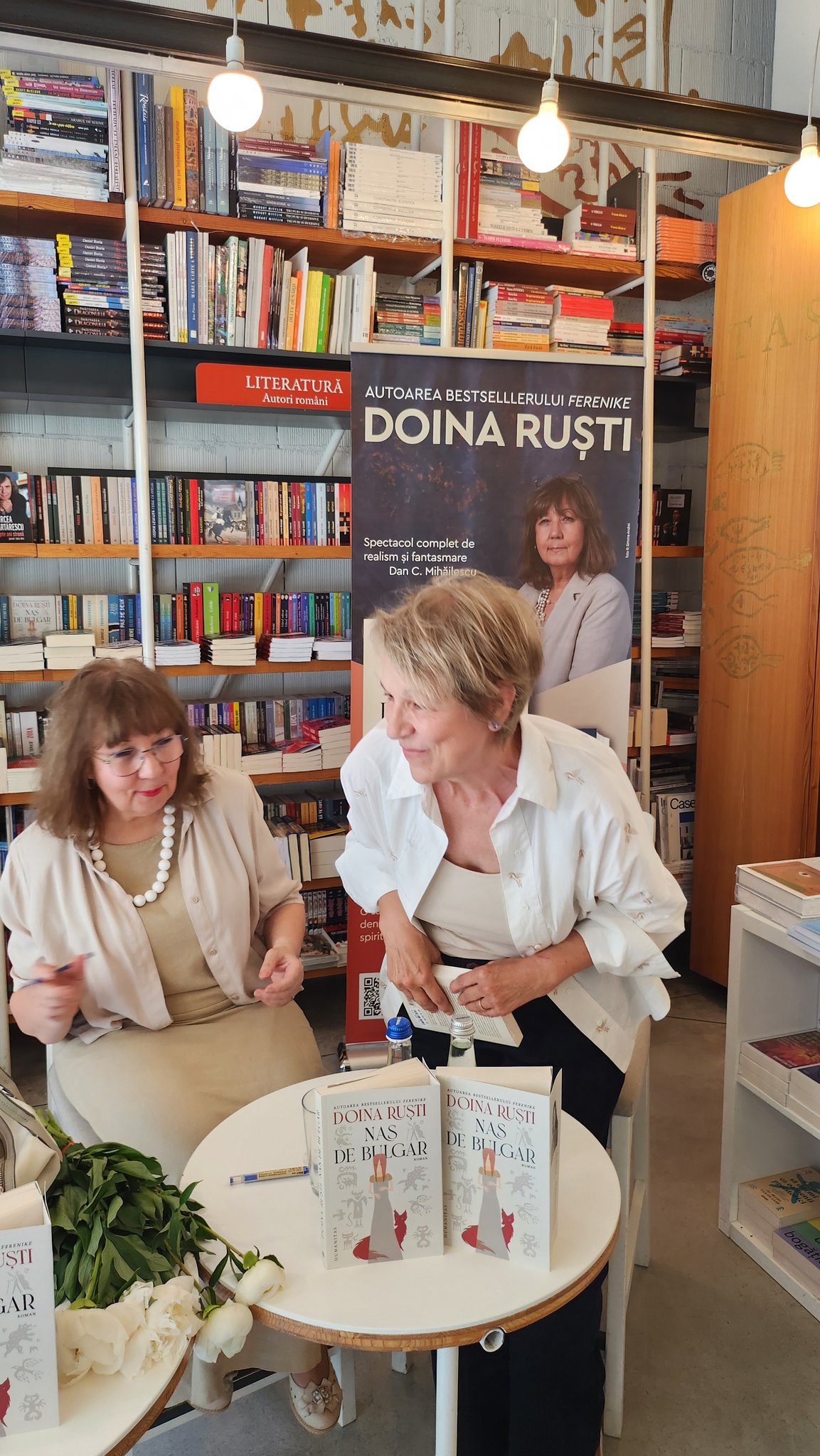
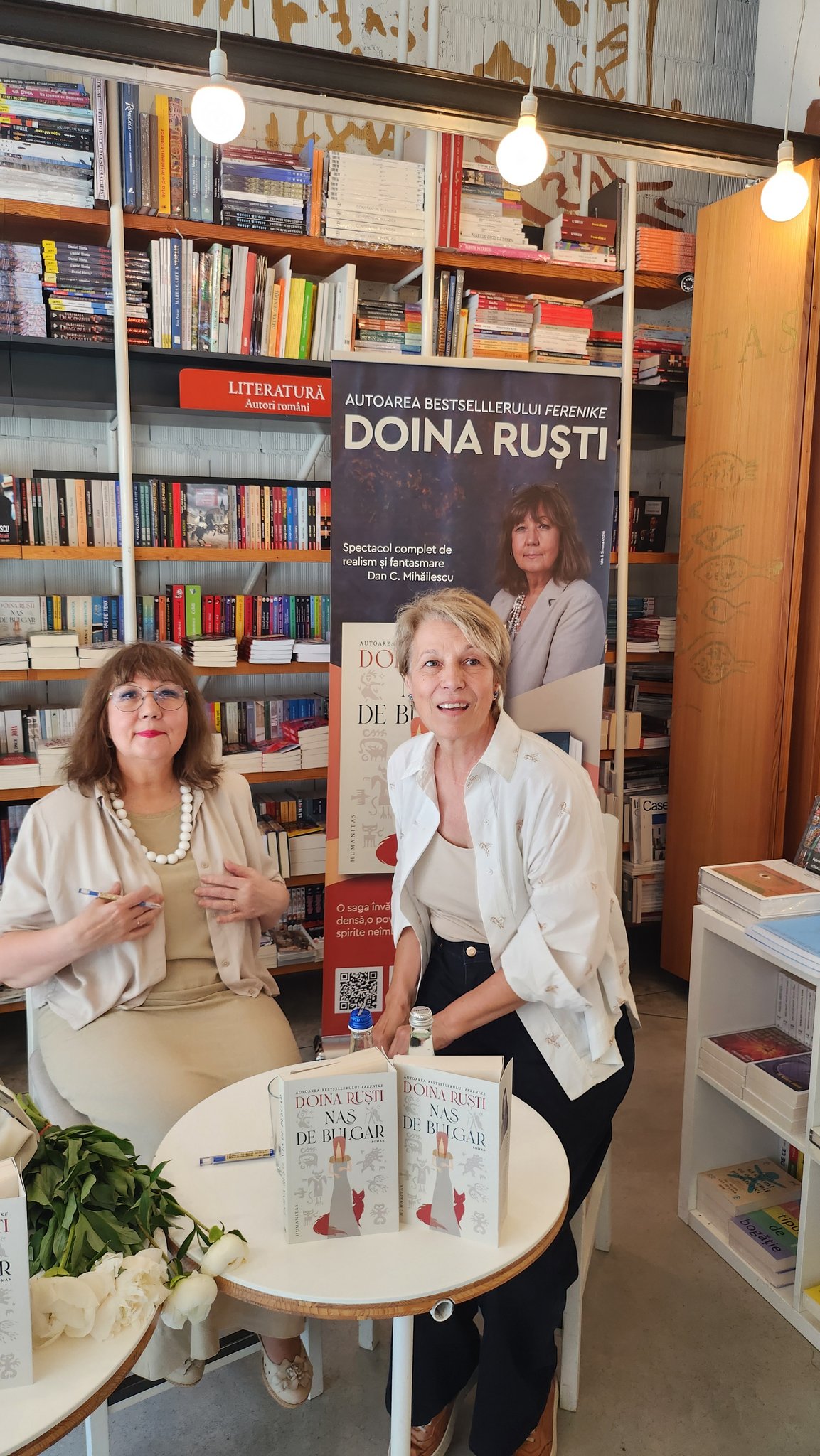
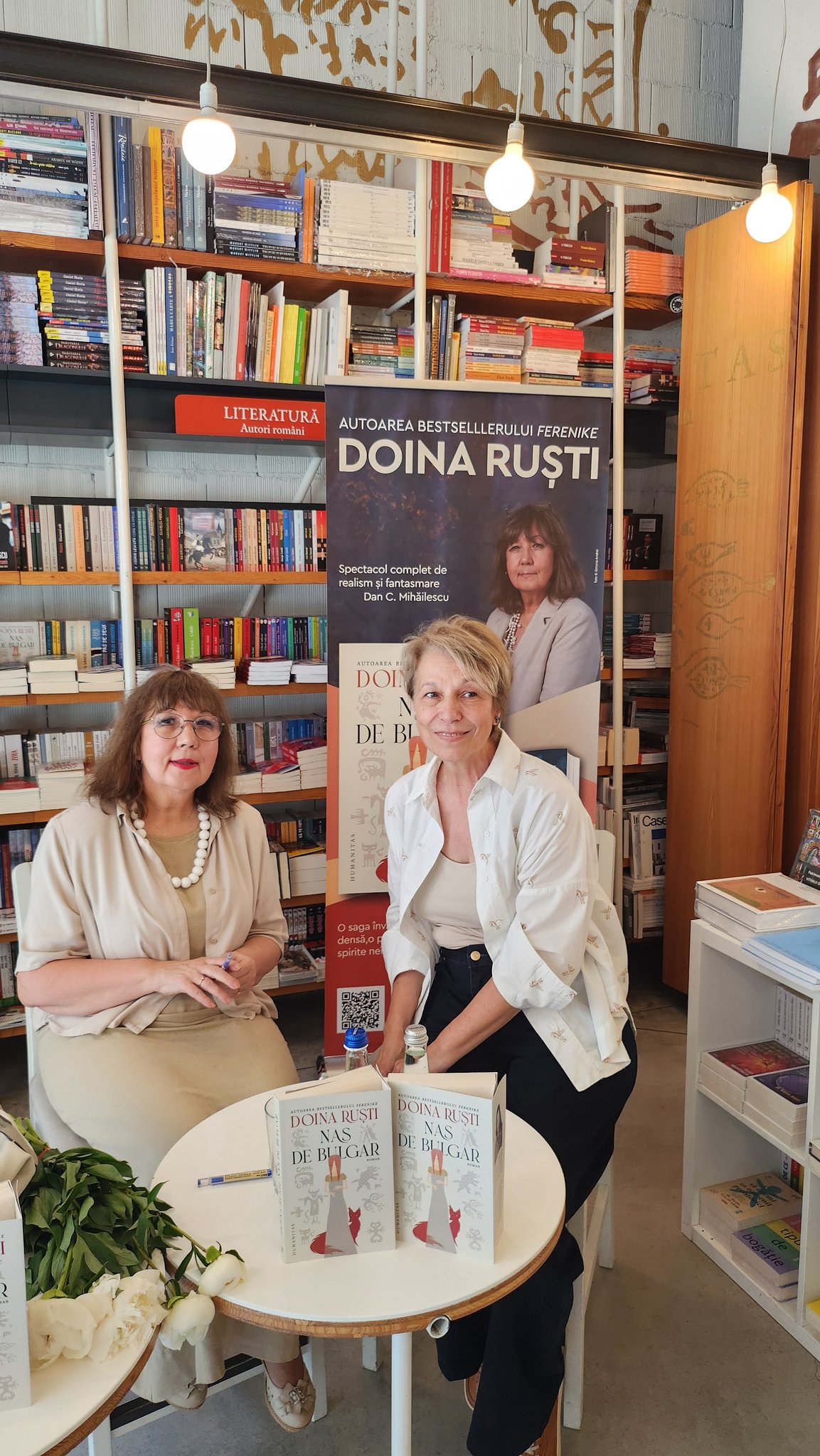
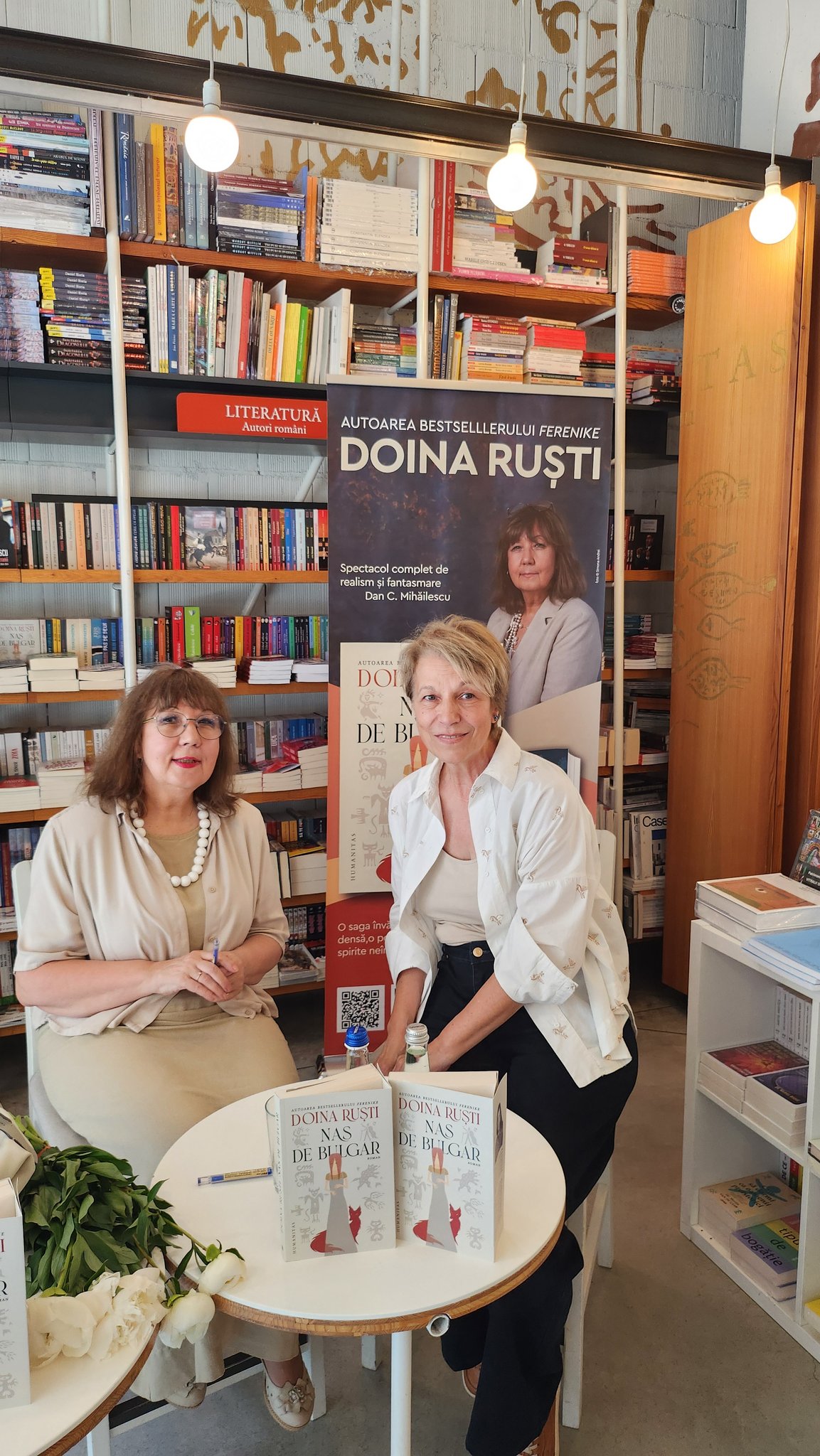
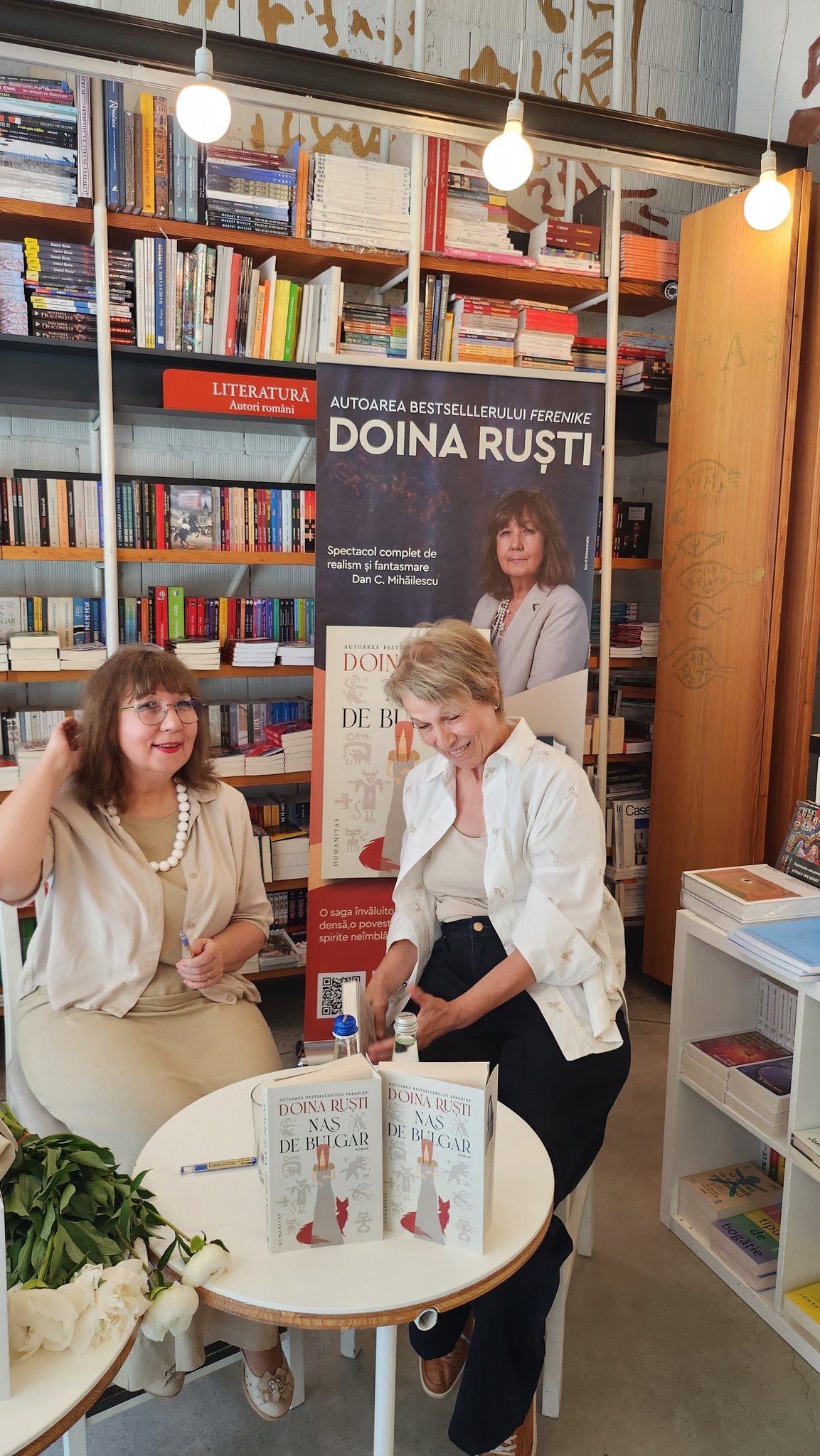
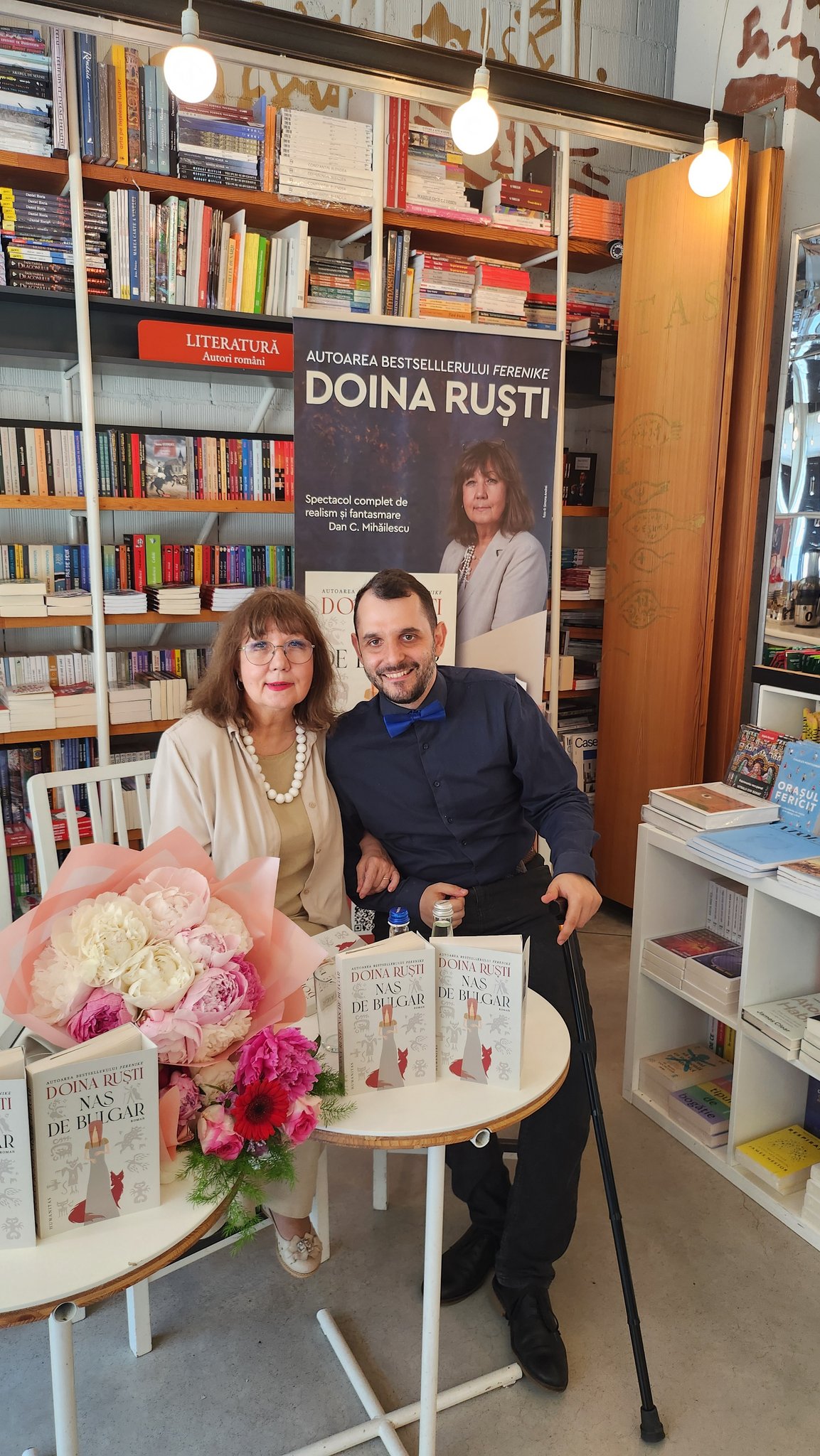
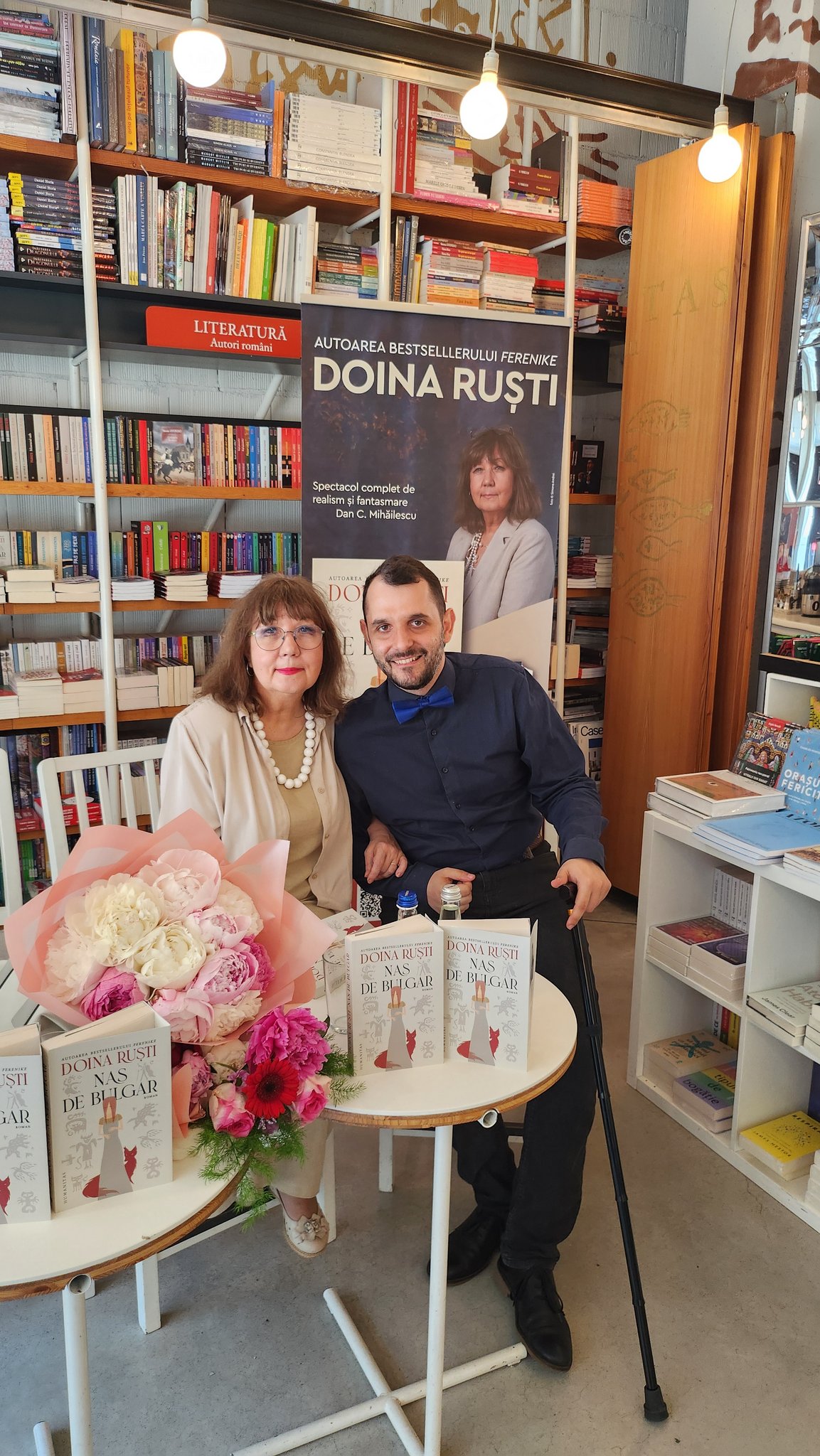
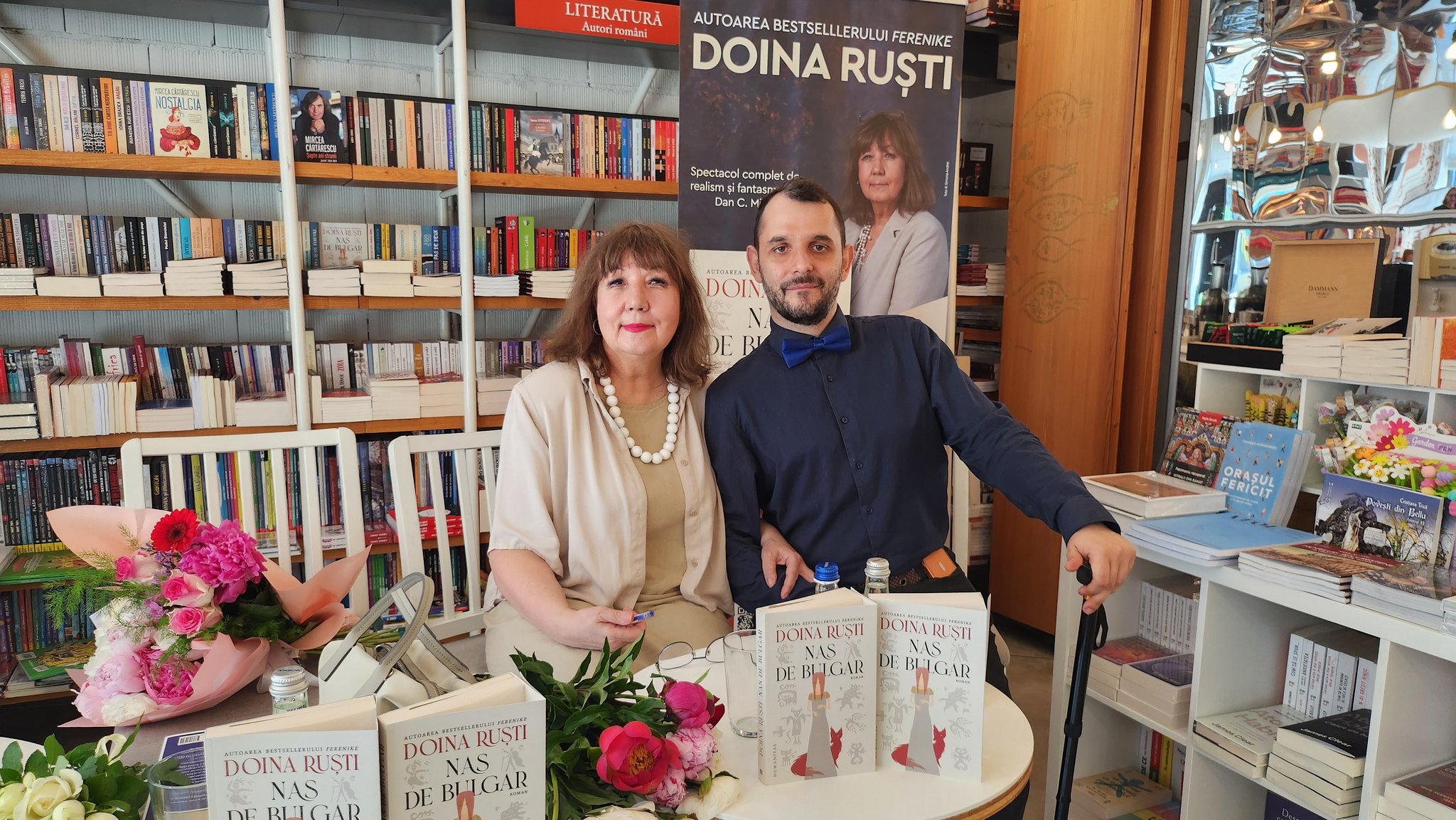
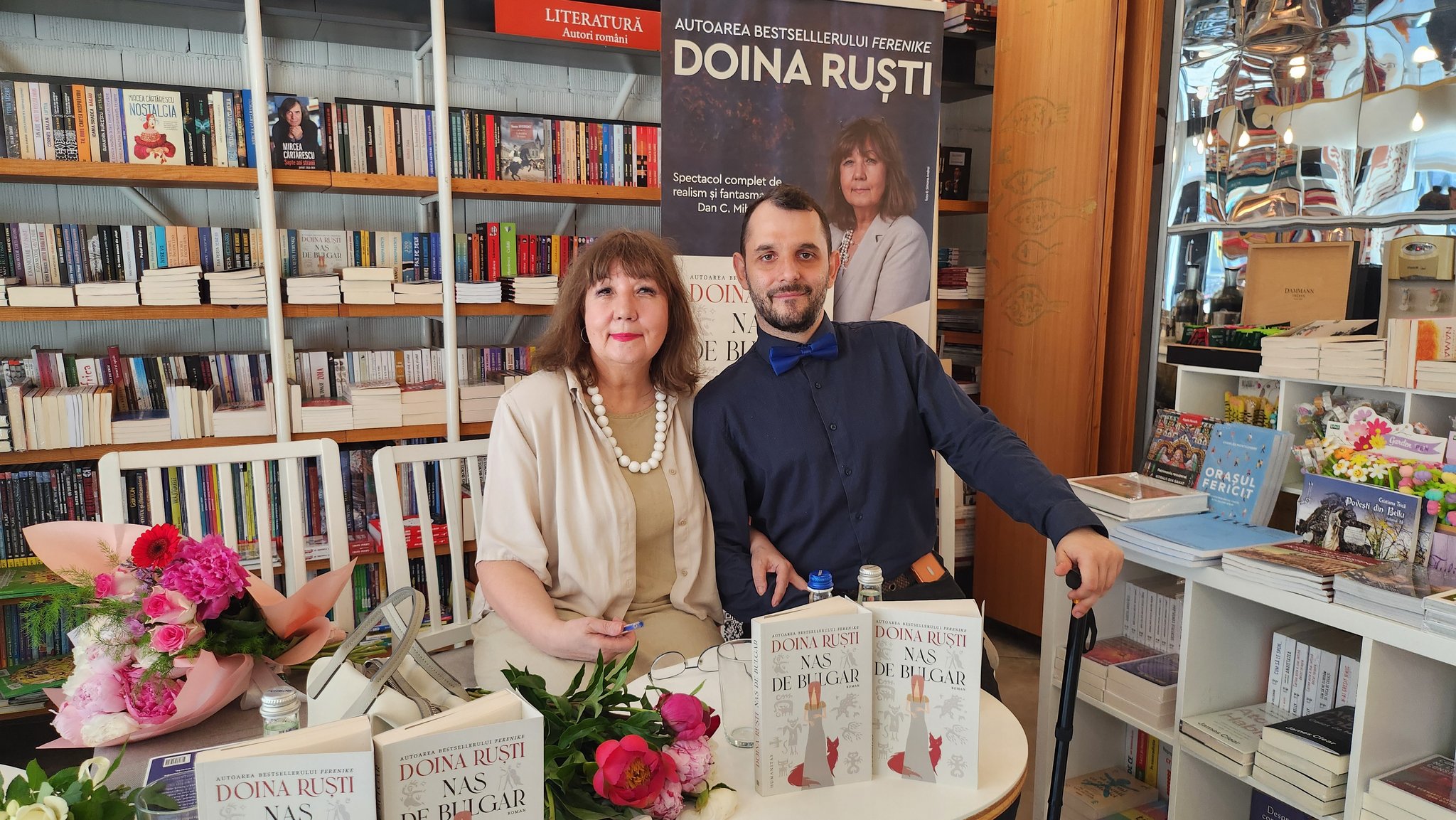
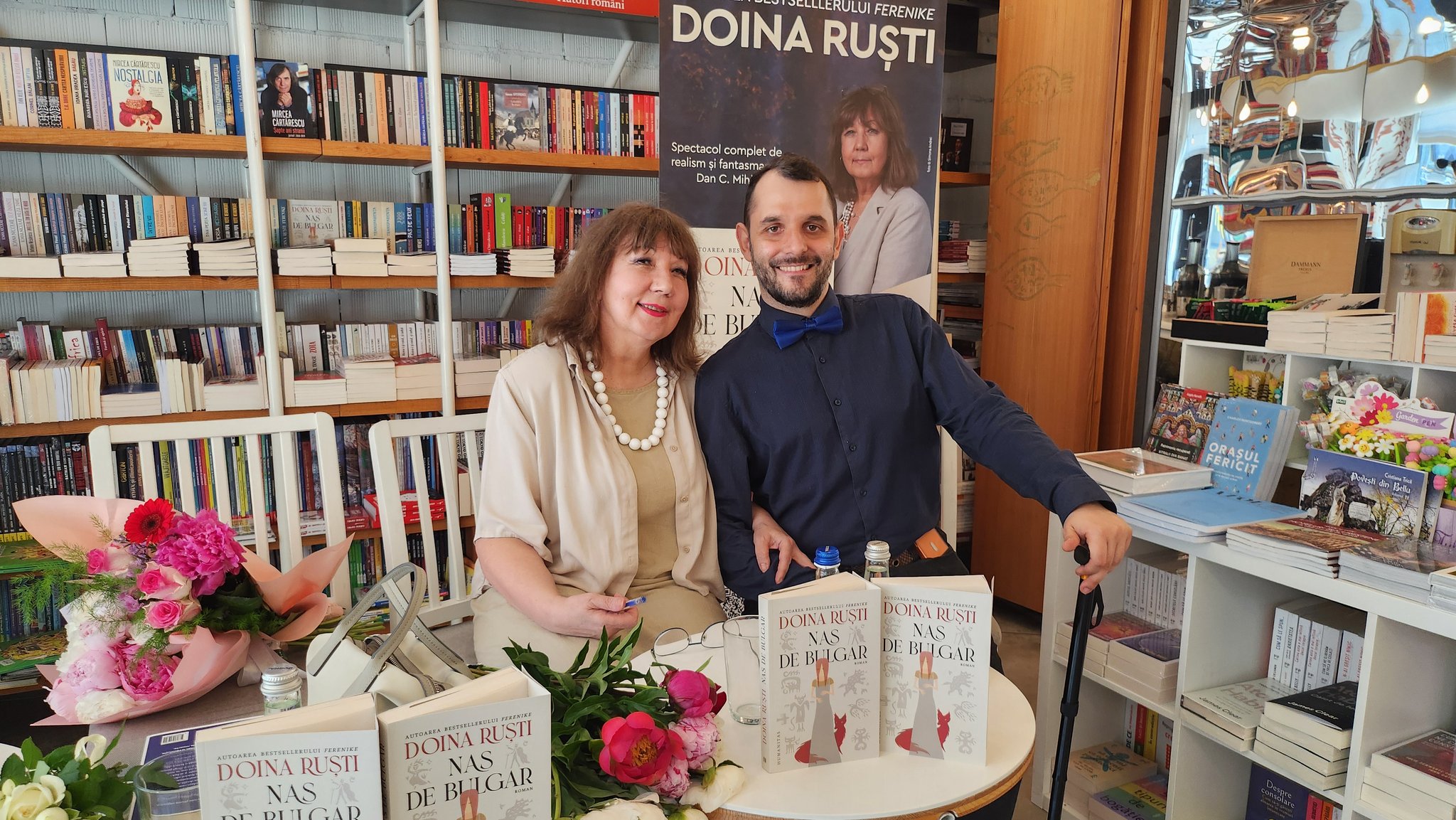
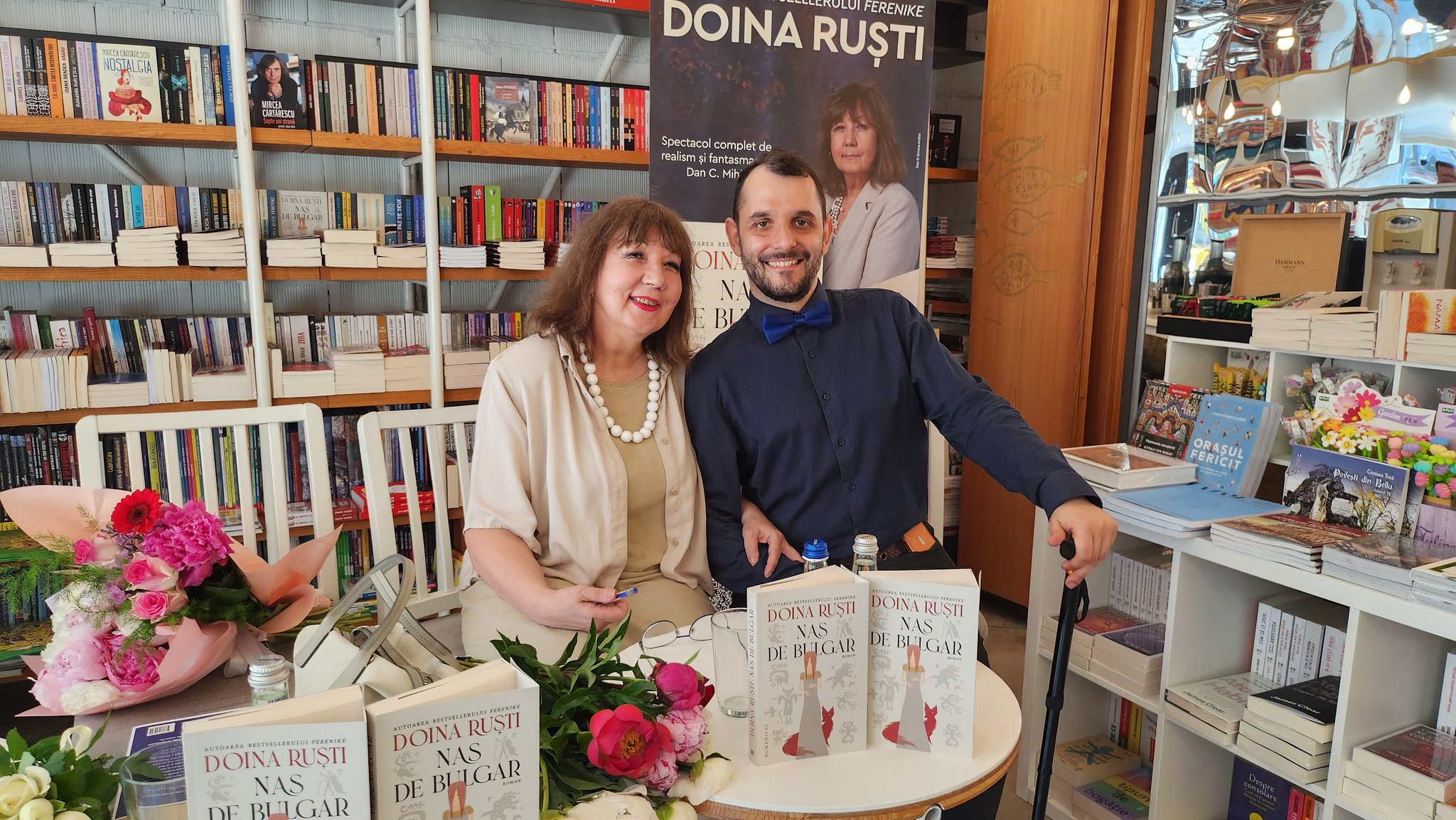
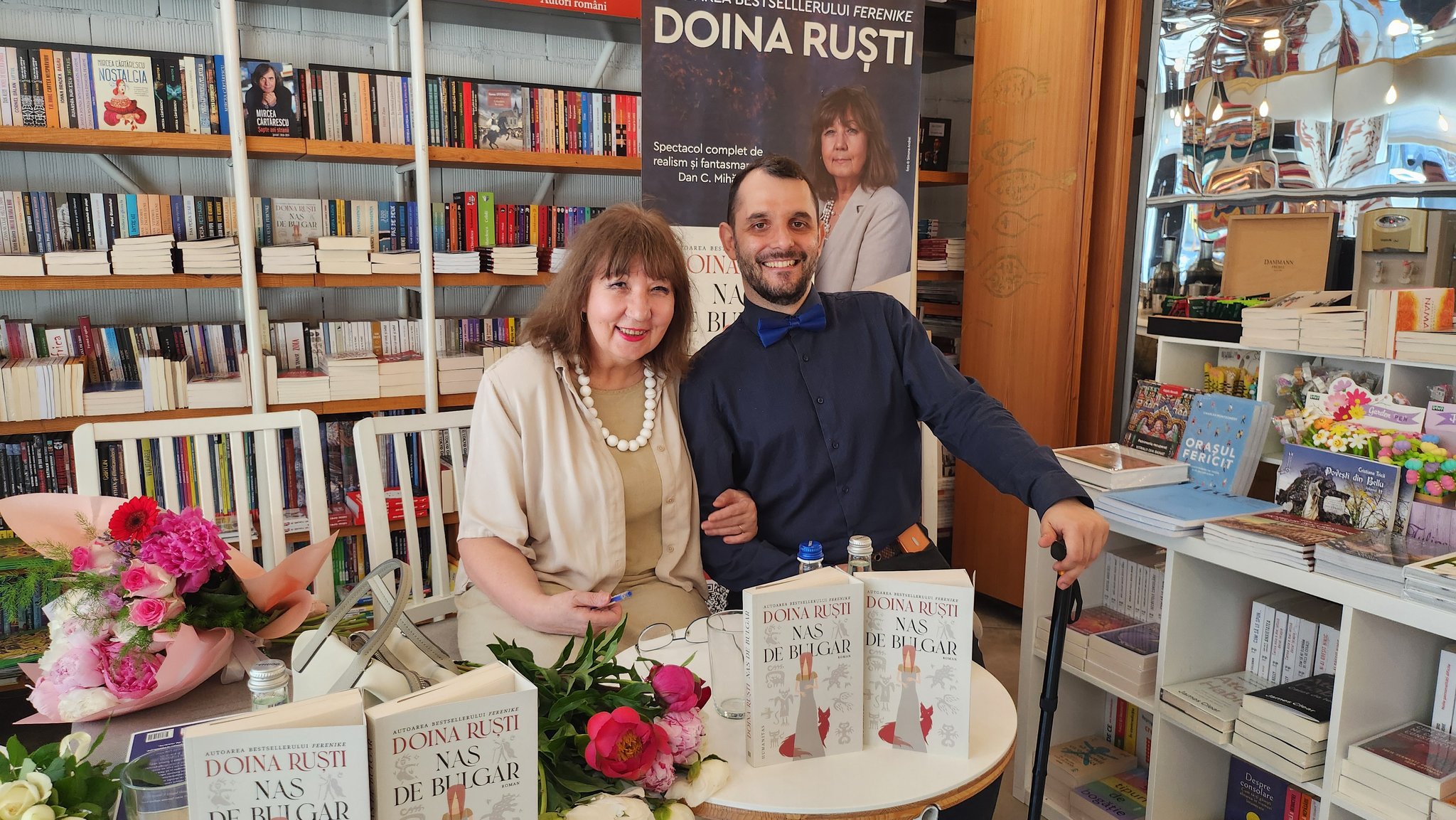
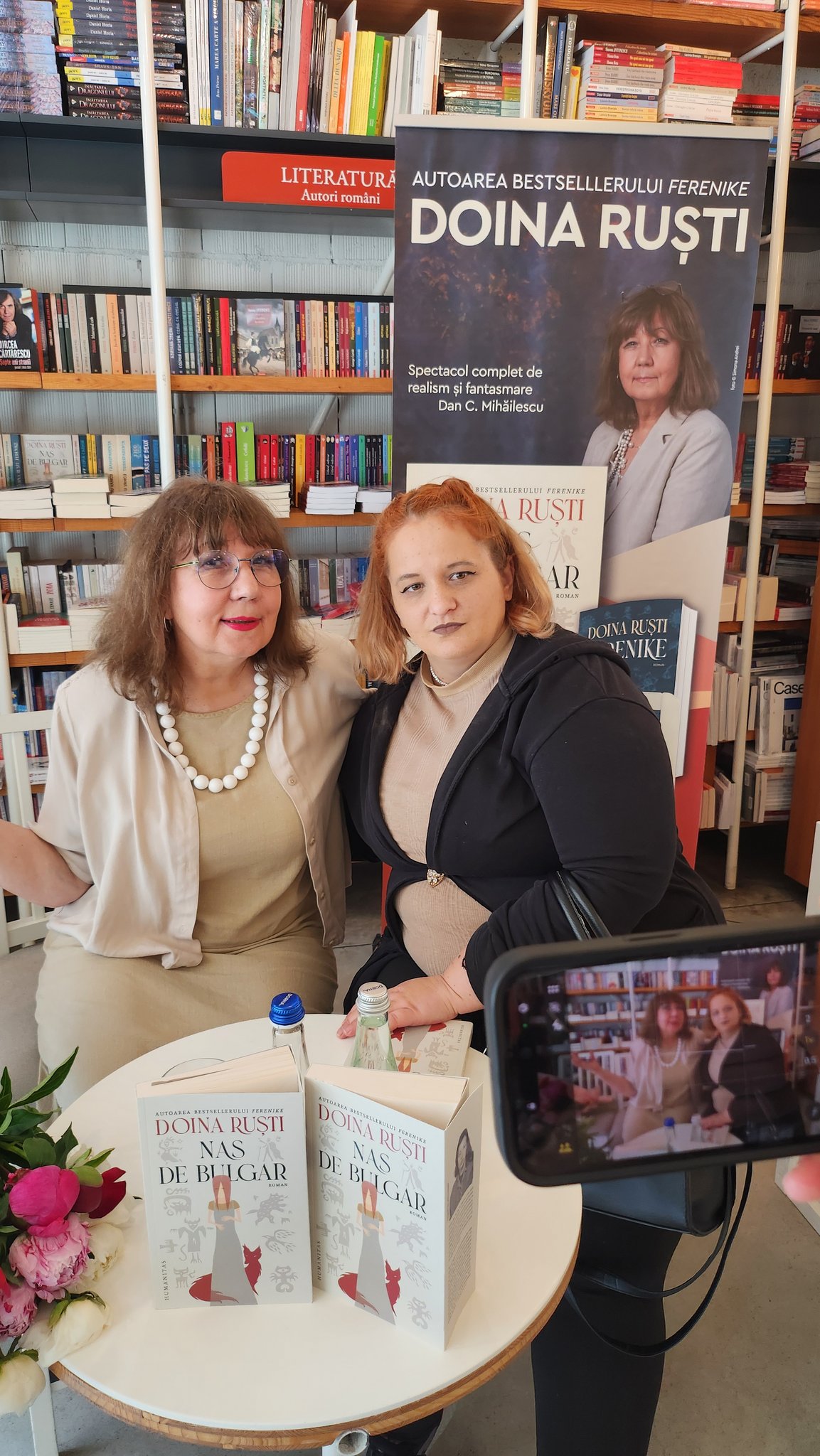
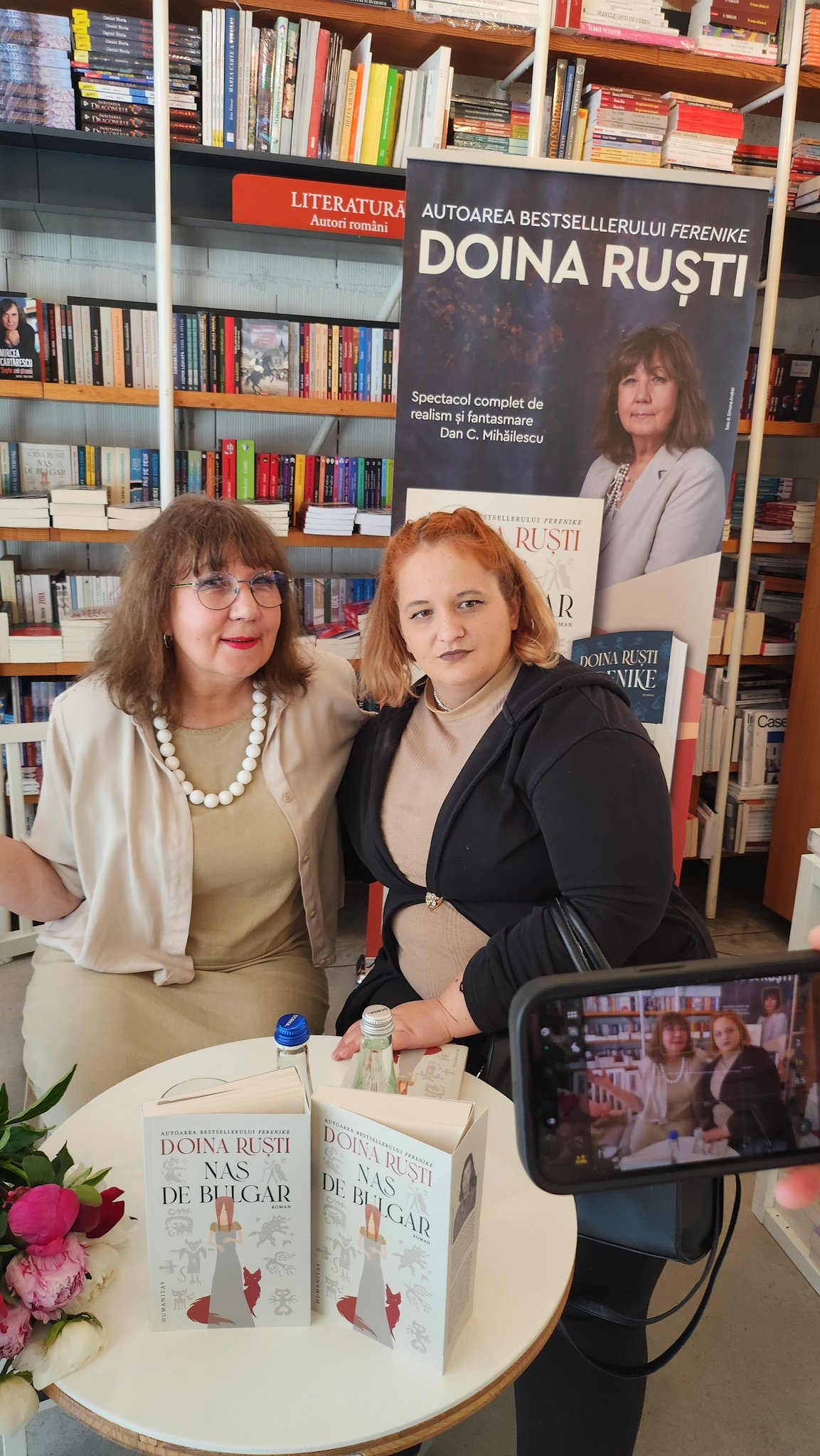
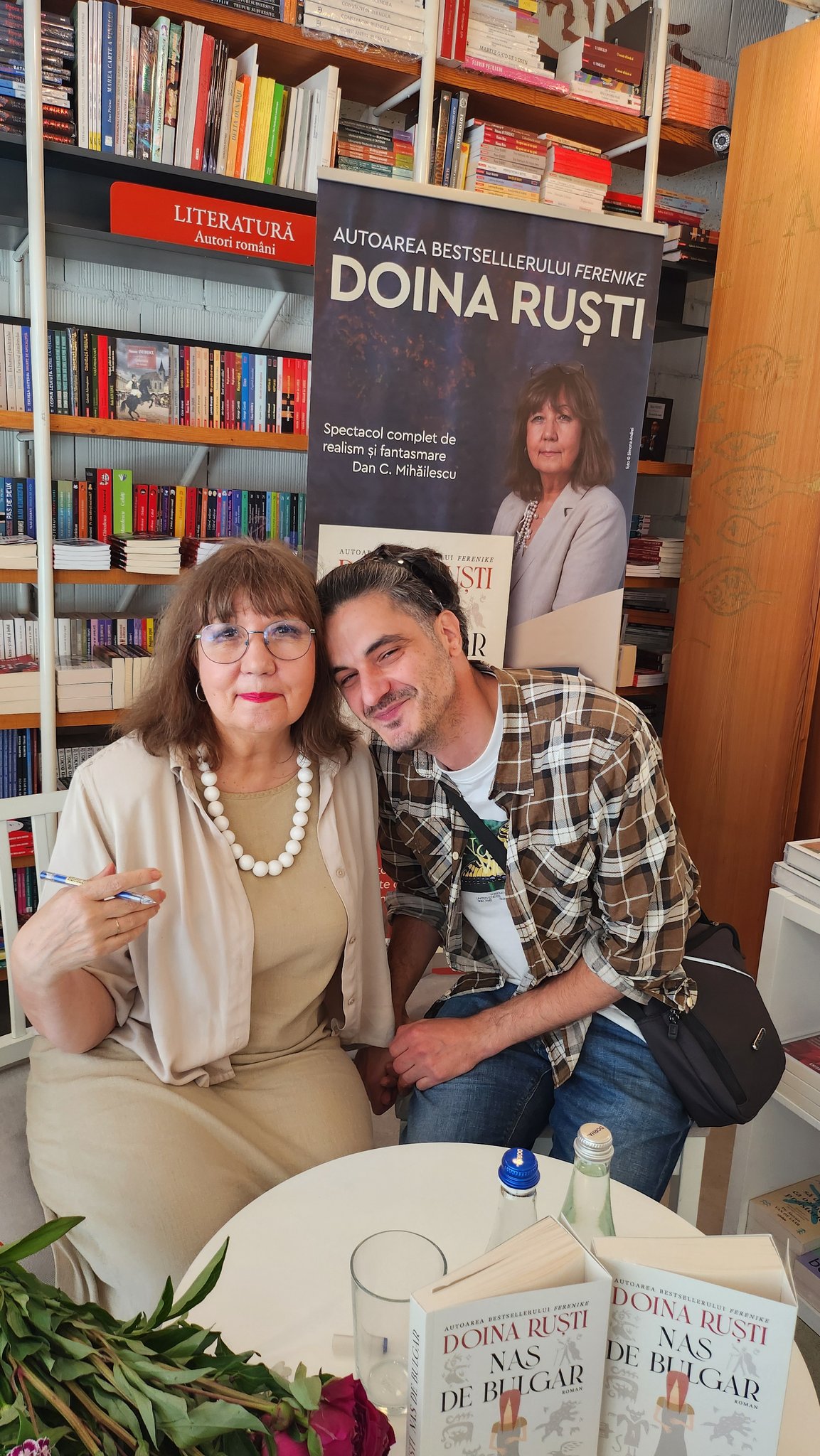
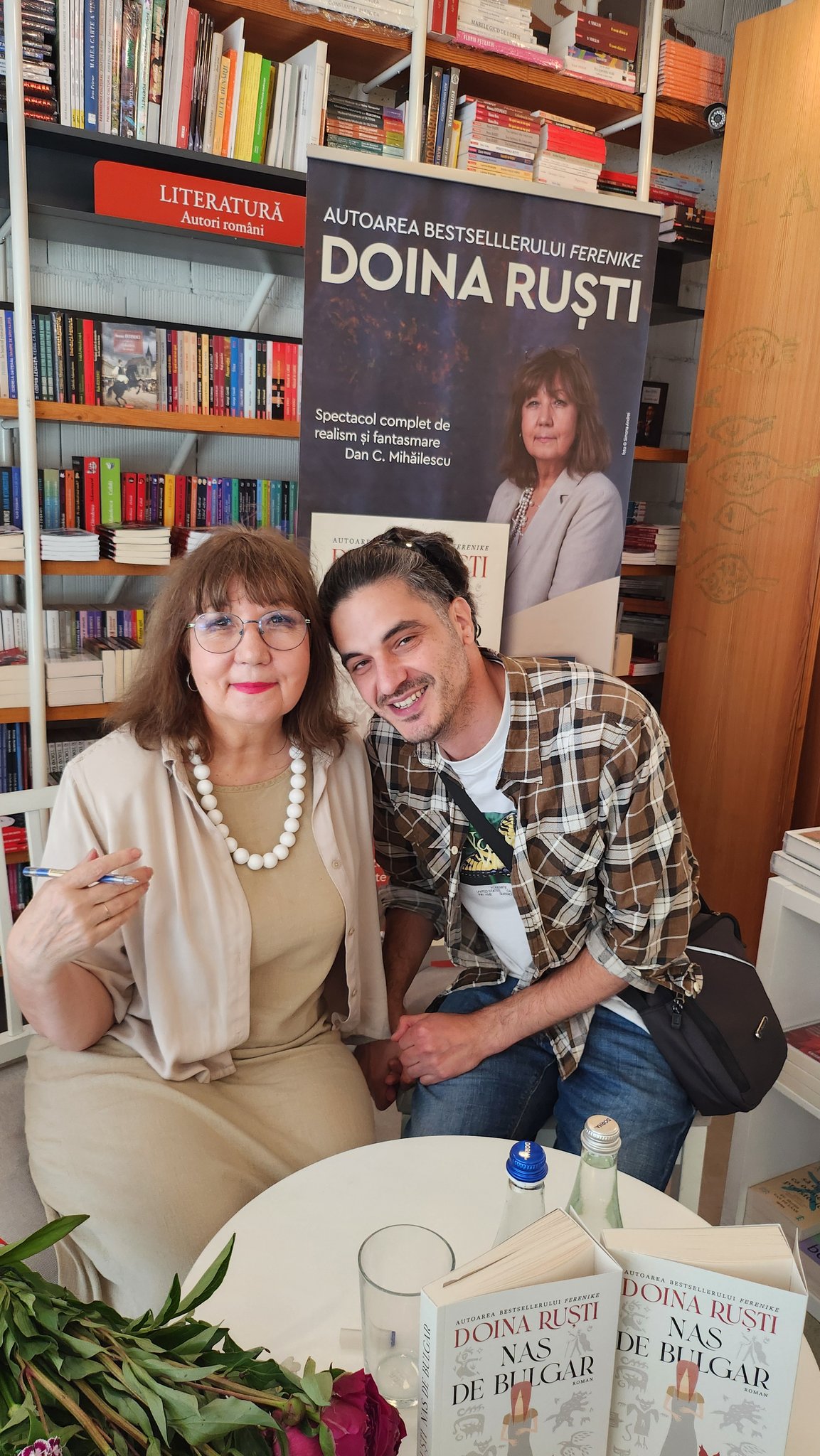
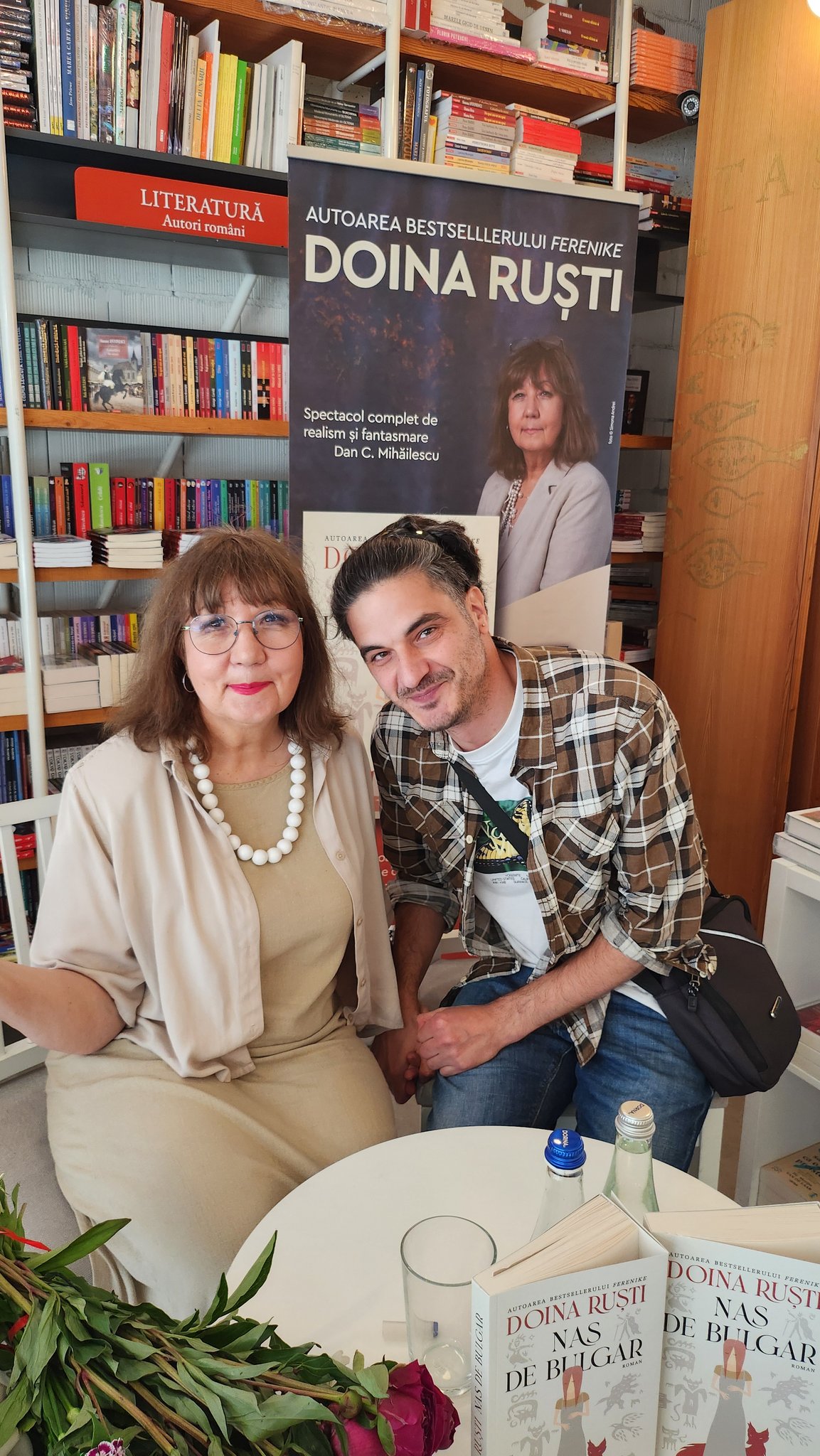
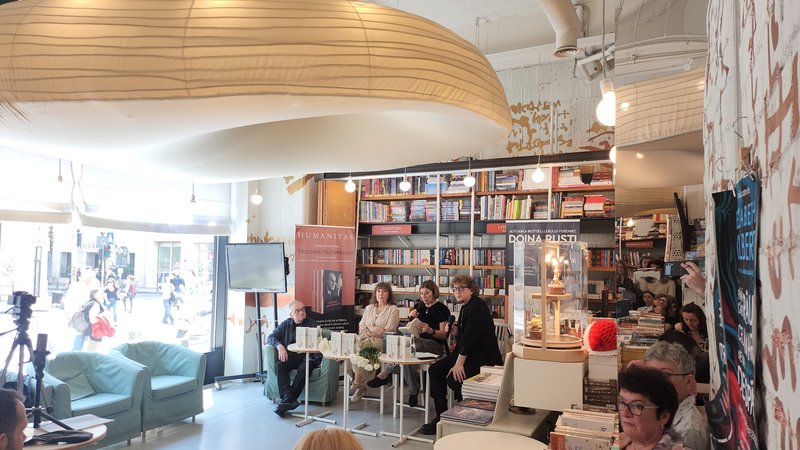
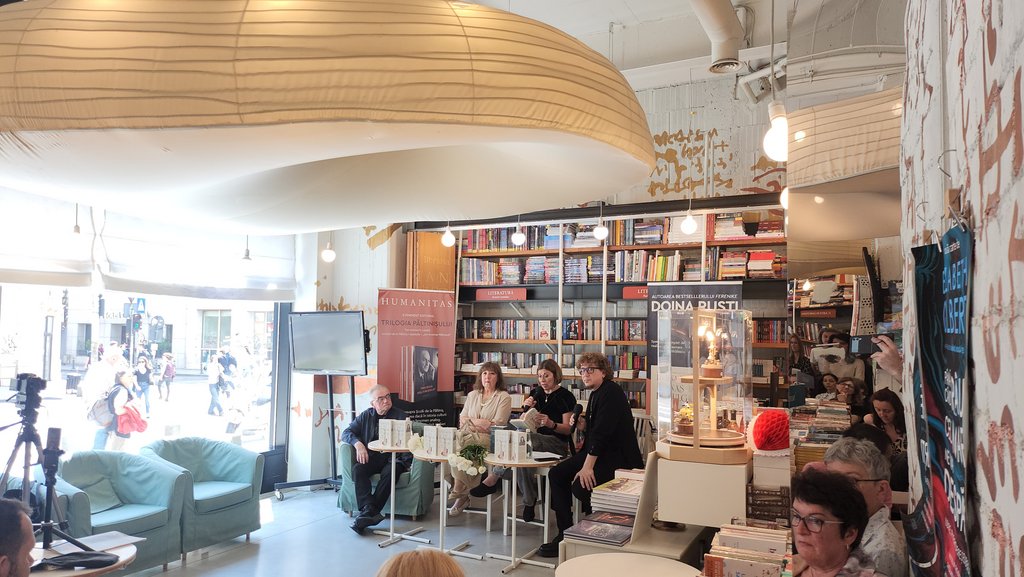
On Saturday, 23 May 2026, at the Humanitas Bookstore in Cișmigiu, the launch of the novel Nas de bulgar, Doina Ruști’s latest book published by Humanitas, took place. After the national tour Cele cinci povești, the book arrived in Bucharest like a homecoming: among readers, friends, and a conversation about love, memory, origin, and identity.
Alongside Doina Ruști, Dan C. Mihăilescu and Lidia Bodea spoke, and the event was moderated by Bogdan Stănescu.
The event brought to the forefront a confessional and baroque novel in which a love story opens up to deeper themes: the formation of a woman, affective genealogy, Danubian migrations, communism, marginalization, and the need to understand one’s own history.
A memorable statement by Dan C. Mihăilescu remains:
„Such an art of intoxicating yourself, of fakirizing yourself like a cobra — no other authors have it now, none of ours.”
Dan C. Mihăilescu
Love as a form of knowledge
In Nas de bulgar, love is not merely a biographical episode but a form of knowledge. “To love means to find out who you are” — the phrase from the novel encapsulates the meaning of a book in which eros, memory, and identity illuminate each other. Doina Ruști speaks about two decisive years in her life: the 10th grade of high school and the first year of university — two moments when encountering love becomes inseparable from asserting one’s own identity.
“Essentially, I am telling the story of encountering love, which is always connected to the assertion of identity. For me, self-legitimization involves an existential map and several pressing themes: migration, communism, the marginalization of women, and national origin. As I write in the novel, to love means to find out who you are,” says Doina Ruști.
Lidia Bodea evoked the Pușkin campus, a socialist space and symbolic topos in Nas de bulgar.
A campus, a love, a genealogy
The novel begins in a student campus haunted by fear and violence. He is a student at the Conservatory, she at the Faculty of Letters. Between the two there is not only music and literature, but also a deeper past: migrations, archaic myths, family history, communism, and the desire to discover where one’s own vulnerability actually comes from.
“The road was not easy, but as soon as she crossed the Danube, Veliku married off her two daughters, giving them only her nose as dowry, which they carried forward. One reached me and about it I want to write, gathering here the joys and the troubles — that is, the story of my nose.”
Dan C. Mihăilescu: “Here everything is dual”
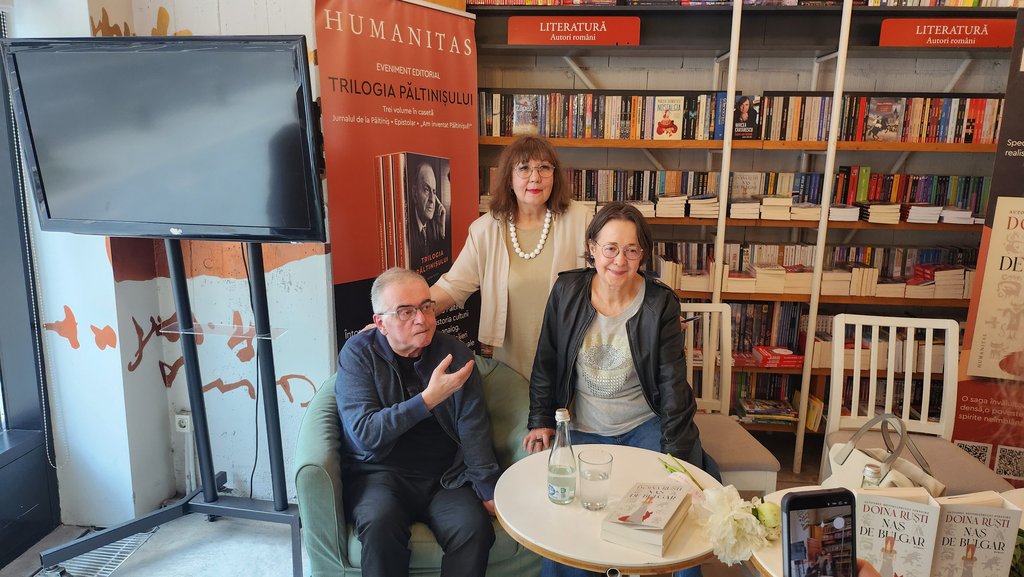
In his intervention, Dan C. Mihăilescu placed the novel under the sign of duality. For him, Nas de bulgar is the book of a double nature.
The critic spoke about the profound Balkan character of the novel, about Byzantine nostalgia, about Bogomilism, and about the way good and evil, light and darkness share the same person.
“Here everything is dual,” said Dan C. Mihăilescu. In his reading, the writer claims a Balkan identity that starts from Albania, Bulgaria, and Serbia and extends to the Macedo-Romanian Vlachs. This world, with its Byzantine nostalgia and mythical layers, meets in the novel with a modern, confessional sensibility, crossed by restlessness, memory, and desire.
“I think Doina Ruști also recognizes a bit of Bogomilism in herself, which I claim as well — I am here out of consonant admiration. If I don’t admire, I don’t breathe,” said Dan C. Mihăilescu.

A spectacle of realism and phantasm
Dan C. Mihăilescu saw in Nas de bulgar a “complete spectacle of realism and phantasm,” a book that marries family chronicle with campus novel, fictionalization with parable, autobiography with history and archaic imagination. In his reading, the novel has a “peacock’s tail”: it intoxicates, fascinates, and constantly opens new layers of reading. Social realism, sensuality, Balkan mythology, and the memory of communism overlap in a dense, brilliant construction that is difficult to fit into a single formula.
The nose as sensory memory
One of the strongest accents of Dan C. Mihăilescu’s intervention was related to the book’s sensuality. The “Bulgarian nose” is not only a genealogical sign or an identity mark, but also an olfactory richness — a way of knowing the world through smell, sight, and the senses. The critic spoke about the pages in which the novel’s sensorium enters a “debauchery of sensations,” becoming at the same time poem, film script, and total spectacle.
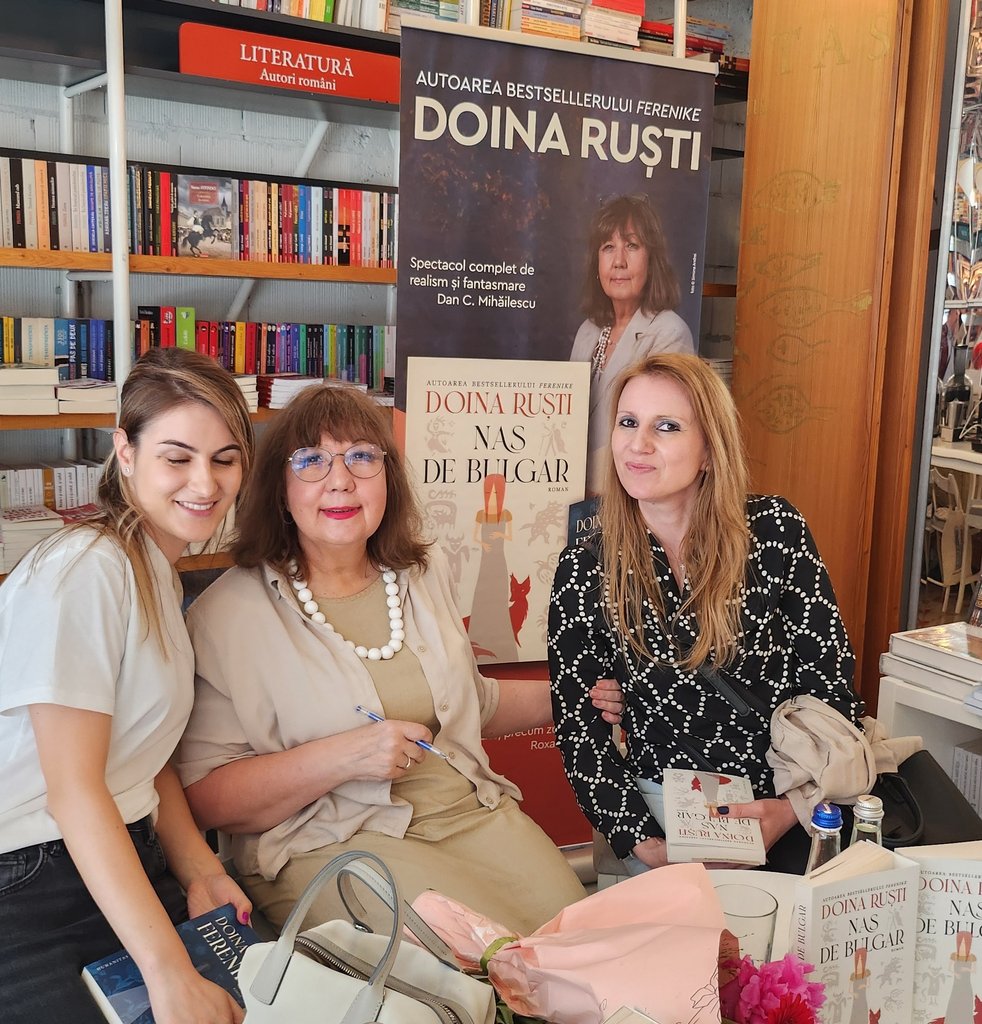
After Ferenike: love illuminates the past
Beyond the love story, Nas de bulgar continues, in a different tone, the universe of Ferenike.
Bogdan Stănescu asked several pertinent questions, especially regarding memory and identity.
If Ferenike spoke about formative trauma and the memory of death, the new novel brings love to the stage as a force of knowledge. Personal trauma, national myths, communism, and archaic history become parallel systems of control and escape, and biography turns into an existential map.
Myths, migrations, and vanished worlds
In the novel, every affective episode opens a gate to an older world: Danubian migrations, the cult of Dionysus, Bulgarian mercenaries, the mythical Caucaland, archaic gods, and the spirits of a vanished world. The story of the nose thus becomes the story of a lineage, a sensibility, and a claimed identity.
The Iași philological school, explained Doina Ruști, is based on the theses of Alexandru Philippide; hence a permanent obsession with ethnogenesis, which she placed in the novel as the emblem of her years of intellectual formation.
A community of readers
The launch at Cișmigiu was not only an encounter with a new novel, but also a return to the center of a community of readers. Nas de bulgar came home with its story about love and origin, about the way memory is transmitted through the body, through language, through smells, through myths, and through the books that help us understand ourselves.
This page is part of The Tour of the 5 Stories, a literary project connected to the novel Nas de bulgar.