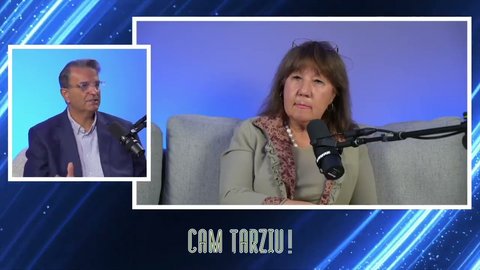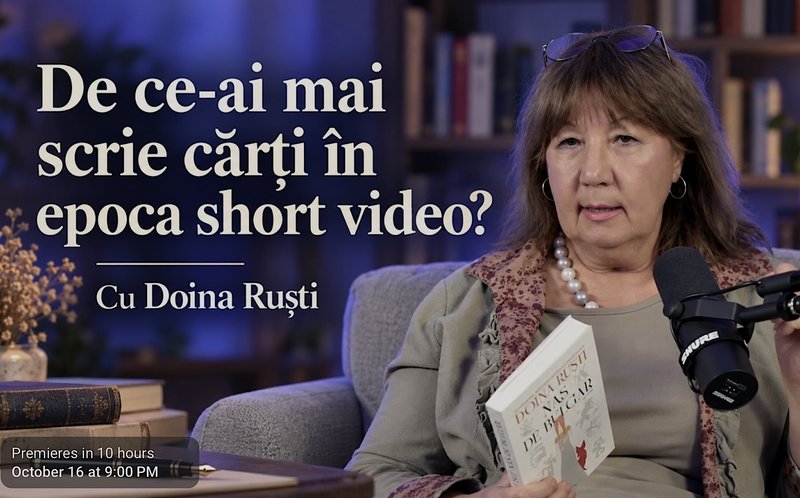
Recently invited to Lucian Mîndruță's podcast, Doina Ruști took part in a conversation that began with her upcoming appearance at the Guadalajara International Book Fair (FIL).
Ruști spoke about the importance of the festival and the opportunity to meet leading publishers and writers.
With his characteristic humor, Lucian Mîndruță raised a question that seems to be on everyone's mind: what does it mean to write literature in today's world?
From artificial intelligence to the decline in reading, the conversation explored the future of the novel and the relationship between writers and their readers.
"At least we have one reader we can count on: ChatGPT!" Doina Ruști joked, arguing that writing is, above all, an act of play and creation. What truly matters is not the publishing industry, but the creative act itself, the pleasure of inventing worlds and building a story. Literature is changing, but storytelling is eternal.
Another topic was the relationship between autobiography and fiction, and the way personal experiences become the raw material of fiction, as in her novels Ferenike and Nas de bulgar.
The writer also spoke about the tragedy of her childhood, marked by her father's murder, an experience explored in Ferenike.
The conversation then turned to identity and literary works that stand the test of time.
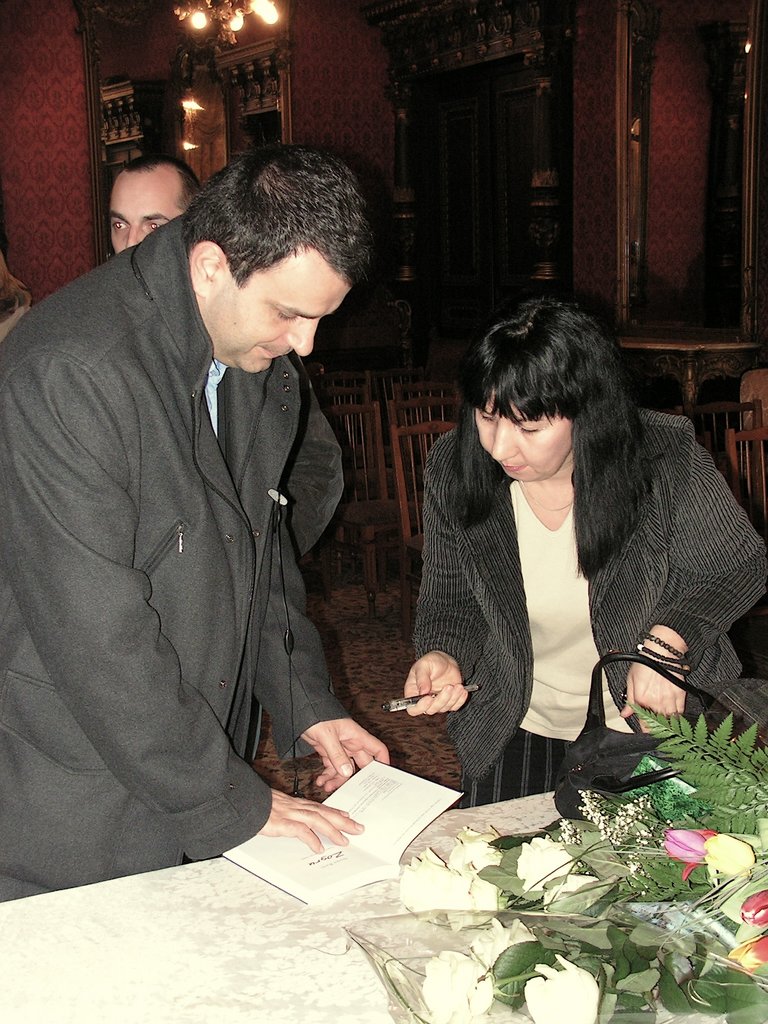
Lucian Mîndruță and Doina Ruști at the launch of the novel Zogru, 2006.
Doina Ruști also discussed the power of serious themes in literature, referring to her novel Sălbatica, which revisits the Stalinist deportations to the Bărăgan Plain through a simple yet moving story, one of the reasons behind the book's success.
The discussion also touched on Matuf, her most recent novel, continuing the reflection on how history, memory, and imagination are transformed into literature.
Watch the *full interview here.*