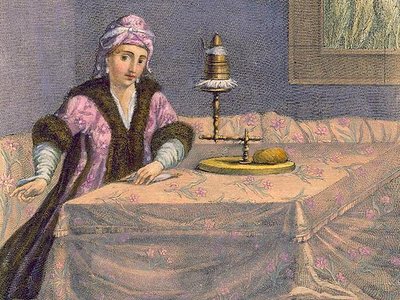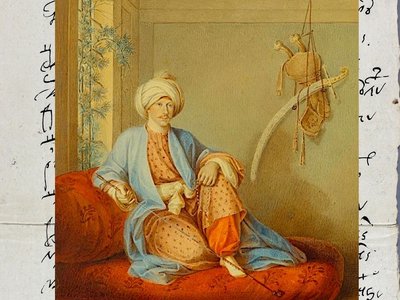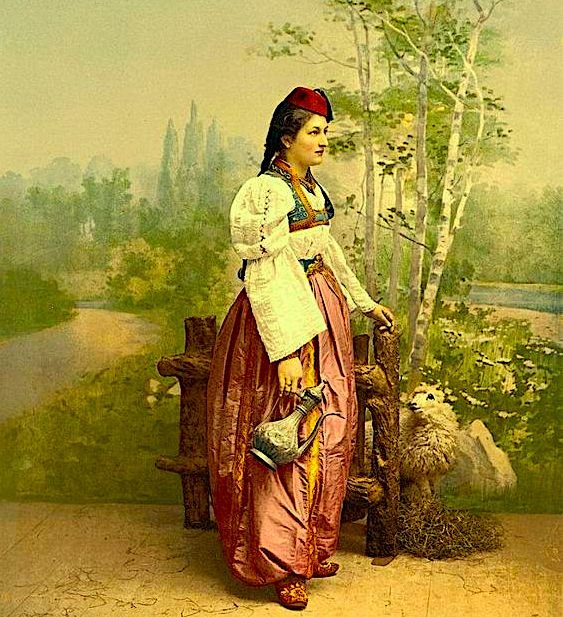
Zinca was preparing to step into the world by apprenticing under her grandmother, a well-known healer in Bucharest, famed for her miraculous preparations: elixirs, flea powders, snuff for beautiful dreams, ointments to clear the mind, oils to rejuvenate weary legs, stomach liqueurs and heart pills, rubs, drops for the gallbladder, living water to restore sight, and tinctures—among them a popular basil infusion, good for sadness and dark thoughts.
Though Zinca was her right hand in almost everything, there were certain remedies whose recipes she was allowed to see only in part. That was the case on a March day when her entire life was turned upside down.
An order arrived from a master builder in the Boteanu neighborhood, a man her grandmother knew well. He needed a particular ginepro, a juniper-based liqueur prepared especially for him.
For nearly two weeks they worked on nothing else. And so you won’t need to search dictionaries: ginepro is juniper, the term used at the time throughout the Balkan world, borrowed from Italian. Juniper berries steeped in wine produced a liqueur still made today, flavored with musk, roses, or lemons. Everything was left to macerate, then strained and refined with mallow flowers and fragrant peels of exotic fruits. Naturally, ginepro required strong wine—preferably fig wine—and among other things, refined alcohol was added.
All this Zinca knew well. But this time, the demijohn prepared for the mason received one more ingredient—something added in secret, beyond Zinca’s sight. The moment left a quiet ache in her heart. So her grandmother had no intention of sharing everything. The best she kept for herself, so that no one would ever equal her.
Heavy with melancholy, Zinca took the demijohn along with a few other parcels and bottles that had to be delivered that day. “Be especially careful with that little box,” her grandmother told her. “It’s dog poison, for the honorable Manole of Zlătari.”
Zinca set off on foot, unhurried, but unable to think of anything except the ginepro. Once she left Stelea, she stopped at the first bridge, uncorked the bottle, and touched a drop of the liqueur to her tongue. What could her grandmother have added? She tasted nothing beyond the dizzying flavor of musk, faintly drowned in hyacinths and sugars. She had never tasted any elixir before—doing so was strictly forbidden. Only her grandmother ever tested them, touching her lips to the spoon and then rubbing them methodically afterward.
A rebellion, like the breath of a summer evening, rose straight to Zinca’s head. She took a few steps and swallowed a mouthful. After all, the mason wouldn’t know how much had been poured into the bottle. Now she sensed almonds, which made no sense. Another sip wouldn’t change anything. This time she discovered nectar-like sweetness and fragrant flowers passing through her nose. A pleasant warmth made her sit down. She had no fixed hour to return home, and the mason was surely still on his scaffolding. Zinca sat beneath a mulberry tree and drank again. Now the liqueur opened like a flower, widening her arteries, making her throw her head back. A radiant indifference took hold of her—white, enchanting, as all indifferences are. She took another swig, rubbing her back against the mulberry trunk. It was a lovely day; through the young leaves she could see a sky sprayed with icy streaks.
I won’t bore you with details. Zinca didn’t drink the entire bottle. What remained found its way into the stomach of an enterprising man who had just launched a business.
When Zinca awoke, it was already evening, and the sight froze her blood. She was in a slave market, an improvised fair set in a small grove.
She was sold for seven thalers to an armaș, who quickly got rid of her, reselling her in Giurgiu with proper papers. For eleven months she was nothing but a slave, trampled underfoot. One day, however, she found in the pocket of her skirt the small box of dog poison. She remembered the honorable Manole of Zlătari, who had waited in vain. The demijohn, the mason, and the mysterious ginepro flickered briefly through her mind.
By then she had been through much. Curiosity no longer ruled her; she had learned that only action mattered. After lunch, she rid herself of her masters and ran all the way home.
She crossed the threshold in the year of grace 1784, at the very moment her grandmother was preparing to breathe her last. Though she looked like a worn-out sock, the dying woman smiled, passing away with happiness stamped on her face.
Zinca spent her life thinking about the secret ingredient in that long-ago ginepro made for a mason. Whatever she did, a single riddle lodged in her mind. She knew how to mix herbs and powders, yet her obsession remained the liqueur whose recipe she could never recover. Despite countless attempts, her fame never went beyond a fly-poisoning water—so that many generations of fragile winged creatures wondered whether freedom had ever been worth it.