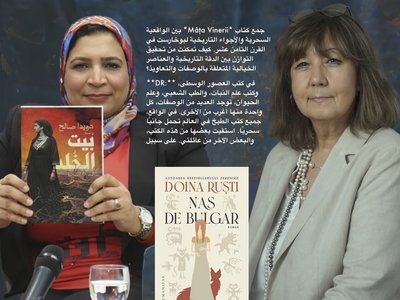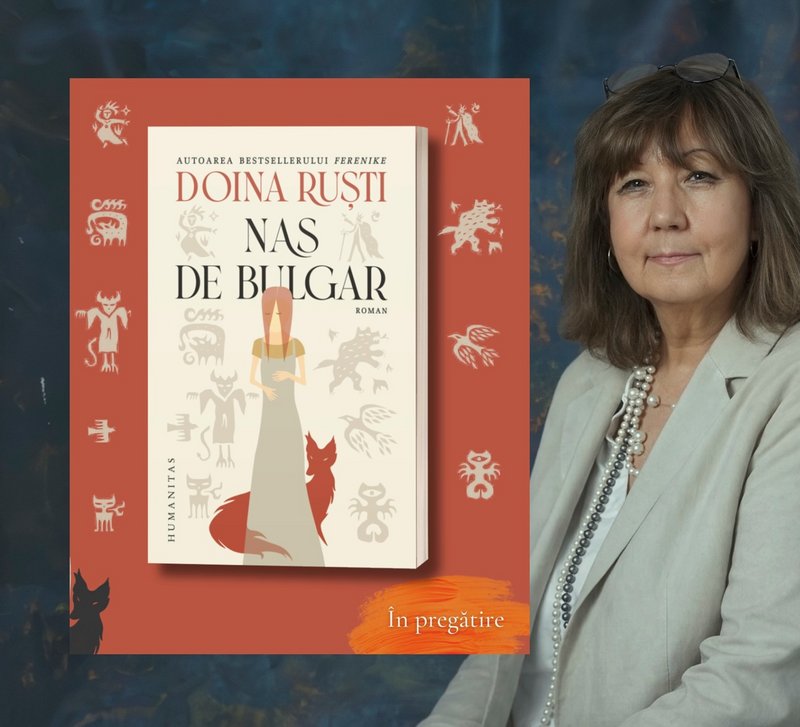
The novel Nas de bulgar by Doina Ruști was recently announced by Humanitas Publishing House on Facebook and is set to appear at the end of April.
Ruști’s latest book continues the narrative opened in Ferenike, exploring identity and love within a context shaped by history and memory. The story follows a process of self-formation in a tense academic setting, where personal experience intertwines with deeper historical layers.
The announcement prompted a brief phone conversation with Doina Ruști.
“Ah, yes,” said the novelist who created Zogru, with the same astonishment as her character. I then asked her how far she had distanced herself from the novel Nas de bulgar.
“I’ve taken some distance, especially since many of the events in the book are very old.”
“How old?”
“From around the third century.”
“But I expected it to be an autobiographical novel, following Ferenike,” I said.
“It is.”
“Then how do you explain the third century? Are you claiming to be over a thousand years old?”
“It always happens to me,” Doina Ruști replied, “especially around Easter, when the fairies begin to wander and the gods of plants start rustling.”
So I didn’t find out much about the novel, but I did learn a few things from the book’s page here.
The book will be published by Humanitas and marks a new stage in the evolution of Doina Ruști’s fiction, consolidating the direction opened by Ferenike.