October 17, 2026 \| Interview by Florentina Mușat
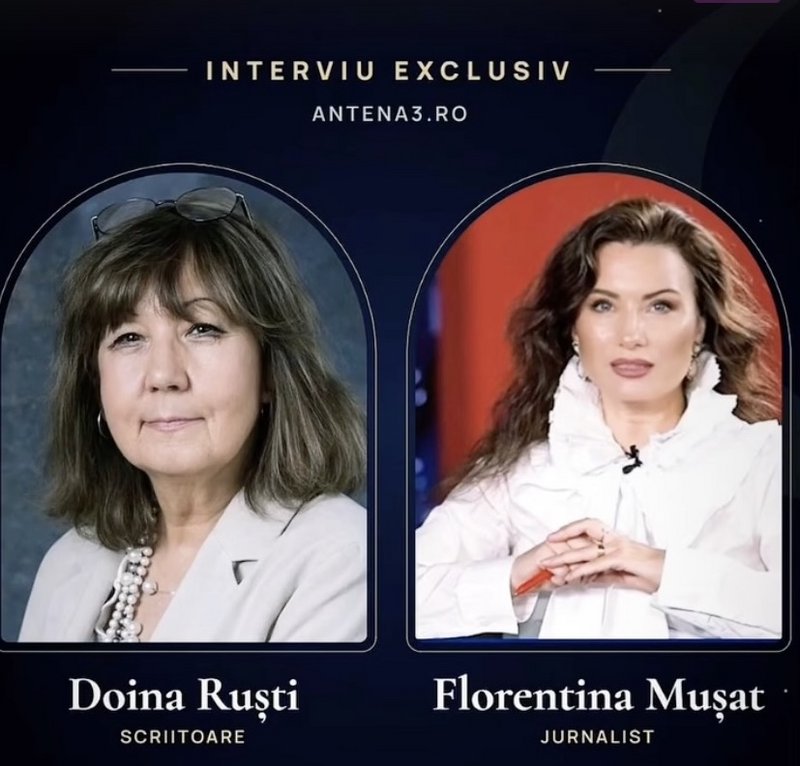
In an extensive interview with journalist Florentina Mușat for Antena 3 CNN, Doina Ruști discusses the creative process, the emotions that give birth to stories, the relationship between fantasy and history, and the secret geography of Bucharest, a defining landscape in her fiction.
For Ruști, literature begins with an overwhelming emotion that gradually takes the shape of a narrative. History is merely a backdrop, while fiction forms the true substance of the novel. Writing is an adventure that requires talent, literary knowledge, lived experience, and the courage to take risks.
A significant part of the conversation focuses on The Phanariot Manuscript (Manuscrisul fanariot), a novel inspired by an authentic eighteenth-century document recording the sale of a human being. Ruști explains how this document became the starting point for an epic tale of love, freedom, and identity, in which words themselves become characters.
The conversation also explores old Bucharest, particularly Bozăria, Gorgani, and Lipscani, places rich in memory that form the writer's personal and fictional map of the city. This imaginary geography also shapes Matuf peruchierul, her latest novel, a fantasy with elements of psychological thriller, beginning in the eighteenth century and extending into a post-AI future.
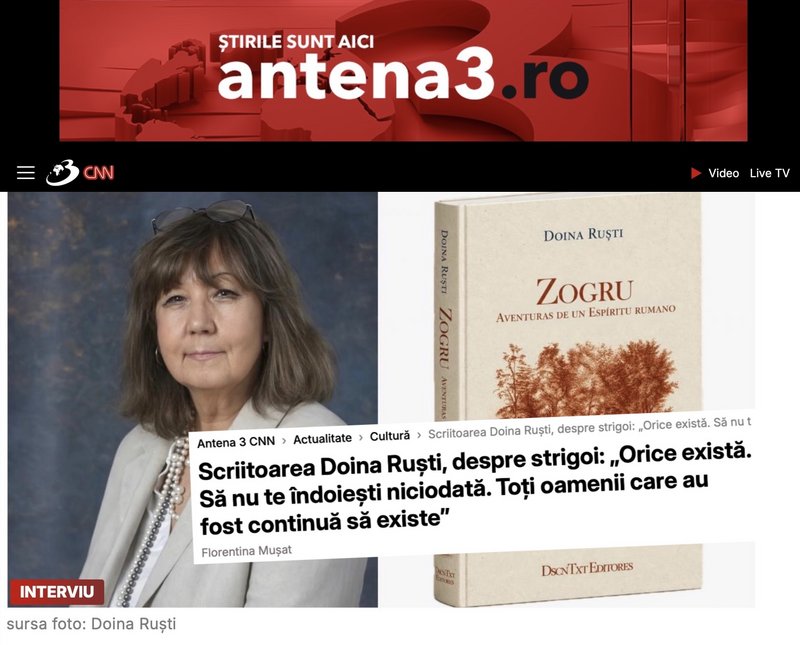
Another central theme is the relationship between reality and the invisible world. Restless spirits, supernatural beings, and mythical creatures belong to the Romanian imagination, and Ruști argues that these traditions deserve a richer literary treatment beyond commercial conventions. One example is Zogru, her vampire-like character who travels through the centuries, inhabiting human blood.
"Everything exists. Never doubt anything in this world," the writer declares, suggesting that the invisible realm, the memory of those who have passed away, and human intuition provide an inexhaustible source of literary inspiration.
The interview also touches on autobiographical experiences explored in Ferenike, the relationship between talent and literary education, international translations, and Ruști's upcoming participation in the Guadalajara International Book Fair (FIL), where she will present three of her novels translated into Spanish.
Read the full interview on Antena 3 CNN.