Around 1920, there lived in Bucharest a perfumer who dreamed of love. He spent his days in a laboratory, blending aromatic plant oils, macerations, ointments, and soaps, dreaming of a woman he had never met—but who exists in the mind of every man.
He was a typical Bucharest man: short, restless, dark-complexioned, and above all arrogant. He strode through the streets stiffly, a scarf fluttering over his shoulder, sometimes so deeply buried beneath his borsalino hats—always in shades of sable—that one expected him to stumble and fall. His full name was Dumitru Leroiu. Perhaps you have heard of him.
In any case, at the beginning of that glittering century, many people knew him. Along Calea Victoriei, shopkeepers would step out into their doorways to watch him pass. One milliner in particular, who had friends in France, was fascinated by the arrogance of this Bucharest perfumer. At the hour of his daily promenade, she would already be standing by the shop window; afterwards she would rush to her desk and write long letters about the hats of the Bucharest perfumer. As soon as her letter reached its destination, it circulated the same day through Paris, then down to Lyon and Toulouse, was read and retold in Madrid, and finally reached Lisbon, where the Portuguese—people weary of whims—tore it into tiny pieces and threw it into the ocean.
A true Bucharest native, with ancestors stretching back fifty years, Mitiță earned his fame through a linden-blossom perfume—the linden being the most widespread tree in the city.
At that time, there was no street without lindens, but their paradise was a wide boulevard lined on both sides with old trees, while golden showers of withered blossoms drifted down from the gardens. Linden Street—today Mihai Eminescu Street, running from Romană to Moșilor—was Mitiță’s favorite place and, above all, the main source of his perfume.
For him, the scent of linden blossom surpassed everything else. In the shops of the time one could find squat little bottles labeled Floare de București, a perfume by Mititza le Roi. In fact, there were three bottles. A green one, where linden and mint blended harmoniously. A purple one, containing linden softened by the tenderness of oakmoss. And finally, a red bottle, holding linden bitten here and there by basil essences.
These three perfumes were his life.
Women often came to Mitiță’s laboratory, interested in buying directly from the source, but also in seeing the place and sometimes part of the perfumer’s work. Over time, Mitiță compiled a veritable study of women, based on their preferences. He observed, for instance, that women who chose the green bottle were reserved—fit to be invited for tea, and nothing more. They were not even good for conversation. The purple bottle was for romantics. He would invite them to lunch in Zlătari and let them talk, because they knew how to praise and flatter in every possible way. They spoke of his hats and scarves; they were capable of describing in detail his walking sticks, the small brooch pinned to his lapel. They were masters of elaborate compliments.
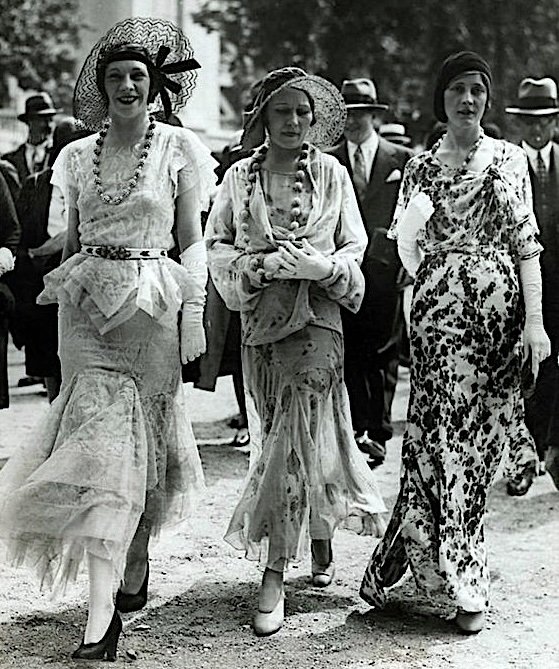
But Mitiță’s real interest lay with the red bottles. Like everyone else, he knew that basil was for love, and through observation and analysis he had learned that women who bought the red bottle were passionate and bound to him by a thin, invisible thread. Such a woman would enter the laboratory like a bird on fire, glance at Mitiță, and make him sit down. She was always wrapped in cashmere, her steps swaying to the cadence of pearl strands, to the rhythm of light furs and the flutter of black hats.
Such a woman would enter, buy the red bottle, and disappear among the trees of Cișmigiu, followed by Mitiță’s timid, uncertain steps. She crossed the park; he followed, cautiously sniffing the air. The sun fell toward Cotroceni, the booksellers locked their cabinets—forever entering the memory of the perfumer, who continued to hope behind the woman who, finally reaching Știrbey, looked back over her shoulder. But Mitiță was not the only man interested in the women of the red bottles. Behind her came a cohort of men, all elegant, chests puffed out, handkerchiefs fluttering impatiently from their pockets. The woman would purse her lips and choose one of them. The perfumer, fascinated by the phenomenon, would see that man the next morning being dragged out by servants through the back door, more dead than alive, ruined, clutching at fences on his way home.
The women of the red bottles filled him with pain.
And one sad day, strolling as usual along Calea Victoriei, he laid eyes on the milliner who endlessly wrote letters. Weighing her from a distance, he immediately realized she was a woman who would choose the purple bottle—and since he already knew what to expect from such a creature, he decided to conduct an experiment. He added a drop of basil perfume to the purple bottle—the bottle of praisers incapable of adventure—and at the first opportunity entered the hat shop.
“Here, my dear miss, I’ve brought you a gift,” he said to the milliner who had watched him so often through the shop window. He suspected what would happen; he wanted to hear her praise him, to see her eyes fill with tears, yearning, incapable of asking or receiving.
But his wait was short. The milliner looked at the small bottle and from her faultless observer’s eyes there burst an evident satisfaction straight toward the eyes examining her from nearby. She had no idea what the perfumer thought would happen. She turned her back, went into the small room behind the shop, and began to write a letter that would enter history.
Mitiță’s arrogance reached its peak. It spread across his entire face, blossomed in his eyes. It had become a tongue of fire and slipped into the small bottle, into which—alongside the perfidious scents—a part of his life had also seeped. The milliner’s story contained details; it described attitudes. It spoke of a bed covered in fox furs, of collars lined with fine chiffon. Whoever read the letter could see the perfumer in all his splendor—not merely as a typical Bucharest man, but as a hunter, with the abilities of a hound and the mind of an analyst, perfectly suited to become a doctor of the science of philogyny.
Once again, the letter circulated through many European cities. When it finally reached Lisbon, it inspired João Artur Vasconcelos, who created a memorable portrait entitled Arrogante.
Therefore, one might say that Linden Street—today Mihai Eminescu Street—could be an important destination. After walking it from Romană toward Moșilor, at its very end you will sense the scent of linden coming directly from the red bottle of the little perfumer, whether it is winter or autumn rain.
And somewhere around the middle of the street there is a small painting shop. On one wall hangs a copy of Vasconcelos’s famous portrait, painted by a Bulgarian artist in the early 2000s.