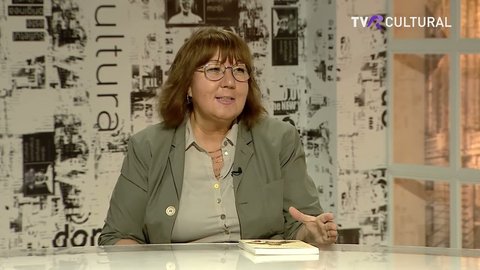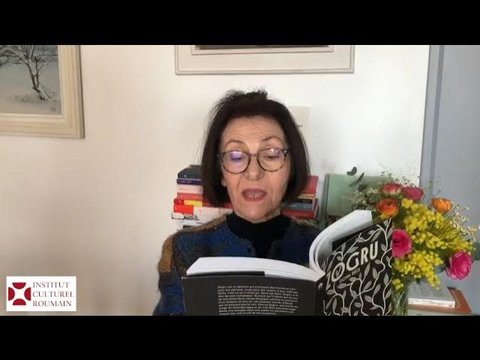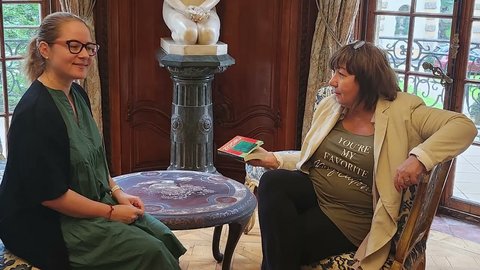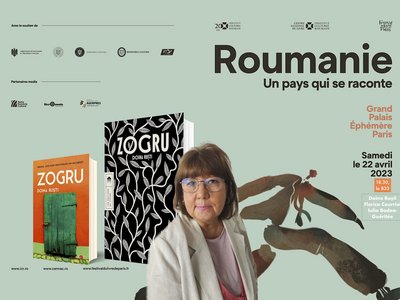
We take a short break from the Phanariots to tell you about my journey to Paris, together with Zogru and other beings like him. I spent two days among books, inside a building near the Eiffel Tower, at the Palais Éphémère. An atmosphere of great deeds, Belle Époque architecture, and, of course, the city learned from Balzac.
I sat down at a terrace somewhere in the famous tower district and watched the street. Something felt off. Something was missing—the bohemian air that exists only in tourists’ imagination. And gradually I realized that, for me, Paris today has acquired a provincial air.
As for Le Festival du Livre, I can say it delighted me through its simplicity. First of all, the ticket was cheap—five euros—unlike London, where I was almost required to leave my underwear as collateral. Otherwise, as you know: crowds, somewhat cramped stands. All book fairs are more or less the same—Saturday congestion, people taking endless phone pictures, wealthy publishers placed in the center, star authors, the press (just like at home) showing up for a tip-off or a deal, covering only certain books, and above all a large cohort of minor writers, anonymous or merely aspiring.
Despite this sense of déjà vu, every fair has something uniquely its own. Here there was a sort of tall lectern at which three well-known writers signed books. A few hours later, others. When I arrived, one of them was Franck Thilliez, crime novelist, author among others of Chambre des morts, later adapted into a film. Relaxed, “arrived,” accompanied by a young woman—probably from the publishing house—who turned the pages and placed the book before him. A significant number of fans stood in line, arranged in several rows all the way to the fair’s exit. I had never seen such a queue even for Margaret Atwood in Frankfurt. Perhaps for Umberto Eco. And I think I saw something similar with Suzanne Collins in London. A chaotic crowd took photos around the line. What was spectacular was the arrangement: the signing writers were seated at an elevated height. They dominated the landscape. Anyone entering rushed instinctively toward that “cathedra.” You had the impression that this was the most important place, that they were the only writers who mattered. Beside Thilliez stood Marie de Lattre (La Promesse, Robert Laffont).
Then came the familiar scenes: stages with chairs in front, where you could catch your breath. As at home, there was an Agora—more elegant than ours—where launches by major names were scheduled, such as Jonathan Coe, published by Gallimard.
I wandered further, gawking at Albin Michel covers, at the queues at the cash desks—because all books were taken on trust and paid for later at a common register.
The most beautiful space belonged to Italy, the guest country: a wide, open amphitheater with about a hundred chairs, all occupied, an airy, warm stage.
Then I reached the Romanian stand, next to the Greek one: a tiny enclosure with ten plastic chairs where you could rest a little. Everything felt more restrained than at other fairs—few books, familiar faces. A handful of discreet events, among them mine.
Zogru sat bored on a shelf, waiting his turn. I felt sorry that he had lost his enthusiasm; I empathized with him. Saturday evening, Parisian-style, in a sea of people—you can imagine it. And the genuinely emotional voice of Iulia Guéritée, which made me feel very good.
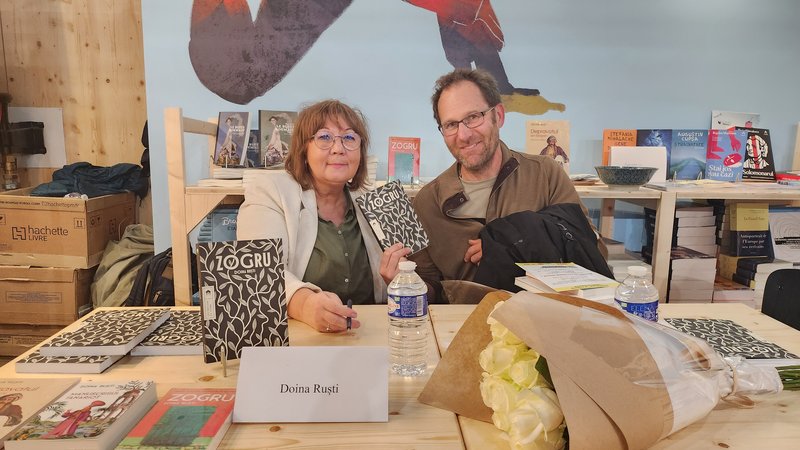
While chatting with Florica Courriol and drifting far into The Ghost in the Mill, Jonathan Coe passed by us, and Zogru sighed, shifting slightly on his shelf. As consolation, a journalist we were expecting sent me a WhatsApp message: “I read Zogru on the beach at Berck and it was a joy…”—but she could no longer make it. I think I wouldn’t have come either on a Saturday evening for a book launch. Then an unknown reader appeared—my new fan, Jérôme. We took photos; I wrote him a short dedication. I met a few other lovely people, among them Constantine, a student concerned with humanitarian causes—and with Zogru.
The next day we left for the airport accompanied by a little summer drizzle that seemed to be telling some endless story. “What are you saying there?” I asked. “I’m telling Zogru a story,” the drizzle replied politely.
And just so you have an idea, I met many people there: Doina Marian wore a jacket made of book pages; Cezar Preda, gallant as ever, waited for me with white roses; Julie Guéritée composed poems in tandem with Zogru. I exchanged a few words with Liviu Jicman—warm yet analytical—and chatted with Roxana, Marius, and the fabulous Pompiliu. Among the writers attending the French gathering, I spoke briefly with the Fulaș family, with Stejărel Olaru (accompanied, of course, by “Nadia”). Florica and Jean-Louis Courriol, as always, in splendid spirits.
The novel ZOGRU by Doina Ruști was published by Les Éditions du Typhon (Marseille, 2022), with the support of the Jan Michalski Foundation. The translation is signed by Florica Courriol.
Recently, a new edition of the novel appeared with Litera Publishing House.
Ziare Live