Among the rare purchases made by the people of Bucharest were exotic fruits—oranges, mandarins, large grapes, figs, and occasionally pineapples, which appear in the order lists of the Brăiloiu family.
Hagi Popp often received letters from the Brăiloius, avid collectors of rarities: French champagne, Spanish wine, sweets wrapped in foil, and also pineapples, ordered around Christmas or for pregnant women seized by exotic cravings.
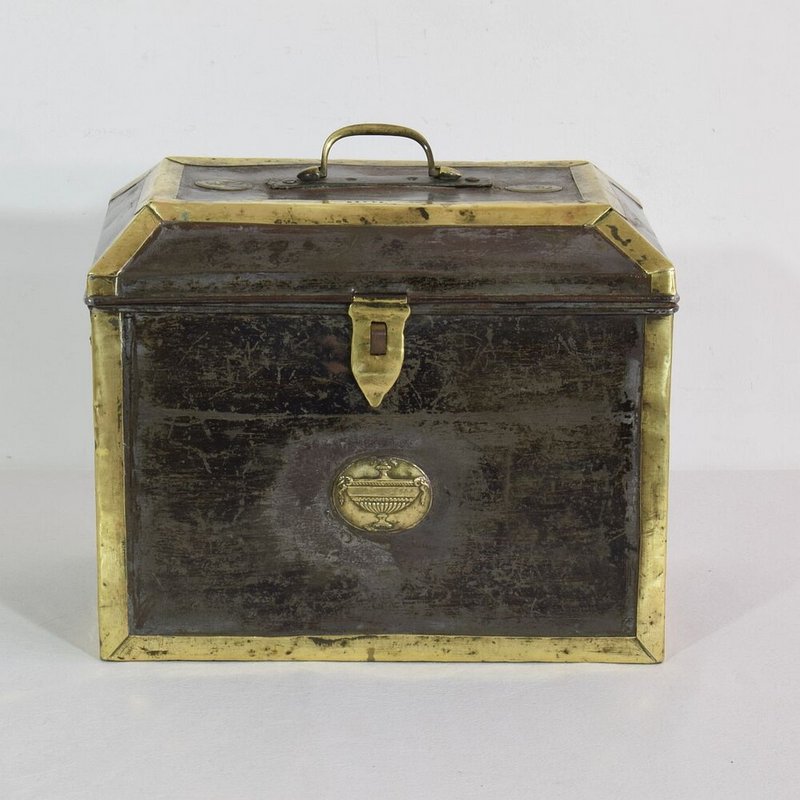
It was a rare fruit, one that Popp himself obtained with difficulty, already packed for a long journey. It seems no one ever ordered more than a single piece, delivered in a wooden crate—polished, painted, with a decorated lid. The pineapple was carefully laid in straw, and the crate was sealed with a black padlock bearing the name Keller.
This detail appears both in order lists and in letters.
Naturally, any order traveling from Sibiu to Bucharest arrived by special couriers, in mail coaches guarded by mercenaries. Once inside the Brăiloiu household, after everyone had admired it—examining the skin and the leaves—the day on which it would be served was decided.
The pineapple spoken of here was, of course, ordered for Christmas, when the Brăiloius hosted a grand celebration, which I have already described in The Phanariot Manuscript.
Among the servants responsible for storing provisions was a man named Căpriceanu, whose descendants I have written about elsewhere. He was a curious fellow, with dreamy eyes, determined to have everything life could offer, though his modest birth fatally constrained his ambitions.
Căpriceanu touched the crate, marveled at the padlock, and when he found a moment, asked the cellar master what was written on it. “Keller,” the man translated, not without arrogance—for he was a cellar master, not a carrier of crates and barrels. So, Keller, Căpriceanu thought. A beginning.
With several days still remaining before Christmas, his dreams—many and astonishingly elaborate—began to stir. Căpriceanu pried open the padlock with a bodkin. Inside lay the pineapple, like a gilded egg. He could not imagine what lay beneath the scaly skin, but reasoned that a small plug could do no harm. With a razor, he cut out a small triangle and removed it like a nugget, with utmost care. Yellow, scented with cantaloupe and pear! It spread around it something like the sigh of an abandoned man. He tasted it. He had not expected such an aroma, such a flavor. Nothing he had ever tasted resembled this pineapple.
The experience might have remained a winged memory—but it did not. In the mornings that followed, an indescribable melancholy seized him. The Brăiloiu household was bustling, and the approach of Christmas made all the servants happy—except Căpriceanu. His mind was filled with pineapple.
On Christmas Eve, when the sadness of carols crept past the gates, when Brăiloiu dreamed at the window and the cellar master set aside a bottle of wine, Căpriceanu slipped out through the gate, wrapped in his sheepskin coat. He walked heavily, leaving deep tracks in the snow, fingering in his pocket two thalers with which he intended to pay for a seat on the first mail coach. He wanted only to reach the city of Sibiu and find Keller. He already dreamed of him, imagining him as a taller Brăiloiu, a great nobleman no doubt, living in a house made of pineapples.
Somehow, aided by luck, Căpriceanu reached Sibiu. He had no papers, was a runaway, and within hours was arrested. Yet his burning eyes and resolute words aroused the curiosity of a commissioner, who listened to him. So—you are looking for Keller, the man said. And what business do you have with him?
The pineapple was his sacred secret, so he spun a tale with Brăiloiu at its center, and in the end he was brought before Keller—a cooper who had never seen a pineapple in his life.
Căpriceanu remained there, a jack-of-all-trades, diligently researching the origins of the pineapple. He spent the rest of his life investigating it, until one rainy autumn he fell gravely ill. In his agony between life and death, he dreamed of a gigantic pineapple. With this image in his mind, he crossed into the other world. Sometimes that dream erupts into the dreams of other people—especially those in Bucharest. So when you eat pineapple, do not forget: Căpriceanu is thinking of you.