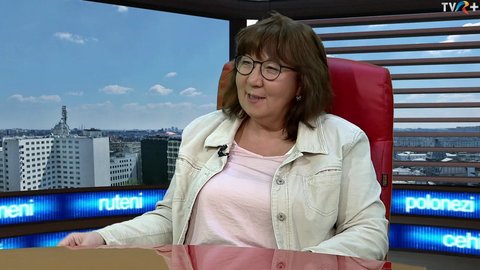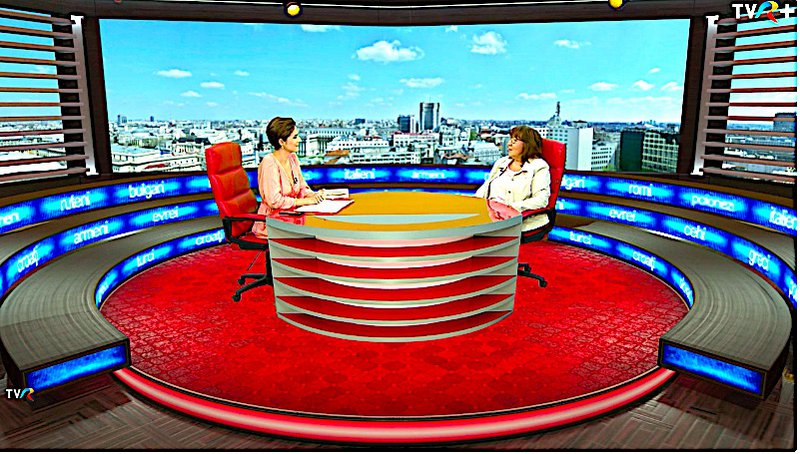
Romanian novelist Doina Ruști spoke about her novel Occult Beds in an interview broadcast by TVR, in the program Conviețuiri. The conversation began with the central themes of the book and expanded toward the Balkan dimension of the author’s identity, evoking her family ties to the regions south of the Danube and to the cultural space of the Balkans.
In the televised dialogue, Doina Ruști spoke about the character in the novel who comes from Vidin (Bulgaria), as well as about her own Balkan roots—Macedonian ancestors originating from Montenegro, some of whom later settled in Bulgaria, whose stories have left traces in her literary imagination.
This Balkan dimension is also reflected in the structure of the novel Occult Beds, a book that blends everyday realism with fantastic and speculative elements, constructing a story about identity, memory, and transformation.
Published in 2020, Occult Beds is a story about adolescence, destiny, and metamorphosis.
The main character, Flori, is finishing high school and lives with her father, a vulnerable man and amateur actor who oscillates between dream and reality. Within this fragile relationship, the teenager learns to take care both of herself and of the person who, under normal circumstances, should be protecting her.
In her aunt’s house, Flori discovers a very old bed, and during a night spent there she has an unusual dream: she finds herself in a grove of carob trees, a mysterious space that seems to belong to a hidden world. Upon waking, she notices that her appearance has slightly changed, as if the dream experience had produced a real transformation.
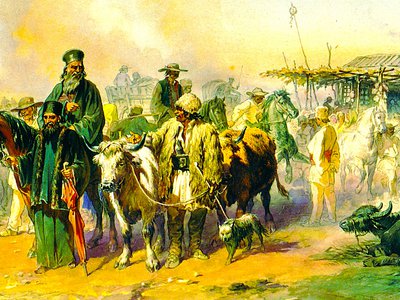
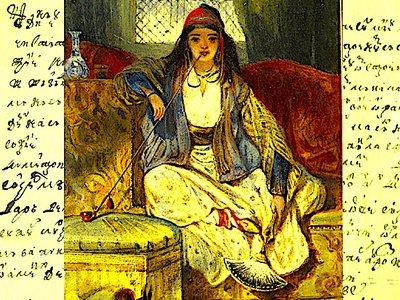
As the story unfolds, the girl’s destiny intersects with the biography of a character from the eighteenth century, and the narrative expands toward a secret world dominated by a forest of carob trees and by laws that seem to transcend the logic of time.
Thus, the novel becomes a meditation on identity and on the ways in which human existences may communicate across centuries.
In a review published in Revista 22, critic Serenela Ghițeanu observes the metaphysical dimension of the novel and the way the story evolves from a fantastic intrigue toward a reflection on the human condition:
“We therefore have a novel that begins with stories tinged with the fantastic and arrives at a vision of the world and of life that moves the reader at least as much as it provokes thought. In this vision, human essence is something ineffable, transcending space and time, capable of improvement but also of deterioration along its journey. At the same time, the novel proposes a vision of death that cannot leave any reader indifferent. The ending reconfigures the entire text, proposing an extremely daring interpretation of a contemporary phenomenon.”
The critic also highlights the chapter “The Carob Trees,” which shifts the narrative perspective of the book:
“The chapter ‘The Carob Trees,’ in which the vanished Căpriceanu has an extraordinary dialogue with the wild, eternal carob trees, marks the leap from an exotic magical-realist novel to a metaphysical one. The ending of the novel brings a surprise of great magnitude.”
https://www.youtube.com/watch?v=T-Ed8Gh1bK0
“We therefore have a novel that begins with stories tinged with the fantastic and arrives at a vision of the world and of life that moves the reader at least as much as it provokes thought…”
(Serenela Ghițeanu, Revista 22)
https://www.youtube.com/watch?v=T-Ed8Gh1bK0
Conversation with Natașa Culea, BOOKMEDIA, A7TV
During the interview, images from meetings with readers were included, as well as an intervention by the actor Alexandru Papadopol.