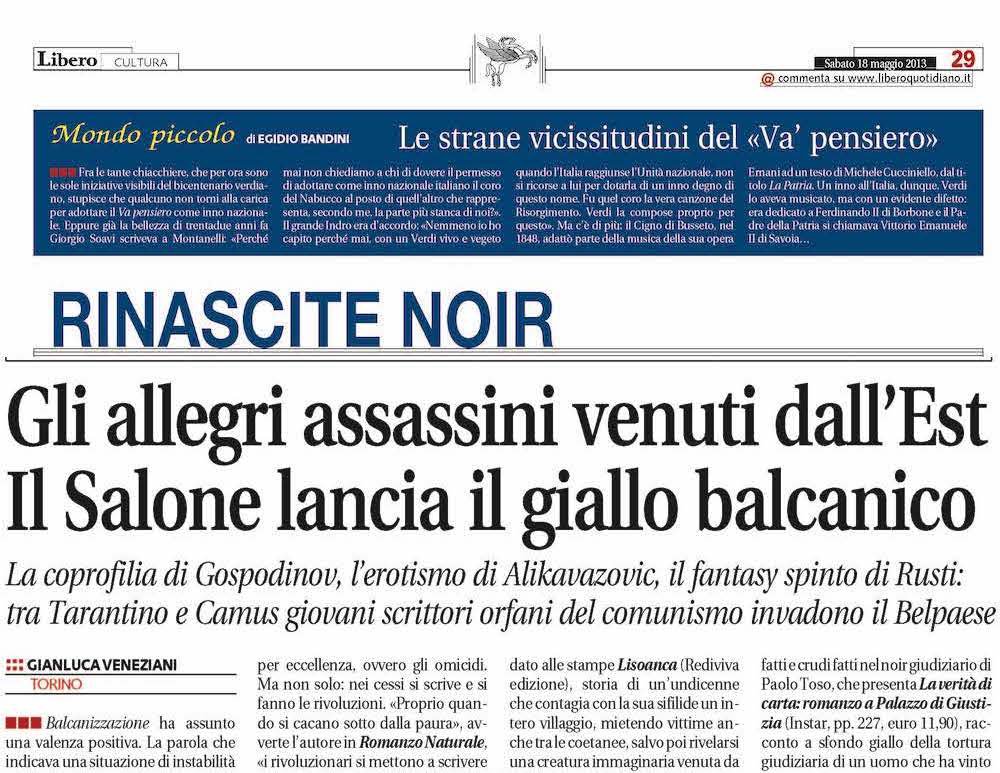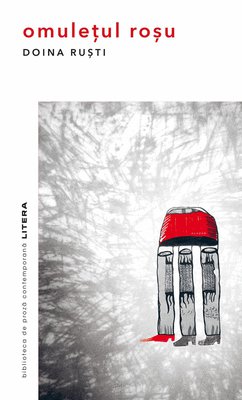
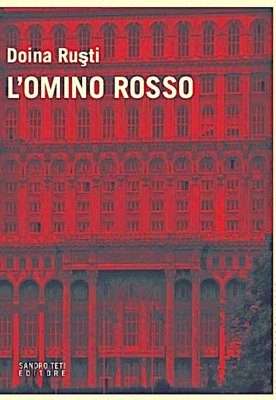
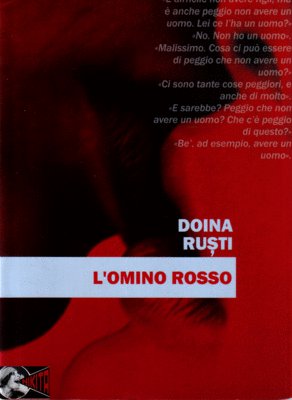
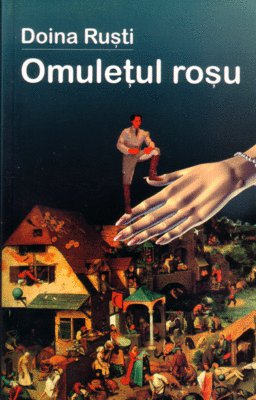
The page includes the novel’s critical reception: excerpts from reviews, articles, and press mentions of The Little Red Man, together with references to their sources. Among those who have written about the novel are Marco Totti, Roberto Merlo, Noemi Cuffia, Dan C. Mihăilescu, Horia Gârbea, Mircea Mihăieș, Liviu Antonesei, and others. The novel was also discussed in the Italian press, in publications such as Il Venerdì di Repubblica, La Stampa, Libero, Stato Quotidiano, and Il Cittadino
Critical Reception
Doina Ruști's novel reads with great joy, with the mind ravaged by exclamations and a barely restrained laughter.
Alessandra Iadicicco, La Stampa
An ironic and seductive story, placed in an contradictory magical city.
Il venerdì di Repubblica
A solid novel with mystery and unexpected ending.
Stato Quotidiano
An ironic and seductive story, set in a magically contradictory city.
Giuseppe Ortolano – Il Venerdì di Repubblica, March 23, 2012
“A talented writer, Doina Ruști parodies noir fantasy.”
Il Libero
“A new virtual Paradise, hallucinatory.”
Il Cittadino
“Alazărul, pure feeling of astonishment, is a hallucinatory, convulsive, absurd, yet coherent and real universe, as only fantasy can be: an electronic, bizarre and unpredictable Wonderland into which Laura ventures, enchanted and obstinate, like a telematic Alice.”
Roberto Merlo, in the volume Ritorno a Babele, ed. 2016
Far from having exhausted the extraordinary resources of this novel, I end here by endorsing an observation from La Stampa, where it is said that “the novel is read with great joy: with a mind shaken by exclamations and an only barely restrained laugh” (La Stampa, May 12, 2012). The tonic writing, the clarity of vision and the emotion poured into each episode come from the writer’s unmistakable style: “Entirely overwhelming is the explosion of original and dazzling expressions through which Doina Ruști describes her characters” (ibid.). But also from her strength in handling an immense epic material and fixing it into memorable sequences.
Pompilia Chifu, Litera blog
“The Little Red Man has two qualities: depth and the beauty of storytelling.”
Marco Dotti, La Repubblica
Doina Ruști’s novel looks for readers talented enough to cut out each scene and let it stand on its own, refusing to subject it to the predictable order that leads toward a denouement.
The Little Red Man was well received by readers in search of an original novel, reaching as far as Italy.
Adriana Gionea, Townportal
The Little Red Man is an enchanting novel, ingeniously conceived. It contains much truth presented in a form full of humor. It has memorable characters, among them the mysterious little red man. It is charged with an atrocious realism, offering as truthful a vision as possible of strictly contemporary reality, yet it escapes into the fantastic as naturally as the famous Remedios in Márquez rose to the sky while hanging out the laundry.
Horia Gârbea – Ziua literară, January 22, 2005
In fact, Doina Ruști wrote, with courage and talent, a novel about the existence of the contemporary intellectual who moves between two “parallel mirrors” — a direct reality and one perceived through virtual space, the Internet, where we increasingly navigate.
…beyond the originality of the theme, the novel could not stand without the talent, intelligence and verve of the writer, which shine through abundantly.
Horia Gârbea – Ziua literară, January 22, 2005
The little red man, the alazăr, literature, the fears of life, the fear of un-love. All told—where else?—in a diary deposited in a cell, brought onto a chat: an ingenious narrative manner that allows the first readers to scroll through a footnote metatext, which will be exploited skillfully in the novel’s final chapter, narratively profitable and tempting.
Const. Dram – “Vinculum vinculorum”, Convorbiri literare, February (110), 2005
From the very first paragraphs, the spirit of observation overwhelms the epic, and the main character becomes not Laura Iosa, but Romanian society, captured here in colors ranging from the thick, piquant texture of Flemish painting to the dusty fragility of an insect collection.
Mircea Platon, Rost, February 2005
Intelligence, including in the form of artistic intelligence, served the writer very well in choosing the formula and, especially, in covering it within the text! A novel you read with the pleasure of a detective story, yet with real aesthetic stakes. What more could an author want? And a reader?
Liviu Antonesei – Timpul, March 2005
Some commentators of The Little Red Man have favored a reading in the key of “virtual worlds,” Cyberland, hackers, etc. I prefer the classic reading, in the key of feminine solitude touched by the cold wing of sentimental failure. A femininity obsessed with today’s vogue—the brazenly grotesque, impetuous, mercantile “lolitas”—and nauseated by everything belonging to a squalid, “hetero” masculinity.
This classic reading also favors Laura’s figure and her relationships with Lucian, Raluca, Rufă, or the workshop mentor, Castratu—relationships which, from a certain point on, discourage autoscopic impulses and shift the confessional core toward satirical burlesque.
=
Dan C. Mihăilescu – Romanian Literature in Post-Ceaușism, vol. II, 2006, p. 251
What I like very much in Doina Ruști’s novel—besides Laura’s amorous tribulations and the acidic comments in the forum, where you can guess very well-contoured mental structures in the alter-egos of the novel’s characters—is the rediscovery of contemporary Romania, in a permanent and exhausting transition: a country synthesized by everything that defines various social strata, everyday mentalities, the condition of the intellectual, of the woman in a world of men, or of lonely people.
Ioana Drăgan – Libraries in the Mirror. Writer’s Ex-Libris, Ed. All, 2007, p. 180
Doina Ruști’s novel The Little Red Man contains fantastic elements, created on the margins of traditional fantasy, combined with elements of psychoanalysis.
Mara Magda Maftei – Viața Românească, no. 5, 2005
Thus, presented as a possible alternative to the real and having its genesis in fantastic prose (of an Eliade-like kind), the imaginary proposed by Doina Ruști undergoes an evident renewal of paradigm, being connected to the heroine’s need to transcend herself, to save herself through communication.
Laura becomes an Alice swinging between a virtual and illusory Wonderland (the alazăr), full of semantic traps, and a Dâmbovița Fair of Vanities.
Tudor Negoescu – Ramuri, no. 5–6 (1067–1068), May–June 2005
The charm of the book comes from the pleasure of shaping imaginary worlds—realities you can touch with your hand.
Mircea Mihăieș, Cotidianul, August 13–14, 2005, p. 17
Doina Ruști set out to write a novel, The Little Red Man, in which to reveal the hypocrisy of her contemporaries in a manner that would “catch” the reader and amuse them—indeed, even anger them at times. She succeeded admirably. She would have succeeded even if she had aimed for more.
Radu Voinescu – Sud, July–August 2005
… A remarkable satirical force in portraying Romanian cultural life, in all its taboo aspects.
A book that deserved literary prizes and more discussion than others.
See also Critical Reception
and [BIBLIOGRAPHY]
Luminița Marcu – Ziua, October 12, 2005