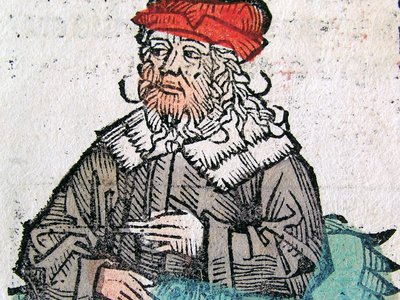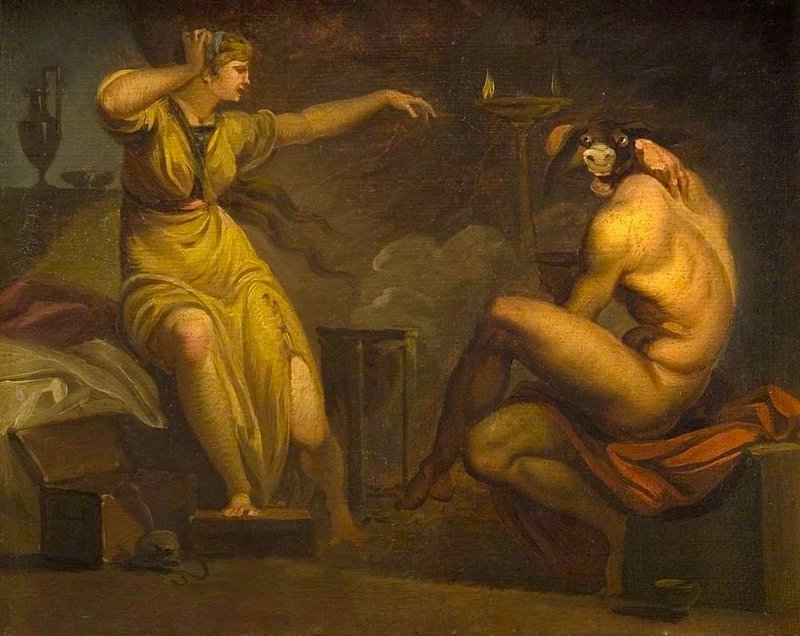
There are books that do not remain on the shelf but move inside you and begin to work silently. For me, The Golden Ass, Apuleius’s novel, is one of these source-books. I first read it as a strange story, but over time I became increasingly drawn to the imagination of the late Antiquity, to the way the ancient world dissolved into the emerging patterns of Christianity. It is not merely the transformation of a lawyer into a donkey that matters here, but transformation itself. The symbolism of the rose, originating in the cult of Isis and later absorbed into Christian imagery, the worship of idols, and above all the social structures that persist to this day — all of these fascinated me deeply.
Lucius, the man who becomes a donkey, is not punished for his curiosity; he is initiated. His animal body allows him to see the world more clearly, to endure its violence, and to pass through social and religious layers otherwise inaccessible. Metamorphosis is not a farce, but a necessary descent. Only when identity has been completely dismantled does the possibility of salvation emerge.
This form of the fantastic — in which transformation becomes a path to knowledge — does not fully correspond to my own literary temperament. Yet the synthetic nature of the transformative adventure brings me close to this late-antique text, especially through Zogru. I have never been interested in the fantastic as ornament, moral allegory, or escape, but rather as a means of probing reality. In The Golden Ass, magic, dreams, cruelty, and the grotesque coexist with sacrality, and this tension defines, for me, the essence of living literature.
Apuleius writes at a moment when Hellenism was approaching its end. Faith, philosophy, and fiction had not yet separated into distinct domains. Gnosticism, treatises on dreams, symbolic cosmologies, and the earliest forms of the novel all arise from the same search for meaning, most of them centered in Alexandria, the great laboratory of cultural synthesis. In this context, The Golden Ass is more than a novel: it is a map of wandering and rediscovery.
In my own writing, the fantastic often appears as a fissure within reality, not as a separate world. This fissure derives, to a large extent, from Apuleius’s lesson: truth does not reveal itself to the prudent and intact, but to those who accept the loss of form, the passage through humiliation, and exposure to chaos. Metamorphosis thus becomes a historical form.
For this reason, whenever I return to the second century, I am in fact returning to this origin of my imagination. The Golden Ass remains one of those books that cannot be exhausted through interpretation, but continues to generate meaning, dreams, and narratives.
Doina Ruști, Enciclopedia, 2004
A broader analysis of the second century — from Gnosticism and the philosophy of the period to literature and its imagination — was published in Adevărul and can be read here: