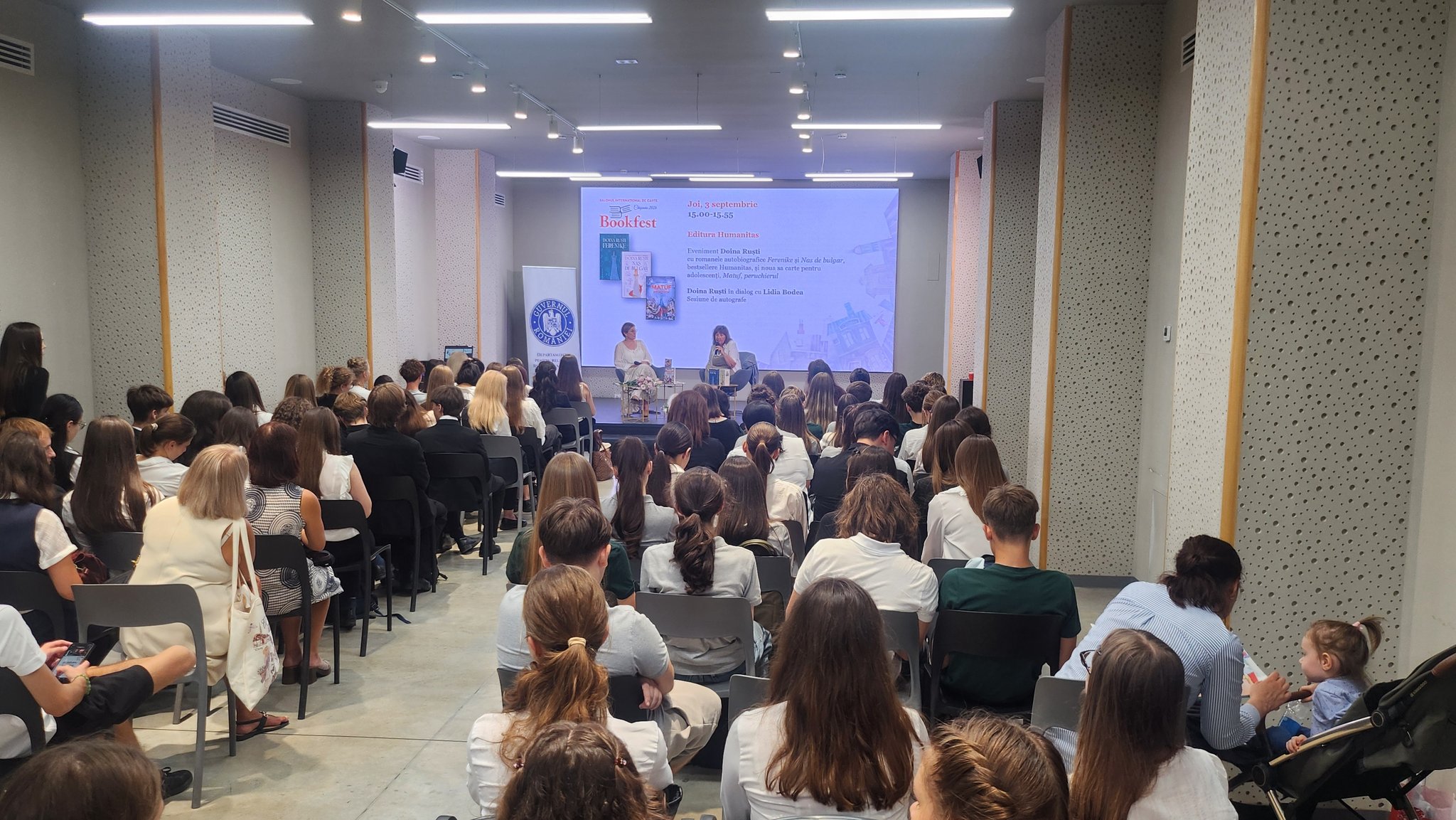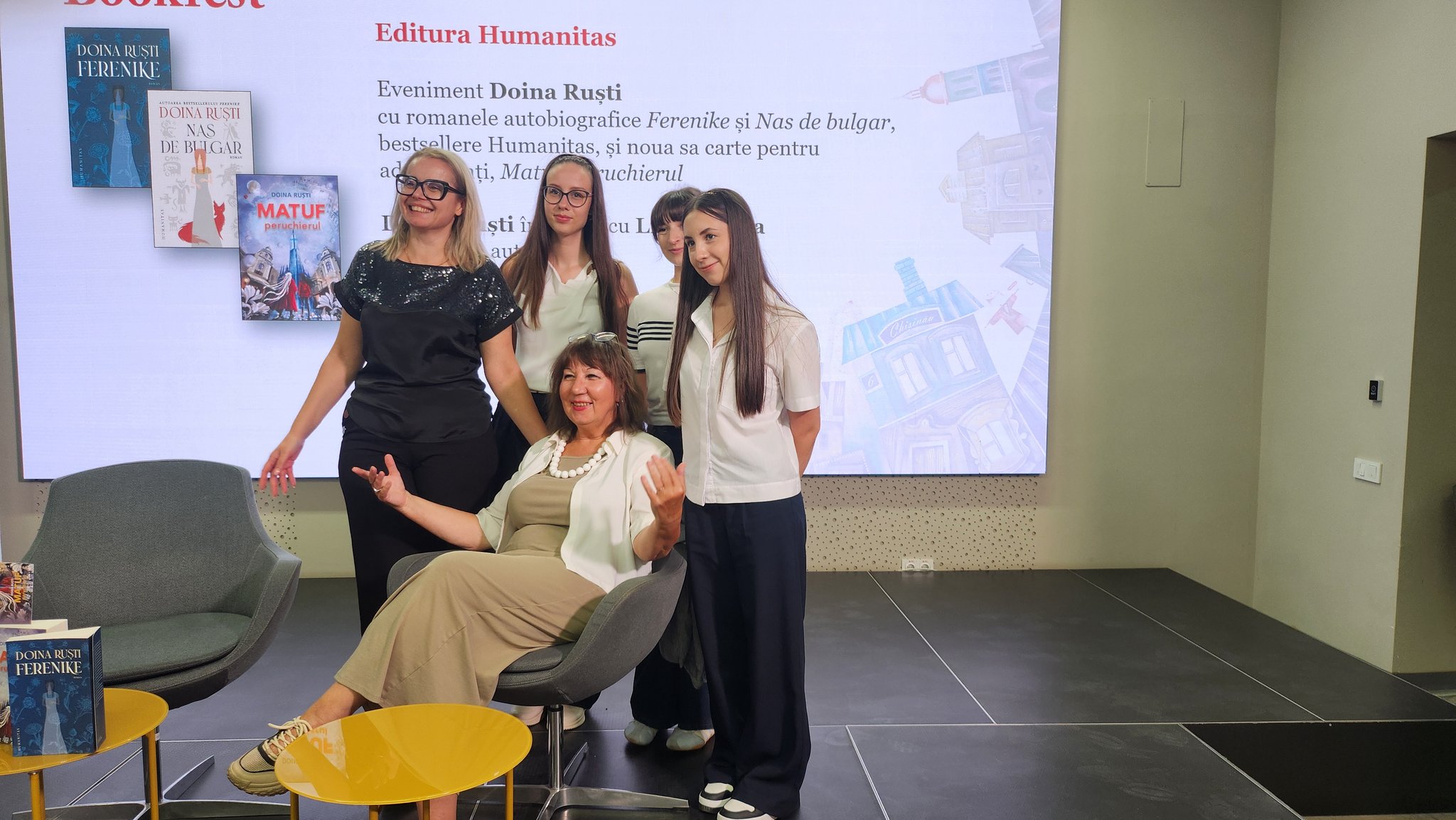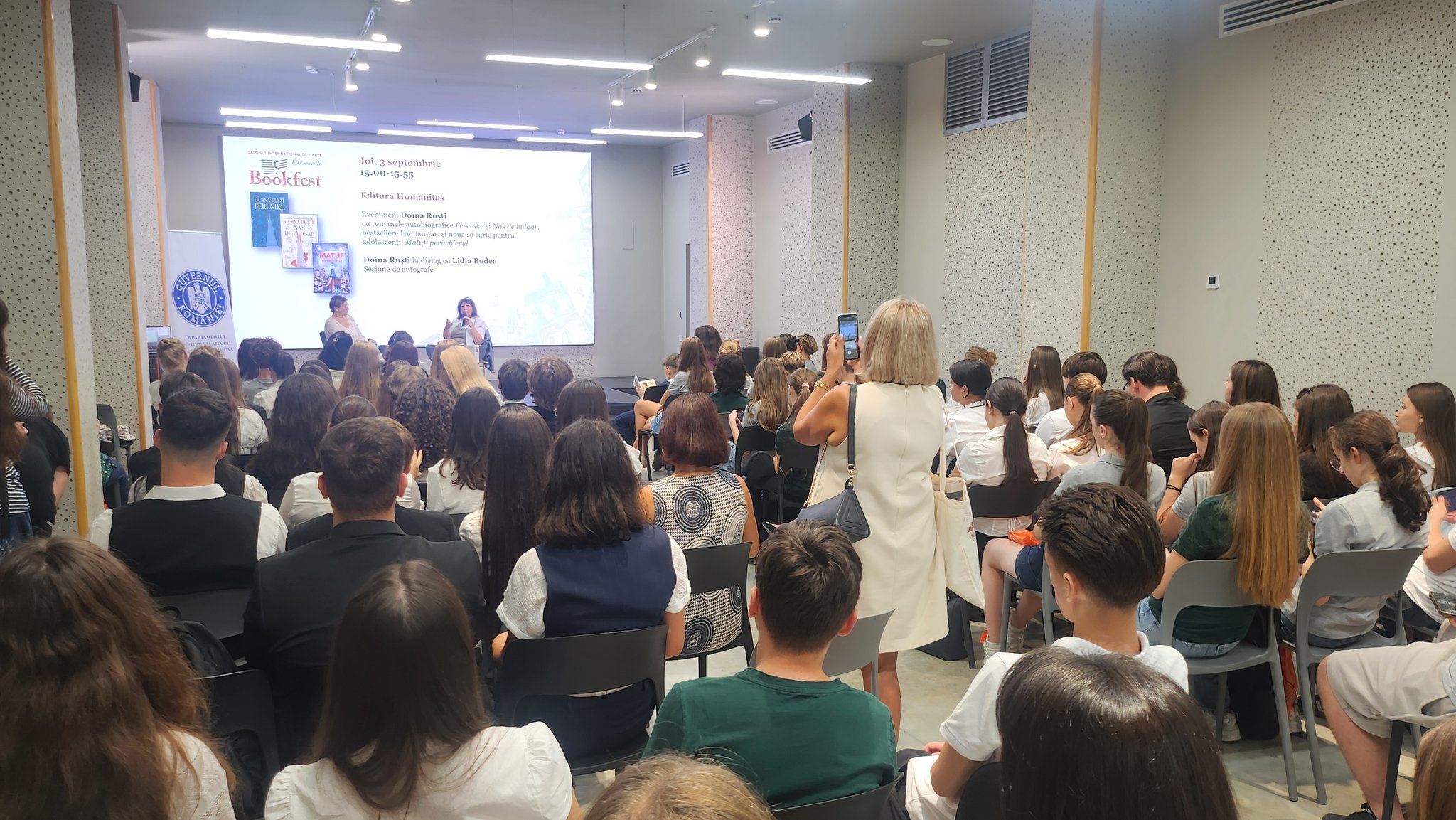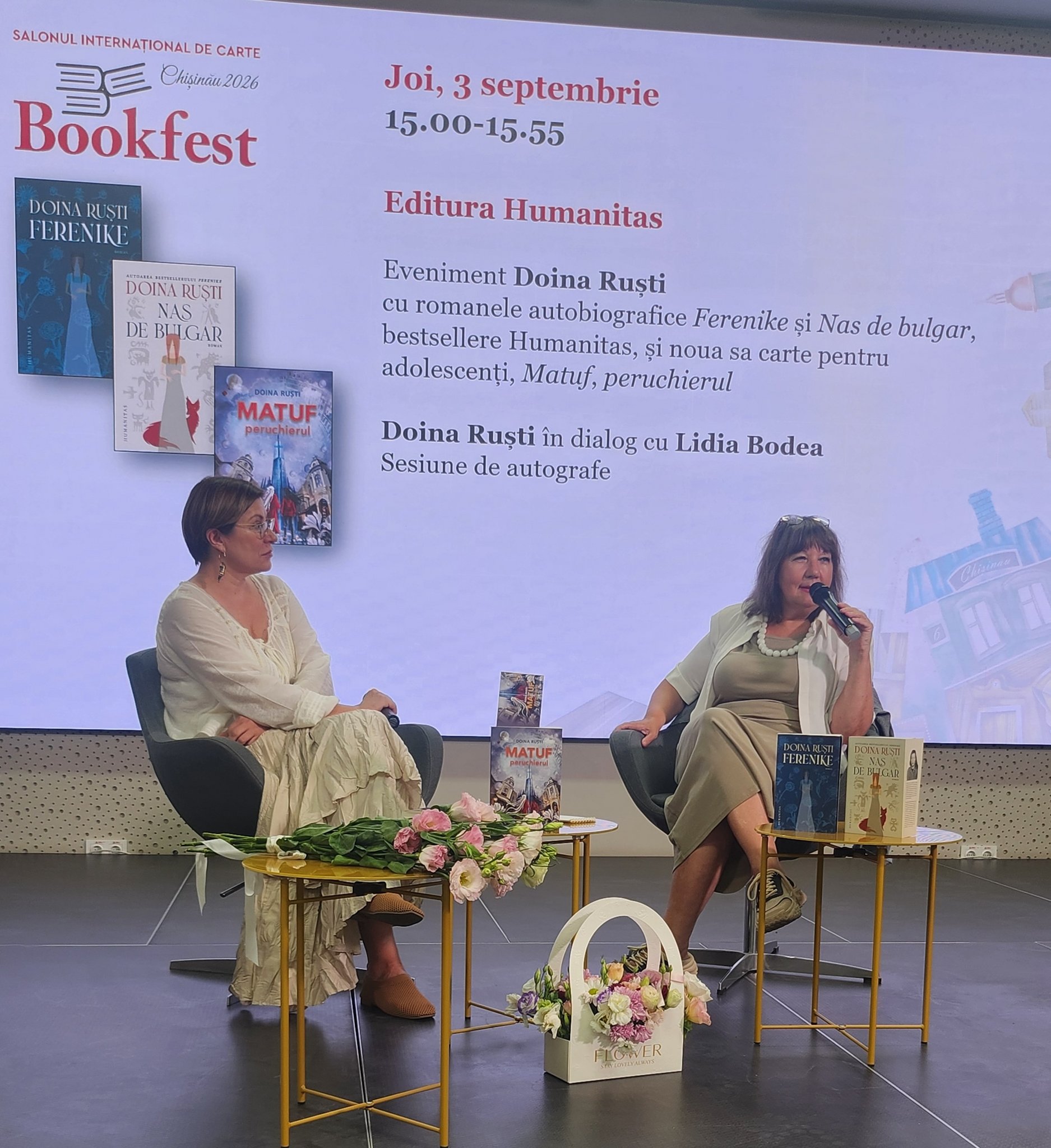
Doina Ruști’s participation in Bookfest Chișinău, on September 3 and 4, 2026, brought two eventful days: a book launch before a packed audience, a lecture on national identity at Moldova State University, and numerous interviews with media outlets in the Republic of Moldova.
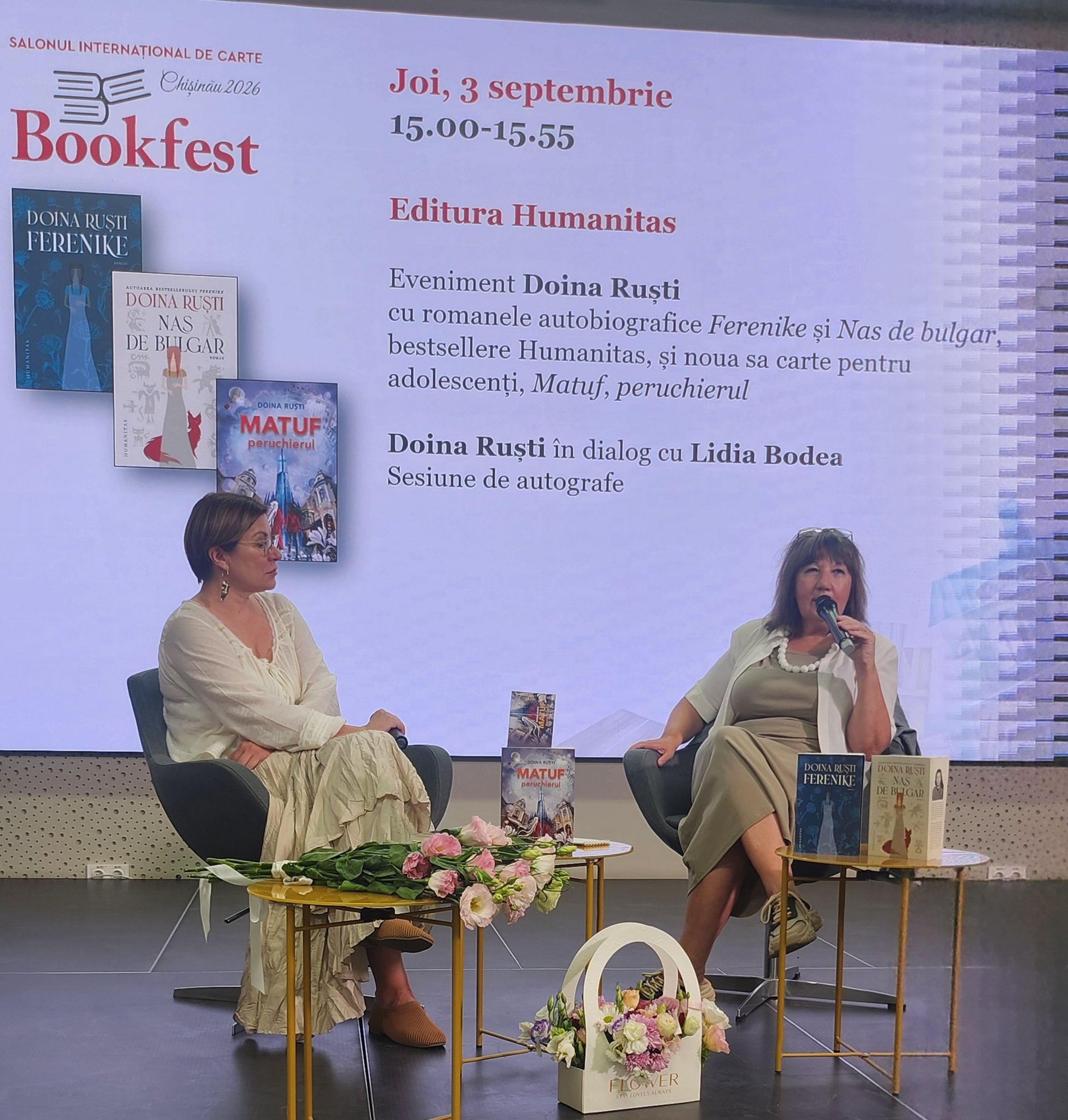
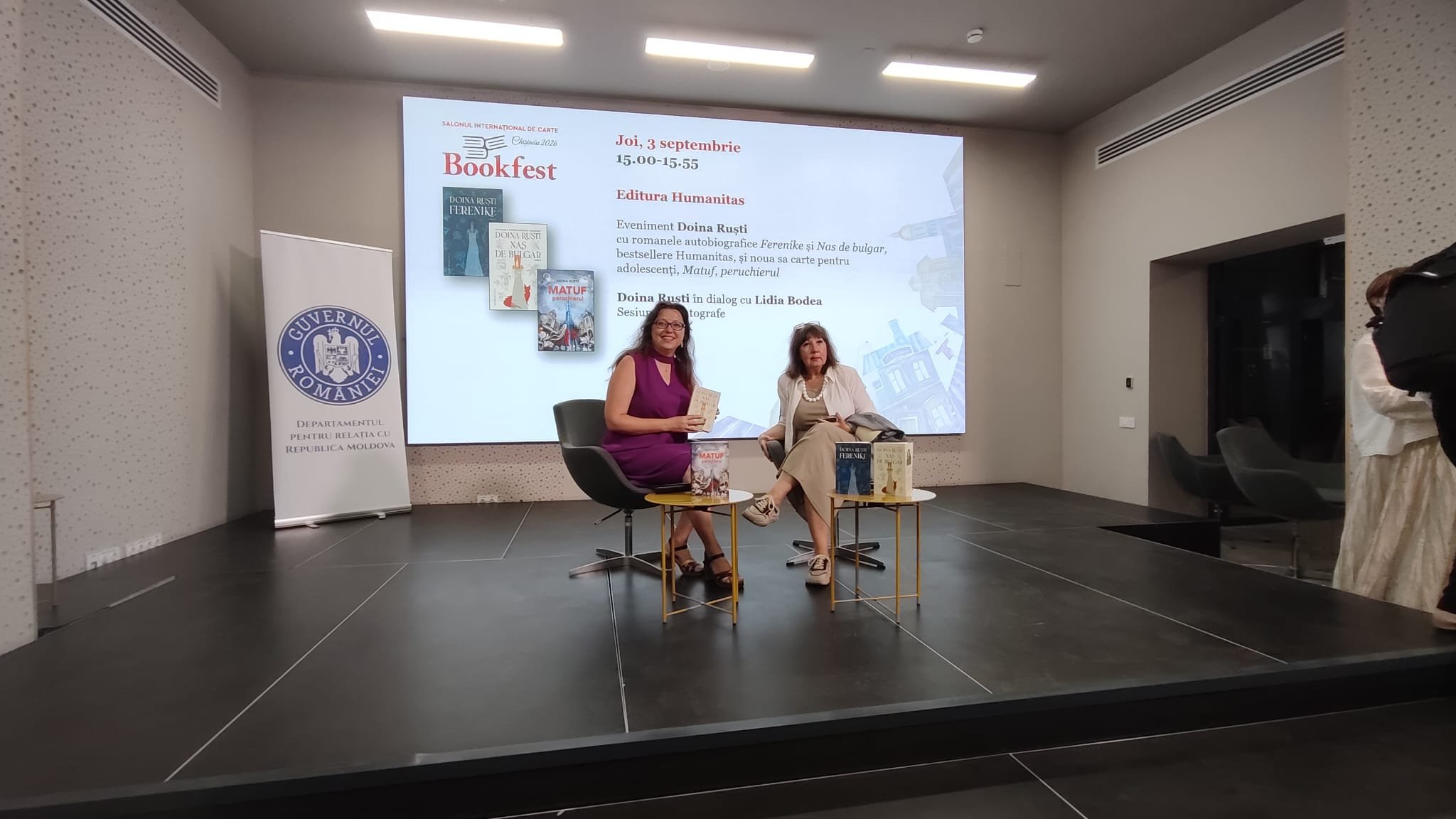
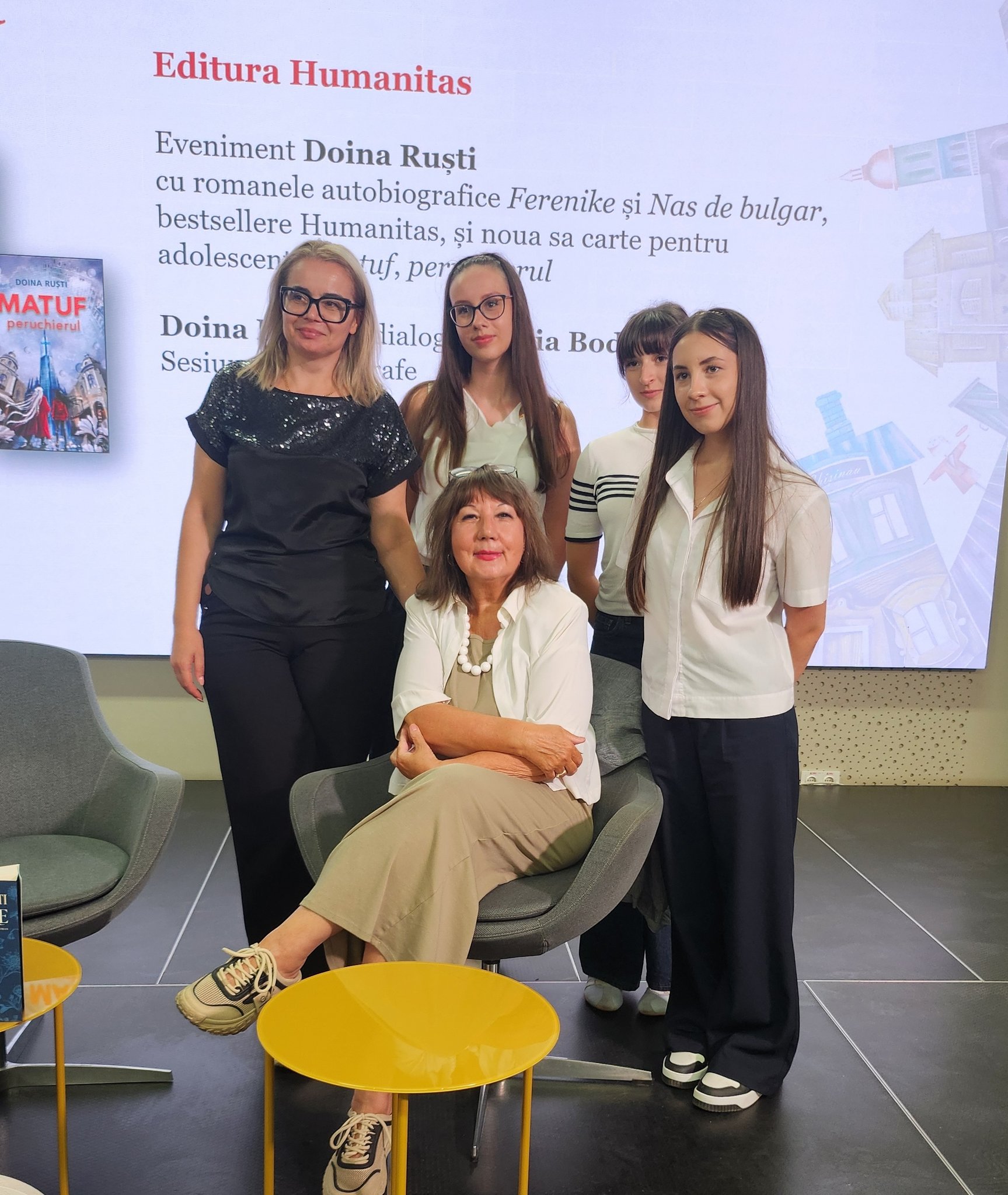
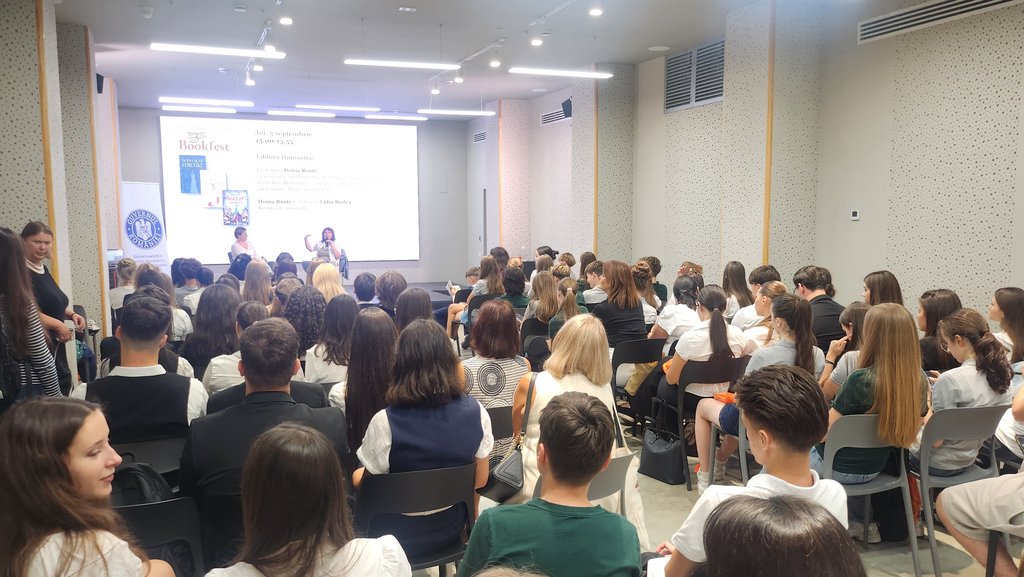
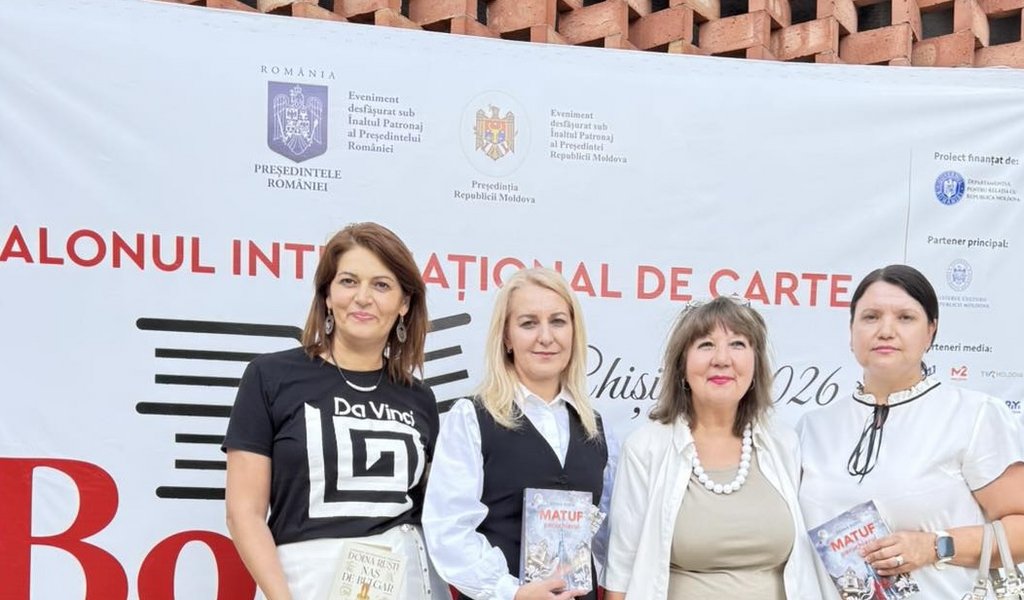
The event organised by Humanitas Publishing House at the Mediacor Centre brought together teachers, students, and readers of all ages. Among those attending were many teachers and students from the Ion Creangă, Da Vinci, Mihai Eminescu, and Prometeu high schools in Chișinău.
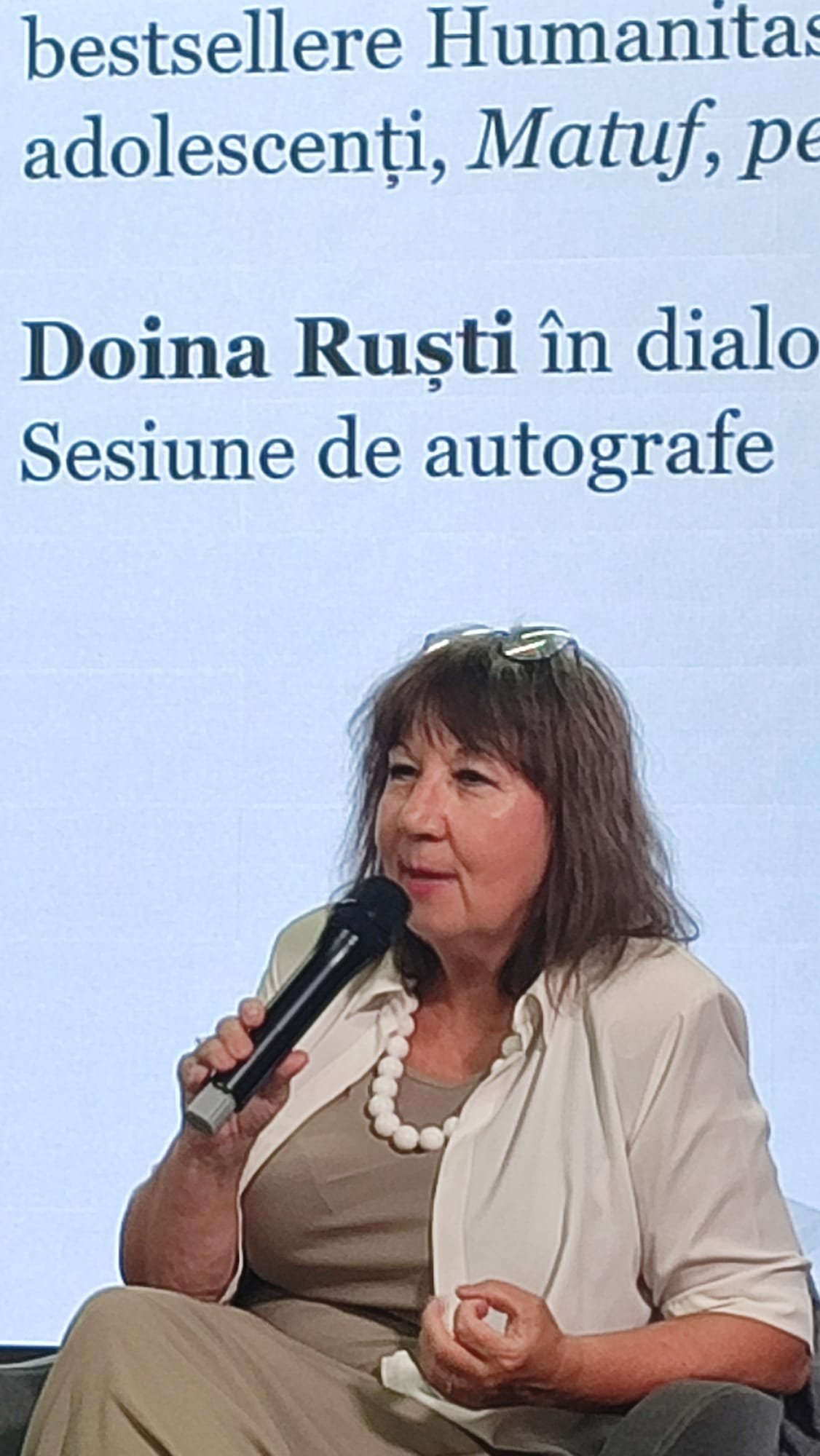
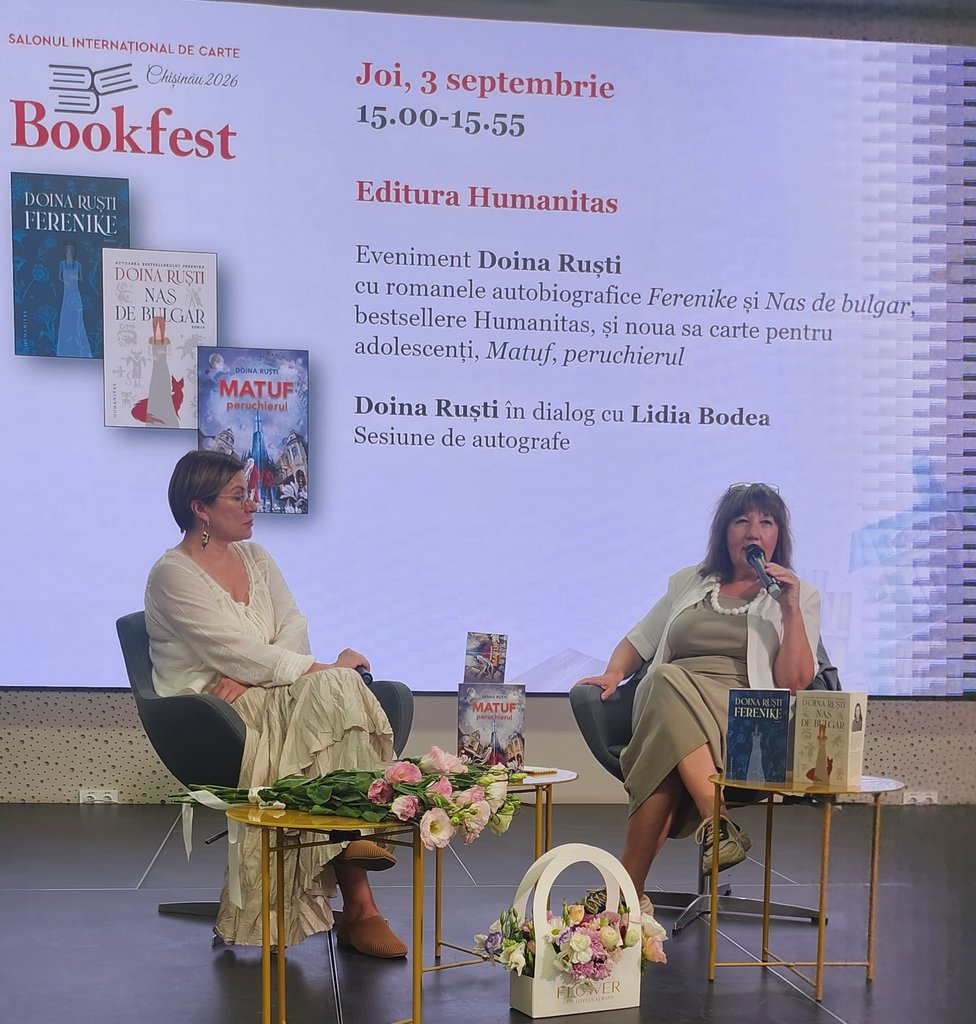
Doina Ruști spoke about her new novel, Matuf, the Wigmaker, as well as her autobiographical novels Ferenike and Bulgarian Nose, in conversation with Lidia Bodea, General Director of Humanitas Publishing House.
The enthusiastic audience, the many questions, and the long book-signing session made the launch one of the memorable events of this year’s Bookfest. All copies of Matuf, the Wigmaker available at the fair were sold, and some readers were unable to purchase the book.
In its official report on Mirabela Grădinaru’s visit to Bookfest Chișinău, the Department for Relations with the Republic of Moldova highlighted, among the events held at the fair, Doina Ruști’s meeting with students from several Chișinău high schools. The Department called it “a special moment” and described it as a lively discussion “about books and stories that cannot be forgotten.”
Source: Department for Relations with the Republic of Moldova
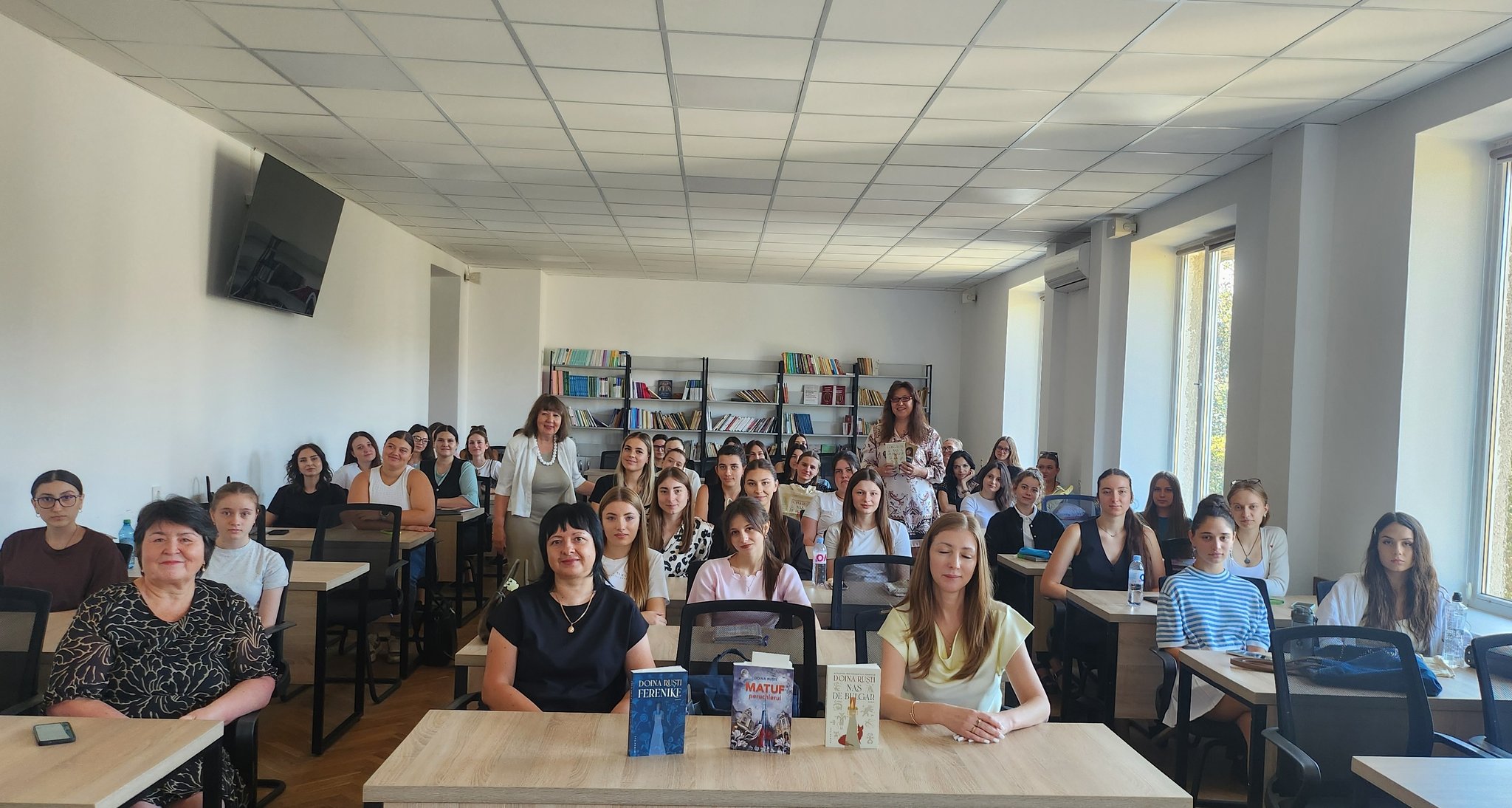
The second day in Chișinău began at Moldova State University, where Doina Ruști delivered the lecture “National Identity, Starting from the Novel «Bulgarian Nose».”
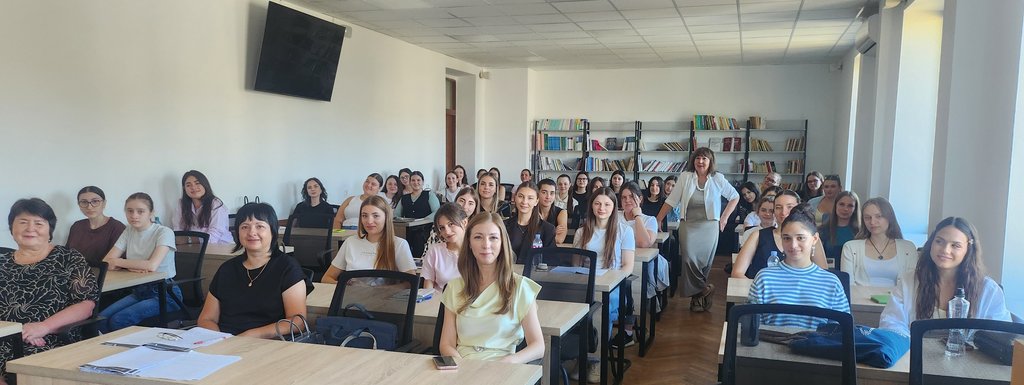
Organised by the Department of Romanian Linguistics and Literary Studies, the meeting took place at the Eugeniu Coșeriu Centre. The stories and characters of the novel opened a wider discussion about personal and national identity, family memory, Balkan legacies, and the ways in which literature recovers the experiences of a community.
The lecture was followed by an extensive conversation. The students asked numerous questions, and the discussion continued beyond the formal framework of the meeting, confirming the strong interest generated by the subject of identity in a cultural space where history, language, and shared memory carry particular significance.
The visit to Chișinău also included several appearances on Moldovan television and radio.
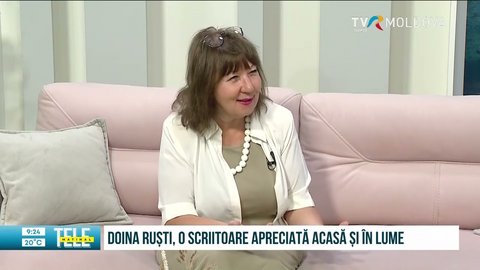
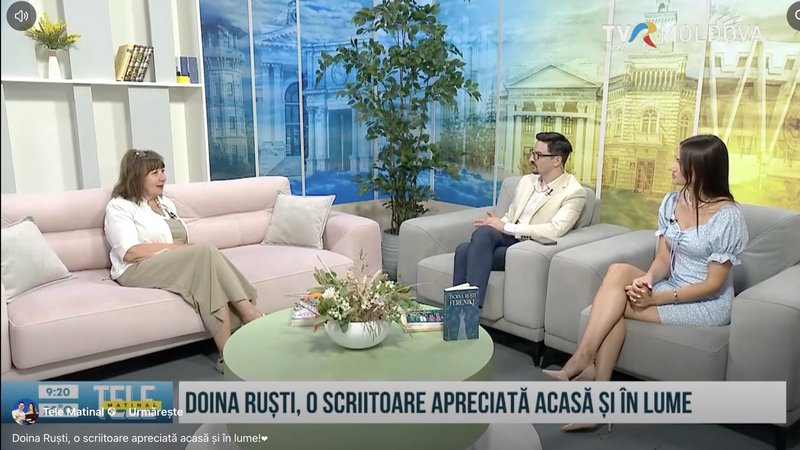
At TVR Moldova, Doina Ruști appeared live on the morning programme. The conversation touched on her recent novels but focused particularly on artificial intelligence, one of the main themes of Matuf, the Wigmaker. She also recorded an interview for the programme “The Bookshelf”, to be broadcast at a later date.
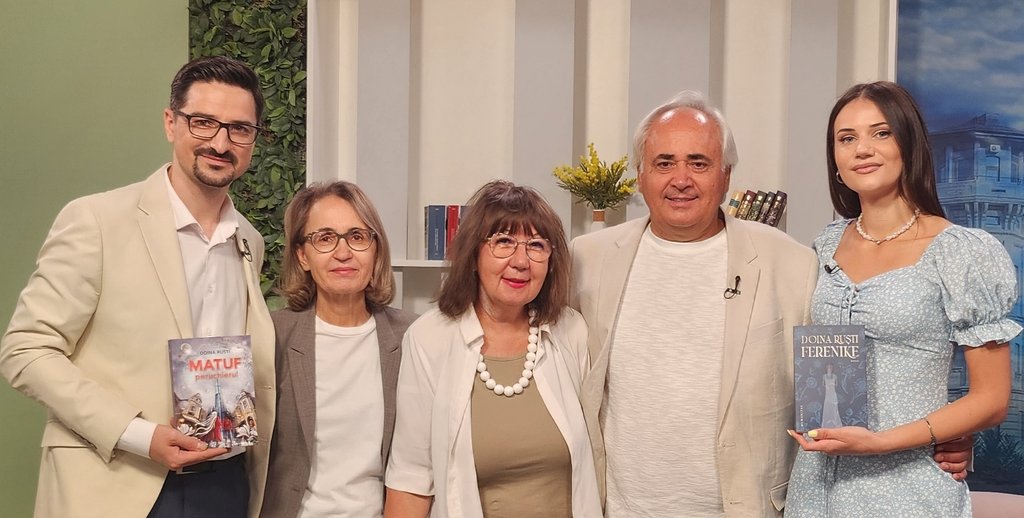
At Moldova 1, the novelist was the guest of journalist Alisa Tanas on the evening news edition of September 3. The live interview addressed several current issues, particularly artificial intelligence and the future of literature. Doina Ruști spoke about literature moving towards hybrid artistic forms.
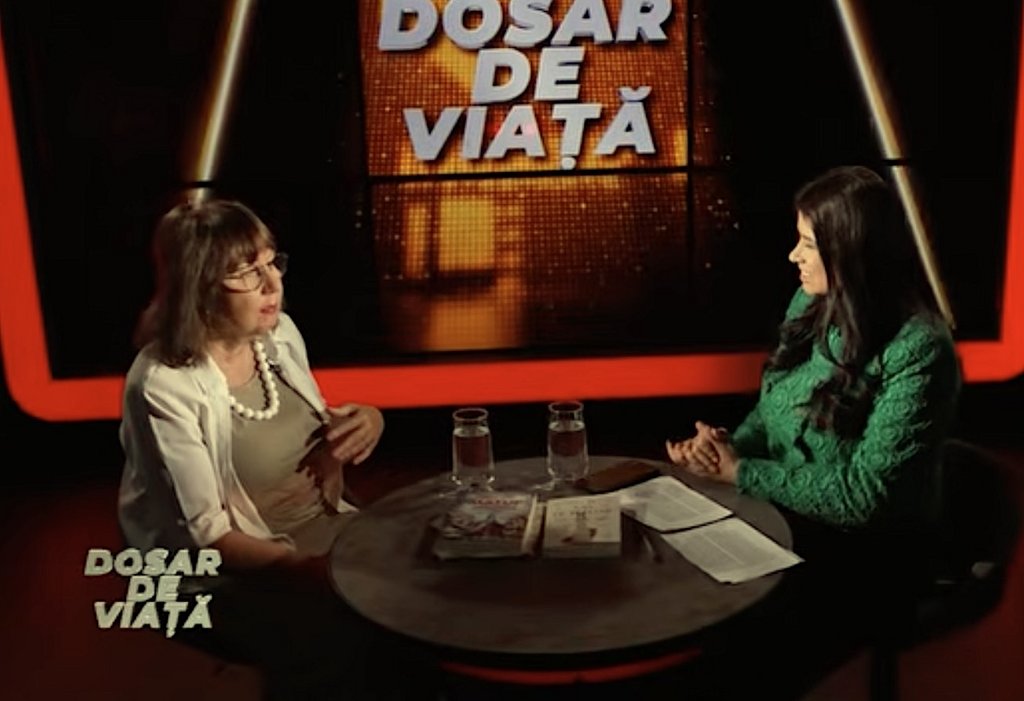
For Vocea Basarabiei, Doina Ruști recorded an edition of the programme “Life File”.
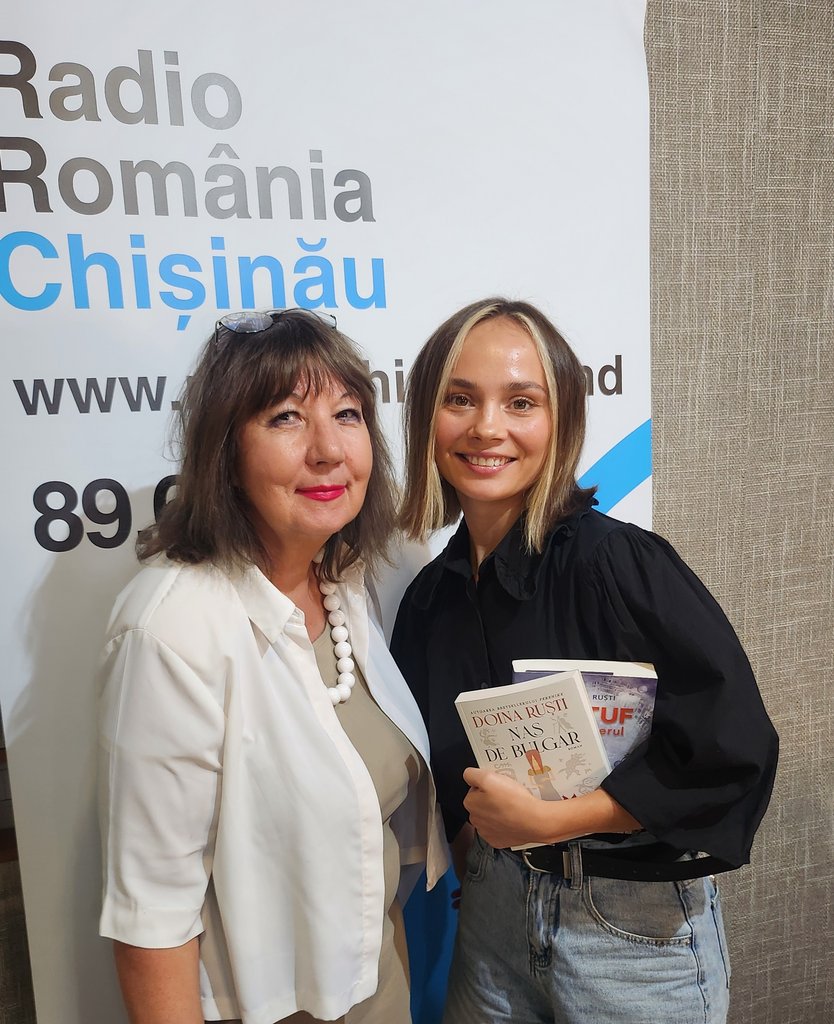
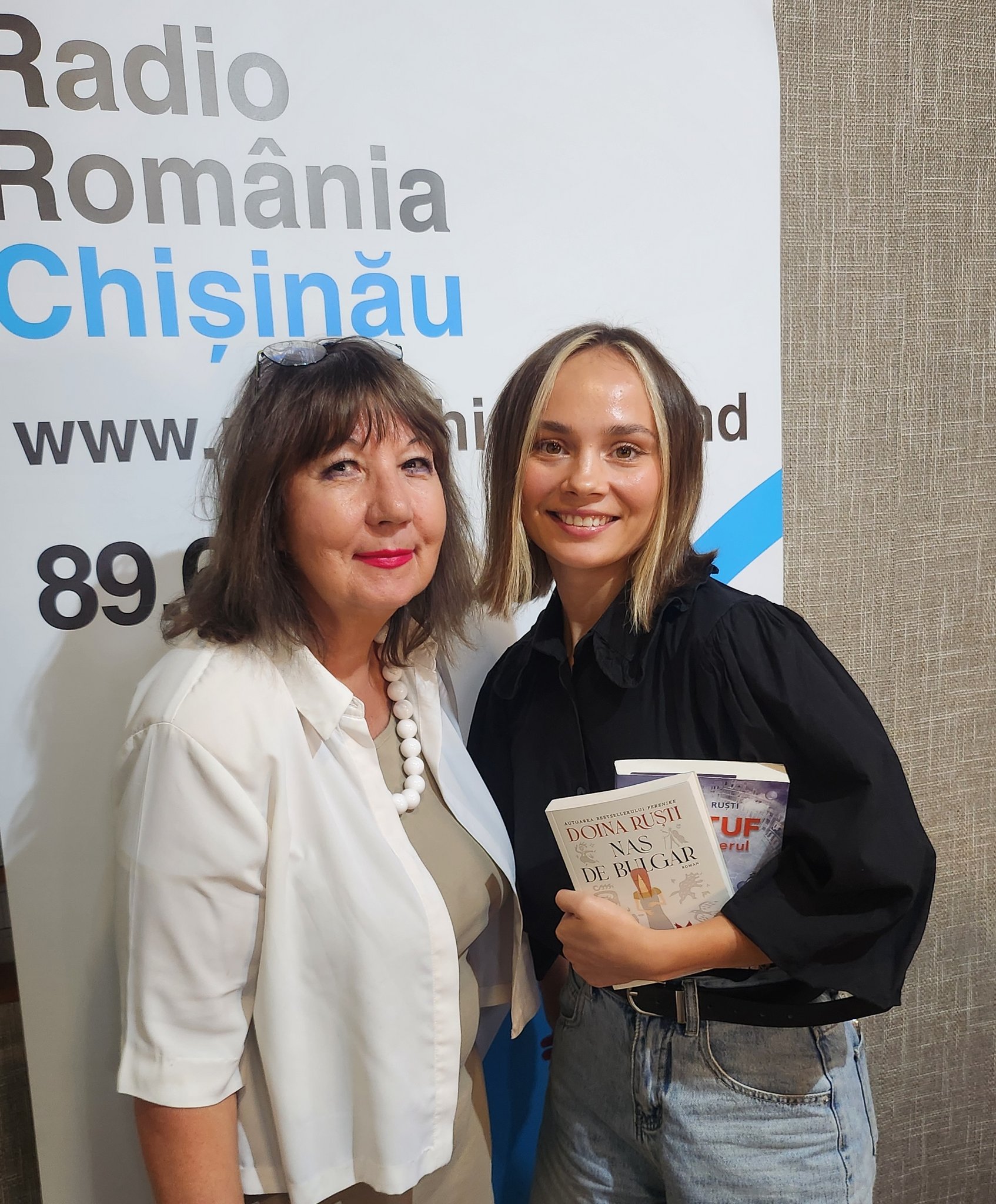
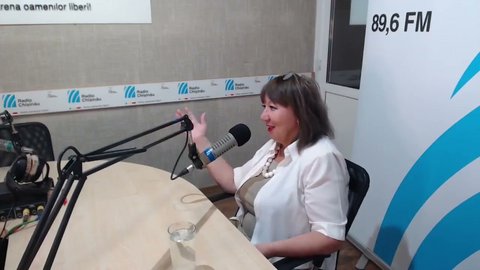
On Radio Chișinău, during the programme “People and Ideas”, the conversation focused on Bookfest, Doina Ruști’s recent books, and the relationship between writers and new generations of readers.
The novelist also revealed that one of the characters in Bulgarian Nose originated in a figure painted on an ancient vessel preserved at the National Museum of History of Moldova. She named this strange character Zul.
Watch the full Radio Chișinău interview.
The programme also included several other interviews recorded at the book fair.
The two days brought together literature for young readers, autobiographical memory, and current questions about identity. From the students who came with their teachers to the launch of Matuf to the university students whose questions extended the lecture on Bulgarian Nose, the meetings in Chișinău had the energy of a living dialogue—between generations and across the two banks of the Prut River.