INTERVIEW
Maria-Alexandra Mortu
Published: 24.09.2022, 13:42, Adevărul
Biographical elements are never absent from Doina Ruști’s prose, appearing against the background of a self-analysis—of her own evolution.
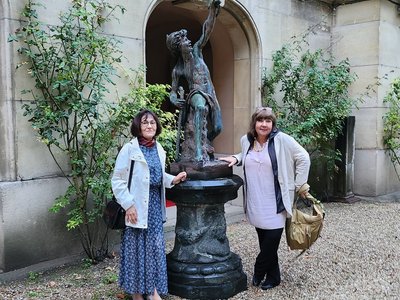
Doina Ruști began writing the novel The Phanariot Manuscript in 2012. (Photo: personal archive)
The prose of Doina Ruști, which reveals her love for old literature as well as her curiosity about historical connections, is complemented by biographical elements that, as she told us, do not represent anything she truly lived through, since “digging into the past has only one purpose: to make sure you’ve evolved.” Weekend Adevărul spoke with Doina Ruști about how she formed her writing style, how biography and real cases intersect with the prose she has written, her years of teaching, and her work at Litera Publishing House, where she offers a genuine chance to debut writers.
Doina Ruști: I began with a notational style, based on the principle “describe what you see,” and gradually adopted a writing of detail. In my debut novel The Little Red Man (2004) I replaced the deepening epic—generally based on commentary—with a block of five or six very short stories, in order to provide narrative perspective and also the illusion of an indisputable reality. For instance, my character talks about his first sexual experience, and as a complement I added short cases that have no connection to the main plot. Little by little, this applied kind of storytelling became part of my style.
But with each novel I changed the type of composition, hence the false impression that the narrative style itself must be different too. I have written linearly, in a fragmentary manner; I have structured the story into epidemic nuclei… For example, the novel The Ghost in the Mill is made up of three parts that construct, from different perspectives, parts of a story: a confession, a construction narrative, and a radiography of a sequence (two days in a man’s life, one at his peak and one at the end).
In some novels, tension is created in a classical way, through accumulating actions, as in Lizoanca, Mommy at the Two Little Blue Flowers, The Fiancée; in others, I placed the story inside a certain kind of atmosphere, apparently mannerist, yet in the depth of the narration one finds the same micror-narratives of tension. This is where The Ghost in the Mill, The Phanariot Manuscript, and Homeric belong.
But of course there are also writings where I stated my aesthetic intentions; one of them is SIGCHLD, fork() and sleep()—a kind of personal ars poetica. About style, one could say much more. Some exegetes of my work have spoken about neo-Gothic—Zogru, The Ghost in the Mill—others about magical realism—The Ghost in the Mill—many about neo-Zolaesque realism in Lizoanca.
No. There are periods when I feel the need to change my laptop; others when I write a few paragraphs by hand. There are days when I absolutely want to tell something, with no connection to any work.
As a novelist, I’m in search of that ideal reader, capable of reading me without prejudice.
No. When I feel like writing—I write; when I don’t, I don’t. I have no idea why a block should exist…
First of all, I seek the incomparable delight you get from conveying a message that matters to you, placed in a unique—or at least, at that moment, unusual—wrapping. And of course, I seek that ideal reader, able to read me without prejudice.
I studied philology. At twenty-three I was already a teacher, at a high school that I resigned from in 1989 in order to come to Bucharest. Immediately the Revolution broke out. I was hired at Humanitas Publishing House, while at the same time taking on two hours at the “Ion Neculce” National College (World Literature) and at the University of Bucharest, where I taught Old Literature and Literary Theory. At some point I moved to Media University, entering the world of film. For a while I was a dean. Around then I also began teaching courses at UNATC. It was a creative and good period in many respects. For instance, I returned to fiction and began publishing novels.
All my jobs benefited from involvement, enthusiasm, and joy. Inside each of them I lived the delights of a builder—both when I wrote high-school textbooks and when I sold newspapers, and also as a teacher. I’ve heard many people say that teaching is a routine job, in which a person dies by repeating the same thing their whole life. For me it wasn’t like that: I always invented another world inside which to teach someone else. I never taught the same course for more than three years.
As for influences, I can say hand on heart that in my novels everything is autobiographical—and nothing of what I truly lived. When I was writing Zogru (2006), for example, I was teaching the History of Culture and Universal Civilization at the Faculty of Cinematography of Media University. Each lecture, from ancient Mesopotamia to cultural globalization, placed me in a secret dialogue with the destiny of national culture, materialized in this novel, which synthesizes the history of the Romanians.
At the same time, my university life from that period also seeped into the pages of the book: Giulia, the character in Zogru, is a film directing student and takes courses in Buftea with Andrei Blaier. This does not mean I lived anything of what Zogru goes through. Still, nothing is completely foreign to me. My love of old literature, my total disdain for rigid rules, my weakness for syntheses, and my permanent curiosity about historical connections—all of that is present in that novel.
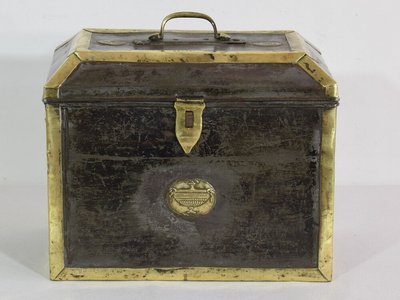
(Photo caption in original: The character Zogru—“as a presentiment of disappearance and as a sense of freedom.” Photo: doinarusti.ro)
After my mother’s death, I was obsessed with her last week of life, when something had changed; I had the impression that a foreign being lived inside her. And that obsession lasted a long time, transferring to me my mother’s sadness and even that violating being, which reminded me of all the sadnesses of life. Around six o’clock, when the day ended, I was seized by such misery that I sincerely believed I was infected with the germs of death. Trying to free myself from that terror, Zogru was born—as a presentiment of disappearance and as a sense of freedom.
The Ghost in the Mill is a novel with a moral message, linked not only to the communist period, but especially to the futility of establishing truth. In situations of general crisis it’s absurd to rank guilt. That’s why I don’t believe in evaluating people by their Securitate files, or by lightning analyses done in front of a laptop. Harsh histories can only be told—reconstructed subjectively.
I don’t believe in the existence of impartial judges appearing in a world where denunciations were therapies or even literary fictions, and where people felt like heroes because they only gave two slaps to some wretch they could have trampled into the ground. For such events there are no just measurements, and my novel describes precisely this impasse of morality.
The Ghost in the Mill is my main novel. The first novel I wrote—even if in the order of publication it is only the third. My communist experience is in this book: the atmosphere of social terror, the induced secrecy, the bleak life without prospects, the murder of my father, or the permanent ghost of the informer (for me hidden in the mill of my childhood)—everything belongs to my life.
I had found it before I began writing. As I wrote the novel, I became convinced that nothing done once can be undone: no era deserves to be investigated post-mortem only for therapeutic or vindictive reasons. Digging into the past has only one purpose: to convince yourself that you have evolved.
It comes as a continuation of The Ghost in the Mill; it is a novel that, by following a particular destiny, expresses a moral tendency of history. In Lizoanca I am in fact speaking about forty years of Romanian history, about recurring facts of history.
Doina Ruști has writings translated and published in over 15 languages. (Photo: personal archive)
I read a news item about a child who was prostituting herself; but it wasn’t the case itself that was particular, it was the way it was presented: on all channels they were saying that the child had infected an adult community. The child was accused, blamed. The challenge was that, following the thread of that story, I discovered hundreds of other similar cases, happening at the same age, monitored by a news agency around the same period.
Age became very important—especially because for me too, the age of eleven meant a threshold: that was when I lost my father. Therefore, in the novel, as Lizoanca’s story unfolds, each character returns to the time when they themselves were eleven. And all these characters lie at the base of the profound conflict.
No. I hoped that each reader would return to that time when they were only eleven.
No. My youth was stuffed with South American prose; from there came the impulse to continue it, to surpass it. But my fantastic prose is created on Cartesian intentions. I myself function on the constant belief that for any mystery there is a simple explanation. That’s why, in a fantastic story, despite the atmosphere or the events that contradict reality, there is every time an explanation, even if not in plain view.
My thesis about the fantastic is in the story “The Cinema at the Mall,” published many years ago in România literară. It’s about an adolescent who goes to see a film and comes out of the cinema an old man. His life takes on fantastic proportions; reality becomes strange. But one day he reads online about the case of a Vietnamese woman who had experienced the same thing—though very young, she had turned into a woman who looked eighty. She discovered the cause of the illness. Freed and disappointed in equal measure, the character stops looking for magical causes and tattoos the Vietnamese woman’s name on his hand, feeling kinship with her through illness. The case of the Asian woman is a real one. Her name is Nguyen Thi Phuong, and you can read about her online. This is my kind of fantastic. The Phanariot Manuscript also follows this pattern.
I didn’t set out to write a militant novel, but you can’t write about the eighteenth century without speaking about slavery and human traders. Slaves had a cruel fate: they could be beaten, killed, given as gifts by their masters. But we shouldn’t look at it globally. There are nuances, details, mentalities that deserve to be taken into account.
There were many other people who were born free and were sold to cover debts. Some sold themselves willingly. My novel places its action in the very century of slavery. Therefore I tried to describe the situation, not to campaign for a cause. But this is only the background.
The problem The Phanariot Manuscript raises is tied to the essence of a nation. The whole action of the novel revolves around five lexemes, which also give the titles of the chapters, and they define Romanian history quite well: Bucharest, sudit, Gypsy, deception, and bargain.
Obviously, I have a weakness for the eighteenth century. But there are other reasons too, among them my interest in folk medicine as preserved in eighteenth-century folklore books, massively influenced by the period we call Phanariot, which was in fact a reconnection to the Balkan and Mediterranean space.
Many of the magical recipes in Mâța Vinerii, with apotropaic or sanitary value, come from there. The abracadabra elixirs invented by Cantemir in The Hieroglyphic History have a real support, found in the little information we have about the Phanariot century, when doctors multiplied and conflicts with quacks and female healers increased.
After 1800 there is a lot of information, which kills my interest. Writing implies searching—detective investigation. For me, the novel resembles those galleries that bring a vanished life to light. But The Phanariot Manuscript also begins in my childhood, spent in an old house with many rooms, trunks, and carriages. There are always multiple sources, multiple influences.
I have always considered it a sin to fall prey to influences. There’s no point in saying what I think about that—it would take too long. I was always afraid of resembling others, people in my family, for example. And that not because they weren’t worthy of admiration, but because I had the oppressive intuition that a person must discover everything on their own skin, and look at others only so as not to resemble them.
Many times I have been embarrassed by my own actions, but rarely did I feel burdened by the bitterness of being an epigone. Despite this obstinacy, various people also left their mark on me.
Balzac is one of the men who influenced me deeply, structurally. From him I have my sentence and my taste for detail. In second place is Stavrogin. A detestable man, whom I hated from his very first actions. Whom I hated even after I reread Demons, in fact every time I reread the novel. And yet I must admit his existential poison is contagious and endemic.
Finally, in another, more worldly order, Adalbert, my husband, is the man who influenced my social behavior. I met him in 2000, when many things changed radically in my life. He is younger than me, has a different education, another moral code. From him I learned how many perfidious shades tolerance has.
The Phanariot Manuscript sucked my energy. I wrote it from 2012 to 2015. They were three intense years in which, without exaggerating, I can say I lived in Phanariot Bucharest. The least time it took me to write was Zogru, a minimalist novel written with the intention of being published, of opening the road for The Ghost in the Mill.
I can’t say one novel is dearer to me than another. Still, there is a book that opened the road to the Phanariots for me and charged me, helped me revise my aesthetic vision. It is The Checkered Shirt and 10 Other Happenings in Bucharest, a narrative puzzle. Those 11 stories, set in today’s Bucharest, seem autonomous, but in fact they form a second story, with branches into the Phanariot century. Only at the end of the volume do you realize these stories are connected. I liked writing it; it did me a lot of good. In general I write fantastic prose with involvement, especially of this type, where everything falls under the jurisdiction of chance.
Doina Ruști: I gave up teaching; I only occasionally teach courses at the University of Bucharest now, because I have devoted myself entirely to writing. I also run a prose series at Litera Publishing House, “The Contemporary Prose Library.”
I took a break from writing and tried to build links with the generation that is coming. For any writer, not only a debutant, it seems important to me to have the chance to enter a big publishing house like Litera, and even to enter a group of established writers.
Fortunately, there are very many talented prose writers, which makes selection easy. I admit I’m equally interested in bringing alongside me people who care about the idea of a group, capable of literary solidarity—something that has been lost, unfortunately, but which is essential in the life of literature.
Inevitably, around a series, aspiring writers gravitate, and a debut contest almost arises by itself. Last year’s winner was the novel Translucid by Ligia Pârvulescu, an important, difficult, complex book that brings a major change to today’s narrative prose. This year Ligia Pârvulescu is part of the jury.
It is an established practice; many contests do the same, in order to preserve stylistic tendencies and cultural preferences. In a way, the winner chooses people akin to them. This is a principle of tradition, a kind of golden bough, a relay baton. I would like to keep the idea that the winner becomes a juror the following year.
A debutant is like a promise that keeps hope alive. The debutant does not always rise to the height of expectations. Sometimes they make a few waves and that’s all. Other times, however, they blossom.
In this regard, the human quality of a gifted writer is decisive. Talent can be channeled in various ways, and those ways are determined by each writer’s character. Therefore my choices are subjective, and selection happens naturally.
I would dare say there is quite a lot of goodwill toward the debutant: readers, and the literary community too, are generous with a first book; they are even able to forgive mistakes. Later, with the third or fourth novel, they begin to be more demanding.
Besides, it is well known that valuable people are, as a rule, generous, and readers truly are the real cultural values. Rather, debutants, aspirants, those without a body of work, and especially “imaginary writers” are very critical of their fellow writers and ready to cut into living flesh. History “spits them out” without resentment. It has always been so; probably things will not change soon.
Society largely boils down to a fierce struggle for celebrity, and the surest path is social involvement, even if only apparent. As for me, I tried to keep pace with this world by writing a short story every week for the Adevărul blogs. In the meantime, more than 150 stories have accumulated. Those who still believe in literature have certainly noticed my effort. I even filmed some of them. It was my way of keeping myself inside a literary world organized like a legion.
In short, I believe the writer’s role is to write until they find their readers—their readers.
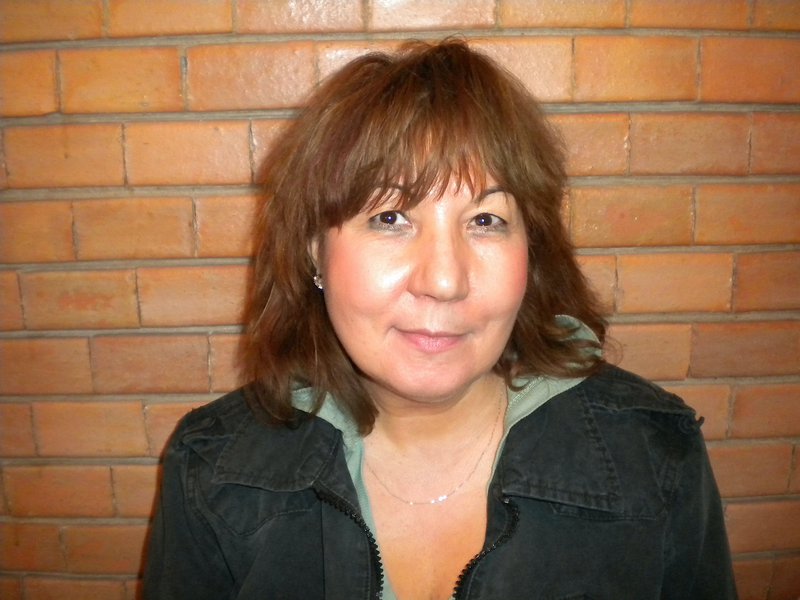
(Photo caption in original: Doina Ruști has a 40-year teaching career. Photo: personal archive)
Name: Doina Ruști
Date and place of birth: 15 February 1957, Comoșteni, Dolj
In 1976 she graduated from the “Garabet Ibrăileanu” High School in Iași, Classics track. Later, from 1976 to 1980, she attended the Faculty of Philology at “Alexandru Ioan Cuza” University of Iași. Two decades later, she earned a PhD in Philological Sciences at the University of Bucharest.
Doina Ruști is a novelist, screenwriter, script analyst, and professor with a PhD, with a forty-year teaching career.
From 2007 to 2019 she was editor-in-chief of the journal Cinematographic Art.
Over the course of her career she has won numerous awards, among them the Writers’ Union Prize—Bucharest Writers’ Association for the novel Zogru (2006), the Romanian Writers’ Union Prose Prize for the novel The Ghost in the Mill(2008), and the “Ion Creangă” Prize of the Romanian Academy for the novel Lizoanca at 11 (2009).
Several of the novelist’s works have been translated and published in over fifteen languages, including English, German, Spanish, French, Italian, Chinese, Danish, Russian, and Hebrew.
She currently coordinates the “Contemporary Prose Library” series at Litera Publishing House and chairs the “First Novel” contest organized by the same publisher.