Alongside brânză (cheese), viezure (badger), strugure (grape), and other words from the ancient substrate, we also find spân. Its origin is lost in Old Europe—more precisely in Greek (spanos)—but it appears as well in other ancient languages, such as Albanian and the Slavic tongues. The Albanian form spărk seems related to the Romanian spârc—meaning a young lad—suggesting overlapping meanings and words that became entangled in misty times. And to be clear, this is not my idea, but Philippide’s, in The Origin of the Romanians, volume II.
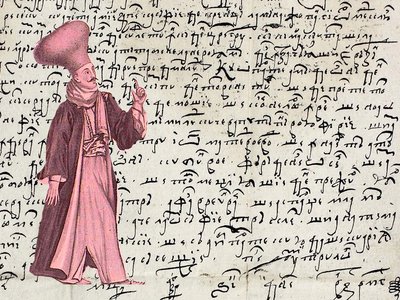
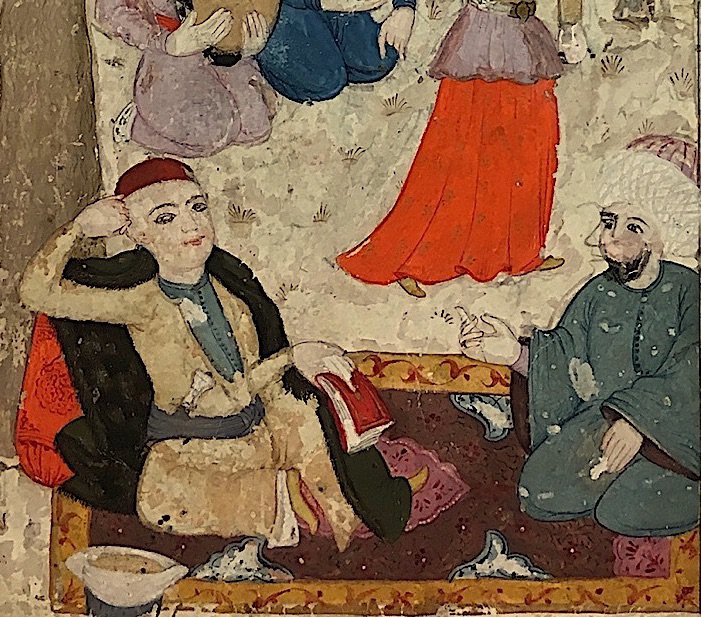
In any case, the spân made quite a career for himself in fairy tales, where he appears as a singular figure: effeminate and perfidious. He earned this reputation precisely because, having no beard, he preserved the appearance of a child, misleading you into believing him innocent, while in fact he lounged comfortably behind his sanctimonious face, ready to hatch mischief and filth.
He has no facial hair, and in a world of bearded men he seems to have fallen from the sky—an apparition: a strange woman or an improbable man, unisex, poised on the boundary between worlds.
There are countless stories about the spân’s wickedness, all portraying him as extraordinarily persuasive. He asks you to climb down into a well—and you do. He tells you to cut off an animal’s horns—and you obey at once. His power of persuasion is inhuman, bordering on sorcery, tied to the eyes he fixes straight into your brain. He is Ganymede, the enchanting adolescent to whom not even Zeus could resist.
And yet, even the spân has his complexes. He is dissatisfied with his effeminacy, and so he dreams day and night of growing a beard—hence the many proverbs devoted to the subject.
Medical treatises did not ignore him either.
One such man, whose beard never grew, lived in Bucharest toward the end of the gilded eighteenth century. His name was Luca, affectionately called Lucache, a seller of goldfinches, whom I have mentioned before in The Phanariot Manuscript.
Being beardless would not have troubled him too much had he not also begun to go bald. Moreover, Lucache had neither the true spân’s dreams nor his fabulatory potential. He was simply a lover of goldfinches and wished that every household might own at least one such bird.
One day he encountered a man who sold him a book—a translated copy of a medical treatise entitled Geopoponicon, published in Venice in 1647 and signed by the monk Agapios, also known as Doctor Athanasios Lando.
I should mention that this book, partially translated, enjoyed great popularity in Bucharest; people often commissioned copies of it at the price of two or three talers.
Among many other miraculous prescriptions, the book also contained a recipe for hair growth, especially as a remedy for baldness—and, implicitly, for the beardless Lucache.
Here is how the recipe went: first, you must find a woman’s shoe, well worn, one that has seen much. Once you find it, tear off the sole, cut out the heel, burn it on the hearth, mix the ashes with oil, and rub the mixture onto your bald scalp.
Having great faith in books, Lucache set out to find the enchanted shoe, believing he would need to persuade a woman to part with hers. But women were not so easily convinced, even if they formally sympathized with the ideals of the beardless goldfinch seller.
Besides, hair growth required more than a single shoe.
And so Lucache came to spend his days in the company of shoes, eventually keeping a sort of journal of the countless soles burned in the name of science. He went from house to house carrying a birdcage, leaving with a slipper in hand—and with memories of gallant adventures: sometimes heartbroken, other times strutting like a proud rooster.
Years passed. His hair never grew back, but in his wake remained the efforts of a suitor, and the happiness of women who had loved him sincerely.
And even more than that: a romance of Bucharest shoes—tall ones, unadorned, worn by thin-legged women; shoes with pompoms for fiery plump girls; brown ones for old women; snakeskin for redheads; velvet or satin shoes embroidered with beads for capricious little faces; slippers for coarse women; fine boots for icy girls; ankle boots for former nuns who had fled the monastery; shoes with German buckles for times of widowhood; clogs for vegetable sellers; and above all iminei for the people of the neighborhoods.
And all these shoes shared a single dream throughout their lives, inherited from their mistresses: that on some freezing winter day, a beardless man with goldfinches might walk through their door.