The perception of the Phanariot period is still largely shaped by negative clichés inherited from school textbooks. The novel proposes a shift in perspective, reconstructing 18th-century Bucharest as a complex, vibrant, and seductive space where history, imagination, and sensory experience intertwine.
The Phanariot Manuscript is not a historical novel in the conventional sense, but a narrative construction in which the fabulous becomes the dominant aesthetic category. It is not about the fantastic per se, but about a reality that exceeds its own limits, reconfigured into an intensely poetic form.
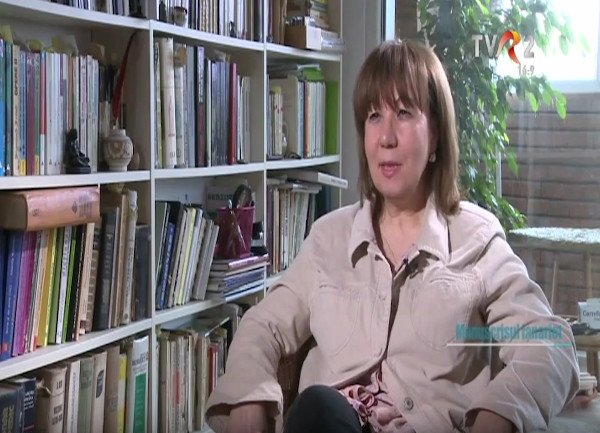
The dialogue between Doina Ruști and Marius Constantinescu focuses on the idea that the novel can be read as a poem of Bucharest, recovering the city’s hidden memory. The Phanariot era is presented from a new perspective, as Doina Ruști brings to light its refinement, brilliance, and cultural complexity.
Critic Eugen Negrici described the book as “a sumptuous work, with a contagious sensuality,” emphasizing its stylistic power.
Through this novel, Doina Ruști is among the first contemporary Romanian writers to explicitly return to the Phanariot era, revaluing it within literature.
Another dialogue between Doina Ruști and Marius Constantinescu