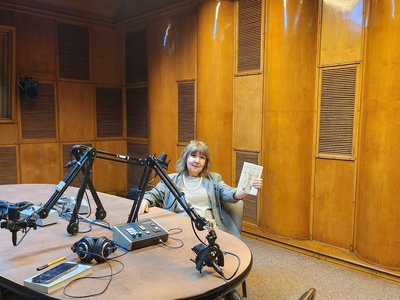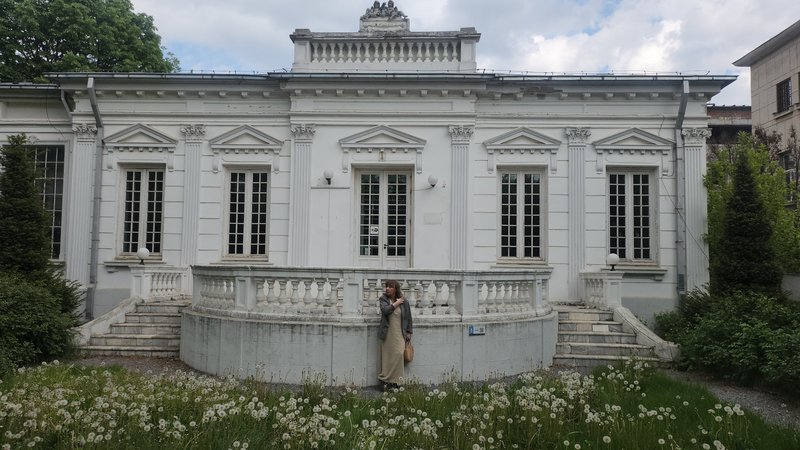
The Tour of the Five Stories, connected to the novel Nas de bulgar, reached Iași. Two events connected me to the readers of Iași, through three thematically different encounters, with different audiences.
On this page:
The Iași Meeting \| Stories from the Tour \| Photos and Video \| Press, Radio, TV \| About the Novel
Iași is one of the central places of Nas de bulgar: the city of Doina Ruști’s student years, of the Pușkin dormitory, of the former Conservatory, and of the encounters that transformed love into a history of identity.
In Iași, the tour began with a return to the places of the novel Nas de bulgar: the Pușkin campus, the former Conservatory, the streets and spaces through which the characters pass. Before the meetings with the public, Doina Ruști retraced the route of a student memory that had become literature.
It was spring in Iași, as in the time of the chestnut trees, though without the chestnut trees. Doina Ruști began by searching for the places of the novel.
“I reached Pușkin, the listless, unsettling and mysterious campus of my student years, and crossed the boulevard to the former Conservatory, following in the footsteps of my characters.”
— Doina Ruști
VIDEO: about the place where the events unfold
Theme: Fugitives
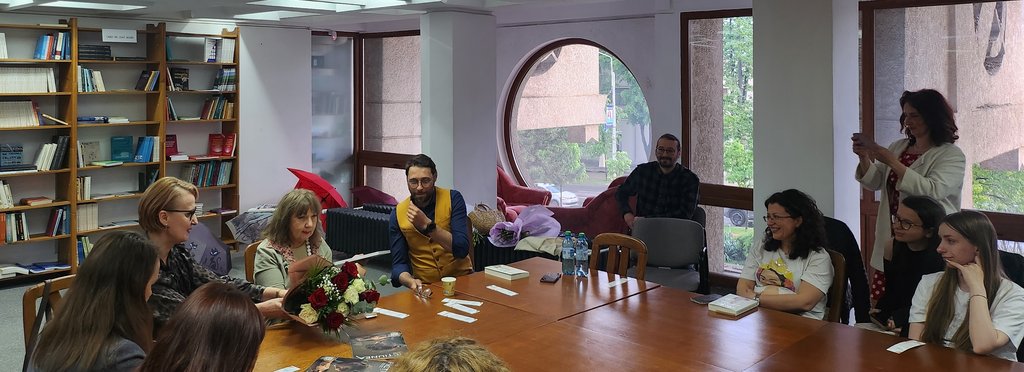
Cuibul visurilor, the book club organized by Dragoș Andrei Preutescu at the Library of the Romanian Academy, is one of Iași’s mature reading spaces. Here, Doina Ruști made the first stop of the Iași stage of the tour, meeting devoted readers, teachers, students and people from various fields.
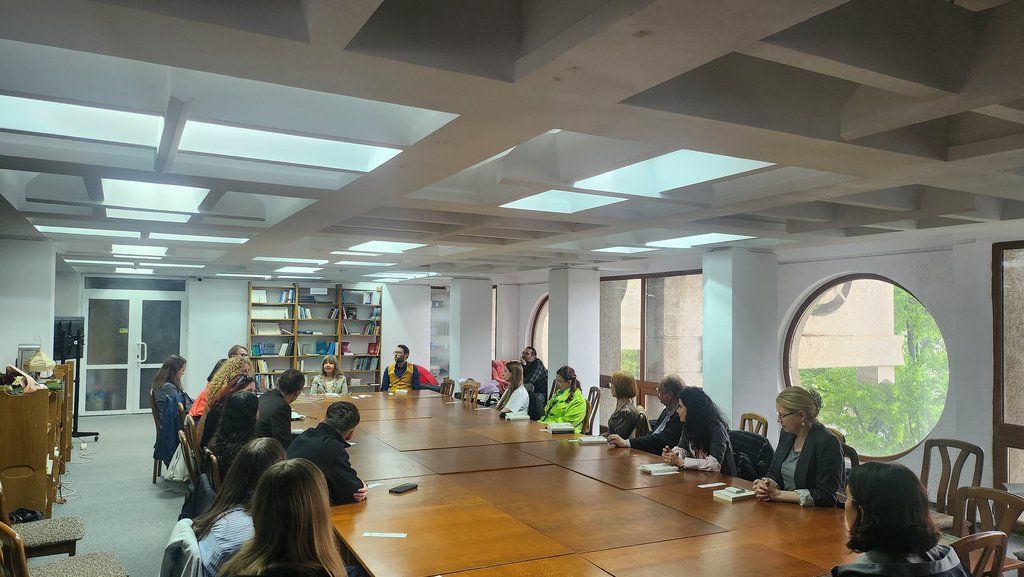
It was a discussion with many comments and questions related to the novel Nas de bulgar, many of them placed in the area of personal and national identity. The conversation touched on the novel’s relevance today, on femininity, past and present, but above all on Iași.
On TVR Iași’s morning show Dimineți perfecte, Doina Ruști spoke about the novel Nas de bulgar and the invitation to the Librex Book Fair, as well as about her ties to Iași, about love and identity.
Watch the full interview here.
The Librex Book Fair brought together numerous guests, among them Doina Ruști, together with Humanitas Publishing House.
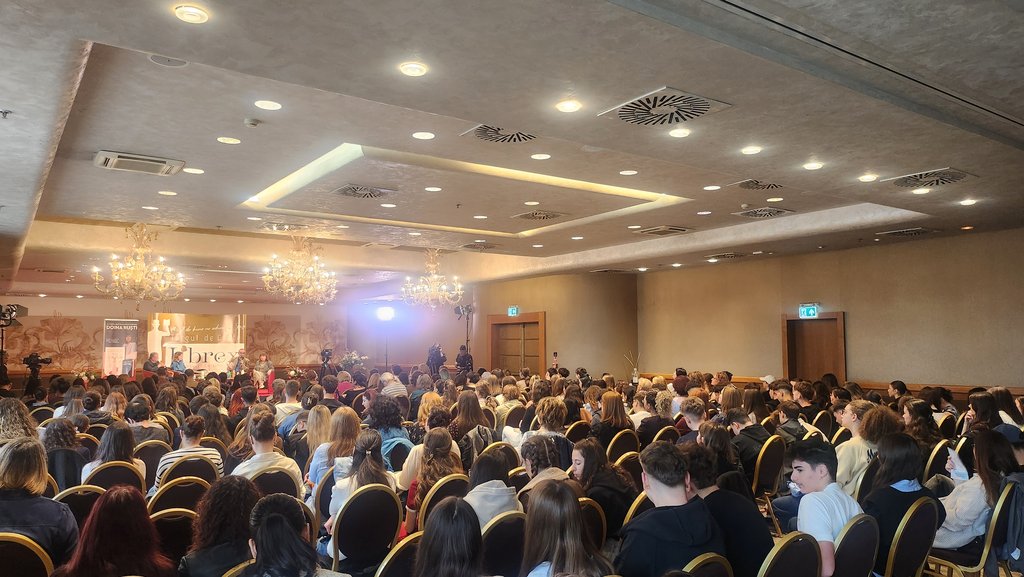
Part of Doina Ruști’s audience. Librex, 2026.
The hall at the Librex meeting gathered a large audience, connected to university Iași and to the places of the novel.
Doina Ruști had intended to tell five stories about fugitives, but this did not happen. The format of the meeting changed along the way, and the time intended for the narrative performance was unexpectedly reduced. The audience had come prepared for dialogue and story — teachers, pupils, students, former colleagues, readers who know her books. For them, one of the stories prepared for Iași is published here.
The Encounter with the God
An armaș was a guard at the princely prison on the bank of the Dâmbovița, and this position was the greatest achievement of his life. One evening, the Arnauts brought in a man it was impossible not to notice. He said he was a doctor and protested that he had been arrested unjustly. Before the armaș could take stock of the situation, before the captain came to question him, this doctor, or whatever he was, rolled his eyes back and died.
Pampu remained beside him, not knowing what to do. He was the first man he had ever seen die. Then, remembering that no one had been there to witness it, he rushed to turn him on one side, to slap him twice, as if to raise him from the dead. He loosened his collar and, just as he was about to undo his buttons too, he felt a swelling on his chest.
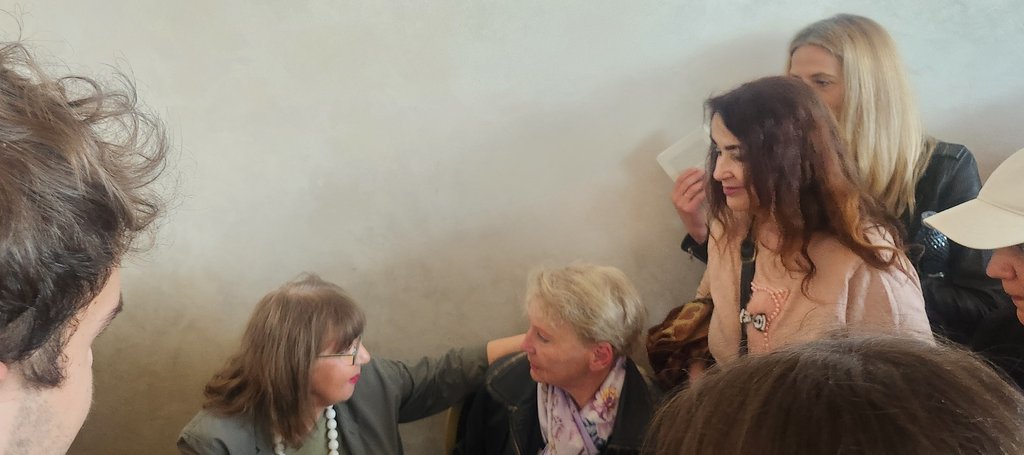
How could he move past that? What if some creature had slipped under the waistcoat? In two movements he pulled out the object, which was a pouch, tightly closed at the mouth and knotted twice.
At last, he called for help, the dead man was taken over by others, and the armaș crossed the road to have a coffee.
There, in peace and quiet, seated on the large divan, he took out the pouch to examine it. Beside him, a rather tipsy Arnaut was dancing, while by the stove a moustached man stirred the coffee and spoke loudly. For one moment he shifted his eyes from the dancer to a saric, and, without knowing when or how, he was left without the pouch.
He was saddened not so much by the value of what he had lost, but by the fact that he had not had time to see what was inside it.
The pouch passed from one person to another, but no one managed to open it until evening, when someone found inside it a feather, a young, insignificant feather, and threw it out the window.
The small feather floated across the courtyard, crossed the bridges and, for some unknown reason, returned to the armaș.
On this feather swayed one of the countless patrons of sleep and dreams. A bastard of the night, this little god still travels, even today, on a feather or a leaf, spreading around him a godly idleness, gradually transformed into melancholy or into heavy, dreamless sleep. And from there it is only one step to the desire for the great journey — to the flight into the world.
His floating vehicle was now passing over gardens, avoiding fences, crossing the street, all the way to the prison, where, you will not believe me, he once again came face to face with the armaș.
The encounter was pleasant. Something familiar invited the god to purr over dreams, and since it was also a sunny day, he settled on the armaș’s fez, where, warmed by the cloth, freed from every constraint, he scattered over him the fine drops of knowledge. And when the armaș reached the street, he realized that something extraordinary had happened to him. He could die, or remain forever in contemplation. In no case could he still be a mere armaș. He had become a bridge, a border soul.
The rest of his life no longer matters. He was a fugitive.
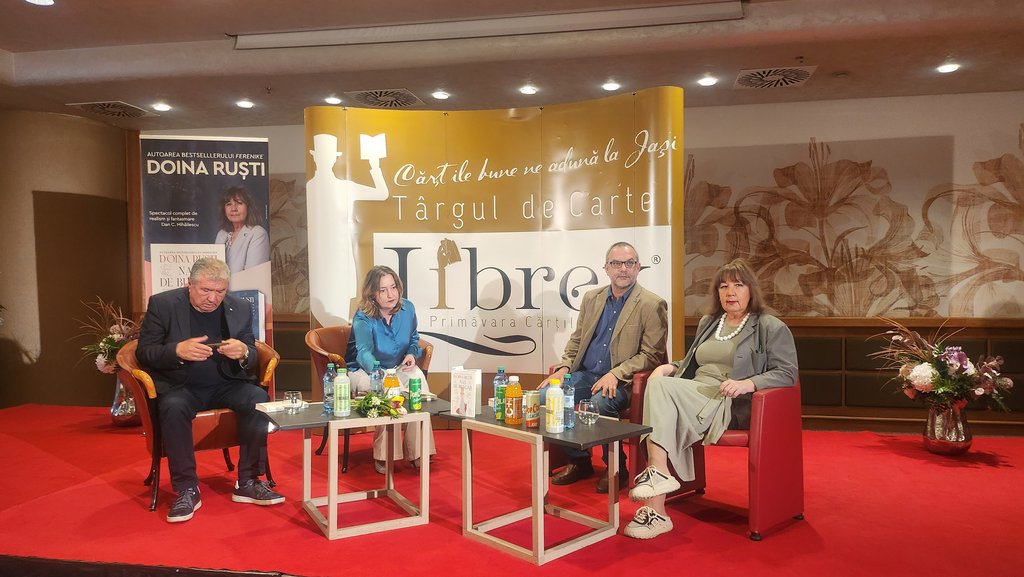
Doina Ruști to Librex
Several hundred people attended the meeting: teachers, pupils, friends, students and readers from Iași.
Time was short, and many questions remained unasked.
“My greatest regret was not having managed to provoke Professor Sergiu Enea into a discussion, a specialist in Cucuteni artefacts, especially since the god in the novel was inspired by a drawing on a Cucuteni vessel.”
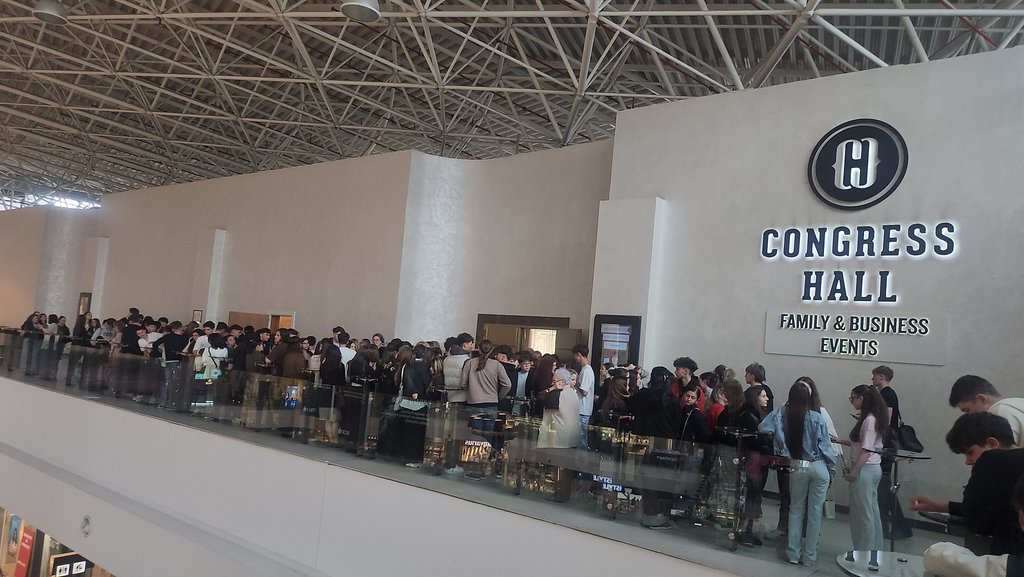
Doina Ruști — the queue for autographs on Nas de bulgar.
In a student campus haunted by crimes and rapes, a love story begins. He is a student at the Conservatory, she studies Letters. But between them there is not only music and literature, there is also a past. Among intellectual aspirations and social fears, people and events from ancient times make their way in.
Each episode of love is symbolically connected to the archaic history of the Romanians: Danubian migrations, the cult of Dionysus, the Bulgar mercenaries, mythical Caucaland, as well as archaic gods and the spirits of a vanished world. All these belong to the context of a love story that gradually turns into a history of identity.
“To love means to discover who you are.” (Nas de bulgar)
This page is part of The Tour of the Five Stories, a literary project connected to the novel Nas de bulgar.