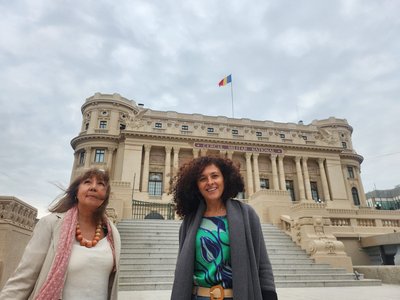
Among my encounters, there is one that remains especially close to my heart: my meeting with the American writer Paul Mandelbaum. His mother had Romanian roots, and he came to Bucharest in search of her memories. This is how I came to discover a sensitive and profound man. The evening we spent together has stayed with me through the tension of our confessions. Nothing in this world moves me more deeply than the adventure of identity.
Many nations mingle in my blood as well—a Balkan world that I often see advancing through history. My ancestors come from far away, from ancient times. Some were Aromanians who arrived from Montenegro. They sought refuge by repeatedly crossing the Danube, hiding to the north or to the south, depending on how the winds of history were blowing. Other ancestors emerged from the vast Byzantine world, from the Ottoman labyrinth, following confrontations or alliances with Slavs and other peoples.
Many peoples have passed through the Balkans, and whenever I look back into the past, one crucial point keeps returning to my mind: Varna. A place of passage, a place of refuge, where names do not matter. Perhaps that is why, for me too, a name can sometimes feel like a kind of disguise.
I remember a history lesson in which I learned about the bravery of a Bulgarian tribe. Their sacrifice impressed many, and although their empire lasted only a short time, the legend spread—and with it, the custom, widespread across the Balkans, of presenting oneself as Bulgarian. Traveling Vlachs, scattered Cumans, Germanic tribes, post-Roman populations, and especially Slavs—whenever they sought to assert themselves or make their way in the world—claimed to be Bulgarian. The name had become a brand, so that precise identity no longer mattered.
And yet, in crucial moments, the language of their ancestors reminded them where they came from, and with it, the place of origin resurfaced.
I believe that, from time to time, people are driven to reflect on identity—especially when they fall in love, when they search for their counterpart.
Every love story carries, at its core, a crisis of identity.
To love means to relinquish a part of yourself—or to offer it—to accept a form of transformation.
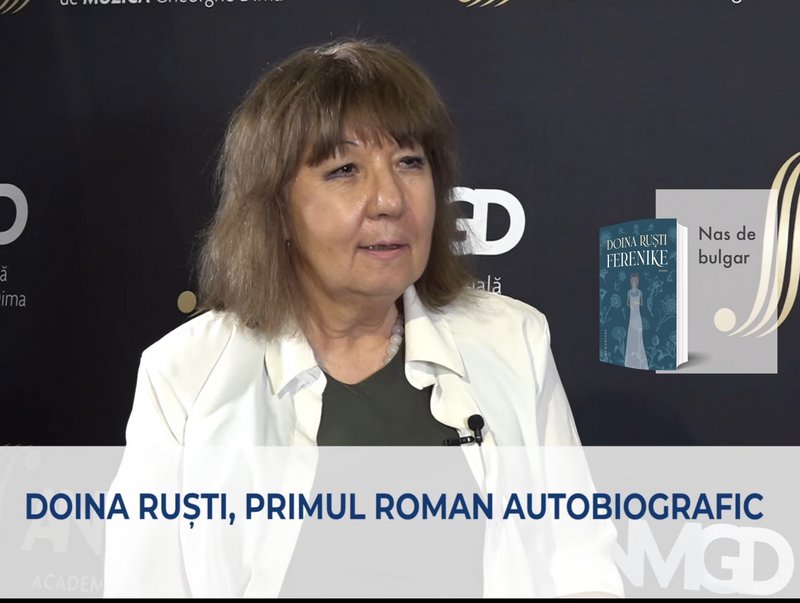
As I finish today the novel Nas de bulgar, the sequel to Ferenike, my meeting with Paul and his journey to Romania naturally come back to mind—a journey I invite you to read about here.
My novel is not directly connected to his story. It is a love story, yet within it lies the long and complicated narrative of my own historical legitimation.