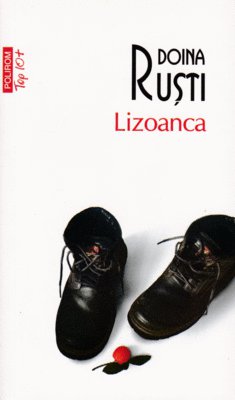
Preface [1] to the 2023 edition, by Pompilia Costianu Chifu
Although historically affiliated with the 2000s generation, Doina Ruști was formed under the canons of the Eighties generation, from which she later distanced herself. This partly explains the difficulty of placing her within a single literary direction, biological generation, or creative generation, since she possesses an aesthetic formula and a style of her own, as several critics have noted, among them Dan C. Mihăilescu[2] and Cătălin Sturza[3].
Doina Ruști has created an epic architecture of great complexity, with carefully conceived diegetic discontinuities, as the action is gradually assembled, showing a clear interest in new techniques and in highly refined postmodern connections. Indeed, she has acquired the reputation of being an atypical writer in many respects, and even a brief survey of the texts written about her work shows that the originality of her style and of her epic solutions comes first.
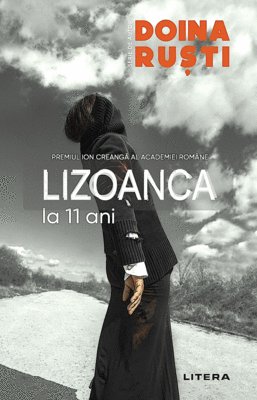
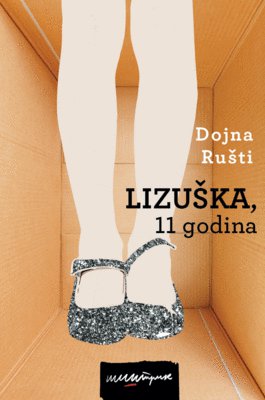
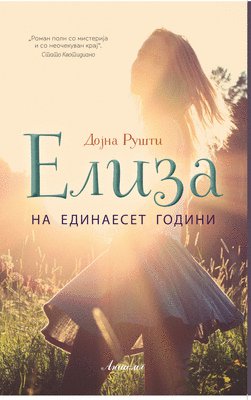
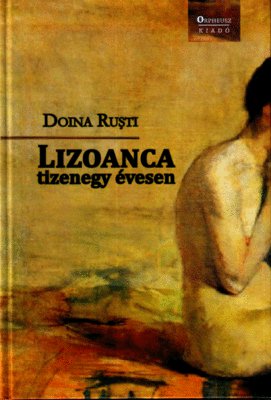
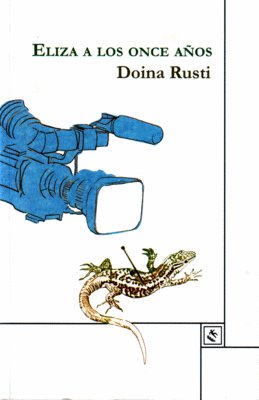
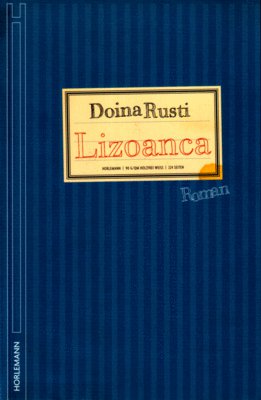
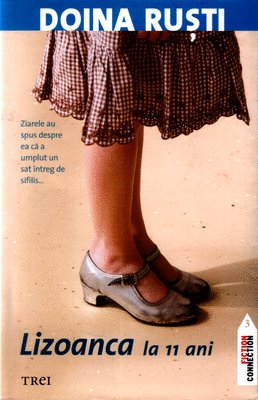
Much has been written about her novels — around 150 studies and reviews, the overwhelming majority of them positive — which, it must be acknowledged, represents not only a remarkable achievement, but also a body of material proving a strong reception of her work. Italy, Germany, Spain, and England are only a few of the 15 countries in which she has been translated, and where her novels have circulated widely and received appropriate critical attention. A prestigious journal such as Turia, published by the Instituto de Estudios Turolenses, devotes a meticulous analysis to her work in the same issue in which another Romanian writer, Mircea Cărtărescu, is also praised. The essay refers exclusively to the novel Lizoanca at Eleven, translated into Spanish, and is signed by the well-known writer Ramón Acín. From the outset, he notes the literary value of Lizoanca, the epic force of the prose writer, and her talent for creating artistic tension: “with a gradual unfolding of the story, Doina Ruști prolongs pain and horror to unsuspected limits, bringing the causes to the surface.”[4] The critic also dwells at length on the characters, emphasizing their value within the writing. This is not simply a matter of construction, but of subtle characterization.
Along the same lines, Antonio J. Ubero writes an extensive review in a widely circulated newspaper, La Opinión[5], focusing especially on the “exceptional qualities” that make this novel good literature: “Doina Ruști turns the novel into a furious general indictment of the decline of the ethical values that should govern any developed society. Beyond its enormous documentary value, this novel reveals extraordinary literary qualities.”[6] Antonio J. Ubero’s arguments are epic and stylistic in nature. He comments on episodes and refers to the powerful message of the book. In Mexico, too, Lizoanca enjoyed an empathetic reception. “The novel is distinguished by a singular narrative style, bringing together the remnants of communism and quality fiction,” writes La Jornada[7], Mexico City’s leading daily newspaper.
The originality of her writing is also highlighted in reviews dedicated to other novels. In the same vein, Leonardo Sanhueza writes in a Santiago de Chile magazine[8] about the parabolic layer of the novel Zogru, seeing in it particular meanings that Romanian exegesis has not emphasized: it is “a singular book [Zogru]” that revisits history and the meaning of “belonging to a territory.”
In Italy, Zogru is seen in its organic dimension and rather as an escape from myth. Marco Dotti writes in the daily Il Manifesto that Zogru “enters that temporality of the fantastic which, in the end, is nothing other than the return to the human of a demon, of an unhappy bond with the earth”[9], while Roberto Merlo[10] considers that the originality of the text lies in the way various aesthetic categories are combined to support the fantastic register without falling into repetition. The novel prompted numerous discussions. In Bulgaria, Bojidar Kuncev[11] sees in it a Cioranian kind of writing, through the type of tragedy addressed in the novel — an idea that none of the Romanian critics had noted, but which also appears in a review in the daily El Mercurio[12], from Santiago de Chile. There, Pedro Gandolfo, a demanding critic from Santiago, underlines, in a substantial review, the tragic vein of the book, seeing this story as a parable of existential alienation: “what predominates in this wonderful story [Zogru] is the figure of the terrible loneliness in which the human spirit finds itself when deprived of love.”
Also within this chapter of originality, one must include the construction of the ending, often remarked upon for its “unexpected conclusion,” as in a review of The Little Red Man published in Stato Quotidiano.[13]
Another aspect related to Doina Ruști’s work is its visual and expressive capacity. “A pictorial story, through the perfect use of comparison — ‘a face crumpled like dirty underwear,’ ‘hands like carpet beaters,’ ‘beautiful as a sleeping cat,’ ‘a summer like a jar of fruit jelly,’ etc. — and a cinematic one,” says Ramón Acín[14] about Lizoanca, while La Stampa reinforces this idea, speaking of the expressive plasticity of The Little Red Man.[15] In the same sense, Pedro Gandolfo compares Zogru to Chagall’s paintings, considering its images well contoured and endowed with valuable visual metaphorical force[16]: “Full of humor in some sequences, tragic and fierce in others, sometimes fantastic and luminous, like a Chagall painting…”
The cinematic unfolding of the action creates the impression of an undeniable reality in Doina Ruști’s novels, as the daily Magyar Nemzet observes: “Even the smallest details are truthful in the novel Lizoanca.”[17]
Literary criticism often focuses on the solid message of her books, with their clear social involvement. Neue Zürcher Zeitung, commenting on The Ghost in the Mill, sees in this novel a kind of artistic synthesis of communist experiences.[18] But the social reverberations of Lizoanca are invoked most often. Ramón Acín states that “Doina Ruști has managed to write about that dark and even invisible part of society, calling many of its essential elements into question”[19], while Zeppel believes that Lizoanca raises issues related to human rights and immigration policies in the European Union.[20] Similarly, Zsidó Ferenc[21] and Nagy-Horváth Bernadett[22] speak about the pronounced moral dimension of the same novel. Gianluca Veneziani makes an interesting comparison between Camus’s The Plague and Lizoanca in the daily Il Libero.[23]
Perhaps more unusual are the references to the type of fantastic cultivated in some of her works, about which Romanian criticism says almost nothing. The Little Red Man, in its Italian version, is seen as a dystopia and compared with works by Dave Eggers, Tommaso Pincio, or Gary Shteyngart, according to Noemi Cuffia.[24] The placement of The Ghost in the Mill within the neo-Gothic style is also something new. Recorded in Jeffry Andrew Weinstock’s The Ashgate Encyclopedia of Literary and Cinematic Monsters[25], Doina Ruști’s novel appears in a new light, implying a different kind of reception. The same idea is extensively analyzed and argued in a study published in English by Raluca Andreescu.[26] She brings aesthetic arguments, methodically examining the “faces” of the ghost as hypostases of fear and of the individual complexes that dominate a village. The unusual type of fantastic is also noted by Alyse Mgdrichian in a review of Mâța Vinerii / The Book of Perilous Dishes.[27]
Summarizing these numerous exegeses, we find that, in the view of foreign criticism, Doina Ruști’s writings are characterized by evident originality, by a specific kind of verisimilitude, often supported by a striking and unusual expressiveness, and by lexical inventiveness.
Far more numerous, the Romanian critical texts dedicated to Doina Ruști are difficult to manage. Overwhelmingly, they are positive reviews or critical essays. Many important critical voices attempt either to situate her within the landscape of post-2000 prose or to identify the structural or semantic marks that give her writing its undeniable particularity. Dan C. Mihăilescu places her within post-Ceaușescu literature[28], because her debut came with a nonfiction work[29] in 1997, while her first novel appeared in 2004, The Little Red Man, at the height of the rise of the 2000s generation. Although in terms of age she may also be placed at the end of the Eighties generation, by the date of her editorial debut she remains linked to the 2000s generation.
There is a system of reference, perhaps more pronounced in Romanian criticism than in foreign criticism, an acute need for analysis that often evokes Lovinescu’s synchronism. The large number of writers and works invoked in support of this analytical approach reflects both the critic’s culture and the prose writer’s openings toward universality. Some of Doina Ruști’s exegetes bring her fantastic register close to that of Márquez[30], an association that appears in several reviews and is rejected by Mihaela Ursa in favor of a reference to Rushdie: “Rather than the Márquez model, the present novel [The Ghost in the Mill] activates the model of Salman Rushdie’s Shame, where an infernal, apocalyptic beast is born and feeds on the fundamental imbalance of a community.”[31]
Sometimes the references are even more distant. Commenting on Zogru, Luminița Corneanu believes that “one of the most persistent impressions after reading the book is something of the vitality and freshness of A Midsummer Night’s Dream.” Others think of Bulgakov: “The procedure of bringing the miraculous down into everyday life recalls, through its humorous effects, Bulgakov first of all,” says Ovidiu Verdeș.[32] Constantin Dram follows the same line.[33]
The critical references move toward canonical fantastic prose. Dana Sala compares Baricco’s Silk and Doina Ruști’s The Phanariot Manuscript[34]; Dan C. Mihăilescu says that The Book of Perilous Dishes is “a stylistic jubilation, a vital literature, as Perfume by Süskind was up to a point and Laurus by Eugene Vodolazkin from another point onward.”[35]
In other reviews, it is said that the prose writer “also sketches a sui-generis mythology of the city of Bucharest, thus entering the series of those fascinated by and fascinating about Bucharest, from Mircea Eliade to Mircea Cărtărescu.”[36]
The Ghost in the Mill remains the novel of consecration. About this novel, Paul Cernat[37] states that it is written “by a powerful and original prose writer,” the novel being “one of the most convincing and expressive fictions about Romanian communism published in the last decade.” This is an admiring statement, which we will encounter in numerous other critics. Paul Cernat has written about many of Doina Ruști’s works, considering that she “writes well, expressively and ‘virilely,’ with an accuracy, fluency, and ease capable of controlling multiple registers simultaneously, asserting herself through the force of narration, tightly held within the harness of a substantial composition.” Recovering the “need for Story,” the prose writer associates it, with due measure, with the need to recover historical memory.
Paul Cernat is also the most attentive exegete of Doina Ruști, missing no detail. One of his observations concerns the epic mechanism through which a real event passes through the stages of its fictional becoming, or, as he puts it, in Doina Ruști’s work the bare fact undergoes spectacular metamorphoses without altering its informational core. The prose writer’s originality lies in the way she possesses the rare art of placing the message in a memorable and unusual context.[38] Few of her exegetes have observed this inclination, and among them Dan C. Mihăilescu states it most bluntly: “The Ghost in the Mill is a fabulatory novel, along autobiographical lines, in which magical realism and everyday realism intertwine.”[39]
The originality of the epic approach, a feature so praised in international exegesis, is also emphasized in numerous Romanian reviews signed by Bianca Burța-Cernat, Daniel Cristea-Enache, Alex Ștefănescu, Tania Radu, Cristina Balinte, Alina Purcaru, and many others. Mircea Muthu, commenting on The Phanariot Manuscript, finds that the novel introduces, among other things, a kind of “historical grammar.”[40] The remark refers to the layer of national history supported lexically. A more general remark, related to the same quality, is made by Tudorel Urian: “The historical novel The Phanariot Manuscript shows the measure of the talent of one of the very important writers of recent years. Modest, talented, always original, discreet, far from the spotlights of social life, Doina Ruști has naturally become a first-rank writer in the library of Romanian prose writers today.”[41]
Continuing the idea, Nicolae Breban, at the awarding of the Academy Prize[42], praises, among other things, the “precise and original description of the milieu” in Lizoanca. Adriana Bittel also writes about an “original formula”[43], while from Doris Mironescu’s perspective, the originality comes from a profound way in which Doina Ruști has not only freed herself from postmodern clichés, but possesses a unique vision.[44]
The key word in relation to Doina Ruști’s writing is originality, most often with precise reference to subject or character. Indeed, it is not difficult to notice that from one novel to another she approaches themes as unusual as they later become sought after. What no one has yet observed is that Doina Ruști creates a trend; she has the ability to leave epigones behind her. As Luminița Marcu, Liviu Antonesei, and Mircea Mihăieș noted at her debut, she blends fabulation and realistic epic in a formula that is neither magical realism nor Bulgakovian satire. “Intelligence, including artistic intelligence, was of great use to the writer in choosing the formula and, above all, in fully sustaining it in the text! A novel [The Little Red Man] that one reads with the pleasure of reading a detective novel, but with a real aesthetic stake,” states Liviu Antonesei[45], while Mihăieș notes “the pleasure of shaping imaginary worlds, that is, realities you can touch with your hand.”[46]
Each novel brings compositional novelties. No other character in Romanian literature resembles Zogru; The Ghost in the Mill comes with an unusual structure; and Lizoanca starts from a real case, transformed metaphorically.
We should also emphasize her capacity for construction, almost unanimously remarked upon. Doina Ruști’s novels have a solid epic skeleton, subject matter, and realist observation. Bianca Burța-Cernat appreciates her in this sense in a reference article with a suggestive title: The Rehabilitation of the Realist Illusion.[47] The analysis is careful and well argued: “Doina Ruști has the vocation of a builder, the ability to shape fiction with stakes and an overflowing imagination. (…) If I were asked to recommend certain characters, pages, or sequences from the second part of The Ghost in the Mill, I would not know where to stop first, because almost everything here is remarkable.”
In the same sense, Daniel Cristea-Enache[48] places Doina Ruști “in the elite of prose.”[49] Cristina Balinte also speaks of the solid epic dimension.[50] Doris Mironescu shares this opinion: “Her talent lies in construction, in characters and situations that not only convince, but give you the feeling of presence. The imagined scenes are stringent, and their cascading succession overwhelms.”[51] Continuing this vision, Mihai Iovănel adds: “The core of the novel is, of the three parts, the second, The Mill: it is somewhat more than 200 pages long and exceptional. In this compressed sequence of space-time, the writer’s great qualities emerge most clearly: construction and the ability to suggest the texture of a humanity.”[52]
Some critics have attributed the clarity of construction to the numerous techniques of portraiture. Thus, the novelist Ioan Groșan states that Doina Ruști possesses “a science of portraiture”[53], while Tania Radu observes the impeccable construction of the characters: “One of Doina Ruști’s critics has observed that all her characters stand out equally well, with extraordinary pregnance. The gallery in Lizoanca at Eleven is no exception.”[54] In fact, this observation appears in many reviews, and it must be said here that the characters gain consistency in context, most often a profoundly human context placed on traditional foundations. Vintilă Mihăilescu formulates the idea best: “With Petrache Notaru we find ourselves in a primal foundation myth, even in a kind of cosmogony of sin: if the incest taboo stands at the foundation of any human society, this world in which Lizoanca was also born was founded precisely on the overturning of this taboo, under the confused protection of diffuse divinities.”[55]
Profound, with reference to the sociological and the mythical alike, Vintilă Mihăilescu’s anthropological approach somewhat broadens the space of reception, in the area of epic construction, and justifies the impression of strong realism of which Bianca Burța-Cernat speaks: Lizoanca “is of a powerful, solid realism, built with the confident pen of the ‘objective prose writer.’”[56]
Technically, the construction arouses critical interest. A distinguished philologist such as Gelu Ionescu — exegete of Eugen Ionescu’s work and the unmistakable voice of Radio Free Europe — offers an applied analysis of Lizoanca, insisting on the epic intelligence and composition, which in Doina Ruști’s novels is impeccable.[57]
What remains after reading this enormous body of critical material is a writer of talent, with an incontestable body of work. We have noted that both foreign and Romanian exegeses insist on style, on literary qualities, but above all on the originality of her novels. Many of the exegetes of her work have appreciated the complexity of her type of imaginary, with historical placements or epic unfoldings within an endless story, as well as the verisimilitude supported by a solid construction.
[1] Study partially taken from the doctoral thesis.
[2] Dan C. Mihăilescu, The Man Who Brings the Book, Pro TV, April 15, 2010.
[3] Cătălin Sturza, Observator cultural, April 16, 2010.
[4] TURIA. Revista Cultural, No. 115, 2015, p. 234.
[5] La Opinión, January 3, 2015.
[6] Antonio J. Ubero, La Opinión, January 3, 2015.
[7] April 5, 2018.
[8] Leonardo Sanhueza, Las Últimas Noticias, Santiago de Chile, May 7, 2018.
[9] “...enters that temporality of the fantastic which, in the end, is nothing other than the return to the human of a demon, of an unhappy bond with the earth,” in Il Manifesto, May 15, 2011.
[10] Quaderni di studi, No. 5, 2010, Edizioni dell’Orso, Turin, p. 134.
[11] On Fate in Zogru, Literaturni Balkani, Sofia, 1/2009.
[12] August 19, 2018.
[13] Roberta Paraggio, Stato Quotidiano, July 3–5, 2012.
[14] Ibid., p. 325.
[15] Alessandra Iadicicco, La Stampa, No. 1815, May 12, 2012.
[16] Ibid.
[17] December 31, 2015.
[18] Markus Bauer, Neue Zürcher Zeitung, Zurich, January 4, 2018.
[19] Ibid.
[20] Deutsch-Rumänische Hefte, Year XVII, Issue 1, Summer 2014.
[21] In Székelyföld, 4/2016.
[22] Ambroozia, 2/2016.
[23] May 18, 2013.
[24] Tazzina di caffè, May 2016.
[25] Routledge, New York, 2016.
[26] In Studies in Gothic Fiction, Zittaw Press, 2011.
[27] Shelf Media Group, April 2022, Los Angeles.
[28] Vols. I–III, Polirom, 2005–2007.
[29] Dictionary of Symbols in Eliade’s Work.
[30] Horia Gârbea, Ziua literară, January 22, 2005.
[31] Apostrof, No. 11, 2008.
[32] Cuvântul, June 2006.
[33] Convorbiri literare, February 2005.
[34] Weaving a Narrative from Metamorphoses in Alessandro Baricco’s Seta and Doina Ruști’s Manuscrisul fanariot, ALLRO, Vol. 22, 2015.
[35] Facebook video, Librăria Humanitas de la Cișmigiu.
[36] Gabriela Gheorghișor, Dilemateca, May 2010.
[37] Paul Cernat, “Romanian Communism in the Mill of Magical Realism,” Revista 22, Bucureștiul cultural, No. 2, December 2008.
[38] Ibid.
[39] Dan C. Mihăilescu, video commentary.
[40] Apostrof, No. 4 (311), April 2016.
[41] Viața Românească, No. 11, November 2015.
[42] See the holograph text in the appendix.
[43] Formula AS, No. 854, February 21, 2009.
[44] Suplimentul de cultură, May 9–15, 2009.
[45] Liviu Antonesei, Timpul, March 2005.
[46] Cotidianul, August 13–14, 2005, p. 17.
[47] Observator cultural, No. 459, January 29, 2009.
[48] Daniel Cristea-Enache, in Timpuri noi, Cartea Românească, 2009.
[49] Timpuri noi, Cartea Românească, 2009, p. 177.
[50] Cultura, April 6, 2006.
[51] Suplimentul de cultură, May 9–15, 2009.
[52] Cultura, January 29, 2009, No. 4.
[53] Observator cultural, No. 792, October 2, 2015.
[54] Revista 22, April 7, 2009.
[55] Dilema Veche, April 16, 2009.
[56] Revista 22, Bucureștiul cultural, October 6, 2009.
[57] Apostrof, No. 10/2009.


