In literature, love scenes are among the most difficult to write. Young writers often avoid them, somewhat hypocritically, under the very fashionable pretext that physical love should not be narrated. It is true that one can quickly become ridiculous when describing eroticism, but that does not mean that carnal scenes should be excluded from literature.
In my novels, eroticism is never a decorative episode. It is part of the structure of the story and of the characters’ destinies. For this reason, such scenes cannot be read as independent texts, but only in connection with the theme of the book.
I try to look back at the love scenes in my books. I believe the most numerous appear in my debut novel, Omulețul roșu (2004). In an online chat the characters discuss first love, and to anchor the dialogue I inserted six very short stories on this theme.
In Zogru (2006), my favorite scene appears right at the ending and has a symbolic character. In The Ghost in the Mill(2008), eroticism is connected to an animistic dimension, in which a spirit transforms the community.
Placed in the novel’s denouement, the scene in Zogru (2006) unfolds in several stages and echoes the central theme of the book. Its premise is the following:
His captivity inside Giulia had changed him fundamentally. He knew he could free himself only through her death, and this thought disturbed him, bringing to the surface all his fears, all the refuse, all the small hidden miseries of his soul. He was guilty and there was nothing left he could do. Forty days with her, forty infernal days, which he now recalls as he waits for Andrei Ionescu, without knowing how they passed or what he did during that time, agonizing in the beloved blood of Giulia.
(Doina Ruști: Zogru)
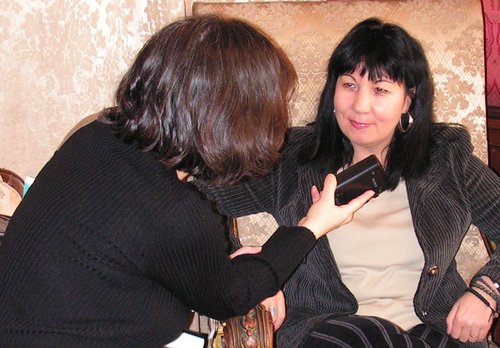
At the time of the novel’s publication, Zogru. In every novel of mine there is some form of eroticism, and rereading these passages I felt a slightly narcissistic impulse to remember how I looked at the moment I wrote them, so I added a photograph from that period.
there are many such scenes, all connected to a Spirit that brings the community back to its animistic beginnings.
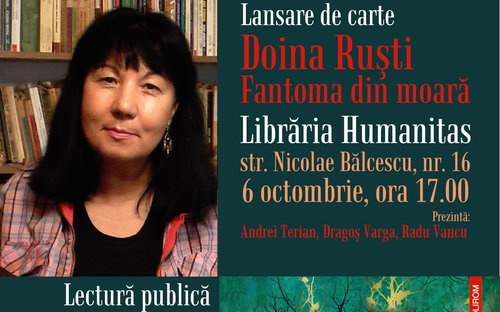
Eroticism becomes brutal and realistic in Lizoanca at Eleven (2009), because the theme of the novel demanded such an approach. In The Plaid Shirt (2010) there appears an encounter charged with erotic tension, hovering at the border between life and death, while in The Mother with Two Cornflowers (2013) eroticism becomes part of a complex psychological universe.
Reading these fragments again, I realize that eroticism in literature is never only about the body. It speaks about fear, desire, memory, and about the ways in which people try to come close to one another.
First he saw her shoes. They were red shoes, with beige heels that imitated wood, as if drawn onto her small white feet. He would have recognized them even in a pile of shoes, especially since they were on her unmistakable legs. He lowered himself at the root of a blackberry bush. Among the twisted thorny branches he could see the red shoes sticking out from beneath a man’s legs.
(Doina Ruști: Lizoanca)

After finishing the novel Lizoanca
A meeting on Batiște Street, in summer, somewhere beyond life. I enjoyed writing it. Its erotic charge came from the shifting folds of death. I am referring to The Plaid Shirt.
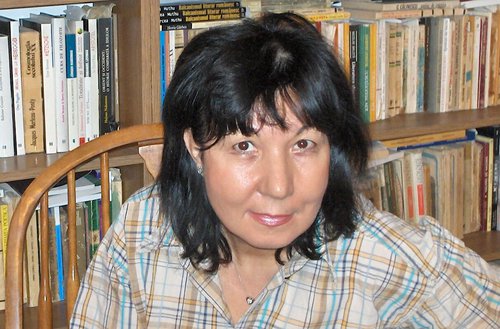
While I was writing The Plaid Shirt
This scene is entirely tied to the theme of the novel. Here I begin to sketch the complex universe of a surrogate father and his obsession that there must exist some “true parents,” reconstructed from the physical details and gestures of Carina, the adopted child.
When Li Zeta unzipped his fly, he still had time to change his mind, but a comfortable shamelessness kept him pinned to the couch.
(Doina Ruști: The Mother with Two Cornflowers, 2013)
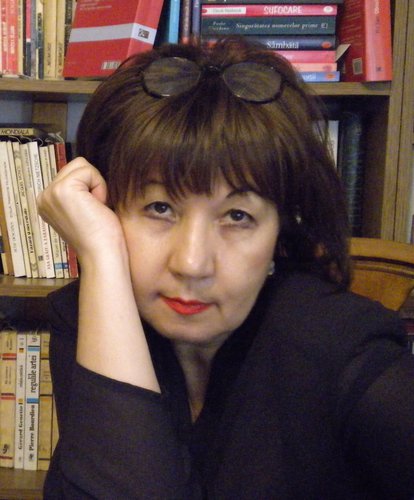
Some time after the publication of the novel The Mother with Two Cornflowers
The novel The Phanariot Manuscript remains entirely tied to the sensual mythology of the city and to the hidden energies of the world.
The basket of bread fell beside the bed, and Leun had the impulse to pick it up, but his eyes struck the shirt beneath which so much longing had gathered.
From their embrace, like a starving wolf, tiny mouths burst forth.
The elder thicket boiled. The embrace, postponed for so long, stirred the muds, scattering sparks and little fiery eyes hidden beneath the blanket of embers. Among the weary leaves, thousands of unseen mouths released their sighs—those small mouths hidden in the folds of the world. Mouths that had not eaten, seized by a single hunger. Mouths that cry out, mouths that whisper for one being alone. Inflamed mouths bitten by other mouths hunted by death. Small mouths emerging from beneath warmed skirts, from the folds of shalwars—mouths that keep alive every wretched little creature, from the louse forgotten under a fingernail to the prince idling beneath his rags. No triumph of the mind is possible without the thousands of mouths of the human dream.
And these longing mouths, born from an embrace delayed too long, invaded the city.
(Doina Ruști: The Phanariot Manuscript)
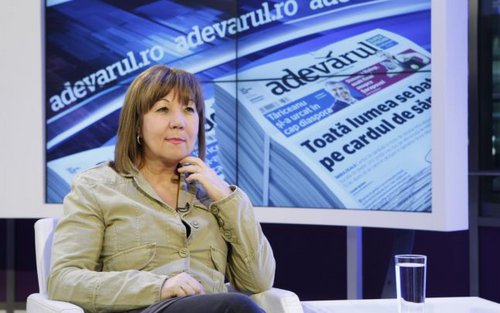
The Phanariot Manuscript had just come out of print.
A short story staged by Radu Afrim in Teatro lucido la malul infinitului.
Published in the volume Erotic Stories (2007), Breasts tells the story behind certain erotic preferences.
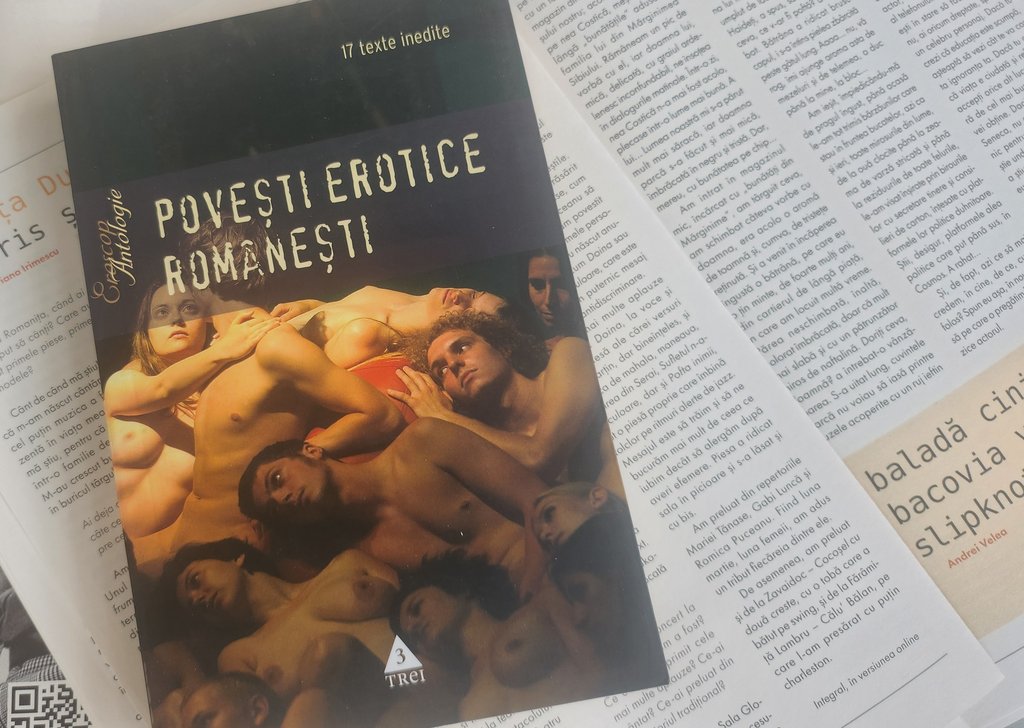
More here.
In my novels, love appears in many forms—mystical, brutal, lyrical, or psychological—but it almost always stands at the border between desire and despair.